← Return to search results
Back to Prindle Institute

Climate Emergency and the Case for Civil Disobedience

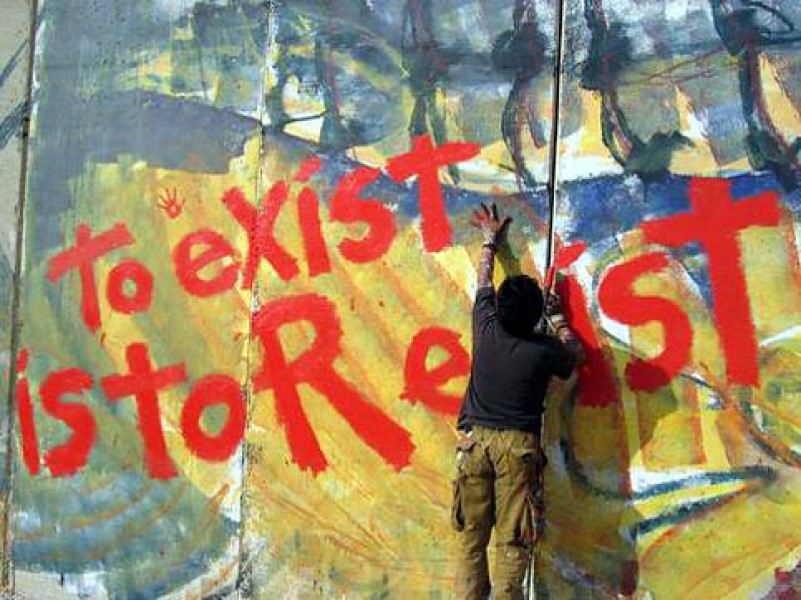
photograph of "to exist is to resist" mural

In Plato’s Republic, during a sustained dialogue on the nature of justice and the structure of a just society, Socrates remarks that we are talking of no small matter, but of how we should live. If that question remains central to moral philosophy, any contemporary answer the question of ‘how we should live’ must acknowledge that to ask it in ‘our’ time is fundamentally different from asking it in any other time in history. The question of what a good human life is in an age of environmental crisis cannot be answered without considering our individual and collective responsibility to mitigate the damage which no longer lies ahead of us, but which is happening now.

Governments, policy makers, corporate institutions, et al, have failed to respond to decades long warnings from scientists that CO2 emissions from industrial and domestic activities pose serious risks to human life and human society, to the world’s ecosystems and perhaps ultimately to much of life on Earth. Those scientists, conservationists and activists who have understood this, have nevertheless failed to effect the change necessary to prevent an ecological and climate emergency. There are complex reasons for these failures, and though it is vitally important that we try to fully understand them, I will not speak to them here.

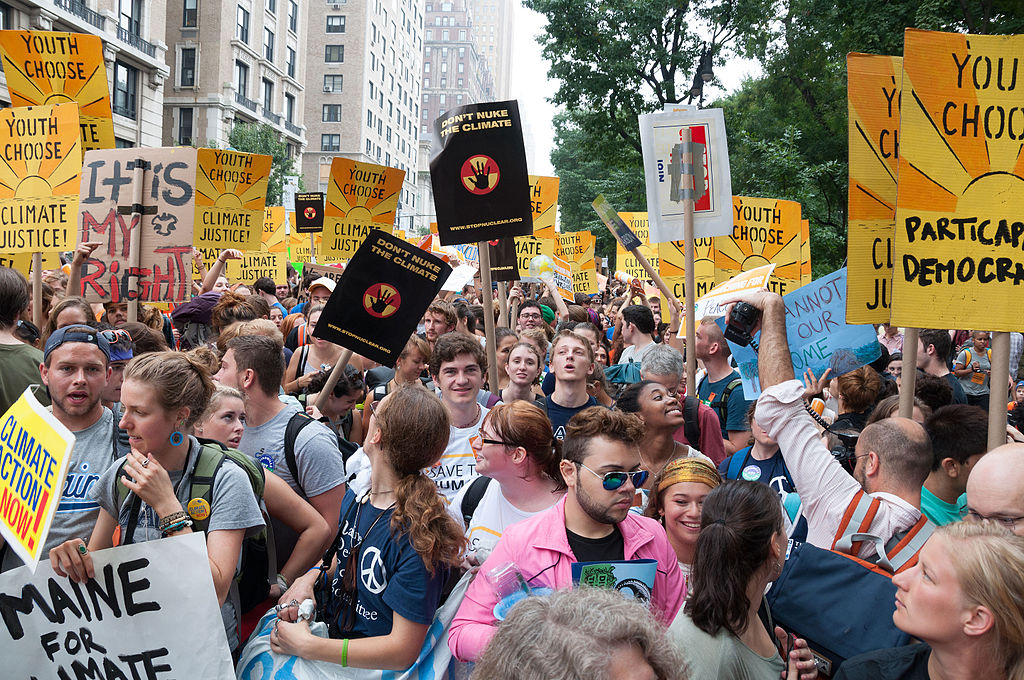
I want to focus on the urgent question ‘what do we do now?’ by considering the response emerging from the new and quickly growing environmental mobilizations such as Extinction Rebellion in which people are beginning to resort to techniques of disruption and civil disobedience in the face of governmental and systemic inaction. Are these measures necessary, are they are morally justified, and are they perhaps even morally required?

Civil disobedience (which I shall assume is necessarily non-violent) has historically played an important part in effecting change, as for instance in the suffragette and the civil rights movements. In one of the most famous endorsements of civil disobedience, Henry David Thoreau (in 1849, after refusing to pay taxes to a government which legally sanctioned slavery) wrote:

“All men recognize the right of revolution; that is, the right to refuse allegiance to and to resist the government, when its tyranny or its inefficiency are great and unendurable.”

Thoreau’s point is simple and obvious: morality or justice does not necessarily line up with the law.  Are we reaching a point now at which the inefficiency of governments and the tyranny of corporate interests have become unendurable; where the refusal to adequately address the climate emergency can no longer be tolerated?

A brief (and incomplete) survey of where we are paints a sobering picture: The latest report published by the Intergovernmental Panel on Climate Change (IPCC) warns that countries must triple their emissions reductions targets to limit global heating to below 2C. Even a 2C increase is not safe, but on the current trajectory heating is likely to result in an increase of between 2.9C and 3.4C by 2100. This will bring about catastrophic climate change globally. The social and geopolitical outcomes of such a scenario are deeply frightening. Rising seas will displace billions of people. Not only will costal habitations be inundated, arable land will be poisoned by salinity and made barren by drought. The effect will be devastating, widespread famine, which, along with water scarcity, will almost certainly cause political instability and conflict. It is likely that humans cannot adapt to an increase of 4C.

Clearly, urgent and serious action is needed. Two of the things that most threaten the possibility for action lie at opposite ends of the spectrum of responses to these predictions. The first is climate denialism  – including the views that climate change is not real, is not caused by human activity or that the likely effects are being wildly exaggerated. The other is climate defeatism – the view, (espoused by Jonathan Franzen in a recent article) that we are already too late. However, many argue that there is still a cause for hope because there is still a window in which to act to keep warming below 2C. Scientists and activists including Tim Flannery and Naomi Klein, are calling for radical action because that window is small, and vanishing quickly.

The question of what kinds of radical action we need brings us back to the question of what role acts of disruption and civil disobedience can play, and how those actions are to be morally reckoned with, given the situation we face.

Civil disobedience can be defined as “a public, non-violent and conscientious breach of law undertaken with the aim of bringing about change in laws or government policies.” The main objection to engaging in civil disobedience is that in a stable, functioning democracy there are effective and non-disruptive pathways to change through campaigning and electoral process. Indeed, the democratic system itself is based on the principle that citizens hold a type of sovereign power in that governments receive their legitimacy through ‘the will of the people.’

But what if democracy is not functioning properly? What if politicians, rather than representing the views and interests of their constituents, seek to dictate those views and interests. And what if they do so to advance their own views and interests? For democracy to function properly, for a citizenry to be self-determinate, citizens need the opportunity to make informed choices about their own welfare. People can only make informed choices if they are in fact informed, and governments have a responsibility, which they are currently abrogating, to tell the truth.

The Australian government is not telling the truth about the climate emergency, and has absolutely no intention of addressing the problem. It is resisting and frustrating renewable energy investment while actively pursuing new fossil fuel projects, of which coal is a major part. In Australia (as elsewhere) the powerful vested interests of the fossil fuel lobby have direct lines to government. The country’s policies and laws under these circumstances do not represent the best interests of the people but rather, at their expense, advance the interests of the few. This triple whammy of government obfuscation, policy inaction, and active support of heavy carbon emission activities is creating intense anger and frustration for climate realists from across the political and social spectrum, and support for disruptive, direct action is rapidly growing.

There is, of course, the question of how creating disruption by, for example, blocking bridges, swarming intersections and surrounding government buildings or corporate offices, would achieve the desired results. On one hand it is unlikely that the government will cave to the demands of protestors. On the other hand, Extinction Rebellion’s sustained protests across London in October 2018 resulted in the UK government declaring a climate emergency. Some dismiss this as merely symbolic, as indeed without meaningful policy change it is – but nevertheless, it is not nothing, and it has given impetus and hope to the movement for solving the climate crisis.

Those engaging in acts of civil disobedience do not know with any certainty if these tactics can or will work, but they do know that ordinary, legal forms of protest can not now be effective enough quickly enough. In this sense civil disobedience is a resort taken by people to express their anger and frustration at a destructive and intransigent system. Disruptive action has a cost – to the individuals risking arrest by disobeying the law and also to society. Those taking such action recognize that the stakes are very high, and that the costs of inaction are far greater.

I do not think it is difficult to make a case that under these circumstances civil disobedience is morally justified. Can we, though, defend the stronger claim that it is morally required?

Ahead of the September 20 School Strike for Climate, an open letter was published from over one hundred Australian academics from a variety of disciplines and universities endorsing and supporting Extinction Rebellion and its activities. The letter concluded that:

“When a government willfully abrogates its responsibility to protect its citizens from harm and secure the future for generations to come, it has failed in its most essential duty of stewardship. The ‘social contract’ has been broken, and it is therefore not only our right, but our moral duty, to rebel to defend life itself.”

This statement clearly makes the move from acts of civil disobedience being justified to their being required – as a moral duty. Though I agree with the claim, its defense is trickier.

For example, exactly whose duty is it? Who is morally required to engage in civil disobedience? Even if someone feels that they, morally, have no choice – are they justified in making that demand of others? Our moral intuitions would suggest that there are reasons for rejecting that inference. And this appears to put it – as a moral duty – into conflict with one of the fundamental features of moral duties, which is that they are universal. If I recognize something as a moral duty for myself, then, all things being equal, I recognize it as such for others as well.

I do not see this as an insurmountable problem for the claim that we have a moral duty to rebel against a fundamentally unjust system in the face of looming existential catastrophe. Perhaps one way of fleshing out an answer would be to return to the ‘all things being equal’ clause. Perhaps also there is a way to acknowledge that while each person must freely choose – and be free not to choose – to take such action, there is still a collective responsibility governing the moral musts. These are difficult philosophical issues and they require further reflection.

I began by saying that at the core of ethics is the Socratic question of what it means to live a good human life. Humanity is at a crossroads, and how we understand Socrates’ question, and how we choose to respond to what it asks of us, needs to be reassessed in light of where we are. It seems clear that, given the current situation, living a good human life cannot mean going about one’s business as if the world might not be ending.
The Ethics of Climate Change Protest: Should Protest Be Funny?

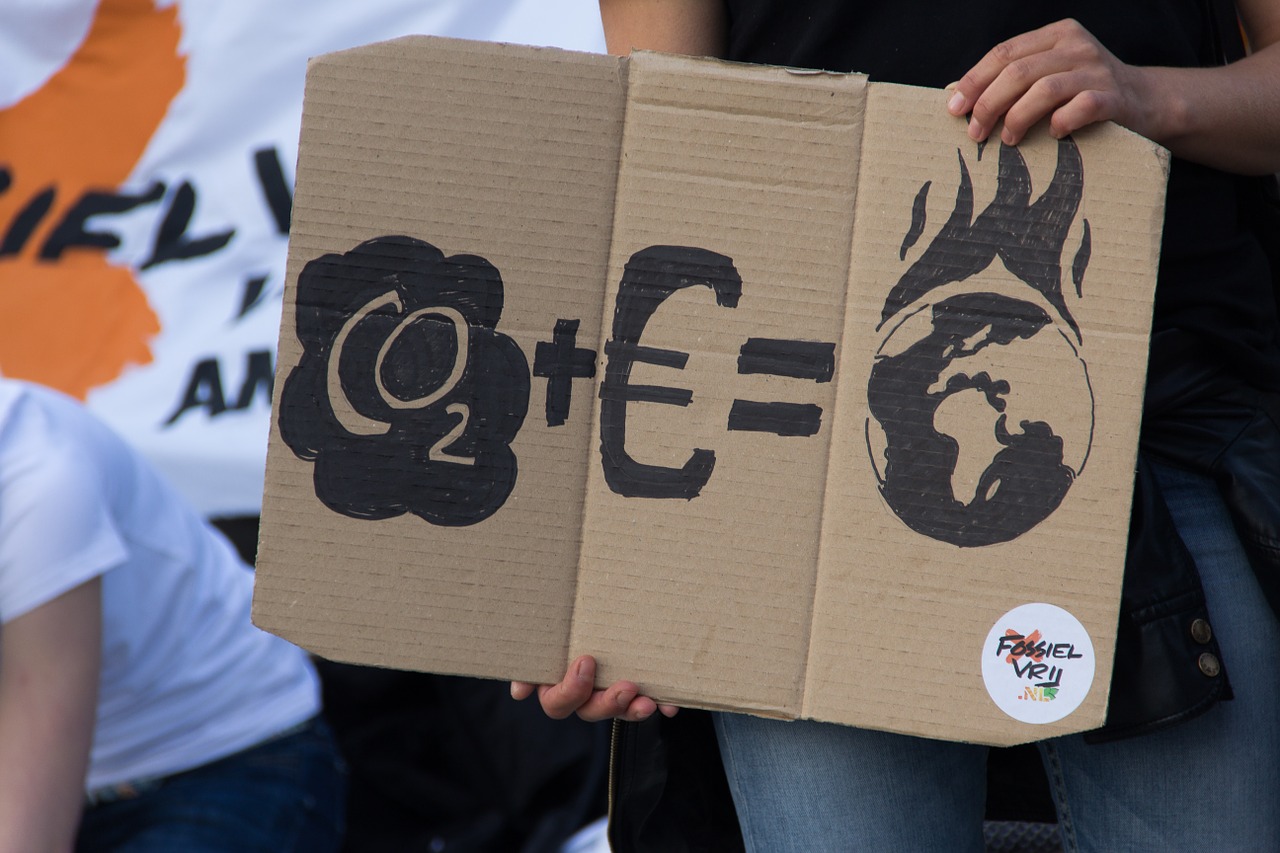
climeme protest sign

The Global Climate Strike, which took place last September and involved over 150 countries, counted nearly 4 million young people among its numbers. This admirable show of support perhaps seems less shocking given the increasing prominence of young people in climate change activism. Greta Thunberg is perhaps the most famous of these, but others like Autumn Peltier and Xiye Bastida have also become important advocates for the fight to save the planet.

Because political protest itself has become increasingly visible online, signs from the climate strike inevitably went viral. The vast majority of signs spoke to the unblunted rage and helplessness inspired by political ineptitude (a perfect example, seen in the header of a Vox article on the climate strikes, simply reads “DON’T FUCKING KILL US”). However, many other drew on the language of memes and online humor to articulate frustration. In one example, a teenage girl holds up a sign with the words “THIS IS NOT WHAT I MEANT WHEN I SAID…DIE LIT” floating above a planet half-engulfed in flame. Another sign reads, “Winter is Not Coming,” a distortion of a Game of Thrones quote that has become a meme in itself. These signs, and many others like them, require fluency in the language and culture of social media. Almost all young people are equipped with this form of literacy. As Bridget Read notes in an article for The Cut, “Gen Z has a knack for incorporating its politics into its internet-inflected, ironic, and earnest self-expression so uncannily, so it’s to be expected that its IRL signs would be as funny, charming, and devastating as the best ‘climemes’.”

Read coins a startling new word in that last sentence, though climate change memes were hardly invented by the protests of last September. While “climemes” is a useful way of describing the ever-growing phenomenon of climate change memes, it should prompt us to ask what the moral ramifications of “memeifying” political protest are. Does humor have a place in our collective reckoning with the environmental catastrophe, or does it impede active and sustained engagement in social change?

On the one hand, memes are more likely to be seen by younger people who aren’t already actively engaged in environmental activism. Because they are made to be shared, memes certainly increase the visibility of issues like climate change for a diverse audience. If many people didn’t read lengthy articles about the climate protests, most at least saw images of funny protest signs on their Twitter feeds. However, memes inherently have an expiration date, and it eventually becomes blasé to share older memes. Given that climate change will have long-lasting ramifications, is such a short-lived format really best for fostering long-term engagement?

This leads into another question, of whether or not memes encourage those who share them to physically participate in activism. The idea of “armchair activism,” or activism that involves nothing more than sharing information with others online, has become controversial in recent years, but one could argue that sharing memes falls under this category. However, it should be clear that the protestors who make such signs are by no means working against their own cause, or that encouraging engagement is even the goal of climemes. A bitter sense of humor may be all we have in the face of looming catastrophe, a way for us to vent frustration and grief.

This issue is rooted in a much older debate about the overall purpose of humor. Aristotle, for example, was skeptical about the purpose of humor, and separated it sharply from tragedy. In Chapter 5 of The Poetics, he states that,

“The tragic and the comic are the same, in so far as both are based on contradiction; but the tragic is the suffering contradiction, the comical, the painless contradiction […] the comic apprehension evokes the contradiction or makes it manifest by having in mind the way out, which is why the contradiction is painless. The tragic apprehension sees the contradiction and despairs of a way out.”

His argument is that both tragedy and comedy are rooted in contradiction. This could be the contradiction between appearance and truth on which much of comedy hinges, or the contradiction between desire and reality which is often at the center of tragedy. Contradiction is just one thing climate change protests are pushing back against; namely, the contradiction between grim reality and the insulated world in which many politicians are living it, the contradiction between the urgency of the situation and the lack of response to it.

Aristotle’s definition of humor vehemently excludes pain. However, the kind of humor utilized by protestors has a painful edge. As Aristotle said, tragedy and humor are closely linked, but as climate change alters every aspect of life on earth, the lines between tragedy and comedy become indistinguishable. This is evident in all climemes, and whether or not circulating them is fully ethical, their existence speaks volumes about the modern day tragedy of environmental destruction.

Toronto vs. Chick-Fil-A: Only About Chicken?

photograph of Chick-fil-a storefornt

My hometown of Toronto, Canada recently saw its first Chick-Fil-A restaurant open, to a very mixed reception. While some were excited to try a new take on fast food fried chicken (with some even going so far as to line up for hours beforehand), many others attended the opening in protest. There were a few different reasons for the protest, although the most prominent was the owners of Chick-Fil-A’s well-documented financial support of evangelical Christian organizations that oppose gay marriage and have funded so-called “gay conversion therapy” (a number of protesters were also there to express the view that the killing of animals is morally wrong, although this is not a transgression solely committed by Chick-Fil-A).

Some did not take well to the protesters. For example, in response to protesters who chanted “shame!” at those leaving the restaurant, Canadian evangelical Christian personality Charles McVety – who was leading the city’s annual “Jesus in the City” parade – encouraged people to show their support for Chick-Fil-A, instead. When interviewed, he expressed his view that:

It’s upsetting that people want to stop a business simply because it adheres to Christian values. The business is only about chicken. It should only be about chicken…It should not happen in Canada, if you just want to get chicken, you shouldn’t be shamed.

Is this a business that is “only about chicken”, though? Is there reason to think that someone should, in fact, feel ashamed when they visit Chick-Fil-A, or is it really as morally unproblematic as those like McVety think it is?

There are a couple of things to say about McVety’s statement right off the bat. First: protesters, of course, have every right to peacefully assemble and demonstrate in support of their cause, so McVety is straight-up wrong that such protests “should not happen in Canada.” Second, while Chick-Fil-A does not hide the fact that it is run by those who identify themselves as Christians, there are many Christians who would deny that supporting anti-LGBTQ causes is coherent with Christian values. McVety himself avows numerous views most typically associated with right-wing Evangelical Christianity, which, in addition to his opposition to same-sex marriage, also includes the denial of evolution and global warming. There is plenty of room, then, to be Christian and not agree with McVety, and no reason to think that in protesting Chick-Fil-A one is trying to thwart a business simply because it is run by self-identified Christians.

More to the point, though: why should someone feel ashamed, just because they want to try out a new chicken sandwich? Consider what one of those visiting the restaurant said when interviewed:

I do not agree with [Chick-Fil-A’s] ideology and the policies of the owners, but I’m not here to support the policy of the owner. I’m here to have a meal that I really enjoy.

So, here’s one way to think about the situation: one should not be shamed or feel ashamed for eating at Chick-Fil-A because the business should be kept separate from the values of the owners, and people have a right to eat what they want without being harassed. If they were supporting anything, then, it would be the consumption of fried chicken.

It is difficult to find these lines of thinking persuasive. In supporting the business, one does, of course, support the policies of the owners insofar as the money one spends profits the owners, who in turn use that money to support anti-LGBTQ causes. This may not be your overt intention, of course – you may just want to eat some chicken – but what you intend and what ends up happening as a result of your actions can be two very different things. That you are part of a larger customer base whose collective spending on Chick-Fil-A actively support these causes means that you are, at least in some way, supporting those causes as well.

But can’t someone just be neutral on the matter? Can I not just go and eat a greasy chicken sandwich in peace without having to worry about politics or being judged? Maybe I’m like the patron interviewed above: sure, all that stuff about supporting groups working against gay marriage sounds bad, and gay conversion therapy is not something I would ever endorse, but my buying fried chicken is not about that, it’s just about being hungry and stuffing something palatable down my gullet.

Again, while one’s ideologies can certainly be opposed to those endorsed by the owners of Chick-Fil-A, one’s actions may say something different. It would be nice if the business side could be separated from the ideological one, but when the profits from that business are used to directly support the ideology, it is difficult to find room to draw a line.

Okay, but wait: I order things from Amazon all the time, despite their well-documented horrendous working conditions; I like to take Ubers despite their well-documented horrendous working conditions; I buy all kinds of products from places that are no doubt not terribly concerned with the health and well-being of their employees. I don’t really feel bad about that, so why should I feel bad about buying some B+ chicken from a new restaurant in town? Is this really that big of a deal?

This is a tempting way to think about the problem insofar as it is a tempting way to get oneself to stop thinking about the problem. That one has supported a bunch of businesses with questionable business practices in the past does not, of course, excuse adding another one to the list. We may indeed wonder whether any ethical consumption is possible under late-stage capitalism, but the fact that there are problems everywhere does not mean that there are not still problems in specific cases, either.

While these are big problems to think about, what should I do when it comes to Chick-Fil-A? Perhaps the take-home message should be this: even though one’s intentions may be apolitical, and even though one may very much disagree with the causes that Chick-Fil-A’s owners have chosen to support, one does not simply get to choose to remain a neutral party if one willingly gives their money to the business. One cannot have one’s chicken and eat it, too.

Concrete Milkshakes and the Ethics of Being Wrong on the Internet

close-up photograph of milkshake

In late June there was yet another clash of right-wing groups and protesters, this time in Portland, Oregon. As has been widely reported, in several previous clashes this year there have been incidents in which protesters threw milkshakes at members of extremist groups and right-wing politicians, most notably during an incident in May in which European Parliament member and Brexit supporter Nigel Farage was on the receiving end of a protester’s milkshake. While the person involved in the incident was arrested, Farage himself was not injured, merely embarrassed. During the recent events in Portland, however, the protesters upped the ante: as many news outlets, along with the Portland police department reported, instead of using regular milkshakes to embarrass members of the fringe extremist group “Proud Boys” [sic], protesters added powdered cement mix to the milkshakes, clearly with the intention to seriously injure their opposition. According to reports, several people called the Portland police to report the incident, after which they tweeted a warning to those attending the protest.

The only problem with the information tweeted out by police and reported by numerous right-wing news outlets? There is not a shred of evidence to suggest that it is true. Not a single word of it.

That blatant falsehoods like these are spread in this day and age is perhaps not surprising; we are perhaps even becoming desensitized to it. And while there are clearly ethical issues with spreading misinformation (some of which have been written before about on this site), what is perhaps just as problematic is the general response from those who have taken part in spreading that misinformation once it has been shown to be false.

It seems that the best thing to do when one has been shown to be wrong is to admit one’s mistake, and to retract one’s original claims. But this is not what we have generally seen happen in recent incidents online: it seems that instead of people admitting that they are wrong they will either quickly move on to the next thing, or else manipulate the narrative so that they can convince themselves that they were right the whole time. Both of these types of responses have been commonplace in response to the recent Portland protests.

Consider first Fox News, who originally ran the headline “Antifa, conservative protests turn violent as demonstrators throw milkshakes of quick-dry cement at police and onlookers.” Not typically known for their subtlety, this headline could not be any clearer, and not any more false. One might think that, upon learning one has printed a headline full of egregious errors, it would be one’s responsibility to set the record straight by issuing a retraction. But no such retraction was issued. Instead, the updated headline was quietly changed to read “Antifa-Proud Boys confrontation in Portland turns violent; conservative writer injured,” with the content altered only slightly: instead of claiming that milkshakes with cement mixed into them were, in fact, thrown, the article now states that “it was reported” that such milkshakes were thrown. This is no way constitutes a retraction of a demonstrably false claim, but instead still strongly implies that it was true. It is hard to see how these actions could constitute anything other than blatant dishonesty.

Philosophers have been writing about the dangers of intellectual dishonesty and carelessness in forming one’s beliefs for a long time. Philosopher W.K. Clifford, for example, discussed an example that sounds like it could have come straight out of today’s headlines, all the way back in 1877:

There was once an island in which some of the inhabitants professed a religion teaching neither the doctrine of original sin nor that of eternal punishment. A suspicion got abroad that the professors of this religion had made use of unfair means to get their doctrines taught to children. They were accused of wresting the laws of their country in such a way as to remove children from the care of their natural and legal guardians; and even of stealing them away and keeping them concealed from their friends and relations. A certain number of men formed themselves into a society for the purpose of agitating the public about this matter. They published grave accusations against individual citizens of the highest position and character, and did all in their power to injure these citizens in their exercise of their professions. So great was the noise they made, that a Commission was appointed to investigate the facts; but after the Commission had carefully inquired into all the evidence that could be got, it appeared that the accused were innocent. Not only had they been accused on insufficient evidence, but the evidence of their innocence was such as the agitators might easily have obtained, if they had attempted a fair inquiry. After these disclosures the inhabitants of that country looked upon the members of the agitating society, not only as persons whose judgment was to be distrusted, but also as no longer to be counted honourable men. For although they had sincerely and conscientiously believed in the charges they had made, yet they had no right to believe on such evidence as was before them. Their sincere convictions, instead of being honestly earned by patient inquiring, were stolen by listening to the voice of prejudice and passion. (Clifford, “The Ethics of Belief”)

Clifford says that it was morally wrong for the agitators to believe what they believed, because they formed their beliefs on shaky and little evidence, and that their beliefs were not the result of patient reflection and careful consideration, but rather “prejudice and passion.” Importantly for Clifford, such beliefs can still be held with complete sincerity – the agitators were not initially aware of the falsity of their beliefs, and they were confident that what they believed was true. Nevertheless, the way that they formed their beliefs still shows that they were doing something wrong.

One difference between Clifford’s case and contemporary events is that instead of today’s agitators being broadly considered untrustworthy and dishonorable, the consequences for being blatantly wrong on the internet are far less severe. In fact, the prejudice and passion that drive the careless acquisition of evidence, further encourages the manipulation of that evidence when confronted with conflicting evidence.

Consider again responses to the fabricated concrete milkshake story. Even after discovering that the story was false, one could find people reinterpreting the evidence to fit their preferred narrative. Consider the following representative tweets:

I’ve been getting a lot of emails telling me I’m stupid for adding to the concrete shake line. Lots have sent me a Portland Mercury article saying there’s no proof of concrete. Maybe so, but this is exactly how to do a kind of petulant terrorism. This makes Antifa terrorists.

This is the effect of concrete shakes, real or not: They tell people this will happen; they do things to make it look real; they maybe don’t even do it; then they accuse everyone of being stupid and gullible. Then they get much of the effect they want and get to do it again.

This kind of response again not only fails to constitute a retraction (nor does it recognize any kind of personal wrongdoing) but instead takes what evidence does exist – that some people claimed that there were concrete milkshakes at the rally – to support the conclusion that they held all along – that Antifa is a violent terrorist group. This is a disastrous leap in logic that not only runs afoul of Clifford’s principle that beliefs should be formed carefully, conscientiously, and on the basis of the best possible evidence, but goes the extra step of manipulating the evidence in such a way that supports one’s initial belief, even after having been proven wrong.

There are a lot of lessons we can take away from the recent events in Portland and the online responses to them, but perhaps one of the most important is to recognize that it is better to admit wrongdoing than to try at all costs to save face in light of overwhelming evidence. Spreading misinformation is harmful, but manipulating evidence to further the spread of misinformation that one knows perfectly well is false is perhaps even more harmful still.

Should the NFL’s Players Have to Pay to Protest?

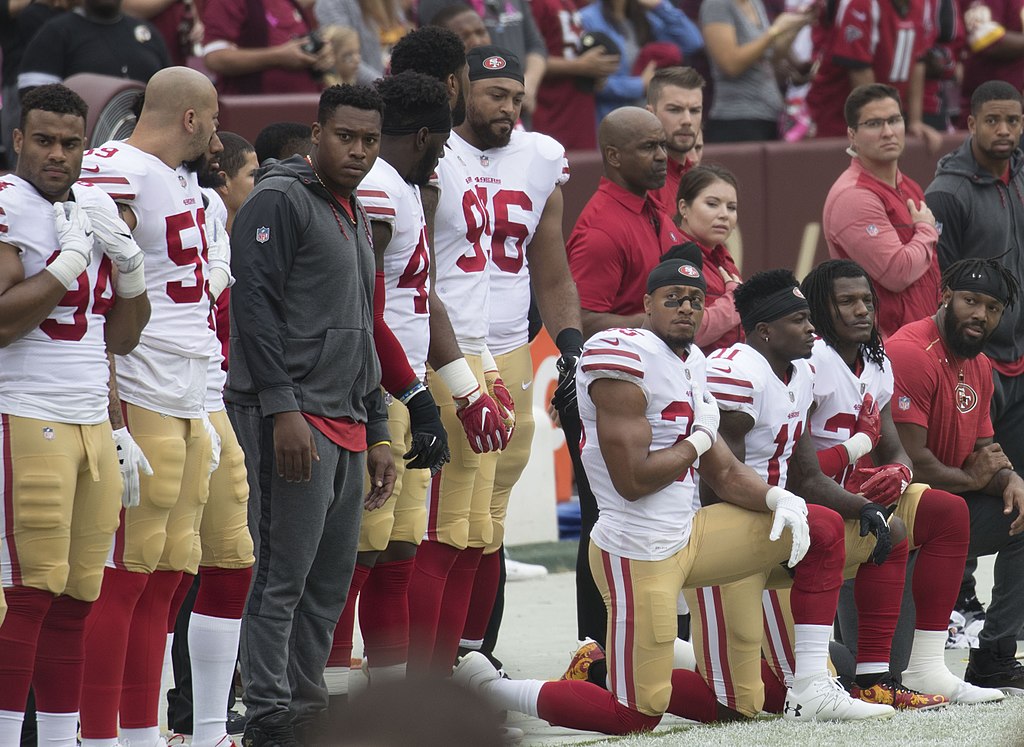
Photo of San Francisco 49ers players kneeling during the National Anthem.

This article has a set of discussion questions tailored for classroom use. Click here to download them. To see a full list of articles with discussion questions and other resources, visit our “Educational Resources” page.


This May, the NFL announced a new policy—any team with a member who kneels during the National Anthem will have to pay a fine. The policy was decided by a vote of the team owners.  Union representatives for the players were not aware of the decision until it was announced. This new policy is a change in tone from the attitudes the league expressed last year and is a further development in an ongoing controversy sparked by players’ decision to protest by taking a knee during the National Anthem.  In August 2016, Colin Kaepernick made headlines for kneeling during the anthem in protest of violence perpetrated by police officers against people of color. Kaepernick no longer plays for the 49ers or any NFL team.  Amnesty International recently honored him with the 2017 Ambassador of Conscience Award.

The new policy mandates that players on the sideline “shall stand and show respect for the flag and the Anthem.” It may sound as if the players are being forced to express respect whether they feel it or not, but one key feature of the new policy is that it doesn’t require players to stand during the anthem.  Players who choose to protest may either willfully incur a fine on their team or may remain in the locker room while the anthem is played. Individual teams have the autonomy to decide how the fine is dealt with; the team can choose to pay it, or it can be imposed on the individual members who chose to protest.  On May 24, New York Jets owner Christopher Johnson announced that fines would be covered by the Jets rather than by players who saw fit to protest.  Moves like this by team owners are attempts to demonstrate respect for both sides of the debate.  Players may continue to protest without fear of punishment at the level of the individual, but the NFL and its teams will not have to deal with being viewed unfavorably by the public.

Some critics of Kaepernick and other players engaging in the same behavior argue that, though protesting is certainly warranted under some circumstances, and perhaps even that it is warranted under these circumstances, the form it takes, in this case, is inappropriate because it is unpatriotic.  The National Anthem is a potent symbol of our country. Kneeling while it plays disrespects the song and, by extension, the nation.  Some argue further that the United States was the country that made it possible for Kaepernick and other football players to make millions of dollars playing sports.  Protesting during the anthem of the country seems, to these people, to be ungrateful. They argue that this is simply not the forum to engage in this kind of behavior.

Supporters of the protest counter those claims in a number of ways.  First and foremost, they argue that the injustices faced by people of color in this country are far more pressing than any concerns about patriotism.  If injustices are happening (and they are), perhaps it is time that society at large stops telling people of color when and where it is appropriate for them to peacefully protest those injustices.  In fact, to many, it sure looks like this is exactly the right forum—these protests have generated widespread national discussion about racial injustice in this country.

 Supporters argue further that kneeling is not a gesture of disrespect.  It’s not as if the protestors were extending the middle finger at the flag while the anthem played.  After all, kneeling is a posture that many people take when they pray. Protesters did not engage in the most outrageous form of protesting.  The simply assumed a prayer position rather than putting their hands over their hearts.

Many contend that it is not unpatriotic to exercise free speech rights.  In fact, taking advantage of the right to peacefully protest is perfectly consistent with the fundamental values of this country.  A smaller group of Kaepernick supporters argue that it is no real, justified criticism to refer to Kaepernick’s actions as “unpatriotic,” because blind patriotism isn’t something that we should value in the first place.  Nationalism can be an ugly thing. When a person commits to being blindly allegiant to their country, they are often willing to overlook bad actions performed in the name of that country. It also becomes easier to behave as if the interests of those who live outside of that country aren’t important.

Another point made by critics of this form of protest is that it could have been done in a way that didn’t insult the troops. For many people, the act of holding one’s hand over one’s heart during the anthem is an opportunity to show support and appreciation for those who fought and risked or even sacrificed their lives in service of the country.  In response to this argument, people are quick to point out that the National Anthem doesn’t have one and only one meaning. It means different things to different people. One of the most crucial guiding motivations behind the formation of our country was the value of freedom of conscience. People should be free to respond to the anthem in a way that is consistent with their values.

A further argument offered against the protests is that they are being done during work, not during the player’s private time.  What an employee does during the time that they are at work reflects on their employer. In most any other job, if an employee engaged in a speech act in their capacity as representative of their employer and that message was not something the employer wanted to be conveyed, the employee would be risking their job.  The new policy addresses this concern because it offers a third option. Players who don’t want to stand for the National Anthem don’t have to. They can stay in the locker room until it is over.

Major figureheads have weighed in on this controversy. In 2016, President Obama acknowledged the importance of the values emphasized on both sides of the debate but indicated that he respected Kaepernick’s exercise of his constitutional rights and encouraged both sides to listen to one another.  President Trump has repeatedly criticized the protests, and Kaepernick in particular. Nevertheless, Trump has extended an invitation to Kaepernick to participate in a summit on race later this year.

In Washington, D.C., A March Against Fear

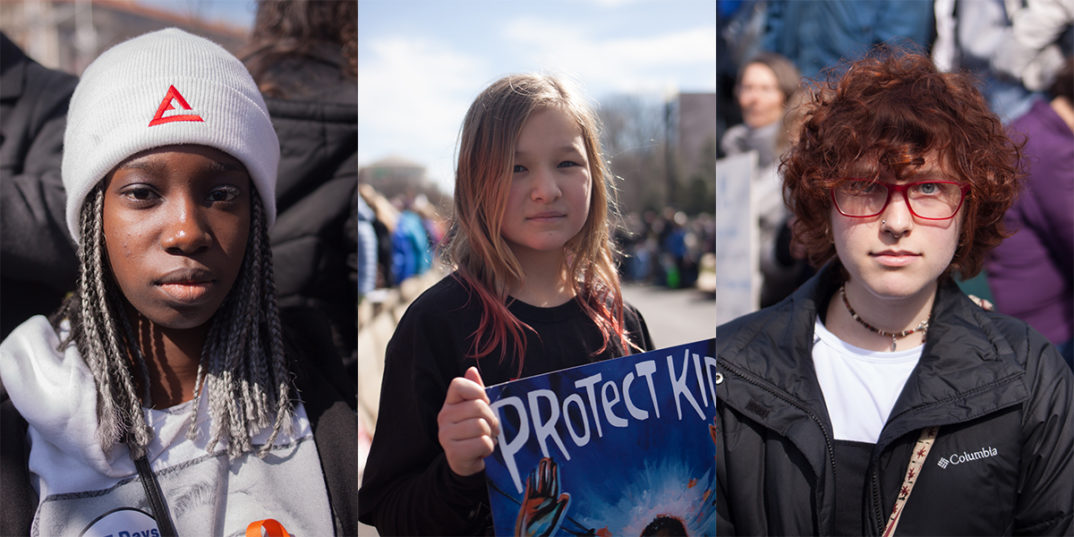
Collage of three people from the March

Reporting by Eleanor Price, Photos by Conner Gordon

On February 14, 2018, a gunman walked into Marjory Stoneman Douglas High School in Parkland, Florida, and shot 17 of his former classmates to death. Six weeks later, the survivors of the shooting led over 200,000 people through the streets of Washington, D.C., to call for gun safety measures at the March For Our Lives. At the time, Congress was in recess; many of the country’s leaders were either back in their districts or overseas, far from the streets where their constituents were demanding change.

Many of the march’s attendees were students themselves, outraged at how routine shootings have become in their schools and neighborhoods. Others had felt the impact of gun violence from afar — a mass shooting on the news, an ever-present worry that they or their families could someday be a target. The people we spoke to gave voice to these fears. But each attendee also made one thing clear: though their leaders may be absent, inaction is no longer acceptable.

Continue reading “In Washington, D.C., A March Against Fear”

More Than Just a Game? Using Sports as a Political Tool

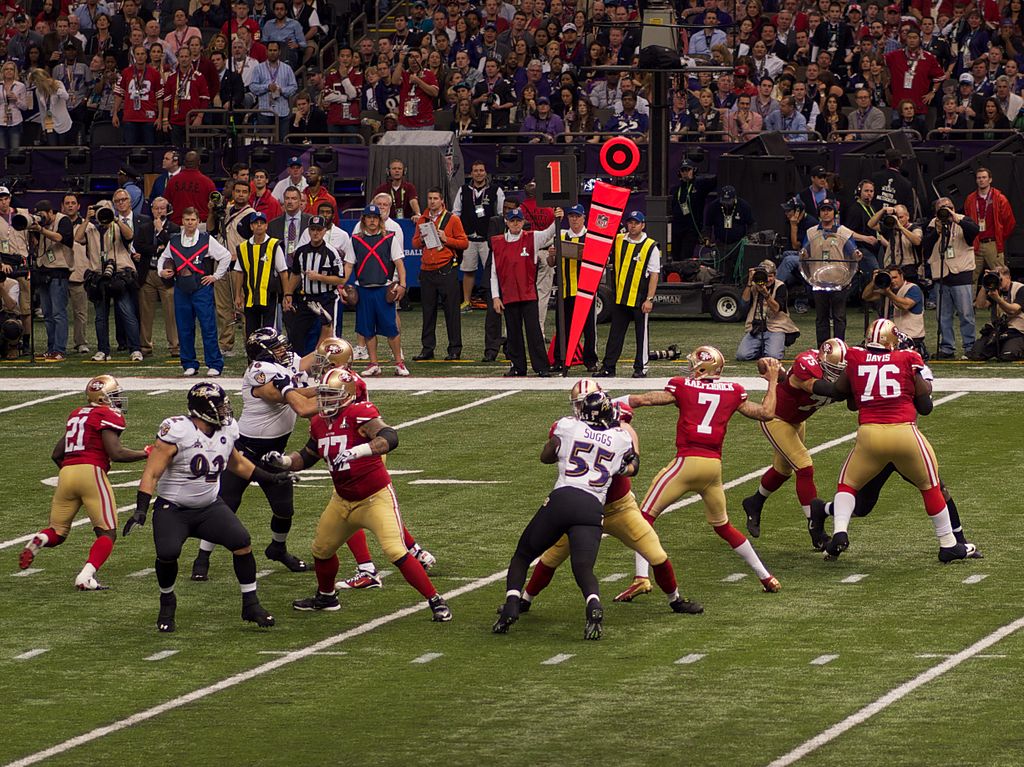
A photo of Colin Kaepernick playing in Super Bowl XLVII

As the NFL heads into its second week of the regular season, former San Francisco 49ers quarterback, Colin Kaepernick, remains a free agent. With six years of professional experience and a Super Bowl ring, it is unusual that Kaepernick has yet to be signed by a team. Many suspect that teams are hesitant to sign Kaepernick because he is perceived as a potential PR concern. During the 2016 NFL preseason, Kaepernick began opting to sit or kneel rather than stand during the national anthem at games as protest against racial injustice and police violence. He was quoted saying, “I am not going to stand up to show pride in a flag for a country that oppresses black people and people of color. To me, this is bigger than football and it would be selfish on my part to look the other way. There are bodies in the street and people getting paid leave and getting away with murder.”

Continue reading “More Than Just a Game? Using Sports as a Political Tool”

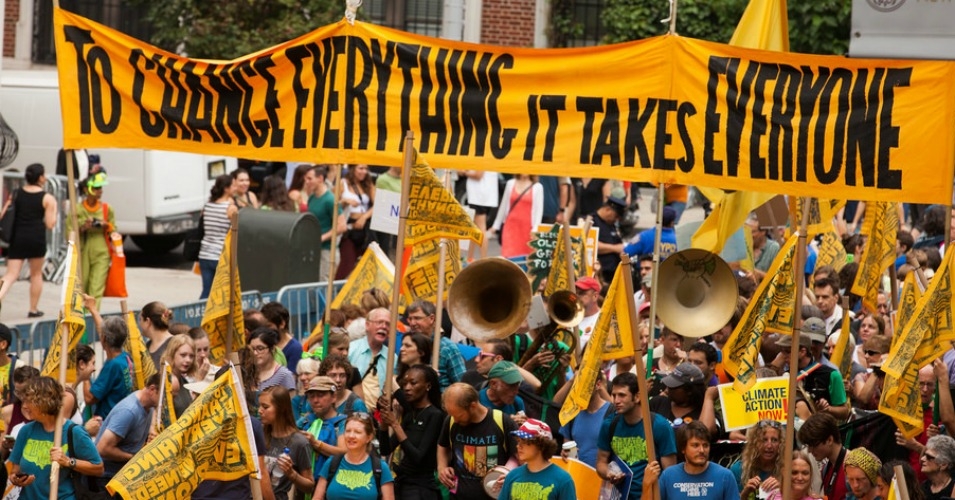
A Trump-Themed People’s Climate March

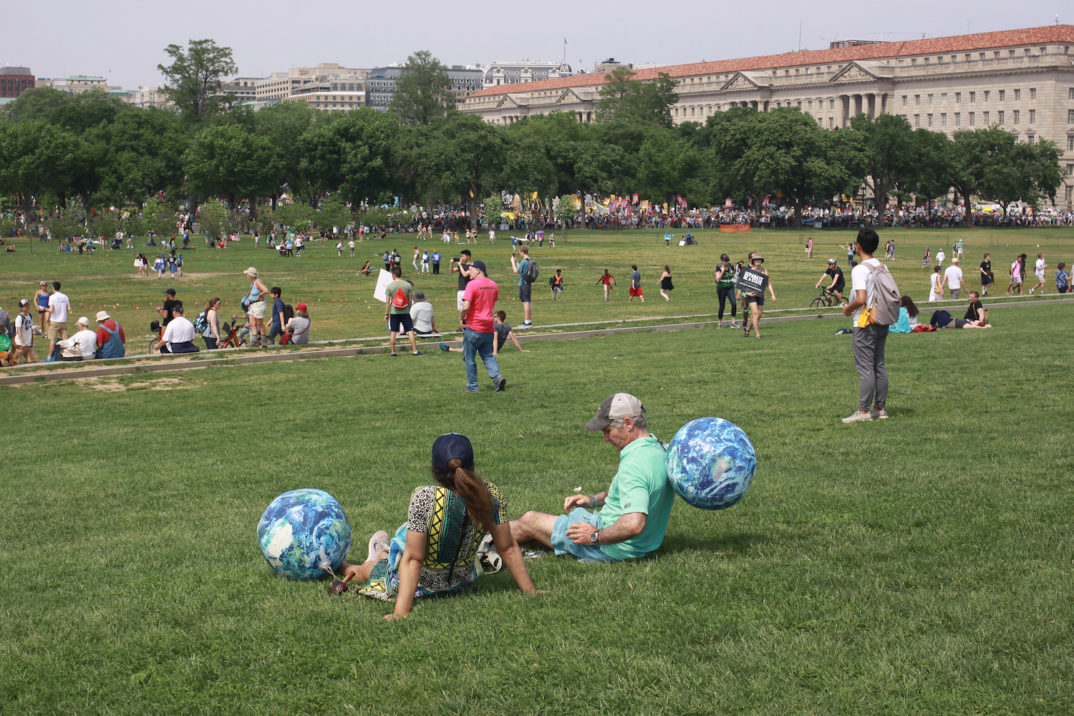
On a day that ironically, or appropriately, broke temperature records, over 200,000 people flocked to the nation’s capital to participate in The People’s Climate March. The march date coincided with President Trump’s 100th day in office, often considered a landmark in every presidency. However, President Trump was not present to observe the massive demonstration, but instead held rallies in support of his presidency in Harrisburg, Pennsylvania. Regardless of Trump, the People’s Climate March aimed to send a bigger message about the importance of environmental protection and climate action. However, like any large protest, the motivations and perspectives of individuals participating differed.

Continue reading “A Trump-Themed People’s Climate March”

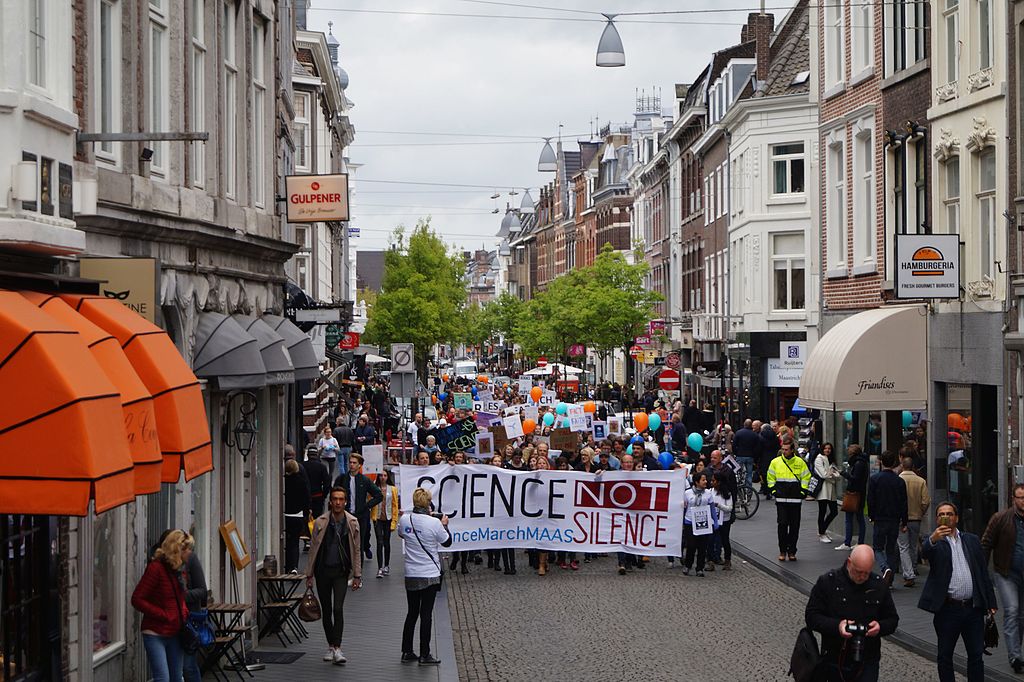
A March for Science, or for Something Else?

A worldwide march in favor of science was successfully carried out on April 22. It was convoked by a wide range of groups, to be held on Earth Day. The initiative came out as a result of major concerns over President Donald Trump’s policies, which include the disbanding of the Environmental Protection Agency, budget cuts in scientific research, and the elimination of scientists’ roles as advisors in the government.

The march was allegedly non-partisan. But, there are plenty of reasons to think otherwise. Critics of the march have seen it as leftist ideology masquerading as legitimate scientific activity. If, indeed, the march is more about politics and less about science, then that should be of concern to the scientific community.

Make no mistake: President Trump is no friend of science. His populist style appeals to unverified claims (or, as it is now called, “post-truth”), the very antithesis of any scientific procedure. His strongest base of supporters is made up of climate change deniers, creationists and anti-intellectualists who see no significance in scientific activity.

These people, however, need to be brought to the light of science. Some of these people may initially understand the importance of scientific activity, but ultimately become disappointed with scientists, because they seem them as too far to the left. They do have a point. To some extent, science has been hijacked by leftist ideology. If the scientific establishment wants to regain the trust of ordinary folks, then it must do a better job of purging its ideological bias.

Take, for instance, the choice of the day for the march. It was celebrated on Earth Day, an obvious appeal to the importance of discussions on climate change. No serious scientist would disagree that, indeed, global warming is a problem. But, what must be done about it is much more open to discussion. Scientists such as Matt Ridley and Bjorn Lomborg have long acknowledged that global warming is a problem, but at the same time, reasonably argue that short-term initiatives on carbon emission reduction (such the Paris Agreement) are far more harmful for the welfare of humanity. Fossil fuels do contribute to global warming, but they save lots of lives, especially in the developing world.

Sure, something must be done, but reducing economic growth, for the time being, is not a rational solution. A more reasonable alternative, as Lomborg has long proposed, is to invest in research in order to find more efficient ways of developing clean energy without reducing economic growth. Solar panels are not enough. The prospect of nuclear power is much more promising in this regard. Yet, for some strange reason, most ecological groups oppose it, and the scientific establishment does not seem to care. This plays into the right-wing narrative that so-called “science” is more about ideology than about facts.  

Unfortunately, the overwhelming majority of people who went to the march in favor of science have a stand that goes far beyond the mere scientific facts on global warming. They make the unwarranted leap from scientific facts to a defense of leftist environmental policy. This is no way to bring Trump’s supporters to the light of science.

Global warming is not the only area where leftist ideology masquerades as science. Take evolutionary theory. Sure, Bible-quoting Creationists feel more at home at a Trump rally than at a scientific lecture on some college campus. And, of course, it is easy to mock people who believe the world is only 6,000 years old and want intelligent design to be taught in public schools. But, unfortunately, the scientific establishment fails to oppose other types of Creationists, the so-called “Creationists of the Mind” (the term was created by scientist Robert Kurzban). This brand of Creationists is made up of leftists who, for some strange reason, believe that Darwinism applies to the body, but not to the mind. They oppose evolutionary psychology on the grounds that it is racist, sexist and an intellectual tool to justify capitalism’s status quo. These Creationists of the Mind were the instigators of the firing of Larry Summers from the presidency of Harvard University, simply because he argued that in some areas of intellectual achievement, women are at a natural disadvantage (as evolutionary psychology claims). This bias in opposing one type of Creationism, but not the other, again plays into the right-wing narrative that the scientific establishment pays more attention to ideology than to facts.

Or, take GMOs. Humans have been genetically modifying organisms for at least 10,000 years. Now, thanks to impressive advances in genetics, we have the technology to do so even more efficiently. It is not hyperbole to claim that GMOs have the potential to solve the problem of world hunger once and for all. And yet, the scientific establishment is too timid to fully embrace GMO research and strongly refute those environmentalists who oppose these technologies (although it must be acknowledged that more than 100 Nobel laureates recently signed a letter defending GMOs).

The recent march in favor of science on Earth Day tried to build the narrative that anti-science is exclusively right-wing. That is clearly not the case. Alex Berezow and Hank Campbell make an extensive argument exposing the fallacies of the anti-scientific left, in their acclaimed book Science Left Behind. The scientific establishment should take note. Science is worth marching for. But, when that march becomes more of a ruse to propagate leftist ideology, it is ethically objectionable. Science needs all the support it can get, and it needs to persuade people to abandon their anti-scientific view of the world. But, when the scientific establishment is itself sequestered by some people who seem to care more about ideology than about facts, it fails in its attempt to bring the likes of Creationists and climate change deniers, to the light of science.

Is Activism the Most Ethical Way to Fight Climate Change?

Mere days away from The People’s Climate March in Washington D.C., at least 100,000 people are estimated to march in the streets. One quick Google search of “Climate March D.C.” turns up dozens of articles on why marching next Saturday is important. However, in terms of social activism, and specifically climate change, is protesting a true form of advocacy? Much of the climate march this year is focused on “fighting back,” specifically against the Trump administration. But is turning the environmental movement into a direct political one ethical? And what is the danger in turning a movement into a large-scale march?

Continue reading “Is Activism the Most Ethical Way to Fight Climate Change?”

Peter Singer and the Ethics of Eugenics

Recently, students at the University of Victoria in British Columbia, Canada, gathered to protest a talk given by Princeton University bioethicist Peter Singer. First and foremost, Singer is a utilitarian who believes that the rightness of actions depends on their maximizing pleasure for sentient creatures. He is well known for his provocative utilitarian views on infanticide, animal welfare, and charitable obligations.

The UVic protestors claimed that “giving Singer a platform was implicitly supporting the murder of disabled people, and that his views supported eugenics.” Their complaint is only the most recent in a long history of protests to the work of Singer. Though questions about academic freedom and freedom of speech more generally are relevant, let’s set them aside for a moment and consider the charge head-on: what is eugenics? Who counts as a eugenicist?

Continue reading “Peter Singer and the Ethics of Eugenics”

The Berkeley Protests, Shock Jocks and Free Speech

On the evening of February 1st, 2017, protestors burst through lines of zip-tied metal fencing to flood a building at the University of California, Berkley.   Some protesters wore masks, and others threw red paint on members of the College Republicans.  Windows were smashed and fires were started.  This chaos was caused by disapproval on the part of many Berkeley students to the invited speaking engagement of Milo Yiannopoulos, a controversial conservative commentator and technology editor for Breitbart.

Continue reading “The Berkeley Protests, Shock Jocks and Free Speech”

Marching for Science

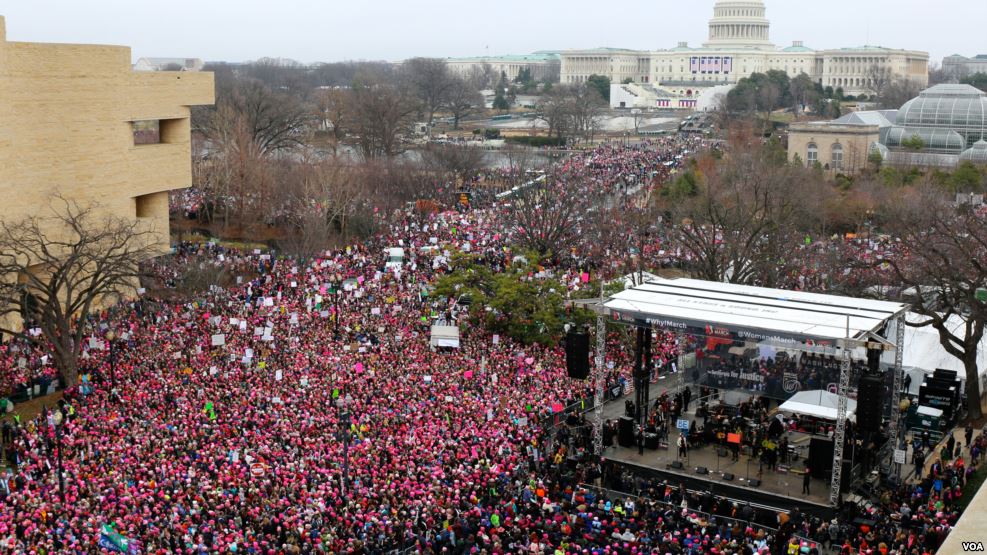
After the January 21 Women’s Marches that clocked in at between 3 and 4 million participants worldwide, other rallies and marches to protest the new Trump administration have been planned in their wake. Amongst these emerging marches is the March for Science, in which scientists will march on Washington and in 11 other cities to advocate for public funding for evidence based research. While the march has gained approval from politicians, scientific organizations, and prominent scientists alike, some wonder whether or not scientists should be marching in the first place.

Continue reading “Marching for Science”

Marching on the Metro: The Inauguration and the Women’s March

One piece of local advice to any newcomer to the D.C. metro area is this: avoid the metro like the plague during the Fourth of July, the Cherry Blossom Festival, or any major tourist-attracting event – especially an inauguration – unless you really, really want to be there. Getting in might not be an issue, but getting out can be next to impossible, unless you have the fortune to live within walking distance. I remember the time when I was fourteen that my parents decided to take me and my seven-year-old brother into the District for the Cherry Blossom Festival, only for us to be stranded and forced to walk two or more hours from the National Mall over the bridge into Virginia, in the hopes that the metro station in Rosslyn would be less crowded than those near the festival itself.

Continue reading “Marching on the Metro: The Inauguration and the Women’s March”

The Ethics of Taking to the Streets and Punching Nazis

The days since the inauguration of President Trump have been filled with demonstrations and protest. The inauguration itself was viewed significantly less than those prior, and what may have been the largest protest in our history followed the next day. It is noteworthy that while over three million people gathered in the Women’s March nationally, it was “peaceful,” with no arrests at the main locus of the protests in Washington, D.C., or at the sister marches in Los Angeles and New York City.

Continue reading “The Ethics of Taking to the Streets and Punching Nazis”

Bernie Sanders and #Blacklivesmatter

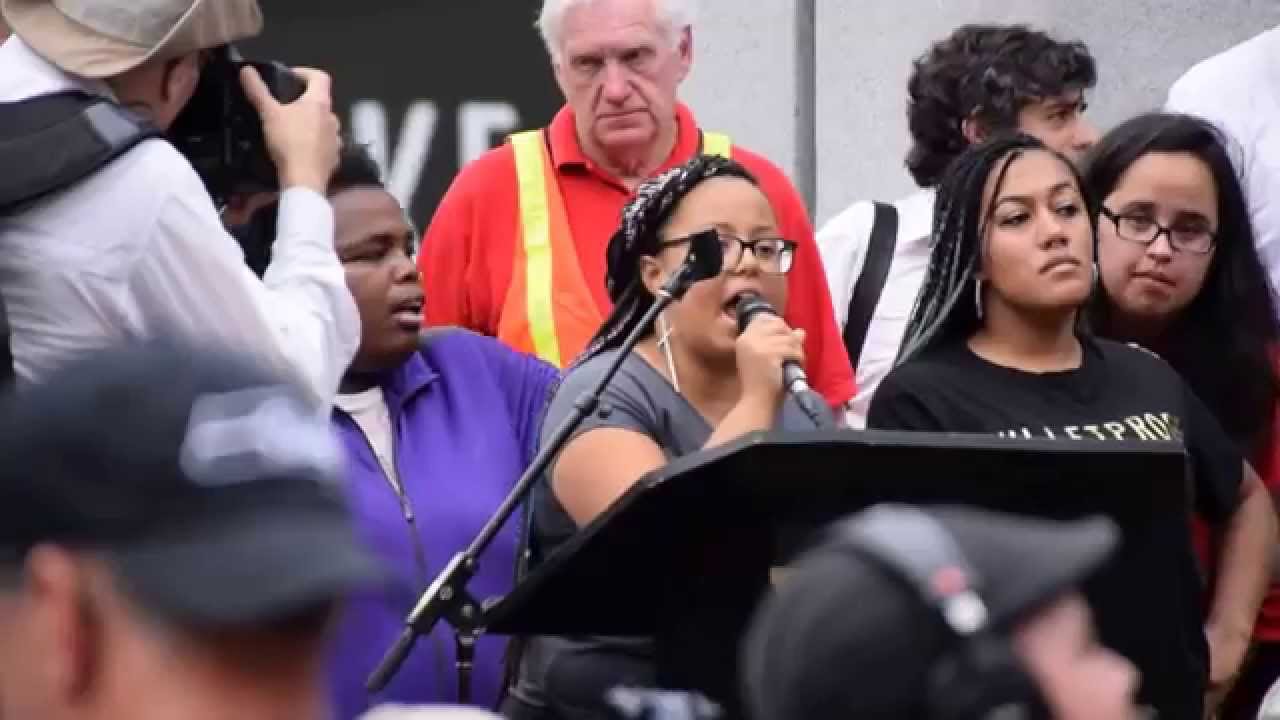
Late last week, activists affiliated with the #Blacklivesmatter movement interrupted presidential candidate Bernie Sanders at a Seattle rally. What they had to say was important, yet the substance of their protest was often sidelined in commentary about their actions. Even after their protest worked, and Sanders’ website posted a detailed campaign plan for racial justice, many still condemned the disruption. Examining why reveals the dangers of viewing such events from a single perspective – a perspective that ultimately helps reinforce sexist and racist stereotypes.

Continue reading “Bernie Sanders and #Blacklivesmatter”