← Return to search results
Back to Prindle Institute

The AI Crisis and The Unexamined Life

One question that I return to over and over again is this: What am I doing? Beneath this question are more questions. What do I want to do? What should I do? What can I do? Is any of this worth doing? Does what I want matter, or should I do what others want me to do? What needs to be done?

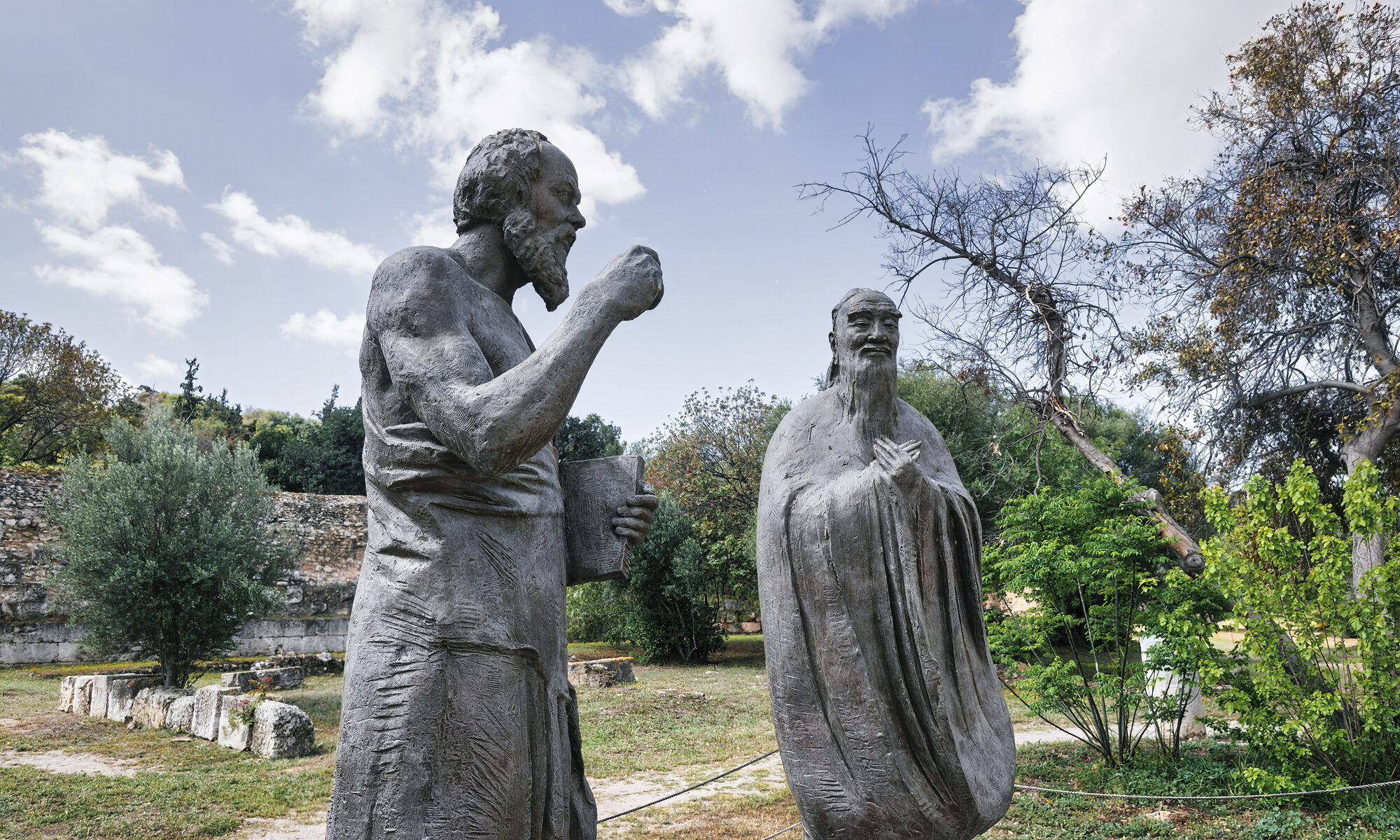
This line of questioning takes us back to the Apology of Socrates. As Socrates is pleading his case to the court about whether or not he is guilty of the charges brought against him (corrupting the youth, claiming to be wise about that which he isn’t, teaching new gods in place of the old ones), he says the following:

And on the other hand, if I say that this even happens to be a very great good for a human being–to make speeches every day about virtue and the other things about which you hear me conversing and examining both myself and others–and that the unexamined life is not worth living for a human being, you will be persuaded by me still less when I say these things. This is the way it is, as I affirm, men; but to persuade you is not easy.

From this the familiar philosophical dictum arises: the unexamined life is not worth living.

While this slogan has stuck with me from the earliest days of my philosophical career, I find myself thinking about it more than usual these days as we continue to barrel through the AI Crisis. This is because AI is encroaching on uniquely human activities; whether real or mimicry, AI emulates thought, rationality, creativity, and agency to such a degree that we can outsource a great deal of our lives to it.

The AI Crisis is unfolding each day and its magnitude as a crisis is currently unclear. There are several components to the crisis, each of which is being debated and analyzed by scholars, technology experts, users, and everyone in between. We can call it a crisis because its scale of influence is global, its potential impacts are wide ranging, some of the worst-case scenarios are plausible, and the spheres of impact have serious stakes.

While the list below is incomplete, we can currently identify four major components of the AI Crisis.

The first component of the crisis is job displacement.

One of AI’s most marketed value propositions is that it can simulate the function and output of intelligence and that this is good for business. If AI can do this with any modicum of success, it threatens virtually any job that requires human intelligence.

Within the debate about AI is a question about the label “intelligence.” AI evangelists are quite serious about the term and many think AI really is intelligent, and if it is not now intelligent, it eventually will be. AI skeptics lament the term and argue that AI intelligence is an illusion and that any modicum of intelligence we can ascribe to AI really ought to be credited to the human labor powering AI and making it run smoothly.

At least for immediate job displacement, whether the intelligence is real or a façade is somewhat irrelevant. All that is required for the threat of job displacement to actualize is that people believe AI is intelligent. If they believe it to be the case, then this is enough to get the ball rolling on finding reasons to remove human workers from the loop. Right now, experts are mixed on whether or not AI is contributing to job displacement, but there is concern that it is inevitable.

Whether AI is able to live up to its labor-replacing hype will determine its long-term viability as a worker replacement. But even if it falls short of its promised performance, we should not underestimate the possibility that society will accept less than ideal labor if it saves someone money.

The second component of the AI crisis is wealth distribution.

The promise of AI is centered around doing more with less. There is a race to figure out precisely how to use AI so that we can accomplish what we want to accomplish with less people, less resources, and less ability. Whoever cracks the code first stands to gain an enormous amount of wealth, and this is something we are already seeing unfold. It is a capitalist dream to have a labor force that does not need to be paid wages, given sick leave or vacation, or provided breaks – there are no human needs to take their attention away from work.

The third component is about political domination.

AI systems cannot be separated from our political reality. AI systems are becoming intertwined in our social infrastructure at a multitude of levels. It is infused in our word processing and data processing software, our search engines and our emails, into our phones and computers. By virtue of being bound up in our information and communication technologies, it will inevitably shape what we see, what we know, how we talk, and how we think. AI is being used by the military, by police force, and by immigration enforcement. It is used by lawmakers and the courts. And, as every educator knows, it is being used by our students who are quite literally the future.

If AI were politically and morally neutral, this would be less alarming; but AI is not politically and morally neutral. It must be given values and red lines; it must be told what it is allowed to say and what it isn’t allowed to say. And, as is well established by now, the data that it relies on itself contains an immense amount of bias and morally coded information. Insofar as AI is generating profit, all of its operations must also somehow conform with the endeavor to do so.

I am not using the term domination flippantly. By domination, I am drawing from the work of Philip Pettit who identifies domination as a kind of arbitrary power that one has over another in the sphere of interpersonal relationships.

One way AI political domination occurs is through AI ownership. Insofar as a small handful of AI systems dominate the information and communication sphere, our way of understanding our political reality will be shaped by those who control and shape these AI systems. Another way is more diffuse and arises as a result of the sprawling and unpredictable nature of AI systems. Insofar as AI systems may not be fully intelligible or controllable by its makers or those who seek to control and regulate these systems, we will be dominated by an AI infused informational reality where all of us are subjected to the interpretations and nudges of AI systems.

The fourth component of the AI crisis is about responsibility.

AI threatens responsibility at several levels. First, AI will make it more difficult to track causal responsibility, which is simply the tracing of who or what is responsible for bringing about a particular state of affairs (something that is already remarkably difficult without considering the role of AI).

When AI is involved in a decision-making procedure and a mistake is made, AI muddies the causal waters in a particularly confusing way because it mimics agency. When someone is wrongly identified by AI as a wanted person, it is clear that AI is in part causally responsible. But so are the people who designed the AI system, the people in charge of updating the code that runs the AI, and the officers who used the system to make the arrest in the first place. The problem we face will only grow as AI continues to be embedded into our social structures.

Second, we lose track of moral responsibility. When an AI agent is involved in a decision-making procedure and something goes off the rails morally, it is not clear cut where we can place the moral blame. While the human in the loop strategy attempts to eliminate this moral ambiguity, the implementation of this strategy has serious limits. If the use of AI becomes standard practice, and AI is deemed as generally trustworthy, and a morally condemnable act happens as a result of the use of AI, it’s hard to understand how we can blame the human in the loop when they were trusting the system they have been socially conditioned to trust.

Third, we lose track of merit responsibility. What I have in mind by merit is simply the responsibility we give people for doing good acts and producing interesting or praiseworthy things in the world. This applies to artists and athletes as much as it does to the romantic partner or friend, or the hardworking employee and studious student. When the musician who studied music theory and put countless hours into practicing their instrument records tens or hundreds of takes, and meticulously mixes the final product, it is clear who deserves the praise and merit for creating music. When someone with an idea for a song uses AI to produce all the instrumentation, refine the lyrics, and structure the melody and pacing of the song with all of its varying sections, and ensures all the instruments are in the right key, the placement of merit is less clear. For what, if anything, is the prompt engineer praiseworthy for?

Back to the Examined Life

One of the unifying features of these components is that the AI crisis is ultimately an existential one. As I ponder the AI crisis, I am led back to some of the most basic philosophical questions: What are we doing here, what kind of lives do we want to live, how should we spend our time, what kind of world do we want to build for ourselves and each other?

Instead of waiting to see where the AI dust settles and just how far the crisis will go, we can insulate ourselves now by remembering the wisdom of Socrates. AI is wrapped up in human activity and how we spend our time. It is wrapped up in questions of morality and virtue and responsibility and meaning. It is bound up in the Socratic dictum that the unexamined life is one not worth living.


The Price of Pollination

In 1990, Tri-Star Pictures released one of the greatest films in Arnold Schwarzenegger’s back catalogue: Total Recall. Set in 2084, the story follows Douglas Quaid, a construction worker who undergoes a memory implant designed to make him believe he is a spy. When the procedure goes awry, Quaid finds himself actually hunted by agents of a shadowy organization. His journey leads him to Mars, where he becomes entangled in a resistance movement fighting a tyrannical regime. It’s the kind of film that defies easy summary, like many of Arnold’s classics, yet one everybody should see.

One notable plot point within the film is the commercialization of air. Because Mars lacks a breathable atmosphere, its inhabitants live within controlled biodomes, where oxygen is owned and rationed by the planet’s ruler, Vilos Cohaagen. Like food, water, or shelter on Earth, air becomes something people must pay for. Failure to do so results in restricted supply or, in extreme cases, complete deprivation. As such, the film turns a basic, taken-for-granted necessity into a tool of control and profit. Something with which I think many of us might relate.

The film came to mind when I recently read about research at the University of Oxford: the development of a “superfood” for honeybees. By engineering a yeast-based extract, researchers created a dietary supplement that, when introduced to bee colonies, increased larval production by up to fifteenfold and significantly improved overall colony health. Taken at face value, this is unequivocally positive as people tend to like honeybees. However, it also carries hints of danger. As Karl Marx observed, capitalism is marked by a tendency to transform more and more aspects of life into commodities. That is, things produced for exchange on the market. Thus, what was once simply part of the natural world becomes something that can be owned, priced, and sold. So, even pollination begins to appear as a process that might be drawn into the logic of the market.

Now, I don’t want to get so down on the bee superfood straight away. After all, bees, and particularly honeybees, occupy a unique place in our cultural imagination. They are symbols of industriousness, cooperation, and prosperity. In Manchester, for instance, the bee serves as an emblem of the city’s industrial heritage and collective spirit, a symbol adopted during the 19th century to reflect values of hard work and unity. Against this backdrop, any development that supports bee populations is likely to be viewed positively.

More critically, however, is the ecological reality. Bee populations, like those of many insects, have been in decline for decades. According to the Royal Horticultural Society, factors such as habitat loss, climate change, widespread pesticide use, and a shortage of suitable breeding sites have all contributed to this trend. The consequences extend far beyond bees themselves. As key pollinators, they play an essential role in sustaining plant life. Without them, natural pollination becomes increasingly difficult, and in some cases, impossible. This places entire ecosystems under strain.

It is not just the ecological impacts that should concern us. The majority of our crops rely on pollinators. Thus, without bees and other insects, our ability to grow food is jeopardized. So, even if you’re not ecologically minded, this should be something you care about, as, put simply, you need to eat, and without pollinators, you probably won’t be doing much of that.

All in all, then, it might seem that the discovery of a superfood that promotes colony health is an out-and-out good thing. So, then, why did it make me think of Total Recall? Because, like most forms of nourishment, this “superfood” must be produced, distributed, and sold. It introduces the possibility that pollination, once a largely uncommodified ecological process, may become increasingly mediated by markets.

Historically, while farmers have always managed crops with care, pollination itself did not require direct purchase. Like sunlight or rainfall, it was a background condition of agricultural life: essential but not priced. Marx described the expansion of capitalism as a process that draws such gifts of nature into the sphere of exchange, capturing them and turning them into sources of profit. The growing reliance on technological or nutritional interventions for pollination suggests that this process may now extend even to the reproductive mechanisms of plant life.

What emerges is the prospect of a new frontier for commercialization: the monetization of a process that was once freely provided by nature. This is not merely a question of unequal access, though that is a concern. Wealthier farmers may well gain advantages by investing in technologies that enhance pollination. But the deeper issue lies elsewhere. It is the steady extension of market logic into domains that were previously outside it; the transformation of common ecological goods into revenue streams.

This concern becomes more present when one considers developments such as RoboBees: miniature robots designed to perform pollination duties. The dangers here are tenfold. Unlike biological bees, which require only viable ecological conditions, such technologies depend on manufacture, maintenance, and ownership. They would not exist outside systems of payment and profit. In this context, RoboBees represent not just a substitute for natural pollination, but its full incorporation into an economic framework

Now, I’m not saying that the scientists who created the bee superfood or the RoboBees had nefarious intentions. Measures that help promote bee and other insect health should be welcomed. But it would be naïve to ignore the commercial possibilities that accompany such innovations. The risk is not the technology itself, but the context into which it is introduced.

If the trajectory continues, we may find ourselves in a world where pollination, like air on Mars, becomes something contingent on the ability to pay. That is not yet our reality, but it’s not unthinkable. If Total Recall offers a cautionary image of life-sustaining resources brought under private control, the lesson here is more subtle but no less important. Rather than relying primarily on market-based solutions to ecological decline, we might instead prioritize addressing its root causes: restoring habitats, reducing pesticide use, and mitigating climate change. In doing so, we preserve not only bee populations, but also the principle that some of the most fundamental conditions of life should remain outside the reach of commodification.

Claude vs. The Pentagon: How Much Should Being Ethical Cost?

Until recently, Anthropic AI’s Large Language Model “Claude” was one of the most widely used in the US military. This status was tested in February when Anthropic refused to allow the military to use Claude for autonomous weapons or domestic mass surveillance. Anthropic has always defined itself as being ethics and AI safety conscious. This time, standing their ground cost them. The Pentagon responded by labeling Anthropic a “supply chain risk,” endangering Claude’s existing contracts with the Department of Defense and other defense contractors. Anthropic asserted this was mere retaliation — no US-based company has ever been labelled a supply chain risk — and sought a legal order to halt the designation. A previous judgment affirmed this stance. However, in bad news for Anthropic, a panel of the DC Circuit Court recently declined to stop the supply chain risk designation while the dispute continues.

The ethical choice is not always the easy choice. People have lost money, jobs, and even their lives to maintain their principles. Anthropic, while their conviction is laudable, is perhaps not the ultimate example of ethical sacrifice. Part of the reason Claude had so much presence in the military is their partnership with Palantir, a major player behind AI-facilitated surveillance. Moreover, as a multi-billion dollar company, Anthropic is able to far better weather the consequences of saying no to the US military than most.

Nonetheless, it invites the more general question: What price should we be willing to pay to do the right thing?

The answer is often surprisingly high. Many philosophers consider ethics to have an “overriding“ character. Not only is ethics a reason for action (or to withhold from action), but it is the most important reason, overriding all non-ethical ones. There might be competing moral reasons: While I know stealing is wrong, if I don‘t steal, then I can‘t feed my family. Contrast this with an unjustified alternative: Stealing is wrong unless one finds a legal loophole.

Central to most ethical approaches are that other lives matter. This is true for Immanuel Kant, who stressed that we must treat each other as fellow rational beings with their own ends, and not merely as means for our ends. It is equally true for many consequence-based frameworks (those that evaluate moral conduct based on what has the best consequences), which value all wellbeing equally.

The combination of overridingness and concern for others, means that being ethical can be quite demanding. However, there is a reason we are impressed by those who stand by their principles in the face of threats and intimidation. Take for instance the German families that hid Jewish children. It is not easy. We value our lives, we value our stuff. Even in less extreme cases, being ethical can be challenging. Confronting a close friend about their drug use may damage the friendship, but it may nonetheless be the right thing to do as a true friend.

In practice, if we care about ethical behavior, it is in our interest to make behaving ethically as convenient as possible. Nations have practical reasons to prevent the harmful effects of stealing, violence, and corruption. We, in fact, expect a well-run society to stop such things. One thing the law can do is align incentives, such that right conduct is favored and wrong conduct punished. Of course, we may prefer people not to steal because it’s unethical, and not because it’s against the law, but you can’t always get what you want.

This relates to an effective system of justice and accountability, but also to the opportunity cost of ethical behavior. Consider two vastly different stories we can tell about cheating. In both cases, cheating to get ahead is morally wrong. In the first story, one is also very likely to get caught and punished, negating any benefit of cheating. In the second, punishment is unlikely, and those who don’t cheat should be prepared to fall behind those who do. In fact, they should probably expect one of those cheaters to be their boss.

Sometimes, sacrifice is required; it may take courage to do the right thing. But what does it mean if sacrifice is required over, and over, and over again? What does it mean if being ethical looks like a fool’s game, a way to set oneself up for nothing but struggle and failure? It doesn’t mean people should stop being ethical. It is, however, an indication the incentive structure of the society is badly misaligned.

Whatever one thinks about the specific ethics of Anthropic, the DC Circuit Panel had an opportunity to signal that if one stands by their principles, the law will protect them from retaliation. They chose not to. What message does this send to those of us who are not billion dollar companies?

Does AI-Resurrection Harm the Dead?

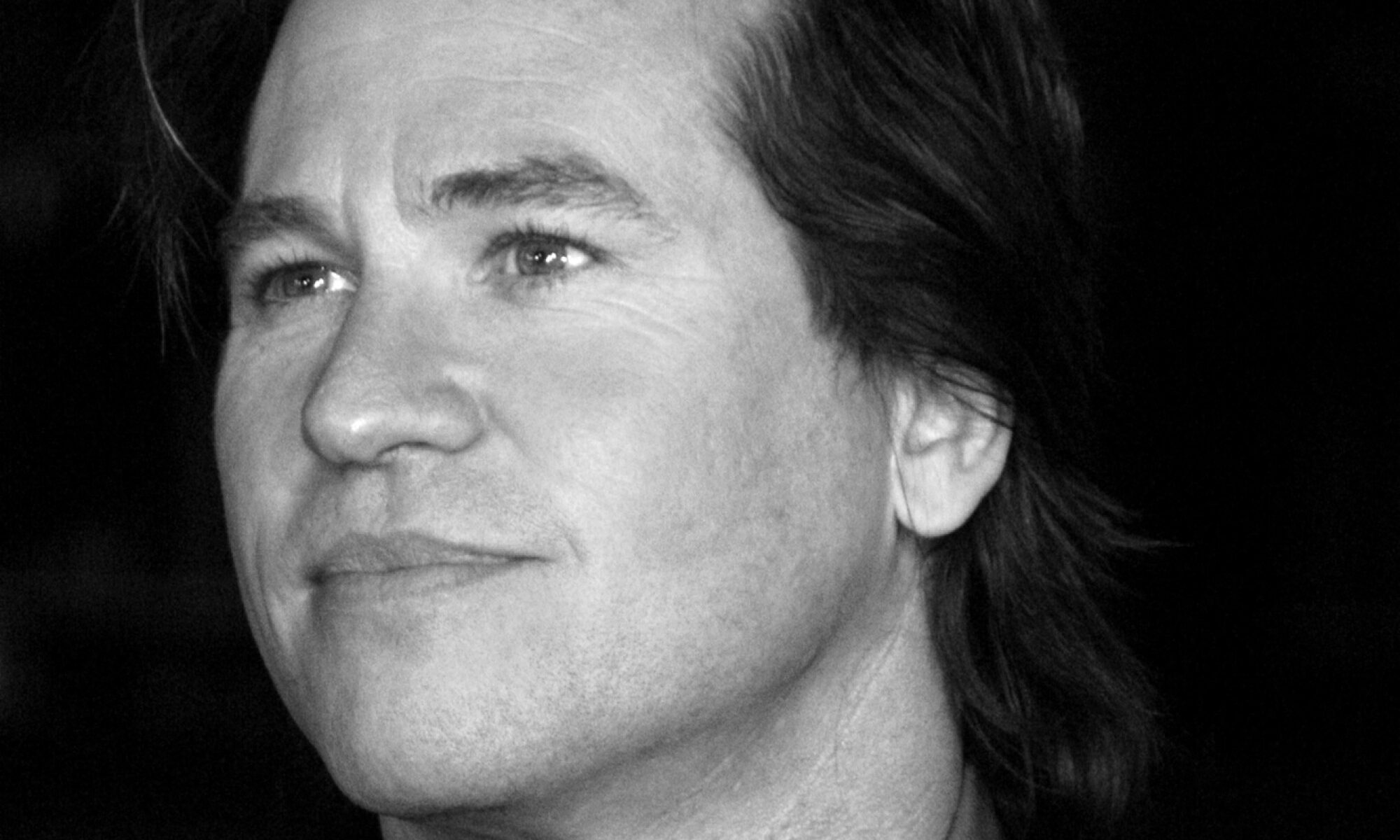
Last week, Variety shared an exclusive first look of Val Kilmer in the upcoming film As Deep as the Grave. This might not seem all that newsworthy, except for the fact that Kilmer passed away without filming a single scene in the movie. He will instead be appearing via the use of generative AI. It’s not the first time AI – or some other form of movie magic – has been used to bring actors back from the dead. And, as in those cases, the “resurrection” of Kilmer has been met with no small amount of controversy. It’s worth considering, then, what might be wrong with this practice. Specifically, might this AI-resurrection in some way harm Kilmer?

The idea that we might be able to someone after their death isn’t without precedent. Most of us think that we should respect someone’s funerary wishes – that it would be wrong to cremate someone who explicitly requested to be buried. Likewise, there are taboos around speaking ill of the dead and wantonly destroying the things they created. Granted, the wrongness of these actions is sometimes grounded in the harms that will be caused to other (still living) people. We might, for example, refrain from maligning a deceased uncle so as not to upset his young children. But there are plenty of cases in which the wrongness of an action seems grounded exclusively in the idea that it will harm the deceased.

This is what we refer to as “posthumous harm.”

Despite the intuitive examples above, it’s notoriously difficult to pin down the basis of posthumous harm. This is made even more difficult if we accept something like the Termination Thesis – that is, the claim that when we die, we simply cease to exist. Hedonism, for example, claims that something can only be bad for us if it causes us pain. But if death is the end of our existence, then we can no longer feel pain – and so nothing that happens posthumously can harm us. But Hedonism isn’t the only way to assess what’s good and bad for a person. A commonly cited alternative is Desire Theory. This view says that something is bad for us if it frustrates our desires. It’s an attractive approach, since it allows us to explain the badness of things that might never cause us pain. Suppose, for example, that several of my students make fun of me behind my back – yet manage to ensure I never find out. Hedonism would say that this isn’t bad for me. Why? Because it never causes me pain. Desire Theory, on the other hand, would provide the more intuitively correct answer that my students words are bad for me. Why? Because I desire to be respected by my students. Their behavior means that this desire is frustrated – which is bad for me, even if I never find out.

What’s important for our purposes is that it seems our desires can be frustrated after we’re dead. If I desire to be cremated, then burying my corpse frustrates that desire. In this way, the Desire Theorist can explain how events that happen after my death can nevertheless harm me.

Perhaps, then, Desire Theory can explain the basis of our concern with AI-resurrection. Namely: this practice will harm a deceased actor where using their likeness will violate certain desires that they held while alive. But that’s what makes Kilmer’s case so interesting: he desired to appear in the film. Kilmer was cast in the role five years prior to his death in 2025 – but was, due to his worsening medical condition, unable to complete any filming. As Coerte Vorhees – writer and director of the film – tells it:

“[Kilmer’s] family kept saying how important they thought the movie was and that Val really wanted to be a part of this. He really thought it was [an] important story that he wanted his name on. It was that support that gave me the confidence to say, okay let’s do this. Despite the fact some people might call it controversial, this is what Val wanted.”

Indeed, Kilmer had form for supporting this kind of technology, assisting in the creation of an AI-powered speaking voice to reprise his role as Tom “Iceman” Kazansky in 2022’s Top Gun: Maverick. As Kilmer’s daughter notes:

“He always looked at emerging technologies with optimism as a tool to expand the possibilities of storytelling. This spirit is something that we are all honoring within this specific film, of which he was an integral part.”

This might seem like the end of the story. By all accounts, Kilmer would have desired to have his likeness used in this way – so engaging in AI-resurrection does not harm him posthumously. If, on the other hand, an actor does express a desire to the contrary, this may provide a basis for saying that AI-resurrection of that actor would harm them posthumously.

But there’s one final complication – and it’s found in general concern about what kinds of desires are actually relevant to our wellbeing in the first place. In a standard case, if a Desire Theorist wants to know if X is good or bad for someone, they simply have to ask “does this person now desire X?” If they do, X is good for them. If they don’t, X is bad for them. But things get tricky when we start talking about desires that depend on something happening in the future. Long ago, I desired (and in fact, trained) to be a lawyer. But now I’m a philosopher. Does this mean I’m harmed by my current career? Clearly not.

We might avoid this problem by focusing exclusively on my most recent desire (which, incidentally, is to be a philosopher). But that move will create all kinds of additional problems – especially in the case of desires about events after we die. Suppose I spend my entire life desiring to be cremated, but develop a sudden desire to be buried in the final five minutes of my life. Would burial harm me or not? In order to answer this, we have to establish which of my desires should be given precedence. Is it my most recent – but short-loved – desire to be buried? Or is it my less-recent – but long-lived – desire to be cremated? Suppose, to complicate matters further, I vacillated constantly between desires – changing my mind every day. I then just so happen to die on a day when I desire burial – even though I desired cremation the day before, and would return to desiring cremation the very next day.

These complications have caused some authors to insist that Desire Theory should only pay attention to future-independent desires – that is, desires that occur simultaneously with the occurrence (or non-occurrence) of what is being desired. But such a limitation automatically preludes posthumous harm. Why? Because (assuming the Termination Thesis is true) we cannot have desires after we die. If that’s the case, then neither Hedonism nor Desire Theory can explain the wrongness of AI-resurrection. If we still want to object to this practice, we’ll need to look elsewhere for the reason.