← Return to search results
Back to Prindle Institute

To What Working Conditions Can We Consent?

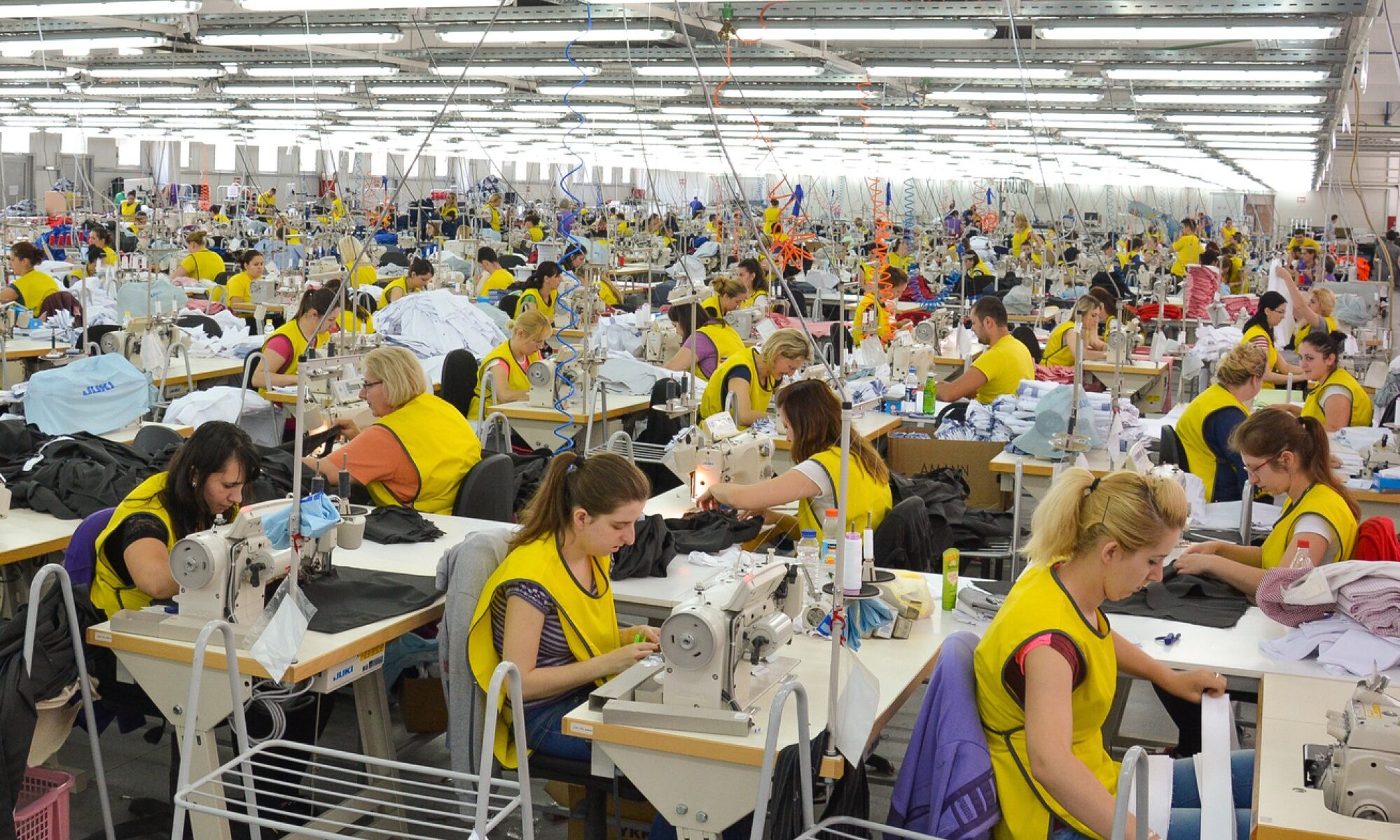
Among the long list of US imports from China, we can now add the 996 work week. This stands for from 9:00 AM to 9:00 PM, 6 days a week. Technically illegal, but still widely practiced in China, the intense 72-hour work week has found another home in the United States’ frenetic AI startup culture. It raises philosophical questions about free choice, regulations, and just what agreements we should be allowed to enter into voluntarily.

One perspective on this matter would be full freedom of contract — a right for an employer and an employee to voluntarily enter into an agreement without government interference. (This actually was a right in the US for about 30 years in the beginning of the 20th century, when the Supreme Court conjured it up in the now notorious case of Lochner v. New York (1905).) On this analysis, as long as an employee and an employer know what they are getting into – i.e., there is no deception – then the employee should be allowed to take on essentially any working conditions. This would include agreeing to work extremely long hours or take on risky tasks that many would consider harmful or ill-advised.

A freedom of contract perspective is at its least problematic in cases like 996 opportunities at AI startups. Here, the job seeker is likely in high demand with a lot of individual negotiating power and alternative job options. However, this may not always be the case. What about, for example, a small town with a single factory? The factory has a tremendous advantage when negotiating with any individual employee, easily leading to unsatisfactory wages and working conditions. This is obviously an extreme example, but it is generally easy for individuals to be at a disadvantage relative to large corporations. Steps to ensure fairness, that is, allowing parties to negotiate on more even ground, may be important to prevent exploitation.

The factory example also speaks to a general limitation of freedom of contract. A decision can be voluntary, as in no one is being literally coerced into it, but still completely miserable. Our hypothetical small-town factory worker may be choosing between three bad options: unemployment, working at the factory, or leaving town. (Some philosophers, such as the ethicist Michael Sandel, argue that employees can indeed be coerced by circumstances rather than by a person, such as if an individual’s options are work for a particular employer or starve to death.)  Put simply, whether someone chooses their employment voluntarily is a different matter from how good or desirable it is.

Assuming a government cares about its populace having good working conditions, what then?

The most direct strategy is to impose guardrails, such as minimum wages and maximum working time. These set certain working conditions deemed unacceptable as out of bounds.  While this can restrict choice for some workers, the aim is that for most people it facilitates a better work environment, especially for those at risk of being exploited in slanted negotiations.

A second avenue is worker empowerment through stronger rights and protections. For example, by ensuring workers can form collective organizations, such as unions, a government can help to even out power imbalances and better position workers to advocate for themselves. Unlike regulations, this preserves the focus on voluntary agreements between employees and employers, but strives to make negotiations fairer.

Finally, the government can expand the pool of options available to job seekers. If a government provides something like universal basic income or generous unemployment benefits, then a job offer must be at least as appealing to be viable. Again, this does not directly interfere with negotiations.

There are, to be clear, complex economic impacts to each of these proposals that require more than philosophical analysis to untangle.

The original driving question was about what limits can be set on employment agreements. This sets an important baseline. The different strategies above help to ensure working conditions are not unsafe, terribly paid, or otherwise oppressive. But what about having work that does not just squeeze by as acceptable, and meets basic needs, but is desirable and fulfilling? Should this be a goal?

An analogy may be helpful: Do we want consenting to an employment contract to be more like medicine or more like sex?

Medicine is rigorous in ensuring patients consent to medical procedures, but the overall situation is often quite grim. There is never an expectation that someone like their medical procedure, merely that they agree to it. Is a cancer patient being “coerced” into having surgery? Not in terms of how we typically use the word, but their available options may well be surgery or death. In short, medical decisions are often the best of a bad lot.

By contrast, consent for sex is intended to be enthusiastic. People should like sex. If two people are only agreeing to sex, because it’s the best option of a bad set of options, then something has gone very wrong. (Imagine if a housewife only has sex with her husband because she is afraid that otherwise he will divorce her and she will be left without a home.)

For many, employment echoes the medical decision-making context, where one chooses the least bad option in a difficult situation. However, is this really something we want to emulate where we have more control? What would it take to ensure widespread options for making a livelihood that people consent to, not begrudgingly, but enthusiastically?

Truth, Nonsense, and Politics

On September 30, 2025, the official White House Twitter account tweeted a list of things it claimed the “Democrat Party” wants, including “Crime and lawlessness in our streets,” “Men competing in women’s sports,” and “’Transgender’ for everybody.” Sadly, tweets like this one are par for the course under the current administration, as the White House social media accounts have consistently posted hateful, false, misleading, and straight-up bizarre content since the inauguration.

That there has been so much garbage posted by the Trump administration is hardly worth commenting on. This has arguably been by design: former White House strategist Steve Bannon argued that disorientation is more effective than persuasion, a view summarized in his now infamous quote that “The real opposition is the media. And the way to deal with them is to flood the zone with shit.” Whether the Trump-controlled White House is intentionally following this plan or not, it is at least an explanation for the state of the White House Twitter account.

A lot has been said about how to characterize Trump’s method of conveying information, with many portraying him as a bullshitter, in the sense elucidated by philosopher Harry Frankfurt. Frankfurt explains the concept by contrasting bullshitters with liars: while both the liar and the bullshitter are involved in misrepresentation of a sort, the liar tries to misrepresent what they believe to be true, while the bullshitter attempts to misrepresent their being interested in the truth at all. In Frankfurt’s words, the bullshitter “does not care whether the things he says describe reality correctly. He just picks them out, or makes them up, to suit his purpose.”

That Trump has historically been a prolific bullshitter in this technical sense has been extensively documented. And while there is no indication that Trump is going to stop anytime soon, his second term has been characterized by statements on social media that have become something else entirely. Let’s call it nonsense.

What makes something nonsense as opposed to mere lies or bullshit? Again, we can look at the perpetrator’s relationship to the truth. For example, it is easy to argue with a liar, at least conceptually, because they care about the truth enough to conceal it. By providing them with evidence that they are lying, they then ought to be motivated to revise or retract their statement: they’ve been caught, and need to react to being discovered. It is much more difficult to argue with a bullshitter, though, precisely because they have no interest in getting at the truth: providing them with evidence that they are wrong is unlikely to cause them to retract or revise anything they’ve said.

However, even though the bullshitter does not care about the truth, the content of the bullshit can still be evaluated as being true or false. For example, Trump recently made the claim that he was responsible for saving 100,000 lives as a result of four strikes on boats that he claimed were being used for drug trafficking. This claim is, arguably, bullshit: there is no evidence that supports it, and it is plausible that Trump fabricated it in the moment to justify his actions. While one could point out to Trump that the claim is bullshit, he would likely be unfazed. However, we can still talk about the content of the claim to learn the truth: in this case, the fact that the total number of opioid overdose deaths in the US for all of 2024 was only 82,000, and thus there is no way to save more lives than that by blowing up a handful of boats.

When it comes to nonsense, the nonsense-spouter may also lack interest in truth. But, unlike bullshit, the content of nonsense cannot plausibly be evaluated as true or false.

For example, take one of the statements in the White House’s recent tweets: that the Democrat Party [sic] wants “’Transgender’ for everybody.” Aside from being broadly ungrammatical, the statement is at least recognizably an English sentence. But it is outside of the realm of sense: it has no plausible, singular interpretation. We might try to unpack something with meaningful content: perhaps Trump is claiming that the Democrats want everyone in America to transition, or that they want everyone to list their sex on government-issued IDs as “transgender,” or something equally ridiculous. But these are mere guesses; on the whole, it is not simply a lie or bullshit, it is just nonsense.

It might not sound terribly insightful to look at something nonsensical coming out of the White House and argue that we ought to call it nonsense. However, nonsense serves an important role as part of the “flooding the zone” strategy: since it has no truth-evaluable content, it precludes the possibility of starting discussions about issues that might involve evidence and lead people to the truth, while at the same time still being able to convey messages of fear and hate.

After all, there is still something that gleaned from nonsense, namely sentiment. For instance, when the White House Twitter account puts a big red “X” next to the statement “’Transgender’ for everybody” they are clearly implying that being trans is bad, in some way; that it is a position attributed to the Democrats by the White House again implies that it’s something that the people Trump perceives as enemies is doing; and that it is something that is meant to be “for everybody” implies that it will affect you and people you know. It is a combination of words and symbols that are meant to stir up anger and fear, even if there is no reasonable, meaningful interpretation of the sentence as a whole.

Statements like this are then a kind of opposite to another type of hateful language, the dog whistle. Dog whistles are statements designed to appear innocuous to the majority of people, but whose true intentions are recognizable to a target group, often being used to convey hateful messaging in an inconspicuous way. Trump’s statements, however, are more like a dog barking: loud and obvious to everyone, but with no content aside from conveying a warning. Dog whistles can be called out, dissected, and interpreted to reveal the hateful content that they are hiding, and in this sense, that content can be argued against or shown to be false. But there is no arguing with a bark.

So what should we do when faced with the White House’s nonsense on social media? Reactions online have included confusion, disappointment, and ridicule, all of which are reasonable. But since nonsense aims to distract while precluding the possibility of dialogue, perhaps the best response is to focus our efforts instead on those who want to address important issues in meaningful ways, and not just bark about them.

The Many Troubles of Marineland

For over sixty years, Marineland amusement park located in Niagara Falls, Ontario provided fun and thrills for families across Canada. While the park featured many rides, including one of the largest roller coasters in the world at one point, it also featured a zoo and the exhibition of marine life, such as dolphins, sea lions, walruses, as well as orca and beluga whales. The park has also attracted controversy through much of its existence from animal rights activists for allegations of poor conditions and animal abuse. After the death of its owners, the park finally closed last year. However, the park still owns 30 beluga whales and it is quickly running out of money to care for them. With the federal government refusing an export permit to move the whales to China, the park now claims they may need to euthanize the belugas. With few good solutions available, it’s unclear what should become of these whales.

As noted, Marineland was the target of criticism for some time. In 2015, the Government of Ontario banned the practice of breeding and keeping orca whales in captivity. Marineland, however, was grandfathered into the legislation. (Kiska, the final orca whale living at Marineland died in 2023.) In 2019, the Government of Canada also passed a law banning the capture and captivity of all whales and dolphins. Marineland was, once again, grandfathered into the legislation. Now that the park has closed, it has sought to export all 30 remaining belugas to Chimelong Ocean Kingdom theme park in China. But the federal minister refused to sign off on the export order, noting that it would “perpetuate the treatment these belugas have endured.” With the park running out of resources, it told the federal and provincial governments that without emergency funding it will need to euthanize all 30 whales. The minister continues to hold a hard line: “The fact that Marineland has not planned for a viable alternative despite raising these whales in captivity for many years, does not place the onus on the Canadian government to cover your expenses.”

This situation presents a complicated moral dilemma. There are limited published studies documenting beluga self-awareness cognition such as the mirror test. Belugas are known to be highly social – able to communicate in very complex and multi-faceted ways – and engage in problem-solving and mimicry. They are part of the same sub-order of mammals that include all whales, dolphins, and porpoises – all of which are known to have a high degree of intelligence. Intelligence may not always represent the minimum benchmark of moral considerability, but it is an important one. If non-human persons exist, many point to whales, elephants, dolphins, cephalopods, and, of course, apes as potential candidates.

Still, there are no great options for the belugas. The first option is to approve the export request and have the belugas moved to China. But this keeps the whales in captivity and does not guarantee their well-being. Meanwhile, simply releasing the belugas (an arctic whale) who have lived their entire lives in captivity into the wild would be a death sentence. They would struggle to feed themselves and would likely be rejected by other animals in the wild.

Many have proposed creating a sea sanctuary where the belugas would live in a sectioned off part of the ocean. Unfortunately, no such sanctuaries exist in North America. Iceland maintains one, but it does not have sufficient resources to take all 30 belugas. Were Canada to build such a sanctuary, it would cost 2 million dollars a year to care for the whales. Of course that kind of project would take a great deal of time to realize, hardly an option for these whales today. To complicate matters further, a paper published this year suggests that such “natural” environments may not guarantee improved welfare as animals showed signs of stress living in the open ocean.

With Marineland claiming that without emergency funding the whales will have to be euthanized, animal rights advocates argue the Government of Ontario has an obligation to prevent the death of the whales, and that they ought to simply seize the belugas. But this too comes with substantial obstacles and risks. The Ontario Government is not particularly well-placed to care for the whales – especially with no long-term solution to the problem. Besides, these are precisely the kinds of financial obligations the minister refuses to foist on taxpayers. Perhaps the best course of action is simply to agree to the export of the whales to China, where they will be used to human handlers and controlled environments.

There are no alternatives here without downsides.

Given that Marineland was created under Ontario legislation, that the whales were legally imported and exhibited for several years, and that legislation reigning in these practices always contained a carveout for Marineland, then perhaps the onus is on the government to both seize the whales and ensure their safety. While Marineland is a private business and their failures should be their own, the governments of Canada and Ontario have contributed to the problem. To start, whale captivity was tolerated (and even welcomed) in the first place. Marineland had no alternative plans, but clearly neither did the government when they assumed we could end the practice of capturing, keeping, and exporting whales with the stroke of a pen. They seem to have had no idea what might happen when the company they grandfathered in became insolvent. Sometimes if you want cake, you have to eat it.

The Questionable Ethics of “Reselling”

In class this week, my students began a discussion of whether it can be wrong to do something even where I have a right to do that thing. The usual examples were given: it’s wrong for me to say something mean to my friend, even though I have a right to freedom of speech. It’s wrong for me to not visit my ailing relative, even though I have a right to spend my free time however I want. And then the conversation turned to an even more contentious topic:

Resellers.

The practice of buying low and selling high has existed since time immemorial. By all accounts, however, the practice was “supercharged” by the COVID-19 pandemic, when mass job-loss saw people looking for quick and efficient forms of alternative income. Many were able to turn this practice from a part-time “hustle” to a full-time job. In many cases, reselling isn’t merely a vocation, but a lifestyle – often accompanied by extensive documentation and posting on social media. But the practice comes at a cost. Last month, the Daily Dot detailed how resellers have co-opted Disney outlet stores, often to the exclusion of the very children these stores were designed for. From vintage clothing, to Pokémon cards, to instant soup mix, resellers have inserted themselves into almost every supply chain. And while it’s true that resellers have a legal right to do what they’re doing, we might nevertheless ask: is it wrong?

Some distinctions are necessary before answering this question. Certain resellers purchase low-value items with the intention of improving those items, and selling them for a profit. Consider someone who restores a neglected piece of furniture, or renovates a run-down home. We might call these “value-added resellers.” Other resellers, however, purchase items to merely resell at a higher price. These resellers make no improvements to the items in question, and simply generate profit by utilizing the rules of supply-and-demand. These are what we might call “mere resellers,” and their behavior gives rise to moral concerns that don’t exist for value-added resellers.

Generally, the activities of mere resellers fall into one of two categories. Some resellers generate profit by bulk-buying items at retail prices, then reselling those items at an inflated price. Such a practice involves a manipulation of supply-and-demand. By bulk-buying – and hoarding – a particular resource, resellers create an artificial scarcity. So long as there’s sufficient demand, this scarcity leads to an increase in the price that consumers are willing to pay for the resource in question. This is precisely what happened at the launch of the latest Pokémon trading card game earlier this year. Resellers went from store to store buying all available stock, then resold this stock to players at an inflated price, thus generating a profit in the process. As a result, many stores implemented purchase limits, and – in some cases – put the cards inside locked cabinets.

This kind of reselling is nothing new. In fact, it’s been the bane of concerts and sporting events for decades – what might have previously been referred to as “scalping” (though that term is itself morally problematic). But why is this kind of reselling wrong? The answer can be found in our consideration of similar problems – like the hoarding of toilet paper during the COVID-19 pandemic. Essentially, resellers are taking more than their fair share of a finite resource. And why is it wrong to do this? Well, there are several explanations we might give – but perhaps the simplest can be found in Immanuel Kant’s assertion that whenever we act, we must be acting in a way that we could will everyone else to act. We can’t carve out an exception for ourselves. When we see the reseller bulk-buying Pokémon cards, we might ask them “why do you get to do this – and reap the resulting profit – when it’s not possible for everyone else to do the same? Put simply; why do you get to be the exception?”

Some resellers operate according to a second, different, model. Generally, this involves buying high-demand items at a low price, then reselling at a higher price. This usually involves resellers combing thrift stores for “bargains” – desirable items that have been greatly undervalued – then reselling these items to buyers who do appreciate the item’s value.

The hunt for a thrifting “bargain” is a thrill enjoyed by many – myself included. Resellers are engaged in the same pastime. The only difference is that instead of using the item in question, they utilize it to generate profit. So why might this be wrong? The fair share approach is less helpful here. While “bargains” are a finite resource, the manner in which they’re distributed seems more fair. At the end of the day, thrift store finds are down to the “luck of the draw.” The avid amateur writer has just as much chance of stumbling across a cheap vintage typewriter as a reseller. But perhaps this form of reselling is wrong for different reasons. When my students raised this topic, their biggest complaint was that their main source of cheap, ethical clothing has been co-opted by those merely seeking to turn a profit.

For the most part, thrift stores offer vital resources to a particular socio-economic demographic. Put simply: these “bargains” might, in many cases, be the only items that certain individuals can afford. When seen in this light, what resellers are doing – buying these cheap items, and selling them at a mark-up – becomes problematic once again. While the reseller might argue that their revenue stream is vital, it’s not clear that the goods they gain from reselling outweigh the goods they’re taking away from others. And this is particularly concerning when those being deprived are among the most vulnerable members of our community.

Fighting Fire with Fire

Last week, I saw Paul Thomas Anderson’s One Battle After Another. While the film deserves its own article, I want to focus on one aspect of the film’s themes, and that is the use of violence in the service of political ideology. (Spoiler Alert: I talk about some details of the film that go beyond what trailers have shown.)

What is striking about the film is that it follows two very different types of people from distinct political ideologies. On the one hand, you have Bob Ferguson and Perfidia Beverly Hills, two radical revolutionaries who are a part of the French 75. They use violent tactics to resist the state and rescue captive immigrants. On the other hand, you have Col. Steven J. Lockjaw, a white supremacist military man who uses violent and oppressive tactics to hunt down his possible daughter and kill her to ensure entry into his white supremacist club, The Christmas Adventurers.

Both sets of people adhere to different ideological positions. But, one common point between the two is that each side acknowledges that violence is, in their minds, a justifiable means to bring about their preferred political ends. While the film highlights this similarity, it sets up the French 75 as the protagonists and state power embodied by Lockjaw as the antagonist.

Although One Battle After Another takes a relatively clear stance on whose violence is “better,” it also clearly communicates an uncomfortable truth about violence in general: violence can be used in service of just about anything. Save for the highly dedicated pacifist, no political ideology is immune to the use of violence.

To understand why most political ideologies are in some way violent, we need only ask a simple question: does the ideology accept that states are permitted to use coercion in order to enforce the law? When you accept that a legitimate state can sometimes use violence, your ideology must have provisions for violence. In order to purify one’s political ideology of all violence, one would need to reject state sanctioned coercion, which is fairly difficult to do at both a theoretical and practical level.

While violence can emerge from nearly all ideological corners, a recent presidential memorandum would have us believe otherwise. On September 25, President Trump released a memorandum on domestic terrorism and organized political violence. It mentions several instances of political violence-among them the assassination of Charlie Kirk, the attempted assassinations on President Trump, the murder of Brian Thompson, and an attempt to kill Brett Kavanaugh. It then goes on to outline several ideological themes that, according to the current administration, unify the motivations for political violence:

Common threads animating this violent conduct include anti-Americanism, anti-capitalism, and anti-Christianity; support for the overthrow of the United States Government; extremism on migration, race, and gender; and hostility towards those who hold traditional American views on family, religion, and morality.

Trump’s administration has framed the issue of political violence in the United States as primarily a problem of radical left-wing extremism. As it turns out, there is some research that supports the claim that left-wing violence has increased. However, the very same research also reveals something else: between the years 1994 and 2025, the majority of politically motivated violent attacks have come from the right. So, although left-wing violence may be rising more rapidly relative to right-wing violence in 2025, right-wing violence has long outpaced left-wing violence.

There are also several glaring omissions in Trump’s memorandum. For instance, he fails to mention the attempted violent insurrection on January 6th, the killing of Melissa Hortman in June of 2025, or the attack on Nancy and Paul Pelosi, which are just a few examples of right-wing extremism. He also omits political violence motivated by anti-Jewish or anti-Muslim sentiment, or by violence towards the LGBTQ+ community.

Given the flexible nature of violence, one might wish to simply argue that any ideologies that lead to violence should be abandoned. However, this position fails to recognize some difficult truths about violence.

First, we must constantly remember that modern political entities are violent by nature. It is why the police and military have weapons. It is why most modern nations invest money into defense budgets and one of the motivating reasons for why many international alliances are struck. It is why, in the U.S. in particular, we spend more money on our own military than any other nation. It is why nations come up with rules that regulate the ways in which states can legally use violent means to enforce rules. It is why a majority of U.S. states still have the death penalty. Any time power changes hands in the U.S., so too does the capacity to shift how the violent means are used. But no party in the U.S. has gotten rid of the means of violence, and it is hard to imagine anyone doing so in the near future.

The reason why violence and state power are commingled has been the subject of political philosophy, social contract theory, critical theory, sociology, and history for a long time. It is widely acknowledged that where there is a state, there follows state-backed violence. Indeed, one of the defining features of a state is that it makes rules and is allowed to enforce those rules using the force of violence. Whether one accepts a social contract theory that legitimizes state violence, or opposes its legitimacy on anarchist grounds, all can clearly see that the state’s supreme power comes from its ability to use the coercive threat of violence.

In addition to the strong bond between state power and violence, we must also acknowledge that it is difficult to eschew ideological positions that justify violence because most of us are committed to some version of the right to life and the right to self-defense. These two rights often come together. The right to life generally states that one has a moral right to their life, which at the very least demands that others not wrongfully take your life from you. From this one can derive the right to self-defense, which generally says that if another fails to respect your right to life, then you may do what is necessary to protect your own life, even if that means using violence.

Given the common belief that states are defined by their use of violence and the general commitment that many have towards the use of violence in self-defense cases, we cannot easily say that all violent ideologies must be abandoned. So, when we evaluate a “violent ideology,” the crucial question is not whether an ideology can justify violence, but under what conditions it does. Framing the issue this way forces us to examine our own ideological commitments and to acknowledge the fundamental seriousness of politics.

And this is precisely why Trump’s memorandum is troubling. His failure to recognize clearly demonstrated forms of right-wing political violence in his memorandum or in his public speeches gives us little reason to believe he genuinely cares about solving the problem of “violent ideologies.” Even more concerning is the way he frames the issue as a “war from within.” In harmony with this warlike rhetoric, Trump has responded accordingly: deploying the National Guard to U.S. cities, empowering police departments to collaborate with ICE, encouraging top military officials to use U.S. cities as training grounds, and routinely citing the insurrection act.

Trump is employing a rhetorical sleight of hand that demands scrutiny. In order to justify the increased militarization of law enforcement, he has selectively highlighted instances of political violence with ambiguous or left-leaning motives. At the same time he ignores, pardons, and uses violence motivated by right-wing beliefs with confidence. This selective framing not only distorts the reality of political violence in the U.S., it also actively makes it worse by deepening the divide between the left and the right.

While many ideologies have room for the use of violence, it is crucial that we do not conflate this point with the idea that all justifications of violence count for the same, or the idea that violence is to be celebrated and used flippantly. Violence is gravely serious and we have good reason to avoid resorting to it unless absolutely necessary. Violence violates bodily autonomy, and often leads to serious injury and death. Taking the life of another is at the top of the list of most immoral things one can do to another human, and for good reason. However, we cannot evaluate the justifications for the use of violence when we fail to acknowledge the fact that violence is used by a wide range of political ideologies.

Asking whether or not an ideology is violent will only ever answer part of our question about its moral value. If we accept the possibility that some violence is justifiable, but that it needs serious justification, knowing that an ideology is violent only tells you that you must scrutinize the ideology more closely. What we need to know next is why an ideology justifies the use of violence. This brings us swiftly one of life’s great moral quandaries: when, if ever, is violence justified?

Answering this question is no small feat, but there are a few principles we can start with to constrain the possible justifications for violence.

First, we can ask whether or not all non-violent means have been pursued. Given a commitment to the moral seriousness of violence, it is imperative to know whether non-violent means cannot bring about the same result. Famously, Martin Luther King advocated for civil disobedience using a similar logic; first exhaust all legal means at your disposal, and then after those routes have failed, engage in non-violent civil disobedience as a way to bring about change. This condition can constrain the use of violence in a similar way,  to only those cases where there are no non-violent means available.

Second, given the moral seriousness of violence and the risk of being wrong about one’s reason for using violence, violence should be kept to an absolute minimum, i.e., one should never use more violence than is necessary to fulfill the justified end of violence. If someone poses a moderate threat to you, but does not threaten your life, it would be wrong to use lethal force when non-lethal force would do. This follows from a commitment to the idea that violence requires justification in the first place. Given that not all violence produces the same amount of harm (e.g., sprained wrists, broken bones, and death are all outcomes of violence), one needs not only a justification for using violence in general, but also for the specific type of violence used.

Third, we should ask ourselves how an ideology frames violence in the first place. Does the ideology glorify violence or does it frame violence as a regrettable necessity? Does the ideology acknowledge the seriousness of violence or does it try to minimize it? Does the ideology dehumanize others? Or, does the ideology recognize the importance of a principle of moral equality? Does the ideology recognize a fundamental right to be protected from violence? The answers to these questions can tell us more about whether the violence is in the realm of justifiable.

While this list is not exhaustive, it outlines some ways we can think about violence that pull us beyond often unhelpful binaries. It is not as simple as saying we should simply reject all violent ideologies. Political ideologies need to address the question of violence and we need to grapple with the way that violence can arise from every direction of the political spectrum. Failure to acknowledge this is a failure to take the discussion about violence seriously.

What Mitomeiosis Means for Family and Humanity

Human beings are wildly diverse. We differ in height, skin color, hair type, cultural practices, beliefs about the afterlife, and even in opinions on whether Batman could really beat Superman. Yet, despite all these differences, some things unite every one of us across history and across the globe. We all breathe air. We all need food and water. We all sleep. We are all carbon-based lifeforms. And we have all shared one biological constant: half of our genetic makeup comes from a biological mother, and half from a biological father.

However, this seemingly universal constant — that every child must inherit genetic material from both a mother and a father via a sperm and egg — may not hold for much longer. A team at the Oregon Health and Science University may have taken the first steps toward disrupting it.

In a recent study published in Nature Communications, researchers reportedly created an early-stage human blastocyst (a cluster of cells with the potential to develop into an embryo) using sperm and a genetically modified egg. Instead of relying on the egg’s original DNA, the researchers replaced its genetic material with DNA taken from a skin cell. Although the technique is still in its infancy, if refined, it could open new possibilities for people with fertility challenges to have genetically related children. Even more striking, it might one day allow same-sex couples to have children who are biologically related to both partners.

Of course, humanity’s attempts to shape, guide, and expand our reproductive horizons is an age-old endeavor. Aristotle is thought to have suggested using cedar oil, lead ointment, or frankincense oil to prevent pregnancy. In the 18th century, Giacomo Casanova wrote about his attempts to create a cervical cap to prevent pregnancy. In the 20th century, Serge Voronoff began transplanting chimpanzee and baboon testical material into men suffering from impotence. More recently, and probably most famously, in 1978 using in virto fertilization (IVF), the world’s first “test tube” baby, Louise Brown was born. And while IVF success rates are far from 100%, since that point, more than 10 million children have been born using IVF, many to people who would have struggled to reproduce otherwise.

There are also the now-infamous actions of Jiankui He, who in 2018 shocked the world by announcing that he had overseen the genome editing, gestation, and birth of twin girls — code-named Lulu and Nana.

Despite these advances, one thing remained constant: reproduction still relied on sperm and egg, each carrying their respective genetic material. Even Louise Brown — whose birth marked a turning point in history — began life with the same genetic foundation as all of us. In that sense, humanity’s genetic continuity, what the United Nations terms “the heritage of humanity” has remained (largely) unbroken.

Yet, what the Oregon team have demonstrated, albeit at the earliest and most foundational stage, is that such a unified genetic legacy might soon be overturned.

But what exactly did they do? In simple terms, the team started by removing the nucleus from an unfertilized donor egg cell. They then took the nucleus from a skin cell and placed it into that empty egg. Next, using a process they called mitomeiosis, they triggered the egg to discard half of its genetic material. This step was crucial, because while our cells normally contain 46 chromosomes, an egg must only have 23. That way, when it combines with a sperm cell — which also carries 23 chromosomes — the resulting fertilized egg has the full set of 46 chromosomes needed for typical development. Once the egg was adjusted to the correct number of chromosomes, sperm was introduced, fertilization took place, and the process of mitosis (cell division) began.

The team did not do this just once, however. Like all good scientists, they wanted to replicate the results and identify any patterns. They conducted this process 82 times. Out of those 82 modified and fertilized eggs, 91% of them exhibited some form of abnormality. Furthermore, none of them were allowed to develop beyond six days. What this means is that there is a very high failure rate, and that given more time, even those that seemed to have developed according to an expected trajectory might develop chromosomal faults or abnormalities. So, it seems safe to say that the practice isn’t ready for widespread deployment just yet.

What’s more than this, there are a huge raft of ethical and legal barriers that would prevent implantation of a modified, fertilized egg cell just yet. For example, in the UK, which has lead the way in the field of not only reproductive medicine (it is where Louise Brown was born) but also regulation, there are explicit safeguard preventing the implantation of embryos resulting from modified eggs or sperm (specifically, Section 3 of the Human Fertilisation and Embryology Act 2008).

Nevertheless, the fact that scientists were able to do this — that they were able to create what appears to be the first tentative stages of blastocyst development, and thus life, using genetic material from a person’s skin cell — is remarkable and, for some, troubling.

As alluded to, the issue of heritage and relationships to the rest of humanity rears its head. What does it mean to relate to the rest of humanity when your genetic material, the very blueprints from which you are constructed, have a different origin story than practically everyone else alive or who has ever lived? What impacts might this have on society or our idea of family?

Such questions are not new. With Louise Brown’s birth came an avalanche of opinions and arguments. Some praising the medical breakthrough. Others decrying it as an affront to nature. One common point of comparison was Aldous Huxley’s 1934 novel Brave New World in which sexual reproduction has been outlawed; replaced by a reproduction in the lab. As the Geneticist Robert J. Berry said in an interview with TIME magazine shortly after Louise Brown’s birth “we’re on a slippery slope,” “Western society is built around the family; once you divorce sex from procreation, what happens to the family?” Similar concerns had already surfaced with the advent of modern contraception, such as the pill, though philosophers like Simone de Beauvoir in The Second Sex rejected the idea that separating sex from reproduction would destroy the family. Since then, we have seen that while the prevalence of the typical nuclear family may have fallen, in its place has come new family dynamics, be those single parents, co-parents, the extended family, the blended family, or even the childless family. What hasn’t happened, however, is the destruction of the family; merely its evolution.

I would hazard a guess that, if or when children are conceived and birthed via the mitomeiosis method, the family unit wouldn’t implode like some suggested it might with Louise Brown’s birth. But, like with Louise Brown’s birth, I think there are some legitimate questions to be asked — maybe even answered — about their relationship with the rest of humanity. In the case of Louise Brown, the defining feature was how the egg was fertilized. With mitomeiosis, the question seems to be more what has been fertilized, and from where did it come?

Children born from mitomeiosis would stand apart from the rest of humanity in a very foundational way. I guess the problem we would need to consider is whether it matters? Even if mitomeiosis-enabled reproduction does in some sense rupture humanity’s genetic continuity which has existed for countless millennia, do we care? Is it something that we should place any value on?

Human history suggests not. What matters most is not that families follow a universal genetic formula, but that they provide love, care, and belonging. Louise Brown’s birth brought hope and joy to millions who longed for children. If mitomeiosis can extend that same gift to those who are currently excluded, then perhaps the true value lies not in preserving continuity, but in creating new connections.

Freedom of Speech and the Freedom from Consequences

As of September 24th, comedian Jimmy Kimmel is back on the air. His comments on the killing of conservative activist Charlie Kirk led to his suspension from ABC. Some conservative advocates of banning Kimmel from the air, stressed that, essentially, freedom of speech does not imply freedom from consequences. As Benjamin Rossi observed in the Prindle Post in 2021, this specific line of argument was once primarily associated with liberals and especially social justice activists.

Something seems right about it. Just because speech is legally allowed, does not mean nothing bad will result. Similarly, one is allowed to tell their partner that they are “a parasite with the same anger issues as their deadbeat father,” but there might be consequences…

But let us put the claim in a very strong form. A government asserts: “You have the freedom of expression, but if we do not like what you say, then we will shoot you. Freedom of speech does not imply freedom from consequences.” Something has clearly gone wrong.

One underlying question here is what does it mean to have a right. One can have a right in a strictly “formal” sense, as in, there is a legal assertion somewhere that someone has the right to free speech, but it does not necessarily follow that they can exercise the right; that they have the right for practical purposes. Benefits of free speech, such as self-expression, exchange of ideas, and critiques of power, all flow from actual expression, not mere legal codification. If we want people to be able to exercise their right to free speech, then there needs to be at least some protection from the consequences of exercising that right.

Moreover, the imposition of consequences is literally how behaviors are restricted. Therefore, the idea that free speech and the consequences of free speech are simply separate matters makes little sense.

However, not all consequences are equal. The clearest example of consequences that a free speech right should limit are consequences imposed by government itself. This is partly because protecting criticism of the government has emerged as an important function of free speech, but also because the government can regulate its own behavior without imposing rules or restrictions on anyone else. The involvement of Federal Communication Commission (FCC) Chairman Brendan Carr in the suspension of Kimmel is one of the factors that made the case so controversial.

This does not mean that the government cannot impose any consequences for speech, but it should be extremely cautious if it cares about preserving the right. And indeed, when ruling on free-speech cases US courts have generally adopted the “strict scrutiny” standard of judicial review. This means that the government must show restrictions on free speech occur due to a compelling government interest, are narrowly tailored to their purpose, and are the least restrictive means of doing so. Laws against inciting violence are a classic example of government restrictions (through consequences, incidentally) of free speech.

But what if the government is not involved?

It might be asserted that freedom from speech does not imply freedom from consequences, as long as those consequences are not imposed by the government or due to government pressure. This avoids some of the absurdity of the original naked assertion. The idea here is that these are consequences imposed by private actors, and therefore not the government’s business to halt. In fact, the argument goes, the government should be especially leery of getting involved because it is now restricting the behavior of private actors. For example, to grant an employee the freedom to go on a political rant at work, the government must also forbid their employer from firing a potentially disruptive employee. (Notably, government employees have some free speech protections at work.)

But does this allow through enough speech? We are likely unsympathetic to the individual who gets fired from work because of some racist rant. But what about an employee fired for political speech outside of work that is unrelated to their work performance or work environment? Suddenly, work can be leveraged against someone’s broader ability to engage in public speech. This is especially the case now with social media and pressure campaigns.  Given this, government protections against firing and other workplace consequences for specific speech may be justified. This is not an uncommon situation in US law. In many states one can be fired at any time without cause, but not for specific protected reasons such as race or religion.

There is no simple principle here, it requires careful balancing, but the general point remains — it can make sense to prevent consequences imposed by non-government actors. The employee’s free speech rights could outweigh their employer’s right to run their business as they see fit.

Other consequences of free speech, e.g., social censure, would be incredibly invasive (and likely fruitless) to try to prevent, so there can always be some professional and social consequences to exercising free speech rights.

In order to protect the larger benefits of free speech, it may be necessary to limit select consequences imposed by private actors and especially government-imposed consequences. But that doesn’t mean that we should treat all speech as being equal. For example, Ryan Biehl has argued in the Prindle Post that disinformation should not necessarily enjoy full free speech protections. Similarly, speech that incites violence is a longstanding exception. While some consequences are surely deserved, if we care about the meaningful exercise of free speech, our right to free speech can’t allow any and all.

Hold the Phones: What Students Deserve

Kids are in school. Their phones are not.

Effective January 1st, classrooms across dozens of states will enforce new phone regulations. H.B. 959 (N.C.), for instance, instructs each school district to establish a policy appropriate for its learners, one that will “prohibit students from using, displaying or having a wireless communication device turned on during instructional time.” Aside from explicit teacher authorization, students are given exceptions for emergencies, healthcare, and special education plans. In response, several schools welcomed students in August with a new policy already in place.

At first glance, the phone mandate seems like a debate over autonomy: the freedom to govern one’s own self. The pictured tug-of-war lies between students and school personnel, each vying for or against the student’s access to personal property. Kids like phones. Schools don’t. So it goes.

But what if the phone question is neither this simple nor simply about autonomy itself? Perhaps everyone, in one way or another, is on the side of student freedom and, instead, the underlying tension lies in what kind of freedom ought to take precedence. Which form of student autonomy needs preserving — and beyond freedom, is something else in jeopardy?

Let’s consider the stakeholders.

First, the kids. Students — and, well, people — are pretty big fans of personal autonomy. This indicates freedom over one’s most basic functions, such as a right to one’s own physical self. For example, a person who is free to dress herself in particular attire, tiptoe her feet across a floor, and ingest a liquid of choice could be said to possess personal autonomy. In a medical setting, this might look like making one’s own healthcare decisions without coercion. Whether high or low stakes, someone with personal autonomy does what she wants with her own self because the self is hers.

Here’s where phones come in. Invoking a right to one’s own property is an appeal to this sort of freedom. That is, perhaps freedom of access to personal belongings can be reasonably umbrellaed under personal autonomy. Unlike a contraband cigarette, a teenager might imagine her device as an extension of the self. Students might argue that a right to personal property is necessitated by a right to personal autonomy, that a school’s ban on phones is a threat to its students’ personal freedom. At first read, this sounds perturbing. But does something legitimate rest at its root, a justification for limiting agency?

Schools, perhaps, think so. ‘Schools’ implicates many personnel: district employees, site administrators, and teachers. Nominally, this conglomerate wants students to achieve academic success. District-level staff who do not routinely, if at all, interface with students may define their success as scoring proficient, if not remarkably above, on standardized tests in reading, math, and science. These results inform the school’s “report card,” a published letter-grade assessment of the school’s student achievement.

Teachers, by contrast, ground their work in student relationships, adapting instruction, assessment, and evaluation in light of the particulars of the young minds they teach. I, for one, might be a daily audience to a student’s burgeoning clarity of writing or speech, the sort of flourishing a scantron doesn’t capture. School principals perhaps fall between my imagined monoliths of district leaders and classroom instructors. Often former teachers themselves, school-based administrators have daily access to student goings-on but are tasked with managing their assessment data and long-term academic outcomes.

Broadly construed, then, schools seek students’ intellectual autonomy. Whatever the motive, they want kids to make well-reasoned judgments, whether demonstrated on a standardized bubble sheet or through analytical prose. If we rely on classroom instruction to deliver students the opportunity to stretch and grow their thinking capacities, then a kid glued to his feed instead of the whiteboard threatens his cerebral development. Well-developed brains, if not ends in themselves, hopefully grow up to power self-sufficient adults who positively engage in the world. If maximizing mental capacity is in students’ best interest, then phones must go, right?

The picture we’ve built, then, implies personal and intellectual autonomy to be at odds. To have freedom over personal choice, one neglects cultivating mental dexterity — and, perhaps, vice versa.

But maybe this is wrong.

For one, perhaps intellectual autonomy is already at risk. Learning often fails without the help of phones. When I lecture longer than my students can focus, my creative indulgence supersedes their likelihood of understanding. If a student is one of forty in a class, then their opportunity for personalized feedback, support, and rapport is lower than a learner tutored one-on-one. Swimming in educational apathy, whether at home or school, a child may grow unenthused in pushing the bounds of their intellectual capacities. In other words, removing phones is hardly a guarantee for saving intellectual freedom.

Kids have always managed to slip through the cracks, even though most classrooms in history were phone-free. Any student can find himself insufficiently rested, nourished, or comfortable, all of which preclude maximal learning in the school day. We will never be able to remove the human factor embedded in schooling, which means it’s not unreasonable to suggest that cultivating intellectual freedom was always a steep climb. Amid post-pandemic teacher burnout and drop in literacy, devices might be a dazzling scapegoat for deeper environmental issues.

Some even argue phones help. Maybe students feel personal autonomy ought to manifest in a phone-friendly way to feel a sense of safety at school. Accessing instant messaging when the outside world lobs our kids bigger-than-math-test updates — family emergencies, travel, death, or celebrations — allows them to acknowledge their whole personhood. The possibility of contacting emergency services or a parent in dire straits, even if unlikely or unrealistic, can feel like freedom. In the wake of media coverage on school shootings, many parents openly feel this way. Life threats aside, we don’t ask working adults to ignore their messages all day. So long as she completes her work too, why must a studious fourteen-year-old?

But maybe we don’t want our kids to have cellular security blankets. More so, we don’t want them to have to want them — to feel like they won’t be able to go without. A lesser acknowledged metric for education is how well-prepared kids are to interact with others in the real world. You might support the phone ban in the name of intellectual efficacy. You might support the phone ban as an appeal to instructors’ authority or improving staff working conditions. But perhaps the best reason to ban phones is in the name of a lesser acknowledged function of education: socialization.

Two school years ago, a high school student told me that social anxiety directly feeds an impulse to turn to a phone; unsure how to talk to new friends, it’s more comfortable, in the short term, to reach into a backpack and feign focus on fleeting notifications. We know persistence amid discomfort is what empowers us in the long term, but it’s hard to relish the long-term when you’re a nervous fourteen-year-old who just wants to hide in the bathroom.

Phones capitalize on this avoidance. This means avoiding not only instruction but also assignments, peers, and oneself. From nervousness or boredom, if every student checks a text every few minutes, even briefly, likely staggered on different timelines, there is feasibly one person is on a phone at all times. With short-lived individual soothing comes disjointed classroom — or lunch table — culture. The whole point of being together in person feels moot. Ironically, most children more than likely aspire to be informed and prepared for the adult world, to find and be who they are, and surround themselves with others who support them in doing so. Even the phone time reflects this inclination. What are any of us ever doing on our devices besides engaging in or idealizing human connection anyway?

This is the point where we might look for something hopeful about the inclusive use of technology. You’ve likely heard the refrain: “We’re not getting rid of it. Technology is a tool. It’s just about using it properly.” There are plenty of tools we’ve made that we’re probably not getting rid of. However, I’m not convinced that any of us are reliable advocates for proper use if we’re all entrenched in algorithmic soup ourselves. I’m not sure that there always is an in-between, even if we want one, and I’m not sure that there’s much nobility in seeking to include tools that both profit from and shape our impulses.

Students have these thoughts, too. They’re aware of their attention degradation, and they don’t like it. Perhaps, then, the most compelling support for banning phones lies beyond intellectual efficacy or teachers feeling respected and, instead, in how kids interact with other kids.

Heaps of my students freely admit technology to be disruptive — one joked her friend is a “screenager.” The only further memory I hold from that moment is its aftermath, how the quip prompted two other seventh graders to peek up from their computers and melt into a conversation full of hand motions, emphatic head-nodding, and giggling through braces.

I think this is where we all want them to end up: looking up, laughing with each other.