← Return to search results
Back to Prindle Institute

What’s Learning Worth?: On The U.S. Higher Ed “Earnings Test”

You borrow $40,000 to buy a product advertised to help your career. You hope your salary increases. It doesn’t. Instead, you’re gifted years upon years of loan repayment. This is the false bill of goods the U.S. Department of Education (ED) suggests masses of American college students have been sold.

So, on July 1st, ED enacted its Student Tuition and Transparency System (STATS) and Earnings Accountability final rule for postsecondary degree programs. To pass this “earnings test,” a degree-issuing program must demonstrate its students earn more than non-degree-holding peers in two out of three award years. This is calculated by comparing median earnings of degree-holders four years post-graduation with that of non-degree-holding “working adults aged 25-34.” For example, if Bryn has a master’s degree, Taylor a bachelor’s degree, and Avery a high school diploma, then Bryn’s financial return ought to be higher than Taylor’s, and Taylor’s higher than Avery’s.

Passing the earnings test ensures a program’s students remain eligible for direct federal loans. Failing “consistently” for three years, however, enables the Department to flag a program as a “low-earning outcome” and terminate its Title IV eligibility. Citing the nation’s $1.83 trillion in outstanding student loans, Secretary of Education Nicholas Kent rationalizes, “If a program cannot show that it leaves its graduates financially better off than if they had never enrolled, it should not be underwritten by federal taxpayers.”

The goal seems straightforward: protect students’ finances, and hold institutions accountable. However, until now, legislation didn’t use earnings potential as a sole determinant for which kind of learning was most worth supporting. In doing so, this policy leaves Americans with an unprecedented verdict: access to education is justified by the government’s assessment of its financial promise.

In several fields, however, monetary reward has never been an honest metric of industry value. Per the U.S. Bureau of Labor Statistics, pre-school and kindergarten teachers’ median earnings fall at $840 per week, with those of social workers and mental health professionals between $1,120 and $1,426. All require a four-year degree, even a master’s. By contrast, the myriad bachelor’s-only professions within computer & mathematics ($2,015) or architecture & engineering ($1,930) average at least a salary-and-a-half more than a substance abuse counselor ($1,120) with an advanced degree.

Even if the counseling program’s graduates earn more than their average masterless peers, the earnings test nonetheless reframes the value of the credential. That is, despite their “essential” status, the low earnings potential for careers like teaching and counseling can be used to further relegate them as labor not worth doing. When programs live or die by the heft of their graduates’ paychecks, then the dignity in pursuing the fields they represent is questioned.

This revaluation is a well-trod path beyond the U.S. Just last month, the BBC reported the University of Exeter’s proposal to reduce 150 full-time roles. “These cuts represent an existential threat to humanities and social science disciplines at Exeter,” states the Exeter’s University and College Union, petitioning against the reduction with over 35,681 signatures.

Perhaps you didn’t like art, history, or English and managed to employ yourself without use of the rule of thirds or semicolons. Nevertheless, beyond paychecks or even passion, there exists value in both your own (higher) education and amongst those with access to it, too. Those who live, work, and think alongside you are people whose judgment, actions, and preferences (whether you agree with them or not) will impact your own lived experience.

At least sixty years ago, American legislation identified academic enrichment as a self-justifying aim. In section 401, the 1965 Higher Education Act (HEA) states its purpose “to assist in making available the benefits of higher education to qualified high school graduates of exceptional financial need.” Though education’s “benefits” go undefined, this does not mean there weren’t any in mind; mid-century social and economic concerns, such as combating discrimination and poverty, remain wrapped up in today’s language of equal opportunity and education.

The 2024 Financial Value Transparency (FVT) and Gainful Employment (GE) regulations further corroborate these intrinsic value claims. Despite the FVT/GE’s purpose as financial accountability measures — the ones to be replaced by the earnings test, in fact — they introduce themselves with acknowledgement of postsecondary schooling’s “myriad non-financial benefits,” enumerating the following:

“Increasing the number of individuals with postsecondary education creates social benefits, including productivity spillovers from a better educated and more flexible workforce, increased civic participation, improvements in health and well-being for the next generation, and innumerable intangible benefits that elude quantification.” 

As back-to-school approaches, turn your heart to the innumerable, intangible, and unquantifiable, to the departments, professors, and peers you hold dear. How do you memorialize your own learning? By what metric do you measure the value of your coursework? Who should get to decide what that education was worth?

The first earnings test will be calculated in early 2027; the Department of Education is all too willing to answer for us.

Climate Actions and Climate Consequences

Change requires incentive. That’s one of the big problems with effective climate action. There are plenty of things that we, as individuals, can do to help mitigate the climate crisis. From driving less, to having smaller families, to giving up leaf blowers. But providing an incentive for people to make these changes is hard. While the world is undergoing a climate catastrophe, many of its immediate effects are highly localized – making it possible for vast swathes of the global population to comfortably ignore the problem.

But sometimes that isn’t the case. In the past few weeks, large portions of North America have experienced a trio of highly disruptive events – all of which can be attributed to the worsening climate crisis. The first is a series of “heat domes” that caused record high temperatures throughout the eastern – and now central – United States. This was followed almost immediately by Canadian wildfires that saw many eastern US states engulfed in smoke, with millions of residents told to remain indoors. Finally, an outbreak of cyclospora has made thousands of Americans ill, with the rest of us being warned to avoid many varieties of parasite-prone fresh fruit and vegetables. While this might appear as a separate phenomenon, it’s likely that the warmer temperatures caused by the climate crisis have created ideal conditions for this parasite to mature, easing its spread across the US.

These are highly distressing events. And doomscrolling through these headlines brings no small amount of existential dread. But as I read stories of how these events are impacting the lives of people – particularly people who are ordinarily somewhat nonchalant about the climate crisis – I find myself filled with a strange sort of satisfaction. There’s a part of me that finds a glimmer of hope: a hope that, now that real disruption is occurring, more people will be incentivized to engage in effective climate action.

Is it wrong for me to feel this way?

On initial introspection, I suppose this attitude is very utilitarian in nature. I see the widespread harms described above, and I tell myself it might all be worth it if it causes people to engage in more effective climate action, and – in doing so – avert even greater harms in the future. Put simply: the ends might justify the means. But this kind of reasoning is highly problematic. Firstly, it assumes that these harmful events are, in fact, sufficient to spur people into action. But that probably won’t be the case. Even if they were, that might not be sufficient to justify the initial harms. Why? Because this Utilitarian approach itself might be flawed. Immanuel Kant, for example, was very clear that it’s always wrong to use another person as a means to an end – even where that end is noble, or achieves some greater good. If this is true, then reveling in the small-scale harms suffered by those who are ordinarily nonchalant about the climate crisis (even if this might ultimately lead to a greater good) is wrong.

It’s worth noting that the Kantian approach might be slightly more nuanced than this, however. In addition to his prohibition against using people as a means to an end, Kant also required that we respect others as ends in themselves. This led Kant to make some fairly unintuitive claims about punishment. He was, for example, an avid proponent of capital punishment. This might seem very, well, un-Kantian. Can there be a clearer example of using someone as means-to-an-end than executing her? Not necessarily. On one (admittedly controversial) interpretation of Kantianism, the death penalty – indeed, all manner of punishment – is a way of being deeply respectful of a person as an ends. How so? Well, if someone rationally chooses a course of action – knowing full well the consequences of that action – then there is nothing wrong in ensuring that person receives precisely those consequences. Indeed, shielding a person from the foreseeable consequences of their rationally chosen action would – for Kant – be deeply disrespectful. So, when someone rationally decides to take the life of another, knowing full well that the penalty for murder is death, then we respect that person as an end by ensuring they receive that precise punishment.

All of this shows how a Kantian might go about justifying the attitude towards climate harms that I discussed earlier. When people remain nonchalant, and continue to knowingly engage in activities that contribute to the climate crisis, any climate-related harms they suffer are merely the foreseeable consequences of their rationally chosen actions. There’s nothing wrong, then, in taking satisfaction in those individuals suffering those harms.

Nevertheless, this justification doesn’t stand for long. And that’s because the category of individuals impacted by climate harms is so diverse. Sure, a healthy number of intensive emitters and climate-deniers might be affected. But so too are many others – from the excusably ignorant, to those who are already doing all they can to mitigate the climate crisis. Added to those are the myriad non-human animals who suffer without making any contribution whatsoever to the climate crisis. All of this means that while the attitude of satisfaction I described above might be a very human response, it’s most likely not an ethical one.

Parakeets in the UK: Invasive Species or Cosmopolitan Migrant?

The sun sets over a late autumn sky. The fading daylight produces magnificent hues of pink and red against which the trees of the park shimmer with what, at a distance, could be mistaken for green summer leaves – except these trees shed their leaves some weeks ago. Approaching the park, a cacophony of shrill squawks grows until the trees are almost vibrating, and what at first seemed like leaves is revealed to be the plumage of dozens of bright green birds – ring-necked parakeets, a bird from the parrot family native to the Indian subcontinent and North Africa. But this isn’t Pakistan or Morocco, this is a small park in central London.

Over the past few decades, parakeets have become so prevalent in parts of London that they may be second only to pigeons as the most commonly sighted bird. Almost obnoxiously bright and producing a high-pitched squawk that pierces the air, parakeets are difficult to miss. Often traveling in large groups of up to a dozen, they have a boisterous presence that sets them apart from the more understated birds – magpies, blue tits, robins, blackbirds – that are native to the city. Yet equally, they bring a vibrance and splash of color to the grey metropolis that make it difficult to avoid a comparison with the cultural enrichment brought to the city through the many waves of human migration that have made London the place it is today.

Myths abound as to the origin story of London’s parakeet population. Some claim Jimi Hendrix released a breeding pair in the late 60s; others believe several escaped from the movie set for The African Queen. The more likely explanation involves the scare around “parrot-flu” in the 1950s that led many pet-owners to release their parakeets into the wild. Whatever their origin, parakeets have now spread far beyond the confines of London, and I have personally seen them in large numbers as far North as Leeds and Manchester. Their incredible success is, however, leading to some concern amongst conservationists, who worry about the impact they may be having on native birds. It’s reasonable to assume that such a rapid population increase is leading to competition between parakeets and native birds for vital resources and territory. Yet little concrete data has been generated on their ecological impacts in the U.K., in part because it is simply too early to know.

The orthodox view within conservation biology, represented by the sub-discipline known as “invasion biology,” tends to see non-native species as bad news, especially with the rapid population and range expansions that the ring-necked parakeet in England has seen. This presumption against non-natives is a deeply entrenched principle, stemming from an understanding that sees ecosystems as the result of the co-evolution of communities of species over long periods of time. The resulting adaptations and behaviors are uniquely suited for that specific community. On such a view, the introduction of a new species is bound to result in harm – new species are unlikely to have natural predators to keep their population in check, or may over-predate on native species who have not developed any strategies for defending themselves. Non-natives are also thought to be more likely to carry pathogens that native species have no immunity to.

We needn’t look far to find support for this view. Take the cane toad. Intentionally introduced to Australia in an effort to protect sugarcane crops from native cane beetles, their population exploded from 100 toads imported in 1932 to over 200 million estimated as of 2011. They produce a toxin that the native predators of Australia have not adapted to digest, and so predators that eat the cane toad often die as a result. Another example is the grey squirrel. Introduced to the U.K. from North America in the 19th century, they are larger and stronger than the native red squirrel. These significant competitive advantages promise an almost certain local extinction for reds in areas where greys are present. The greys are also carriers of, but immune to, the squirrel-pox virus that has had a disastrous impact on red squirrels.

Both the cane toad in Australia and the grey squirrel in the U.K. are famous examples of what conservationists call “invasive species” – species introduced to an area by humans and whose population sizes have increased uncontrollably to the point of negatively impacting native biodiversity. It is usually thought that non-native species, although not necessarily “invasive,” are much more likely than native species to exhibit the properties associated with invasiveness, such as aggressive spreading. As a result, conservationists often aim to control or even eradicate non-native species where possible. Early intervention is the surest way to prevent a new non-native from becoming established as an invasive. And that often means acting without a complete picture of the potential harms, as is the case with British parakeets.

But not everyone agrees with this hard-line approach. Recent arguments coming from both ecology and philosophy have questioned conservation’s traditional opposition to non-native species. The notion of co-evolved communities has fallen out of favor in ecology, replaced with a more chaotic picture in which ecological disturbance and species migration are the norm rather than the exception. If ecosystems aren’t close-knit communities of co-evolved species, there is less reason to presume that introduced species will inevitably harm or outcompete native ones. In reality, many non-native species have been hugely beneficial – the bumblebee, for example, has had great success as a pollinator of native plants in New Zealand, despite being non-native. Similarly, some native species can spread aggressively and harm other species. Bracken, a fern native to the U.K., is aggressively spreading and outcompeting other plant communities that tend to host higher levels of biodiversity. It seems that both native and non-native species can be harmful, beneficial, or a combination of the two.

The philosopher Mark Sagoff makes a comparison with human migration, stating that xenophobes often support their anti-migration arguments by providing individual examples of migrants who have committed violent crimes or cheated the system in some way. However, such individual examples clearly do not establish any general connection between the characteristic of being a migrant and the characteristic of being a criminal. Similarly, individual examples of non-native species that are also harmful aren’t enough to establish a general connection between non-nativeness and harmfulness. As Sagoff points out, if there were a general connection between non-native species and ecological dysfunction, then ecologists should be able to tell from biological/ecological data alone (rather than historical facts about a species’ origin) whether or not a species is native, simply by observing its functionality within a system. However, in practice, ecologists cannot distinguish natives from non-natives simply by examining organisms in a place.

An alternative approach may be to consider the impact of non-native species on biodiversity. A strong correlation between the introduction of non-native species and declines in biodiversity supports a strong stance against non-natives. However, the impact non-native species have on biodiversity is not straightforward. In a direct sense, non-native species can increase biodiversity at the local level, since the non-native is an additional species making the site one species richer. All else being equal, Britain is more biodiverse with parakeets than without them. However, at larger spatial scales, and particularly the global scale, species introductions can lead to ecological homogenization across systems – although individual systems become more diverse, they also become more similar to one another due to the replacement of endemic species with more globally prolific ones. As philosopher Christopher Lean (sarcastically) puts it in the Australian context: “Australia (and the world) has lost the desert bandicoot (Perameles eremiana) but gained the red fox, cat, black rat, and common pigeon; a triumph!” This tension indicates that the impact of non-natives on biodiversity is dependent on the scale at which we choose to measure it – a choice that depends on the types of diversity we perceive to be valuable. While we may value local diversity for its role in ecosystem functioning and productivity, global diversity carries other values, such as the heritage value of endemic species and the potential future uses that more unique species might turn out to have in terms of medicine or engineering.

This indicates that empirical scientific data in itself is often insufficient to settle the question of under what conditions a non-native species should be considered “invasive” and subjected to control measures. The answer is underdetermined by ecological and biological science alone, and ultimately requires the input of ethical, cultural, and aesthetic values to fill in the gaps. While there may be obvious prudential or instrumental concerns in cases where a non-native threatens an important resource or ecosystem service, in others, like that of the British parakeet, the correct response is ambiguous and depends on a host of competing value claims.

Decisions such as these shouldn’t be left purely to scientists, who are likely to share background assumptions and values that may not represent all those the decision impacts. Rather, control measures for Britain’s parakeet population should be subject to public consultation so that a diverse range of values can be brought to bear on the matter. A recent survey of nearly 4,000 British residents found some significant trends in social attitudes that could help to guide future control policies. Most notably, there was a significant rural/urban split, with 64.7% of rural respondents having a negative attitude towards the birds, compared with only 46.7% in urban areas. Additionally, although only 7.8% of respondents indicated a preference for parakeets in their local neighborhood, 83% agreed that they had pleasant aesthetics. These results point the way towards a control policy that focuses on containing British parakeets within urban centers where they are already established and perceived more positively, while utilizing control measures to prevent spillover into rural areas. Still, more research should be done on public perception of parakeets in Britain – biology alone can’t and shouldn’t decide their fate.

Should You Optimize Your Life?

Steven Bartlett, the titular CEO from the Diary of a CEO podcast and YouTube channel, said in an episode last year that drinking three glasses of wine “ruined his life.” Having avoided alcohol for the previous year, Bartlett’s drinking a modest amount of wine apparently had a “domino effect” for the subsequent days, resulting in his skipping the gym, eating worse, and podcasting at a suboptimal level, along with other health metrics that took a hit, according to his wearable health monitor (called “WHOOP”).

While he was clearly being hyperbolic, for him, Bartlett’s experience underscored the detrimental health effects of alcohol and the importance of staying vigilant to his routine. For many others online, his reaction represented everything wrong with modern “tech bro” culture, which is obsessed with quantifying every aspect of one’s physical well-being. One commenter, in an Instagram reel that kickstarted much of the current discourse, argued that his issue with Bartlett’s reaction is “this endless optimization and measuring of everything, to the point where it starts to make you feel a bit miserable if you don’t quite hit your own targets…You can have ambitions and goals, get good at a skill, and do well in your life professionally, and also have a great time. Not everything has to be like work.”

Many others have since chimed in to agree. On his podcast, Ezra Klein opined in response to Bartlett: “And I do think people have this feeling of, like, well, what about enjoyment? Like, what’s the point of all this?” TV presenter Laura Jackson weighed in as well: “People are so busy tracking life we’re forgetting to actually live it,” she said in an Instagram post. “Most people’s legacy will be the people they loved, the laughs they shared and how they made others feel. Spoiler alert THESE are the things that matter.”

There’s good reason to think that Bartlett is overreacting to having a few glasses of wine: conventional wisdom seems to be that there’s nothing wrong with mild indulgence every once in a while, and you shouldn’t beat yourself up if enjoyable actions cause you to perform at less-than-peak levels for a little while. But what’s wrong with trying to live an optimized life, anyway? And is the problem in the pursuit of optimization itself, or what you’re optimizing for?

Some of our commentators seem to have an issue with the process of trying to “optimize” one’s life, in the sense of trying to meet some kind of ideal, quantified metrics pertaining to one’s health and well-being. The “WHOOP band” that Bartlett promotes, for instance, promises its wearer the ability to “measure & monitor everything,” including sleep, strain on your body, how well you’ve recovered, your stress levels, and vital signs. It also allows you to track the behaviors that may have helped or hindered those scores (for example, according to the promotional material, “read in bed” helps your sleep score, but “cat in bedroom” hinders it). Each metric is assigned a score, usually out of 100, and allows you to view trends over time in response to your actions.

For Bartlett, having a few glasses of wine made some of his numbers go down; not a terribly surprising result. But according to one critique, making sure the numbers stay high seems to be the wrong kind of motivation for living your life. The worry is that Bartlett is ignoring the simple fact that having a few glasses of wine with some friends is fun (so long as you do so responsibly, etc.), and having fun can be worth a bad night’s sleep or a so-so podcasting session. Sure, it is important to try to sleep well, get your steps in, and so on, but optimization shouldn’t be the goal.

One worry with attempting to optimize one’s life is that there might be value in being suboptimal: being optimal requires you to miss out on other valuable things in life that are enjoyable but a bit bad for you, and a person is overall worse off for not having these experiences.

We might wonder, though: when we talk about living an optimal life, what are we optimizing? Most of the factors Bartlett seems concerned with pertain to his health and what he considers good habits, alongside how he perceives the quality of his work. All of these things seem good, either for their own sake or for the sake of some other ends we might want to achieve. But there are potentially other goods out there, as well, that he doesn’t consider; as our commentators noted, pleasure is a good that is conspicuously missing from this list.

So is the problem with optimization itself, or what we consider to be the goods worth optimizing? Consider a hypothetical upgrade to the WHOOP band, called the BIG WHOOP. This new wearable health tech will not only measure all the stats you’ve come to expect – heart rate, sleep quality, your workouts and recoveries, etc. – but also how much you’re enjoying life. Just as you can input an activity to detect its impact on the amount you’ve slept, you can also track how much joy it brings you. Some of these factors will cause some numbers to go up and others to go down – e.g. cats might cause you to sleep less, but have more moments of happiness – and just as your health wearable will notify you that you’ve been too sedentary, the BIG WHOOP will also notify you if you’re not having enough fun.

We can then imagine a world where a wearer of a BIG WHOOP laments failing to optimize their fun scores in addition to their health scores. Maybe instead of drinking a moderate amount of wine, they skipped a social occasion to go for a run: good for your step count, but the trend line on the funometer is pointing distinctly downward. Optimization isn’t the problem; it’s just that the goods that optimizers tend to value the most are an incomplete set. Instead of just maximizing physical health and productivity, perhaps we could maximize a more complete set of values (“balancemaxxing” perhaps?).

Is this kind of optimization any better? We might still worry that in seeking to optimize our lives, even in a more balanced way, we miss out on important things. In an interview on the Galaxy Brain podcast, author Ian Bogost argues that too much focus on optimization results in our missing “the small stuff.” He considers the experience of cooking a meal: while he recognizes that cooking is done for a reason, there are lots of enjoyable aspects of the cooking experience that don’t “make sense to think about it in terms of goals and outcomes that you can optimize.” “What would it mean to optimize the sound of onions sizzling?” Bogost asks. “That you should like continuously do it? No; that doesn’t make any sense. It’s just a part of the experience.”

If we were to be a bit obtuse, we might argue that we could, in fact, optimize the sound of onions sizzling (e.g. too small a sizzle isn’t satisfying; too cacophonous a sizzle is a sign there’s something seriously wrong with your onions, etc.). But Bogost’s point is that while optimization conceives of everything worth pursuing in terms of a specific end, many of the most enjoyable things in life are experiences we have along the way. There may simply be some valuable parts of life that are unoptimizable, no matter how much we try.

None of this is to say that there isn’t value in setting goals around your health and trying to stick to them. Nor is there anything wrong with using a device that can help track various metrics associated with your health (even if it is called “WHOOP”). But life contains more goods than can be quantified by a smartwatch, and focusing too much on optimization comes with the risk of missing out on experiences one might have while behaving suboptimally. Whatever your equivalent of an occasional few glasses of wine is, it’s probably fine.

Wage Theft and the Social Construction of Crime

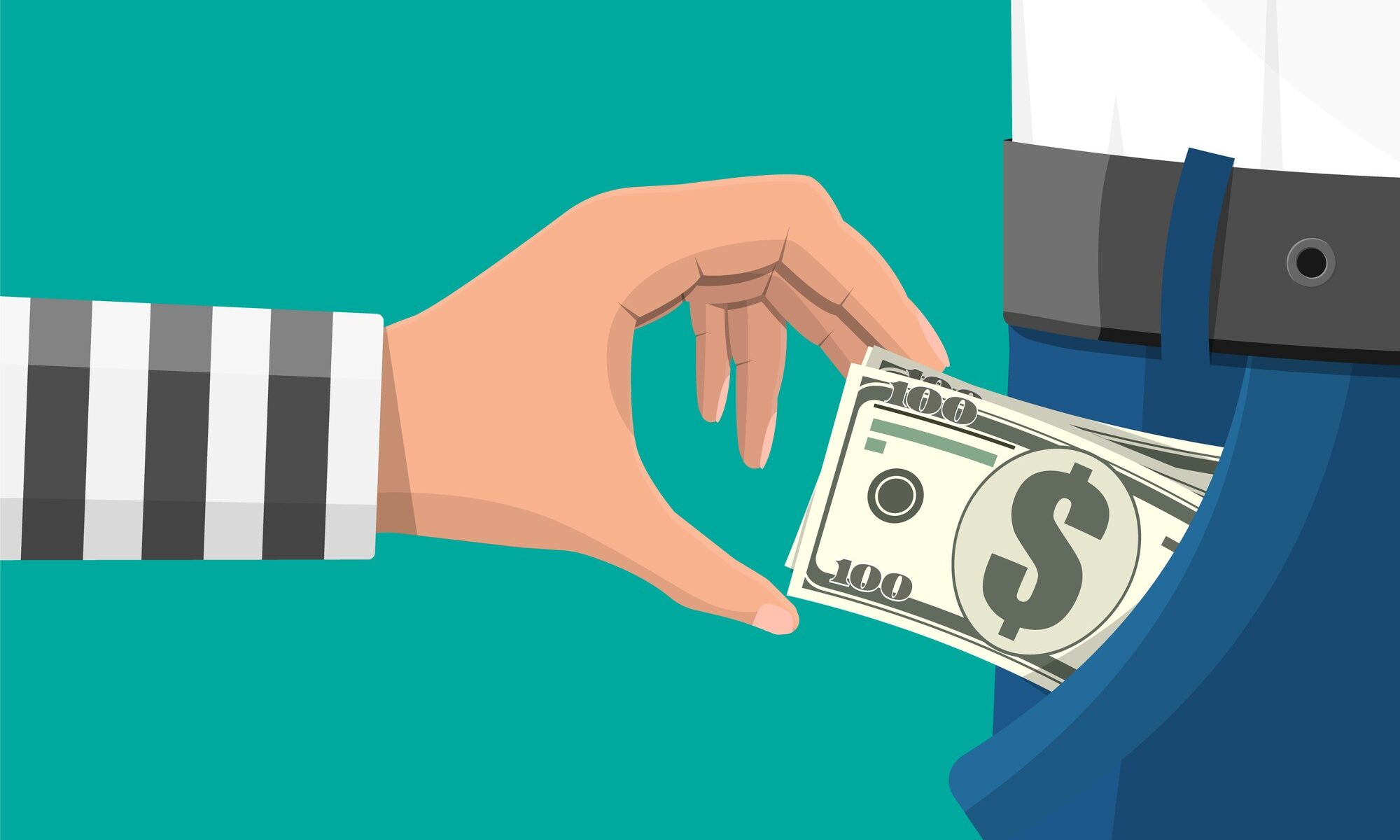
On June 25th, house members once again introduced the Wage Theft Prevention and Wage Recovery Act. As the bill’s sponsors point out, “wage theft” — when an employer fails to give an employee a benefit or payment they are legally entitled to — is the largest source of property crime in the US. The bill seeks to increase employer accountability, facilitate recovery of owed money, and increase penalties for employers engaging in wage theft.

However, despite the incredible scale of wage theft and the impact it has on workers, historically, wage theft has been treated as a bureaucratic matter, rather than a criminal one. (And employee underpayment is assuredly sometimes a matter of bureaucratic error.)  Under current law when wage theft is established, the employee is entitled to back pay and sometimes so-called liquidated damages in an amount equal to the back pay. Although, as of June 2025, the US Department of Labor no longer pursues liquidated damages. To be clear, the proposed law still does not criminalize wage theft at the federal level, although it does increase possible damages. Some states have, however, taken steps to criminalize wage theft.

What determines when something is treated as a crime and how serious the consequences should be? One approach is analytic. We begin by considering the social goals at play. Surely one aim is deterrence – in criminalizing intentional wage theft, we expect employers will take further precautions to ensure fewer instances occur. In considering policy, we might also look at other kinds of theft to see how wage theft fits those models. Wage theft certainly deprives workers of property, a key hallmark of theft. Although, conversely, it does not take existing property from employees, but deprives them of owed property. So, from a technical perspective, one could argue it is best understood as breach of contract.

Rarely though is the law decided on such dry analytic grounds — power matters too. Enter the social construction of crime. “Social constructs” have been somewhat maligned over the past few years, entangled in the culture war. But the underlying idea is simple and useful. Social constructs are things whose existence and character are a product of societal agreement. If all humans were to suddenly disappear, mountains would still exist, as would artifacts such as cars. However, the value of money would not. Money then, or at least the value of money, is a social construct.

A social constructivist approach to crime contends that what things we identify as crimes (and what punishments they deserve) are not the result of pure ethical analysis, but the product of a social context and often reflect who has power and influence. In a previous article, I discussed the case of punishment for pollution in the US. Plausibly, the lesser status of “wage theft” reflects the lesser political influence of employees compared to their employers.

But wage theft also demonstrates how labor organizers and activists leveraged the socially constructed nature of crime. While the idea of employers stealing from their employees is hardly novel, the term “wage theft”  is quite new, dating to the early 2000s. It strategically packaged together a number of employment infractions, from unpaid overtime to employee misclassification, and labeled them as theft. By design, it stresses that employers are taking money from their employees, rather than simply violating policy. In short, it created a category of crime.

This fact alone is neither good nor bad. Being a social construct is a descriptive claim about what kind of thing something is. From a philosophical perspective, the crucial question is what are the reasons behind a designation. For example, there may be excellent reasons to consider murder a crime. We may be less impressed with the US Supreme Court’s very narrow reading of corruption. A social constructivist approach helps us attend to the full suite of reasons behind whether something is criminalized and how seriously it is taken.

A social constructivist approach also reminds us that criminality is contested ground and the categories we have arrived at are not inevitable. For example, homosexuality used to be criminalized in the US. Wage theft is a straightforward case. It is not buried deep in our culture and it is easy to understand how the treatment of wage theft is a product of changing social conditions. We can imagine far deeper revisions of the relationship between wage labor and criminality. Many Marxists, for example, would stress that all labor under capitalism is similar to theft because the owner-class takes all additional profits resulting from their employees’ labor and appropriates it for themselves. This is a much more radical claim and pushes harder against our entrenched sense of the appropriate organization of the economy.

In fact, this is a key value for more “radical” philosophy even if we ultimately disagree. We all go through life picking up beliefs here and there, often quite casually. By interrogating our beliefs and confronting alternatives even to core convictions, we can improve the reasoning behind our ethical commitments.

Fortunately, Congress does not have to wrestle with the socially constructed nature of crime nor radical alternatives to wage labor to vote on the proposed wage theft law. The law uses existing non-criminal enforcement processes and simply makes them more robust. It remains to be seen if, unlike 2022, the bill will make it out of committee.

The Man, the Bin, and the Ballot Box

I think it’s safe to say that politics has, in recent years, become a bit of a sideshow. It feels like the days of the statesman, with their clear vision for their country and their ability to rally, if not inspire, the populace are now a thing of the past. Think of Churchill’s 1940 “We Shall Fight Them on the Beaches” speech, Martin Luther King Jr’s “I Have a Dream” speech of 1963, or John F. Kennedy’s 1962 “We Choose to Go to the Moon” speech. These, and so many more, will live through the annals of time not simply because of what they were about, but also who delivered them.

More recently, however, we are faced with a rather different form of political actor and world leader. In 2005, we had former French president Jacques Chirac saying you can’t trust people, namely the British and the Finns, because their culinary skills are too poor. Argentina’s current president, Javier Milei, often portrays a less-than-reserved demeanor in his role as the country’s leader, most notably in 2025 when he shared a stage with Elon Musk as the latter wielded a chainsaw. And, of course, who could forget the countless gaffes, insults, rants, and temper tantrums of the current US president. Indeed, I struggled to pick just a single illustration of Trump’s lack of statecraft, so I decided to go with a recent one in which he rambles about the Islamic Republic of Japan (spoiler alert: Japan is not an Islamic Republic).

These examples, along with countless others, help illustrate a point which has been made several times in articles and think pieces in the Medium, Compact, National Affairs, and (ironically) the New Statesman, one which I think many of us are feeling. That the days of the great, wise leader may be behind us.

Yet, as the expression goes, the night is darkest before the dawn, and in the past few years, a political upstart has emerged on the scene of UK politics. And while they have not yet had a huge amount, or any, success in the UK parliament, recent developments have meant that now could be their time. Indeed, it seems that much of the country has rallied behind this charismatic politician and their radical agenda. What makes this noteworthy, and why I wanted to write about it here, is that this revolutionary hope is a man with a bin on his head.

His name is Count Binface. Since emerging onto the UK political scene in 2018, he has become an idiosyncratic, yet nearly omnipresent, figure in major elections. He first gained widespread attention by standing in the 2019 UK general election, where he challenged then Prime Minister Boris Johnson. Since then, he has run against a succession of high-profile politicians, including London Mayor Sadiq Khan (twice), former Prime Minister Rishi Sunak, and presumptive incoming Prime Minister Andy Burnham in June of this year.

It is his latest exploit, however, that has garnered attention, as there is the distinct possibility that the self-styled Leader of the Recyclons from the planet Sigma IX – who is, just to reiterate, a man with a bin on his head – could end up in the House of Commons.

For context, and to draw a slightly long story short, there is a constituency in the UK called Clacton. In 2024, the leader of the right-wing populist and far-right political party Reform UK, Nigel Farage, was elected as that constituency’s MP. In recent months, there have been increased calls for an investigation into Farage’s financial affairs as it has been alleged that he failed to disclose income and gifts he received in the 12 months preceding his election; a requirement under the Rules relating to the Conduct of Members. Such an investigation was launched in May 2026 and was anticipated to conclude that Farage had breached the rules. This would likely result in a by-election for Clacton where Farage would once again have to campaign to keep his seat. Farage, however, was seemingly unhappy to wait for this to happen to him, and on July 7th, he announced he would stand down as an MP, thereby forcing a by-election, in which he would stand. Farage’s rationale was that he would let the people of Clacton decide his fate rather than be judged by anyone else. However, all the other major political parties have refused to field a candidate. So, for a moment, it looked like Farage would run unopposed. That is, until Count Binface announced that he would stand. Thus, while nominations are still open and others could put themselves forward for the election (indeed, a couple of persons whom we needn’t concern ourselves with have), the election is a two-horse race. On the one side, one of the country’s most charismatic and inexplicably popular political figures, a man who played a central, if not the central, role in driving the UK out of the European Union, and who some tout as in the running to become the next Prime Minister of the UK. And on the other side, once again, a man with a bin on his head.

Since the announcement that he will run, Count Binface has been doing the media rounds. This has been normal for years as a minor appearance of the novelty candidate. However, this time around, things have taken a weirdly serious tone, with Count Binface making appearances on the leading political and news channels and shows. Now, he’s not a quick throwaway gag that a reporter quickly talks to while they await a more serious candidate from the majority party or the opposition to become free. He’s on the Today program on Radio 4. He’s on Newsnight on the BBC. He’s on LBC talking to Andrew Marr. There was a 35-minute segment on Channel 4 News about him and the by-election. He’s on the front page of practically every newspaper in the country. This by-election has catapulted a novelty candidate into the political limelight. What’s more, Farage framed this by-election as a decision for the people of Clacton as a choice between himself and the establishment. However, as none of the major political parties are standing a candidate, that framing means that Farage’s main rival, the face of the establishment, is, once again, a man with a bin on his head.

Now, all this is extremely funny. In case you’ve forgotten, the UK is a nation that, when asked to pick a name for a polar research vessel in 2016, picked, by a huge margin, Boaty McBoatface (the popular choice was ignored, and the vessel was actually named the Sir David Attenborough). We Brits are famed for our dry and irreverent sense of comedy, and we are happy to take that to the extreme, be it in the naming of a multi-million pound ship or the very real possibility of voting into the highest echelons of the UK political system a man whose manifesto pledges have historically and currently included:

–Renaming London Bridge to Phoebe Waller-Bridge after the actress, screenwriter, and producer.

–Banning loud snacks from theaters.

–Banning the use of the speakerphone function on mobile phones in public. (Offenders will be forced to watch the film version of Cats every day for a year.)

–Moving the hand dryer in the men’s toilet at Uxbridge’s Crown and Treaty pub to a “more sensible position.”

–Nationalizing the singer, Adele.

–Reversing Brexit by inviting EU member states to join the United Kingdom.

It is, in all honesty, bizarre and terribly funny. And the seriousness of the possibility of his being elected to the parliament juxtaposed with the fact that (final time I promise) he is a man with a bin on his head, makes it even more funny. Yet, despite all this silliness, there is a serious political and philosophical point behind it all.

Count Binface is not the only candidate to mock the political establishment. There is a long tradition within the UK political electoral system of, for lack of a better word, odd peoples standing for office. The most well established is the various candidates put forward over the years by the Monster Raving Loony Party. In the recent Makerfield by-election, in which Count Binface stood against presumptive PM Andy Burnham, there was also a man dressed as a fox. Often, if there’s a serious point or process of politics being conducted, there will be a seriously unserious person there to subvert it. And that is itself an important feature of the political process.

The democratic process, for all its seriousness, has always required fools. We tend to think of politics as something that should be conducted with gravity. Parliament is filled with rituals and traditions stretching back centuries. Politicians speak from podiums covered with emblems. Campaign launches are meticulously choreographed. Leaders look to cultivate images of competence, authority, and statesmanship. The entire enterprise, both in the UK and beyond, rests upon the notion that those who seek power ought to be taken seriously.

Yet democracy depends just as much upon our willingness to refuse those that seek power that privilege.

In his 1971 book Rabelais and His World, Russian philosopher Mikhail Bakhtin argued that societies require, occasionally, what he called the carnivalesque: moments in which the normal hierarchy of society is turned upside down. Using the example of the medieval carnival, Bakhtin notes that there were occasions when kings could be mocked, priests parodied, and fools elevated, if only temporarily, above those who ordinarily commanded obedience. These festivals were not attempts to overthrow the established order. Instead, they reminded everyone that power was ultimately human. The king, whom had rule overall, was still just a man.

It is this moment of subversion, where the world flips on its axis, that Count Binface currently embodies. His candidacy functions as a modern carnival, one played out not in a medieval town square but on television studios, radio programs and ballot papers. By standing alongside prime ministers, cabinet ministers and party leaders, he punctures the carefully cultivated aura that surrounds political office. He reminds us that no office is so exalted that it cannot accommodate a joke, and no politician so important that they cannot find themselves debating public policy with a self-proclaimed extraterrestrial from the planet Sigma IX.

This is not to say that Count Binface is making politics absurd. Far from it. He reveals the absurdity that was already there.

After all, modern politics increasingly resembles performance. Election campaigns are stage-managed spectacles. Politicians spend as much time crafting social media clips as they do policy. Success is measured not only in legislation passed but in viral moments, memorable one-liners, and dominance of the news cycle. Increasingly, politics rewards charisma over competence, spectacle over substance. It gives power to those who, rather than being a statesman, are those who can sell their brand of unaware unseriousness. Who think that calling your political rivals names like Sleepy Joe or dumbocrats is high art.

In that environment, Count Binface is less an interruption than an exaggeration. Like all good satire, he simply pushes reality one step further than reality has already pushed itself.

This perhaps explains why his current campaign feels so different from his previous ones. For years, novelty candidates occupied a familiar role in British elections. They provided a brief comic interlude during the results declaration before the cameras returned to the “real” candidates. This time, however, the cameras have stayed on him. He has become a serious participant in the national conversation, not because he has abandoned the joke, but because the joke has become an unexpectedly useful lens for examining British politics itself.

There is a delicious irony in the fact that Nigel Farage sought to frame the Clacton by-election as a contest between himself and the political establishment. By refusing to field candidates, the major parties inadvertently transformed that framing into something else entirely. The principal alternative to one of the most recognizable figures in British politics became a man who is campaigning for cyclists who break the highway code to be forced to ride unicycles instead. If Bakhtin’s carnival momentarily dissolves social hierarchy, then this is surely its democratic equivalent. The distinction between the political elite and the political outsider collapses, leaving voters to confront an unsettling question: how much of politics is performance, and how much is merely costume?

Bakhtin believed that carnival possessed a peculiar kind of truth. By laughing at authority, people were not rejecting society but renewing it. Laughter strips away the facade and reminds rulers that they remained accountable to those they governed. It prevents power from becoming untouchable. That is the role Count Binface performs today.

Whether he wins in Clacton is, in many respects, beside the point. His greatest achievement has already been realized. He has reminded us that democracy is healthiest when it retains the capacity to laugh at itself. As he himself said, when asked whether he has a chance to win: “err probably not. But then, you know, my job is to celebrate and defend the wonders of British democracy.”

If there is but one lesson to be drawn from Count Binface’s rise, it is that satire is not the opposite of politics; it is one of its oldest companions. Democracies need serious politicians willing to grapple with serious problems. But they also need their muppets. Those who are willing and able to expose vanity, puncture pomposity, and remind us that, beneath the titles, the motorcades and the campaign slogans, every politician remains exactly what they have always been: an ordinary human being who probably has just as much clue about what’s happening as the rest of us.

Sometimes, that reminder just so happens to be, for the final time, a man with a bin on his head.


Is AI Responsible for Misleading Us?

A recent court case in Germany found Google liable for false statements that were generated by its AI overview. Two publishers discovered that when users searched the names of their companies, Google’s AI presented information confidently stating the companies were scams with a history of fraud (which they weren’t). Google, while losing the case, did not go down without a fight (and is already planning to appeal the decision). In their defense, they argued that the warning at the bottom of their search results – which reads, at the time of writing, “AI can make mistakes, so double-check responses” – is sufficient to free them from any liability related to anything in the AI summary itself. According to the company, those who rely on Google’s AI summaries should know “that information generated with AI should not be blindly trusted,” and therefore it is the responsibility of users, not Google, to ensure that what they are reading is true.

This argument did not fly in court. But Google’s defense underscores the sometimes-contradictory ways tech companies have attempted to avoid accountability when it comes to the creations of their chatbots. Specifically, tech companies will selectively argue that their AIs are or are not responsible for their outputs, depending on what best suits their needs.

Whether Google should be held responsible for its AI’s behavior, despite providing a warning that it could be providing users with false information, depends in part on how we conceive of the chatbot itself. Consider an example: let’s say I ask my friend for directions to a restaurant he’s recommended (also say the restaurant is brand new and so doesn’t show up on Google Maps yet). He confidently gives me the directions, but adds a caveat: “I’m only human, and none of us are perfect.” Not taking too much heed of his odd remark, I start on my way and quickly find myself lost: it turns out my friend’s directions were completely wrong. When I ask him what happened, he replies that he’s not responsible for my mistake and that I should have double-checked. After all, I really should know better than to blindly trust other people, and he did remind me he can be wrong sometimes.

It seems my friend cannot get off the hook so easily: he told me something that turned out to be false, and for that, he at least owes me an apology (and maybe dinner). Merely reminding someone that there’s always a chance that we could be wrong doesn’t relieve us of our responsibility: if we were really that concerned about saying something false, then we’d either have to retract a statement if we made it or not make it at all.

Of course, this is the kind of responsibility that people have, and AIs are not people. People have agency, and thus can make intentional choices about what they say. But an AI is different. Indeed, Google argued in the German court that their AI merely conveys information that other people have written. In this way, Google argued that its chatbot should be held to the same standards as your run-of-the-mill search engine: since Google search results just present links to stuff that other people have made, Google is not responsible for what shows up in its results (by and large). Similarly, Google argued that in virtue of their AI presenting other people’s content and not its own, they bear no responsibility for it.

As we’ve seen, this argument did not save Google’s case in the German court. One reason the court ruled against Google is that the AI summary hallucinated new information that could only be attributed to the program itself, and thus the responsibility for the defamatory content it presented fell to Google. However, Google’s overall strategy was as follows: argue that its AI should not be compared to the kinds of things that are responsible for their outputs. In many other cases, however, tech companies have argued the exact opposite to try to get out of trouble.

The case in Germany is by no means the first time tech companies have gotten into hot water for their chatbots causing harm to users. For example, in 2025, a court case in the US was brought against tech company Character Technologies when its AI was alleged to have played a large part in a teen’s suicide. In response, the company argued they should not be held liable since their chatbot’s outputs constituted free speech. This argument was rejected by the court on the basis that chatbots don’t produce “speech” – they merely present the outcomes of algorithms – and thus could not benefit from the protections of free speech.

The strategy that Character Technologies took, however, was the opposite of Google’s, arguing that the AI program should be treated in the same way as things that are responsible for their outputs so that they are granted the rights that accompany those responsibilities. While this would not save the company from any moral responsibility, possessing the right of free speech could potentially save them from legal liability.

A similar argument can also be found in ongoing lawsuits concerning the use of copyrighted material to train AI models. As I’ve written about here, some tech companies have argued that training large language models using copyrighted materials is “fair use,” given that using such works in this way is “transformative,” and that training an AI model is akin to the ways that human beings learn and produce new content. Since there’s nothing wrong with a person reading a lot of copyrighted books and then producing new content on the basis of what they have read, so goes the argument, then neither should there be any problems with an AI doing the same thing.

This argument has again been rejected by courts (at least thus far): while a person has the capacities to learn, be creative, and produce something new, and thus also has the responsibility to use content fairly, a computer program that produces content on the basis of algorithms does not have any of these capacities or responsibilities and so lacks any accompanying rights.

Tech companies, then, face a dilemma when trying to skirt moral and legal responsibilities when their chatbots produce false, harmful, or defamatory content: either they are treated like things that can be responsible for their actions, or they are not. If the former, then perhaps they should be granted certain rights, but then they cannot simply be treated as programs that reproduce the content of others, and so their creators must bear responsibility for their content. If the latter, then a case could be made that the responsibility for the content they produce should fall to the original creators of that content that they are reproducing, but then the tech companies must admit that they are, in fact, not using other people’s creations in a fair or transformative way, and so bear responsibilities towards those creators (namely, to pay them).

While there are many court cases around AI that still need to be resolved, appealed, re-appealed, and so on, it seems that no matter what, tech companies cannot completely avoid liability when it comes to content their chatbots create.