Do Anti-Flock Arguments Prove Too Much?


 SHARE
SHARE
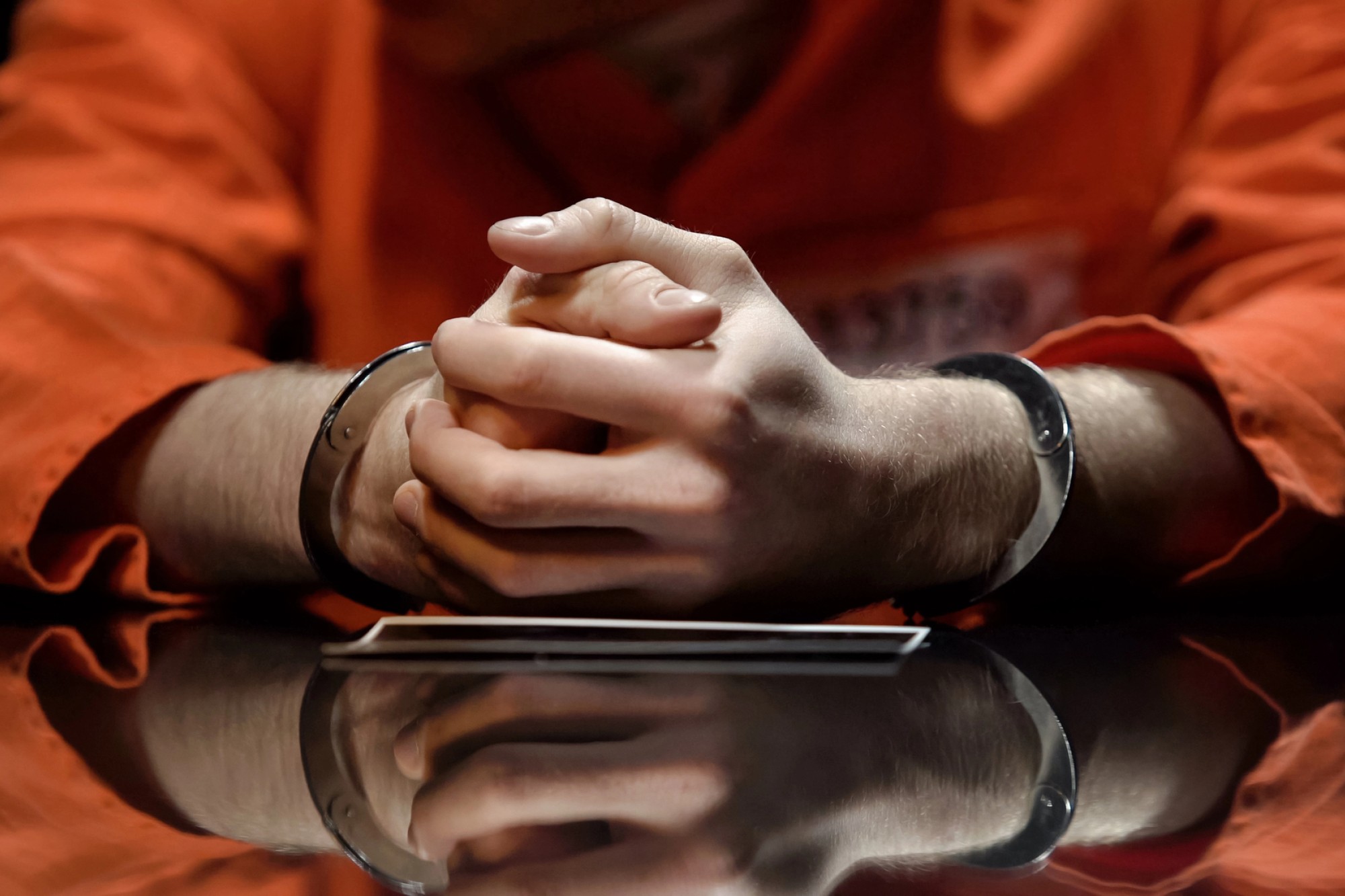
Imagine a disgruntled police officer who just cannot accept that a former girlfriend has moved on. Seething with jealousy, he opens a restricted database available only to law enforcement and uses it to identify who she is currently seeing. He uses what he learns to stalk and manipulate her. Using personal history information, he finds that one man has active warrants and threatens to send him to jail.
None of his searches serves a legitimate law enforcement purpose. The officer has used his own personal vendetta to weaponize a confidential database.
If you have been following the news, you may think that I am describing a case where an officer had misused Flock automated license plate readers (ALPRs) for personal reasons.
But in fact, you would be mistaken.
The officer in question was Akron police sergeant Eric Paull, and the database he accessed was the Ohio Law Enforcement Gateway (OHLEG), a portal that searches criminal justice and Bureau of Motor Vehicles records. Paull pleaded guilty to menacing by stalking, aggravated assault, and unauthorized use of a law enforcement computer. He subsequently was sentenced to four years in prison. A later federal court opinion described how he used OHLEG and another police database to track the woman’s boyfriends and learn their criminal histories. All of this occurred in 2015, well before the advent of Flock cameras.
Would this egregious violation of privacy justify abolishing driver’s license databases or forbidding police to consult them during traffic stops? Of course not. The mere fact that a tool or system was misused does not mean that we should get rid of it.
Police databases contain sensitive information, and some officers abuse their access. This fact is often presented as a reason to abandon ALPRs. But it would seem that this argument proves too much: it would apply equally to the databases officers consult during routine traffic stops and other investigations.
Consistency requires us to apply the same standard to every police database. It would seem that any misuse-based argument strong enough to rule out ALPRs must also rule out nearly every police intelligence tool — including driver license and motor vehicle databases. Since this is quite obviously absurd, we should reject the anti-Flock argument from misuse because it proves too much.
The Anatomy of a Records Check
During a traffic stop, an officer typically enters the driver’s identifying information and vehicle’s plate into a patrol computer, or asks a dispatcher to run them. State databases return licensing and registration information. This includes information on whether a license is valid or suspended, the driver’s identity and address, and the vehicle’s registered owner and insurance status. Checks through the FBI’s National Crime Information Center (NCIC) can reveal an outstanding warrant or stolen vehicle report. These are separate databases, often consulted through a single workflow.
A Flock inquiry searches vehicle sightings. Cameras photograph passing vehicles and captures their license plate information. To initiate a query, an officer logs in, records a reason, and searches by plate or vehicle description, with time and location filters. Flock also automatically alerts officers to plates matching stolen or wanted vehicles (but a match requires further verification).
Both workflows give officers access to information that can serve legitimate investigations or personal misconduct. If access to sensitive information, or its potential for misuse, makes Flock impermissible, then ordinary license and registration inquiries face the same objection.
How Often Are Databases Misused?
A 2016 Associated Press investigation documented more than 325 firings, suspensions, or resignations for police database misuse during 2013-2015, plus more than 250 instances of lesser discipline. All of these involved conventional databases, not Flock ALPRs (which didn’t exist in 2016). AP described its tally as an undercount.
Considered on its own, several hundred cases of misuse might seem like a concerning number. But scale matters. At the time, NCIC alone processed an average of 14 million transactions each day. AP therefore described the known misuse as a “tiny fraction” of the millions of legitimate inquiries conducted during traffic stops and investigations. We have no reason to think that database abuse is routine or systemic.
Flock’s critics sometimes point to the Institute for Justice’s database, which documents around 200 incidents involving ALPR systems. Again, 200 incidents seems concerning, but this number must be understood in context. In order to determine whether Flock abuse is prevalent and systemic, we must compare misuse cases against the total number of Flock searches during a given time period.
Once that data is taken into account, the evidence shows that Flock abuse is exceptionally rare.
Lexington, Kentucky publishes the results of routine audits of their Flock system. During the second quarter of 2026, officers conducted 39,119 Flock searches. The system flagged 185 searches for additional review because they involved a single user or extended beyond 30 days. Auditors connected every flagged search to an active investigation. In a separate Public Integrity Unit audit, investigators randomly selected 60 searches and checked them against police reports, dispatch records, and vehicle records. Every search fell within the officer’s duties.
In Stoughton, Wisconsin, 10 percent of Flock searches in a given month are randomly selected and compared with the underlying case to determine whether the search was warranted and whether the plate was connected to the incident. The department reported that its January-May 2026 audits all passed.
East Palo Alto, California, publishes monthly audits of its Flock system. I reviewed its reports for January through July 2026 and counted a total of 6,636 searches. Across those seven reports, the department identified zero improper officer searches. The searches were reported as consistent with department policy and supported by case numbers or legitimate law enforcement reasons.
After discovering that one officer had improperly used Flock, the Joplin, Missouri Police Department audited the system to determine whether there was a deeper problem. No other violations by Joplin police personnel were found. The city subsequently added monthly audits and increased internal affairs oversight.
Is Flock Really Different?
One might respond that Flock is different from NCIC or a driver’s license database. There are technical differences, of course, but identifying a difference is not enough to defeat an analogy. The difference must be relevant to the principle doing the argumentative work. If the principle is that police should not have access to sensitive information because some officers might misuse it, then Flock and other conventional databases stand or fall together.
Perhaps one relevant difference concerns the kind of information involved. Flock records where and when a vehicle was seen, while driver and vehicle databases contain largely administrative information. But this is a distinction without a difference. One’s driver’s license profile includes photographs, home addresses, dates of birth, physical characteristics, vehicle ownership, driving status, warrant information, traffic history, and a myriad of other data points. For an officer intent on stalking someone, a home address or active warrant may be more useful than a single vehicle sighting. Paull did not need a network of cameras to stalk and manipulate his former girlfriend.
Another potential difference is that Flock automatically records vehicles belonging to people who are not suspected of crimes. Yet driver and vehicle databases also contain information about millions of innocent citizens before any investigation begins. Drivers provide that information because they are required to, not because they consent to personal searches by jealous officers.
What about the fact that Flock is privately owned? While this is true, the difference does not seem relevant. After all, government ownership did not prevent Paull from abusing OHLEG.
The strongest disanalogy is that accumulated Flock sightings can reveal patterns of movement that a single driver’s license inquiry cannot. But this comparison involves a sleight of hand. It compares many Flock records with one conventional database inquiry. Repeated searches across driver, vehicle, criminal history, and other police databases can also produce a detailed picture of someone’s life. Indeed, this is exactly what Paull did. Flock may make aggregation easier, but aggregation is already possible using conventional databases. At most, the difference shows that prolonged or broad Flock tracking requires stronger justification, not that it should be abolished.
So the Flock critic faces a tough choice. If the argument is that Flock systems must be rejected due to abuse, then it proves too much by condemning nearly all routine police inquiries. If the argument is narrowed to unusually broad or prolonged tracking, then it no longer supports eliminating Flock. Instead, the implication would be that we should tighten use restrictions for more intrusive inquiries.
The simple solution is just to adopt the same safeguards for Flock that we do for other existing systems. We are not faced with a binary choice between unrestricted surveillance and abandoning a useful investigative tool that has saved lives.