
Is It Wrong to Gazump and Gazunder?


 SHARE
SHARE
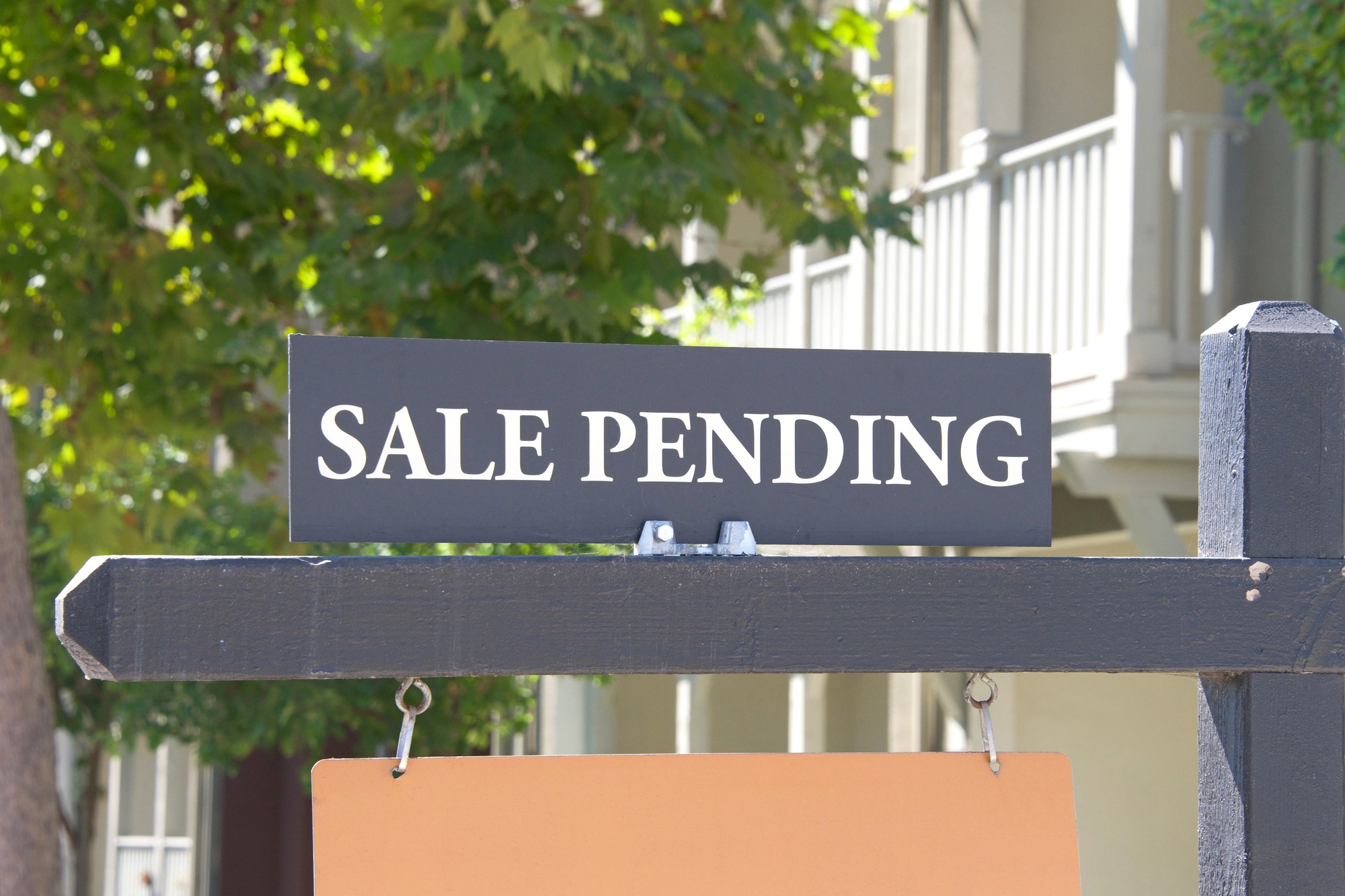
Life can feel rather stressful at times. Climate change, wars, inflation, the cost-of-living crisis, political instability, and the seemingly endless list of other things hanging over us can make it difficult to find much respite from anxiety. But it isn’t only these large, and sometimes existential, threats that can stress us out. Sometimes, comparatively mundane things can be just as bad. Take buying a house. As the title of a 2025 article in The Independent put it rather succinctly: Nothing is more stressful than Britain’s housing market.
There are plenty of reasons why. For one thing, buying a property is probably the largest financial transaction most of us will ever make. Spending that much money is understandably nerve-racking. And for most people, the money required to buy a house isn’t sitting in a bank account waiting. It has to be borrowed. This raises the significant question of whether you’ll still be able to repay that debt years or even decades down the line.
Then there is the process itself. Buying a house takes months. During that time, you might arrange a mortgage, instruct solicitors, commission surveys, sell your existing property, give notice to a landlord, make plans to move, and perhaps even reorganize your entire life around the expectation that you will soon relocate. You might be moving across the street, across the country, or further afield. And yet, after all that time, effort and expense, the sale can still collapse. If it does, you’re back where you started or worse off because of everything you have already spent. Recent figures show that one in three house purchases in the UK fall through. In the US, the figure is closer to 13%. This would obviously stress anyone out.
There are, of course, numerous reasons why a house sale might fall through. But one is particularly interesting from a philosophical perspective: what happens when, toward the process’ end, one party decides they want a different price than the one they previously agreed to?
There is a name for this. In fact, there are two.
The first is gazumping. This happens when a seller accepts a higher offer from a new buyer after already agreeing to sell the property to someone else. The original buyer then faces a choice: increase their offer to match or exceed the new one or walk away from the property and start house hunting again.
The second is gazundering. In effect, the reverse. A buyer who has already agreed to purchase a property for a particular price makes a lower offer shortly before contracts are exchanged. The hope is that the seller, having already invested considerable time and money in the transaction, will feel committed enough to accept the reduced price rather than abandon the sale.
Now, this is a particularly British problem. Or, at least, a particularly English and Welsh one. Scotland’s system works differently, and these practices are comparatively rare. And in the United States, where the contractual structure of property transactions differs substantially, gazumping and gazundering are largely unheard of. So, for present purposes, let’s stick with Britain (the ethics is largely transplantable, anyway).
Legally, the situation is relatively straightforward. In England and Wales, an agreement to buy or sell a property does not become legally binding until the parties have exchanged contracts. Until that point, either party can withdraw from the transaction. A seller can therefore accept a higher offer from someone else, and a buyer can make a lower offer or withdraw without breaching a contract.
There is a certain logic to this. If exchanging contracts creates the legally binding agreement, then it would be strange for the parties to be legally bound before that point. We generally want people to be free not to enter into contracts they have not agreed to. On this understanding, gazumping and gazundering are, at least in the relevant sense, legal.
As we all know, however, legality and morality are not one and the same.
At first glance, gazumping and gazundering seem morally suspect because they appear to involve bad faith. When two people agree that a property will be bought or sold for a particular price, we normally assume that they have genuinely reached an agreement about that price. The fact that the agreement is not yet legally binding does not necessarily mean that it is meaningless. If I agree or promise to do something, we would, I suspect, think I have some obligation to make good on my word, regardless of whether I’m contractually obliged to do so.
Yet gazumping and gazundering seemingly treat that agreement very differently. In gazumping, the seller might regard the original buyer’s offer as a safety net: an acceptable price to fall back on while waiting to see whether someone will offer more. In the case of gazundering, the buyer might make the initial offer not because they genuinely intend to pay that amount, but because it gets the seller to commit time, money, and effort to the transaction. The buyer can then reduce the offer at the last possible moment: when the seller has the most to lose by walking away.
In both cases, then, the other party can be used as a means to an end. The apparent agreement serves one purpose for as long as it is useful, only to be discarded when circumstances change in a way that benefits the person who made it. Hopefully the idea that we should not treat people, or by extension their monetary offers, merely as means to an end rings some Kant-shaped bells.
Another approach, however, is possible here. One where gazumping and gazundering are not only permissible but, in some sense, precisely what we should expect.
This is because such actions do not take place within the ordinary social relationships most of us live in. This is not a case of one friend lying to or taking advantage of another (unless, of course, the purchase happens to be between friends). It is a commercial transaction. One party is the seller and the other the buyer. And the relationship between them is, at least in part, defined by their competing interests.
Indeed, philosophy has long regarded competition between self-interested individuals not as a regrettable feature of markets, but as one of their virtues. Adam Smith famously argued that exchange is possible because individuals have an interest in advancing their own welfare, rather than because they are motivated by benevolence toward one another. Friedrich Hayek, meanwhile, emphasized the value of competition as a mechanism through which people respond to changing information and opportunities. From this perspective, a seller wanting the highest possible price, or a buyer wanting to pay the lowest possible one, is not a moral defect. It is part of what markets are for.
This point can be pushed even further if we turn to Robert Nozick. For Nozick, exchange is central to determining whether people’s holdings are just. If people are entitled to what they have and voluntarily transfer it to others, there is no further requirement that the resulting distribution conform to some preferred pattern. Applied to the housing market, this suggests that the fact that I previously offered you £200,000 does not, by itself, mean that I am morally required to pay you £200,000 if I subsequently decide not to. Likewise, if you discover that someone else is willing to pay £220,000 for your house, it is not immediately obvious why you should be morally required to accept my £200,000 simply because I made the offer first.
On this view, gazumping and gazundering are not aberrations from market logic. They are examples of it. Each party is attempting to negotiate the best deal using the resources at their disposal. In these cases, that resource is time. The seller uses the time before contracts are exchanged to see whether a better offer will appear; the buyer uses it to see whether circumstances will allow them to negotiate a lower price. Neither is necessarily obliged to regard the other party’s interests as their own.
And there is something intuitively attractive about this position. After all, we do not normally think that someone who decides not to buy a product because they have found it cheaper elsewhere has behaved immorally. Nor do we usually condemn a shopkeeper for raising the price of something when demand increases. Negotiation is a process in which each party attempts to improve their position. Why should the buying and selling of houses be any different?
The problem, however, is that buying a house differs from buying other things. The stakes are considerably higher, and the transaction takes considerably longer. More importantly, the market depends upon a certain degree of trust. If every offer is understood as merely provisional, and every agreement as nothing more than a tactical maneuver until contracts are exchanged, then it becomes difficult for either party to rely on what the other says.
So, what we have is a tension. The competition that makes markets valuable can also provide opportunities for exploitation. There is nothing obviously wrong with a seller accepting a higher offer because one unexpectedly appears. Nor is it obviously wrong for a buyer to renegotiate after discovering a serious problem with the property. But deliberately making an offer one has no intention of honoring, simply to encourage the other party to spend time and money before exploiting their increasingly vulnerable position, seems rather different.
Perhaps, then, the ethical problem with gazumping and gazundering is not that they involve changing one’s mind. Nor is it that they involve pursuing one’s own interests. Both are perfectly ordinary features of market transactions. The problem arises when one party creates a reasonable expectation of commitment while secretly using that expectation to secure a better deal.
However, this still feels slightly off to me. The market is, after all, a battleground. Sellers want to get as much as they can, while buyers want to pay as little as possible. That is simply how markets work. If someone fails to take advantage of an opportunity that presents itself, whether by gazumping or gazundering, can we really say they behaved more morally? Or have they simply failed to use every tool at their disposal to secure the best deal they can?