Working at the Speed of AI


 SHARE
SHARE
Recently, I was talking with a friend whose job requires coding. I asked him how much he uses AI, and he told me he uses it every day. I asked him if it made his job easier, or if he felt as though it lightened the workload. After a little reflection, he said, “Actually, I feel like I work more, not less.” While this is anecdotal, there are similar reports of this phenomenon elsewhere.
Many AI critics (myself included) worry that one of the consequences we might expect as AI continues to proliferate and infiltrate our labor market is a job market crisis. However, this is still speculative. AI has not been operational long enough for us to determine that it will be a net loss in employment. Even as we see some worrying fluctuations in the job market, there remains the possibility that AI will not negatively impact the job market (though I am still personally skeptical about this outcome).
We know that changes in labor technology result in shifts within labor markets. When new technologies are put into use, they often can and do replace workers; however, as AI enthusiasts are quick to point out, they also usher in new forms of work that historically expand the labor market.
What struck me most about the conversation with my friend, however, was his sense that he is working more, not less. This left me wondering: why is that?
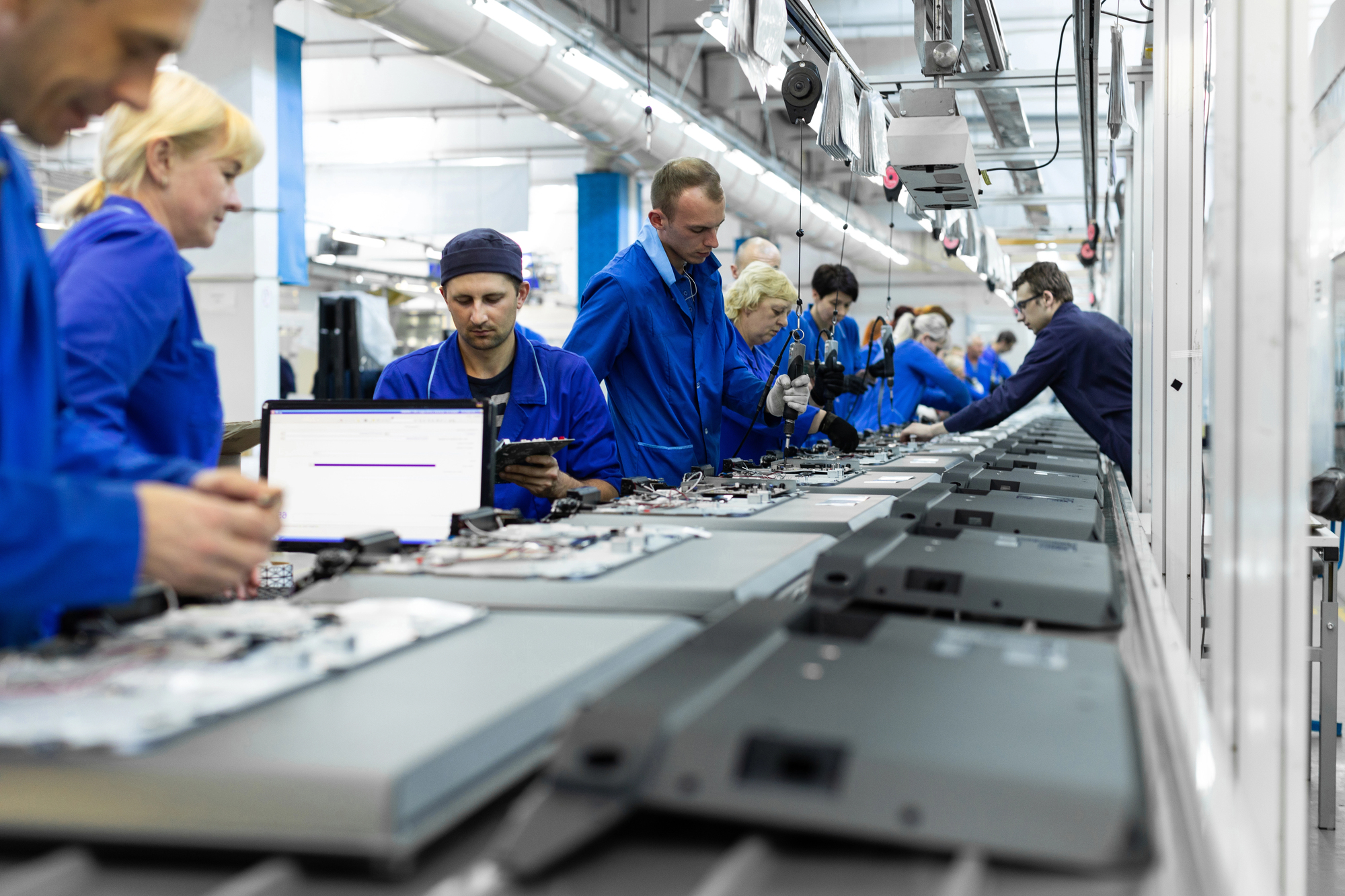
In his well-known critique of capitalism, Capital, Karl Marx proposes an answer to this question that is worth remembering. Here, Marx analyzes the effects of the factory and the machine on human labor. Similar to the rhetoric surrounding AI today, there were historical promises that machines and factories would increase efficiency and remove burden from the laborer. Only half of this ended up being true. While economic efficiency increased, the burden was not removed; rather, the burden on the laborer increased.
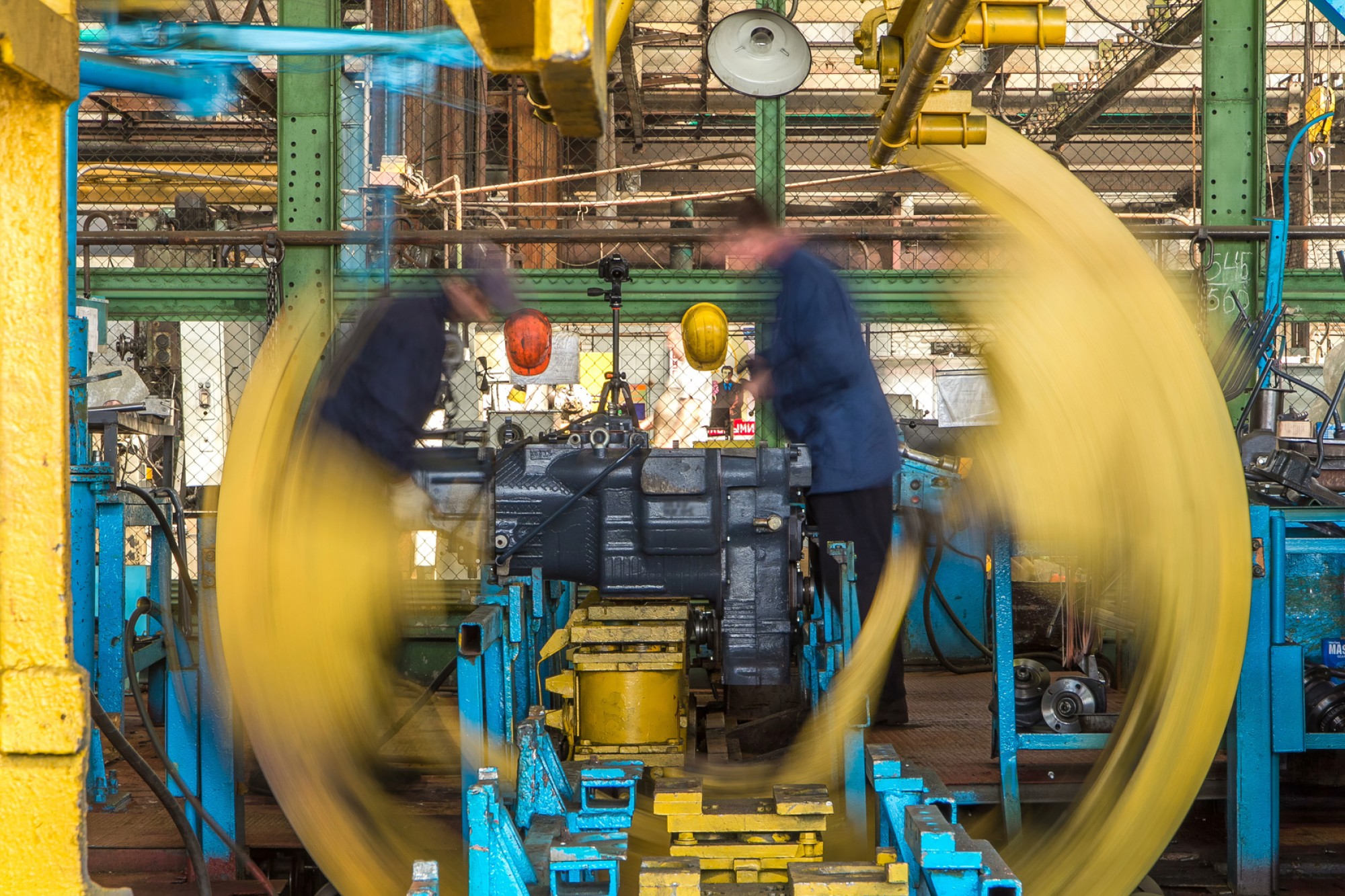
The explanation Marx offered was that in a world where humans are still required to operate and monitor machines to keep the factory running, they must also adapt to the nature of the machine. This forces us to ask: what is a machine like? Machines do not get tired; they can run 24-hours a day, 7 days a week. They are fast and unrelenting. They do not complain and they do not ask for breaks, holidays, or sick leave.
Of course, this is only true when the machine is working properly and has not broken down from use or malfunction, which is where the human often has to intervene. The human relationship with the machine is a frantic one. Operators must be able to keep up with the pace of the machine, while maintenance workers need to be ever-present and ready to fix malfunctions as fast as possible. With the invention of the ever-producing factory comes the logic of ever-increasing production, and a deep anxiety associated with any break in the action.
As others have pointed out, our hunter-gatherer ancestors may have had more leisurely lives (though their lives were fraught with other problems, like not having penicillin). This is in part because their lives were more determined by natural phenomena, along with the nature of their needs and the technologies available to them being different than ours. In a world without a cheap, instant, and relatively permanent source of light, work at night is limited. Without the climate-controlled environments we have created for our homes and workplaces, there was also greater pressure from the elements, which determined what times of the year certain kinds of work could take place.
Perhaps counter intuitively, the invention of the machine and the factory increased the amount of hours people worked. Marx pointed out that labor laws restricting the amount of time people are permitted to work were a direct result of the machine and the factory. If the automation promises of the past actually increased work and ushered in a newfound need for workplace security and regulation, we might take heed and ask ourselves: in what ways will labor change as we are forced to adapt to the nature of AI?
One of the most noteworthy features of AI is that unlike the industrial machine which automated physical labor, AI automates (or at least attempts to automate) intellectual labor. Perhaps this is why my friend lamented that he is working more, not less. The burden of intellectual labor was lightened for him in one sense: he no longer needs to build codebases from scratch. However, this means that he is now free to take on a significantly higher number of commits at work. The logic is simple. When it is easier to produce a product born of intellectual effort, one should be able to produce more of that product. If AI reduces the required intellectual effort to produce something, then we will be expected to produce a vastly higher amount of that product.
Still, volume alone may not entirely account for the feeling of working more; for instance, we might wonder why we won’t simply end up working the same number of hours, at the same level of effort, while producing more. This is where Marx’s analysis has something else to say. The feeling of working more might be wrought by the relationship we are developing with AI. AI is viewed as an entity with a yet untapped intellectual potential. Especially because its mass adoption is still nascent, there is an intense sense of urgency regarding where and how to apply it. Those who use it may feel an ongoing pressure to keep pace with the intellectual potential (real or imagined) that AI represents.
The factory also ushered in a new kind of uniformity. Before industrialization, the mass production of goods yielded expected variations. Even the most skillfully made handcrafted products carry some variability, the “human touch,” as it were. Machines, by contrast, are especially adept at creating identical products. In fields that adopt AI, we might similarly expect a certain uniformity of the intellectual product to arise. As every educator knows by now, student writing has quickly become uniform. Nearly every post that I encounter on LinkedIn feels as though it was written by the same person.
Another phenomenon the factory gave rise to was a general shift in the skill required of the labor force to manufacture goods. The automatic lathe removes the fine-tuned skills needed by the manual lathe worker; the power loom replaces the dexterity and intense focus required of a traditional weaver; the introduction of extrusion and molding eliminates the need to hand-shape and forge raw materials into useful or beautiful objects.
This is not to say there is no skill involved in the operation of all machinery; on the contrary there are a great number of things one will need to know how to do in order to operate machines well (for a peek inside the complexity of making something from start to finish using factories, check out SmarterEveryDay’s journey of getting a grill scrub brush made). But still, the factory also gives rise to a whole host of jobs that entail highly specific, repetitive tasks that one can become proficient in within a few weeks or months.
We are seeing this skillset shift play out today with the rise of “vibe coders,” AI “musicians,” and prompt engineers that work across all the modalities one can use AI for. A uniform, highly transferable skill set is emerging across various intellectual domains. If one becomes adept at prompting AI, the baseline skills required to produce something like a complete movie script, a musical score, storyboard, and promotional website for the final film effectively collapse into the same skillset. This is just to say that with one skill, namely the skill of knowing how to use AI, one can produce a vast array of products that previously required a larger diversity of skillsets.
This points to one final possibility I want to mention: since AI is supposed to help us get more done, faster, and with less baseline skill in the unique domains that it is theoretically connected to, it may result in the expectation that everyone whose work can be infused with AI should achieve higher output with fewer resources. This should not surprise us since this is precisely what previous forms of automation have done.
The lesson from Marx that we would do well to contemplate is that the introduction of new technology introduces a new force into the world. The AI optimist who views technology merely as a neutral tool of human agency misses a vital historical lesson: the human will is not absolute, and we are not the masters of the universe bending it to suit our needs. We are participants who both act on the world and are continually acted upon by it. Just as much as we might influence what AI is used for, AI will fundamentally reshape what we do and how we do it.