Should Blue-Collar Workers Care About AI Taking White-Collar Jobs?


 SHARE
SHARE
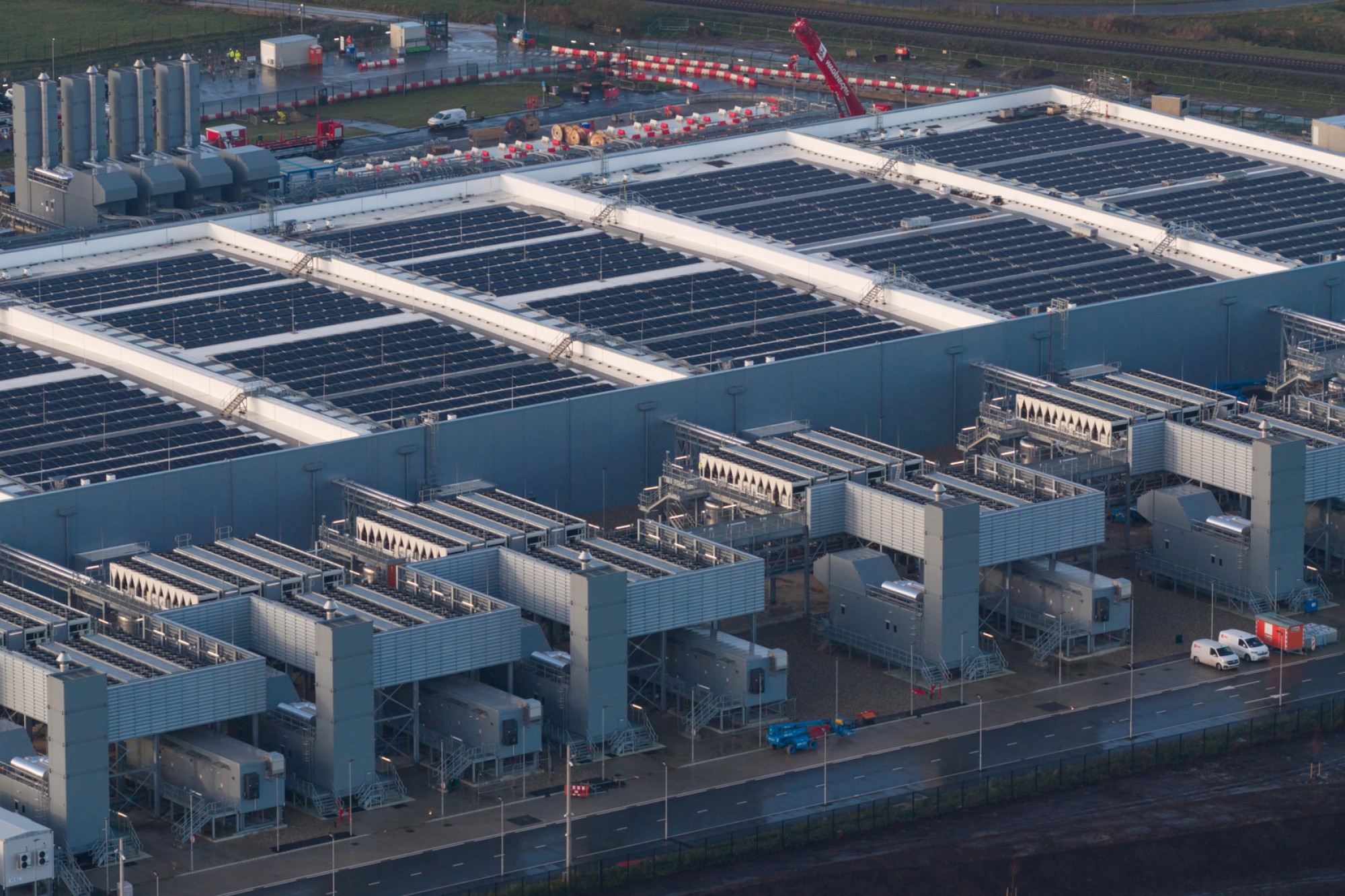
Amid the ongoing kerfuffle about the effect of AI on jobs, labor unions remain surprisingly split in their opinions, especially regarding data centers. Even as public sentiment turns against data centers, major unions such as the International Brotherhood of Electrical Workers, push against anti-data-center legislation like moratoriums. Some Democratic politicians find themselves pinned between wanting union support and broader public opposition toward data center construction. On the one hand, data centers underpin AI and the potential risks that AI poses to labor, especially white-collar workers and professionals. On the other, data centers are large infrastructure projects that require labor, especially blue-collar labor, to build and maintain, with about one third of the labor involved in the construction of data centers being union labor. Electricians, for example, as a recent NYT article observed, have benefited enormously from the data center boom.
Data centers demonstrate the threat AI poses to employment is not evenly distributed across industries. Should an electrician, flush with cash from their new job at a data center, care if some writers, graphic artists, or software developers are losing their jobs? How we answer this question tells us a lot about the broader goals and ethical perspective of unions and the labor movement.
We should not expect a simple answer. Unions are organizations constituted by workers and their decision making is typically democratic. (Although union democracy, like democracy generally, may be messy.) Workers can disagree about where they should be devoting their focus. Additionally, opinions on data centers and AI by workers and unions are often a lot more complicated than “for” or “against.” Someone could support data center construction, but only with certain regulations in place. And while opposition to data centers often tracks opposition to AI, one can be opposed to data centers, or at least their implementation, and support AI more generally.
One vision is that a union should prioritize the immediate working conditions of their members: wages, benefits, working hours, and such like. This is sometimes called pure-and-simple unionism or business unionism. From this perspective, the relevant fact about AI is not whether it is good or bad for workers on average, but how it affects union members. Carpenters, electricians, and welders would have reason to support AI, or at least data center construction, flight attendants should not care, writers should be opposed. There is nuance in the precise viewpoints of unions and their membership, but this is loosely how it has played out in the US.
Of course, like all people, union members often have concerns beyond their immediate working conditions. Some visions of labor power, such as social movement unionism, emphasize how unions can be (and have been) major players in social movements, from human rights to climate change activism. When it comes to AI, an electrician may be concerned about everything from water use to the effect on inequality, even if data center construction provides jobs in their field. This is not to say that these broader issues cannot impact working conditions. A union might oppose Big Tech-controlled AI, because concentration of corporate power is generally bad for worker bargaining power, even if there is no immediate change to anyone’s paycheck. However, this is a more indirect benefit than simply having more union jobs in the short-term and perhaps harder to evaluate.
Should an electrician care about the lost job of a software developer specifically as a fellow worker? This is a solidarity or shared struggle approach to labor activism and unionism. The idea is that an electrician and software developer share a political and economic struggle even though superficially their jobs look different. This perspective is historically associated with radical and class-struggle forms of unionism, where workers and unions seek an overall change in the economic organization of society. From a leftist perspective, workers are united by being part of the same (exploited) economic class. Whatever the particulars of their work, both the software developer and the electrician are wage laborers who have to make a living through selling their labor, as opposed to capitalists who earn money by leveraging what they own to either collect rent or appropriate a share of their laborer’s earnings. Emphasizing class struggle gives workers and union members reason to show solidarity across vastly different trades. The idea is rather than the software developer losing their job to Claude Code being someone else’s fight, there is just one big fight.
However, it is easier to ask for solidarity than to give it. White collar workers have not always been staunch allies when blue collar professions faced their own technological upheavals during the 20th century. It would be hard to blame an electrician for indulging in a little schadenfreude, even if they believe in a shared class interest.
These different perspectives on labor activism and union goals speak to the challenge of scale or granularity in ethical analysis. It is not always clear what the appropriate unit of analysis should be. People may share one interest as electricians, but a different interest as wage laborers. Neither of these claims is necessarily wrong, rather it depends on the “zoom” we are using to look at a situation.
Asking questions such as whether AI or data centers are “good” or “bad” for workers may be too coarse -grained. Which workers are they good or bad for, and at what level of analysis? How does this depend on who controls AI and what regulations are in place? Even if we can come up with an overarching answer, there may be substantial complexity with many different winners and losers underneath the hood. Analysis gets yet more complicated as we consider the importance of time. AI enthusiasts still allow there may be a rocky transition period associated with AI. And critics contend that while constructing data centers requires a lot of jobs, they generate few permanent positions. The fight over AI is about more than just its immediate employment impacts, it is also over how we should evaluate potentially transformative technologies. Whose interests count, at what scale, and over what period of time? What short-term pain are we willing to tolerate? And perhaps most importantly, who gets to decide?