The Price of Pollination


 SHARE
SHARE
In 1990, Tri-Star Pictures released one of the greatest films in Arnold Schwarzenegger’s back catalogue: Total Recall. Set in 2084, the story follows Douglas Quaid, a construction worker who undergoes a memory implant designed to make him believe he is a spy. When the procedure goes awry, Quaid finds himself actually hunted by agents of a shadowy organization. His journey leads him to Mars, where he becomes entangled in a resistance movement fighting a tyrannical regime. It’s the kind of film that defies easy summary, like many of Arnold’s classics, yet one everybody should see.
One notable plot point within the film is the commercialization of air. Because Mars lacks a breathable atmosphere, its inhabitants live within controlled biodomes, where oxygen is owned and rationed by the planet’s ruler, Vilos Cohaagen. Like food, water, or shelter on Earth, air becomes something people must pay for. Failure to do so results in restricted supply or, in extreme cases, complete deprivation. As such, the film turns a basic, taken-for-granted necessity into a tool of control and profit. Something with which I think many of us might relate.
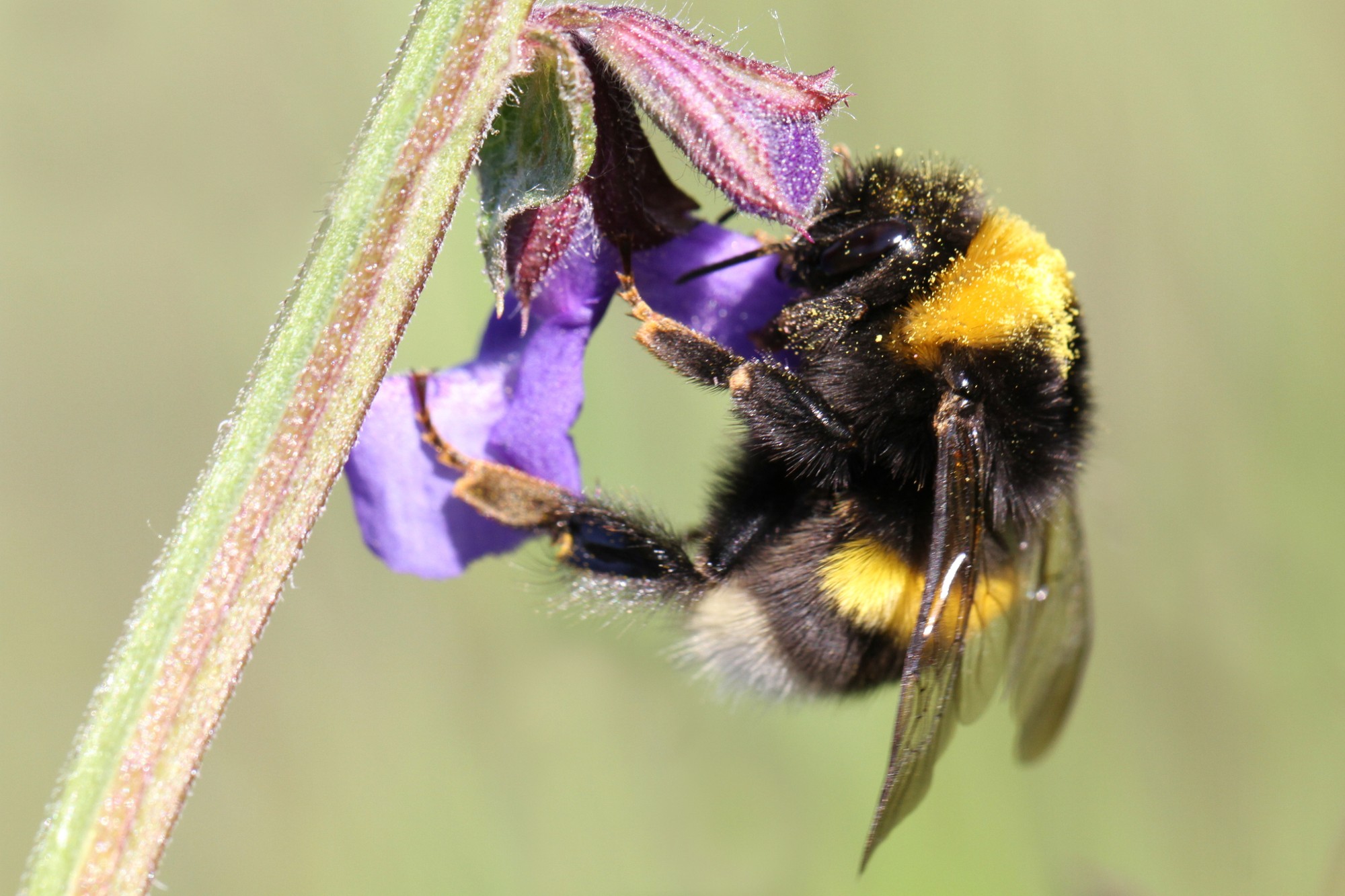
The film came to mind when I recently read about research at the University of Oxford: the development of a “superfood” for honeybees. By engineering a yeast-based extract, researchers created a dietary supplement that, when introduced to bee colonies, increased larval production by up to fifteenfold and significantly improved overall colony health. Taken at face value, this is unequivocally positive as people tend to like honeybees. However, it also carries hints of danger. As Karl Marx observed, capitalism is marked by a tendency to transform more and more aspects of life into commodities. That is, things produced for exchange on the market. Thus, what was once simply part of the natural world becomes something that can be owned, priced, and sold. So, even pollination begins to appear as a process that might be drawn into the logic of the market.
Now, I don’t want to get so down on the bee superfood straight away. After all, bees, and particularly honeybees, occupy a unique place in our cultural imagination. They are symbols of industriousness, cooperation, and prosperity. In Manchester, for instance, the bee serves as an emblem of the city’s industrial heritage and collective spirit, a symbol adopted during the 19th century to reflect values of hard work and unity. Against this backdrop, any development that supports bee populations is likely to be viewed positively.
More critically, however, is the ecological reality. Bee populations, like those of many insects, have been in decline for decades. According to the Royal Horticultural Society, factors such as habitat loss, climate change, widespread pesticide use, and a shortage of suitable breeding sites have all contributed to this trend. The consequences extend far beyond bees themselves. As key pollinators, they play an essential role in sustaining plant life. Without them, natural pollination becomes increasingly difficult, and in some cases, impossible. This places entire ecosystems under strain.
It is not just the ecological impacts that should concern us. The majority of our crops rely on pollinators. Thus, without bees and other insects, our ability to grow food is jeopardized. So, even if you’re not ecologically minded, this should be something you care about, as, put simply, you need to eat, and without pollinators, you probably won’t be doing much of that.
All in all, then, it might seem that the discovery of a superfood that promotes colony health is an out-and-out good thing. So, then, why did it make me think of Total Recall? Because, like most forms of nourishment, this “superfood” must be produced, distributed, and sold. It introduces the possibility that pollination, once a largely uncommodified ecological process, may become increasingly mediated by markets.
Historically, while farmers have always managed crops with care, pollination itself did not require direct purchase. Like sunlight or rainfall, it was a background condition of agricultural life: essential but not priced. Marx described the expansion of capitalism as a process that draws such gifts of nature into the sphere of exchange, capturing them and turning them into sources of profit. The growing reliance on technological or nutritional interventions for pollination suggests that this process may now extend even to the reproductive mechanisms of plant life.
What emerges is the prospect of a new frontier for commercialization: the monetization of a process that was once freely provided by nature. This is not merely a question of unequal access, though that is a concern. Wealthier farmers may well gain advantages by investing in technologies that enhance pollination. But the deeper issue lies elsewhere. It is the steady extension of market logic into domains that were previously outside it; the transformation of common ecological goods into revenue streams.
This concern becomes more present when one considers developments such as RoboBees: miniature robots designed to perform pollination duties. The dangers here are tenfold. Unlike biological bees, which require only viable ecological conditions, such technologies depend on manufacture, maintenance, and ownership. They would not exist outside systems of payment and profit. In this context, RoboBees represent not just a substitute for natural pollination, but its full incorporation into an economic framework
Now, I’m not saying that the scientists who created the bee superfood or the RoboBees had nefarious intentions. Measures that help promote bee and other insect health should be welcomed. But it would be naïve to ignore the commercial possibilities that accompany such innovations. The risk is not the technology itself, but the context into which it is introduced.
If the trajectory continues, we may find ourselves in a world where pollination, like air on Mars, becomes something contingent on the ability to pay. That is not yet our reality, but it’s not unthinkable. If Total Recall offers a cautionary image of life-sustaining resources brought under private control, the lesson here is more subtle but no less important. Rather than relying primarily on market-based solutions to ecological decline, we might instead prioritize addressing its root causes: restoring habitats, reducing pesticide use, and mitigating climate change. In doing so, we preserve not only bee populations, but also the principle that some of the most fundamental conditions of life should remain outside the reach of commodification.