← Return to search results
Back to Prindle Institute

When It Comes to the Environment, is Education Morally Obligatory?

Image of plastic bottles floating in the ocean

In April of this year, scientists from the Alfred Wegener Helmholtz Center for Polar and Marine Research reported finding record amounts of plastic particles in the Arctic sea. Ice core samples were taken from five regions in the area. Up to 12,000 pieces of micro-plastic particles per liter of ice were found in the samples.  Scientists believe that much of the plastic, cigarettes butts, and other debris came from the Great Pacific Garbage Patch, a mass of floating waste occupying 600,000 square miles between Hawaii and California.

Plastics in the sea pose substantial dangers for ecosystems and marine life. As evidence of this fact, earlier this year, a dead sperm whale washed up on a beach in Spain. Scientists concluded that it was death by garbage—64 pounds of plastics and other waste were found in the young whale’s stomach.

Continue reading “When It Comes to the Environment, is Education Morally Obligatory?”

Is the Global Citizenship Movement the New “White Man’s Burden”?

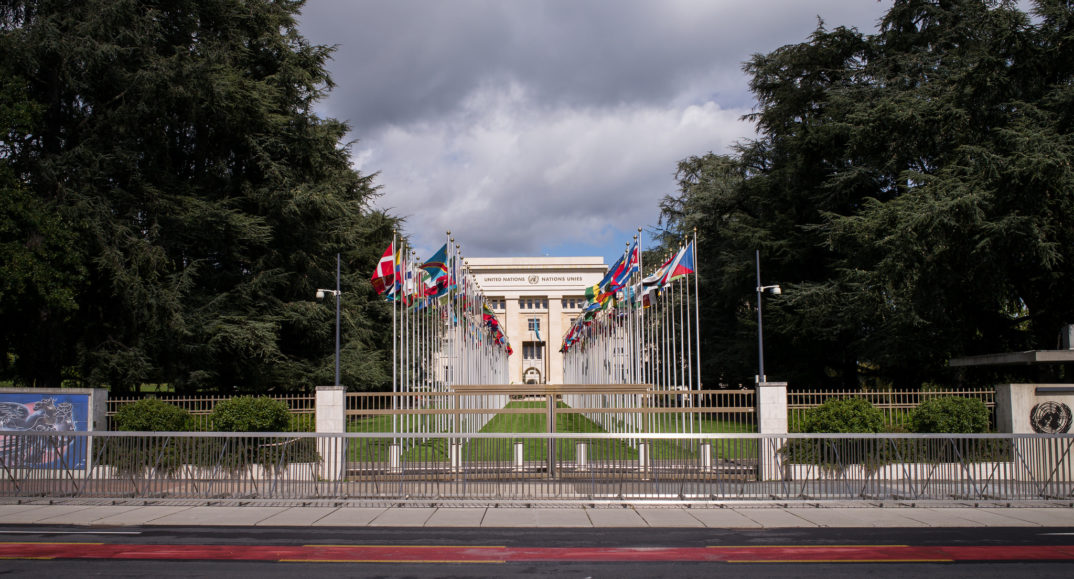
Photograph of Palais des Nations building with flags in two columns in front of it

This article has a set of discussion questions tailored for classroom use. Click here to download them. To see a full list of articles with discussion questions and other resources, visit our “Educational Resources” page.


In an age of red-eye flights and the ability to communicate digitally across thousands of miles, the world has never felt so small and interconnected. Despite this, the governments of countries across the world remain relatively segregated in regards to policies concerning citizenship and human rights. These issues were discussed at large during the 37th session of the UN Human Rights Council, which took place on March 6 in the Palais des Nations. During the session, many different methods for improving human rights worldwide were discussed, including the concept of Global Citizenship Education. The movement for global citizenship counters the concept of isolationism and advocates for a set of moral standards to apply a global society. Though global citizenship sounds relatively straightforward, the movement is often steeped in questions of justice and national self-determination.

The United Nations Educational, Scientific and Cultural Organization (UNESCO) Program for Global Citizenship Education aims to improve human rights worldwide “by empowering learners of all ages to understand that these are global, not local issues and to become active promoters of more peaceful, tolerant, inclusive, secure and sustainable societies.” But does the call for global citizens risk the erasure of national identity? Are the standards set for development always just? And does the initiative for global citizenship encourage a 21st century “white man’s burden” mentality?

The term global citizen refers to “someone who is aware of and understands the wider world – and their place in it.” Though the concept of global citizenship is not necessarily new, the organized global citizen movement began less than 10 years ago. The organization Global Citizen was founded in 2011 with the mission of empowering individuals and communities to make an impact worldwide on a variety of human rights issues. Though one of Global Citizen’s largest goals is to eradicate extreme poverty, the organization also works toward securing gender equity, environmental health, and civil rights.  

Global Citizen takes steps to empower people at the local level, but is there a danger in redefining certain issues as inherently global? There have been ardent critics of this concept of the sentiments of global citizenship, such as British Prime Minister Theresa May and President Donald Trump. In a speech delivered in October of 2016, May expressed her discontent with the attitude of global elites. She commented, “Today, too many people in positions of power behave as though they have more in common with international elites than with the people down the road, the people they employ, the people they pass on the street.” It’s obvious that May feels that globalization has erased local and national connections. She continued with a more controversial statement, declaring that “If you believe you are a citizen of the world, you are a citizen of nowhere.” Only a few months after May’s comments, Donald Trump expressed a similar sentiment. He proclaimed, “There is no global anthem. No global currency. No certificate of global citizenship,” in a speech given during his presidential victory tour. Trump appealed to the isolationist values of his supporters, promising that “Never anyone [sic] again will any other interests come before the interest of the American people.” For these politicians, and their supporters, global citizenship means abandoning national identity.

Though May and Trump’s comments were blasted as ignorant, uncompassionate, and even sympathetic to fascist values, whether or not one can ethically reconcile nationalism and globalism remains largely unanswered. In an article titled “Global Citizens vs the People,” Jim Butcher of online political magazine Spiked explains how global citizenship does not only contradict conservative ideology, but liberal populist ideology as well. Butcher argues that global citizenship does not necessarily mean renouncing nationalist sentiments, but he notes that global citizenship runs the risk of “seeking respite from democracy” and can in fact be “a way of avoiding having to address the political views and arguments of your fellow citizens.”

But some proponents of global citizenship claim that such criticism fails to acknowledge the difference between soft and critical global citizenship. In her article “Soft versus critical global citizenship education,” Vanessa Andreotti acknowledges the potential harm in global citizenship education, but believes that it can be eradicated by emphasizing critical thinking. It is possible for global citizen education to encourage its proponents to “project their beliefs and myths as universal and reproduce power relations and violence similar to those in colonial times.” This need not be the inevitable result, however, if global citizenship education gives learners the tools to critically assess issues of inequality and injustice, which are skills soft global citizenship fails to provide.

For example, while soft global citizenship may frame the solutions to global issues as humanitarian, critical citizenship frames these solutions as a political and ethical. Teaching these critical distinctions keeps the global citizen aware of their own biases and safeguards the global citizen movement from a patronizing mindset. And organizations such as Global Citizen arguably embody critical global citizenship education, with its mission explaining that “everyone from citizens, governments, businesses, and charities have a role – because none of aid, trade nor charity can do this alone.”

But global citizenship is also inherently reliant on globalization. Though critical global citizenship encourages people to think critically about the negative effects of globalization, it assumes that globalization can be used as a positive force. Some might argue that globalization has in fact created a new world hierarchy, specifically in terms of the standards of development. Post-development theory holds that the global crusade for development has failed and that in some cases development operates as a modern form of imperialism that is “a reflection of Western-Northern hegemony over the rest of the world.”

Prominent post-development scholars, such as Wolfgang Sachs, have argued that because development standards often include assimilation to Western lifestyle, “it is not the failure of development which has to be feared but its success.” It is undeniable that development standards are often set and enforced by the Western world, with Western countries holding the majority of power in prominent global organizations working toward development, such as the United Nations and the World Bank. A paper funded by The National Bureau of Economic Research’s Economics of National Security program found that since the UN’s inception, there has been an unwavering power bias in the secretariat in favor of Western countries. Though the UN maintains its mission is to keep peace throughout the world, one could argue that such an imbalance in institutional power is obstructive to this mission and actually reflects the continuation of geographical and racial inequalities spurred by the history of Western imperialism.

However, many supporters of globalization argue that the concrete effects of globalism justify its problematic ideological implications. The United Nations was single-handedly responsible for the eradication of smallpox, with its initiative in the 1960’s and 70’s through the World Health Organization. The UN also touts a variety of achievements through partner organizations like UNICEF, which, between 1990 and 2015, reportedly saved the lives of over 90 million children. The World Bank, an organization working to end worldwide poverty that also grew out of globalization, is responsible for providing essential health services to over 600 million people and providing 72 million with better access to clean water. These achievements are undeniably significant, and would not be possible without a unified effort and collection of people advocating for positive globalization.

Though the struggle for human rights and global economic equality has improved, the problems made apparent by globalization are nowhere close to disappearing. A world of global citizens might just be the solution that marks the 21st century as the century that eradicates extreme poverty and radically improves justice and equality. However, the effects of increasing the global stake in these issues will not be easy to backtrack if such initiatives are unsuccessful or have unintended consequences. We should not underestimate the potential of the global citizen movement to encourage a “developed man’s burden” outlook if it fails to encourage critical and ethical examinations of its followers.


The 21st-Century Valedictorian and the Battle for First Place

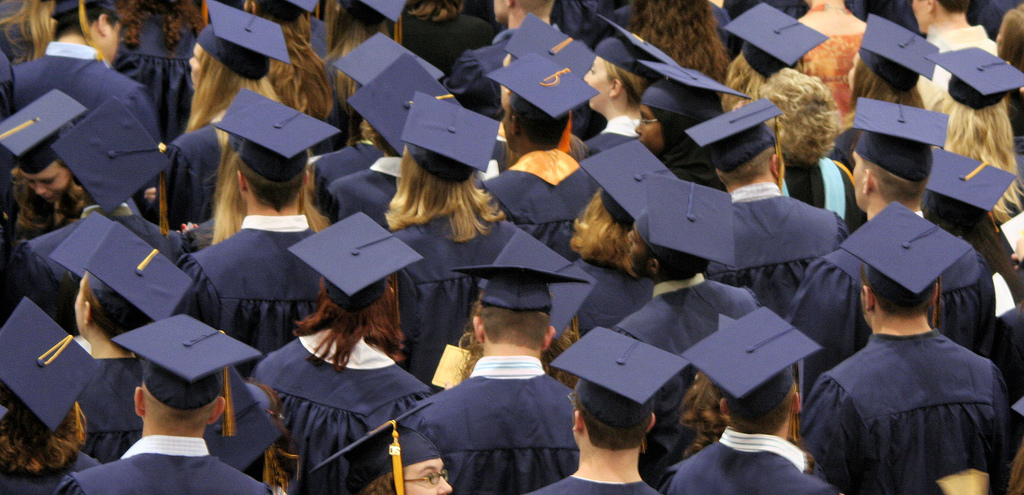
An image of high school graduates during a commencement ceremony.

This article has a set of discussion questions tailored for classroom use. Click here to download them. To see a full list of articles with discussion questions and other resources, visit our “Educational Resources” page.


According to 16-year-old Ryan Walters of North Carolina, abolishing the title of valedictorian in high schools only serves to “recogniz[e] mediocrity, not greatness.” Ryan was interviewed for a Wall Street Journal article about ridding schools of valedictorian titles, and he provides a voice of disapproval and disappointment. After working toward the glorious title of valedictorian for many years of his life, Ryan’s dream is over, as his high school has decided to do away with recognizing the top performer in each graduating class. This harsh critique by the Heritage High School junior may have some validity, but it can also be refuted.

Across the country, high school administrators are beginning to question the productivity of declaring a valedictorian every year. Many students work toward the title of valedictorian from a young age; it is a testament to perseverance, intelligence, and hard work. However, it can also create extreme competition among students and determine one’s value based heavily upon grades. Some school administrators argue that the title of valedictorian motivates students to study harder and achieve more academically. Others argue that declaring a valedictorian promotes unhealthy competition and does more to harm students than to help them. This debate raises the question: is it ethical for high school administrations to declare a valedictorian each year?

The critics of the valedictorian system argue that recognizing a valedictorian places an unhealthy amount of pressure on students. This is a large reason why around half of the schools in the country have eliminated the title. According to the National Institute of Mental Health, 8 percent of high schoolers are diagnosed with some form of anxiety. Suicide was the second leading cause of death in teenagers 15-19 years old in 2014. Although a direct correlation between the stress of school and suicide cannot be made, the anxiety developed because of academic pressures surely contributes. School counselors have expressed concern about the impact that pressure to perform is having on adolescent anxiety. In an article in The Atlantic, Kirkwood High School counselor Amber Lutz said, “high performance expectations surrounding school and sports often result in stress and, in turn, anxiety.

Declaring a valedictorian increases competition among students. As classmates vie for first in their class, the emphasis can be taken off of learning and bettering oneself, and placed upon winning. If a student is aiming for valedictorian but does not achieve it, they may lose appreciation for their accomplishments and simply focus on the fact that they “lost.” In addition, a GPA is not a reflection of one’s high school experience. It does not include creativity, learning style, experience, and passion for certain subjects. It is a number, not a holistic view of an individual. The title of valedictorian separates one student from their peers who may have worked as hard or be of equal inteligence. Many factors affect a grade, including distribution of points, class load, grading rubrics, and more. A GPA is too narrow in its summary of achievement, and too dependent on other factors for it to declare the best student in a class of many.

A question follows this conclusion: should schools be comparing their students to one another at all? Is ranking adolescents based on GPA an exercise that will push students to do their best work? Or is it counterproductive to development?

Competition can be productive. Advancements are made because of competition, and individuals are pushed to achieve more when they are not the only ones aiming for a goal. Certain aspects of society do not function without competition. A customer is not going to buy all five versions of a laptop; rather, they are going to buy what they consider the best option. Competition is also the reason there are five laptops to choose from. In the same way, that technology company is not going to hire all applicants for an open software developer position. They are able hire the best developer out of the five and create a better laptop because of competition. It is important that students are aware of competition and the ways it manifests within society. However, declaring a valedictorian is not the sole method with which this can be taught.

Many high school students play sports in which they win or lose. One may question how this is different from declaring a valedictorian. This question requires the examination of the purpose of education. Schools must decide whether education is meant to increase equality or separate “the best” from the rest. Pittsburg high school superintendent, Patrick J. Mannarino of North Hills High, rid his school of the valedictorian designation and said:  “Education’s not a game. It’s not about ‘I finished first and you finished second.’ That high school diploma declares you all winners.” If a sports game ends in defeat for a teenager, they are surely upset, but their entire athletic career is not rated based on a single game. However, a class ranking does summarize a student’s academic career; therefore, the title must have a greater impact on the self esteem of a student than the outcome of a sports game.

A compromise has been implemented across the country. In recent years, schools have started declaring multiple valedictorians in an effort to recognize more than one high-achieving student. Some argue this solution minimizes the glory that one valedictorian could have and harms the motivation to work hard. Others argue that it presents the same dilemmas as declaring a single valedictorian. The difference between one and seven valedictorians is nonexistent, in the sense that it still separates students and equates the value of each student with their GPA.

The tradition of declaring a valedictorian has been passed down for generations, and valedictorians go on to make great contributions to society. But, if the title of valedictorian was taken away, would the futures success of those students be affected? Would students lose motivation to work hard? Or would schools adapt a more inclusive environment in which students are intrinsically motivated and want to work together? It may be time for schools to reconsider what environment is best for producing intelligent, hardworking students who appreciate what they have accomplished and do not need to compete to have these accomplishments recognized.

Perhaps declaring a valedictorian provides a healthy dose of competition to schools around the country. Maybe it is teaching students to work hard and preparing them for adult life. Or, perhaps ranking adolescents based on their academic performance is contributing to  the growing rates of anxiety and depression in the United States. Maybe declaring a valedictorian is taking the emphasis off of learning and placing it on competing.

Pronouns and Provocateurs: Wilfrid Laurier University’s Free Speech Controversy

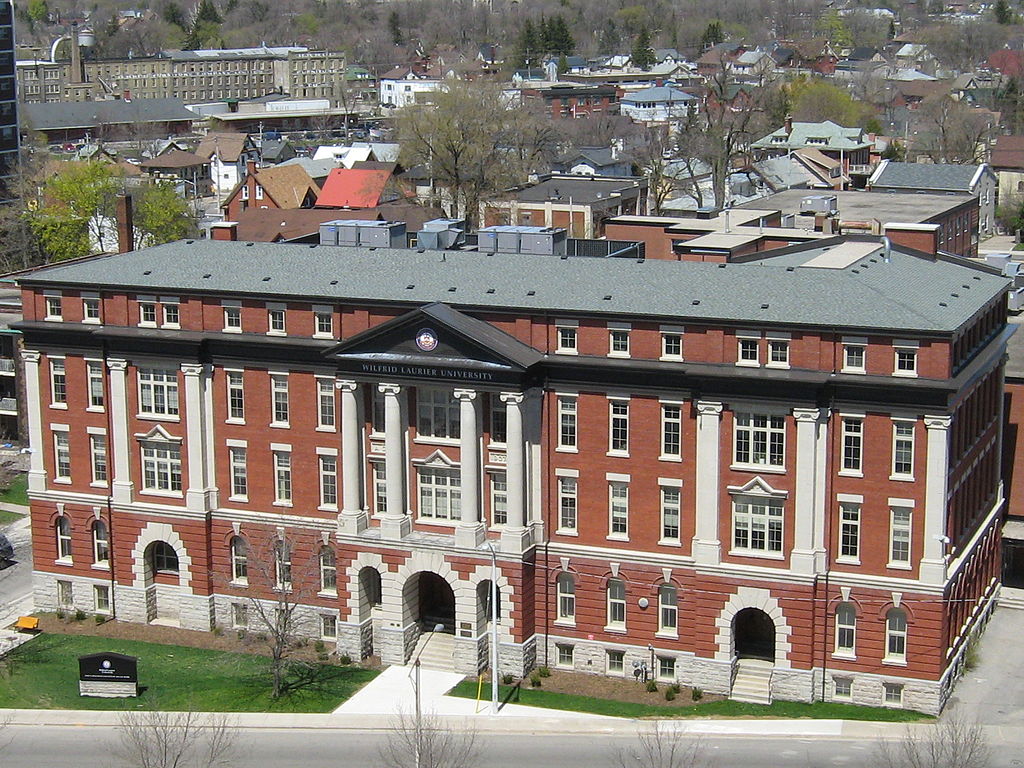
A photo of an academic building at Wilfrid Laurier University

At the beginning of November, Lindsay Shepherd, a graduate student at Canada’s Wilfrid Laurier University,  made the fateful decision to show a video clip of a debate about pronouns to her tutorial for students in a large first-year writing class. The debate, which aired on Canadian public television a year ago, featured firebrand Jordan Peterson, a professor of clinical psychology at the University of Toronto and a crusader against political correctness.

Continue reading “Pronouns and Provocateurs: Wilfrid Laurier University’s Free Speech Controversy”

Should Universities Abandon Placement Exams?

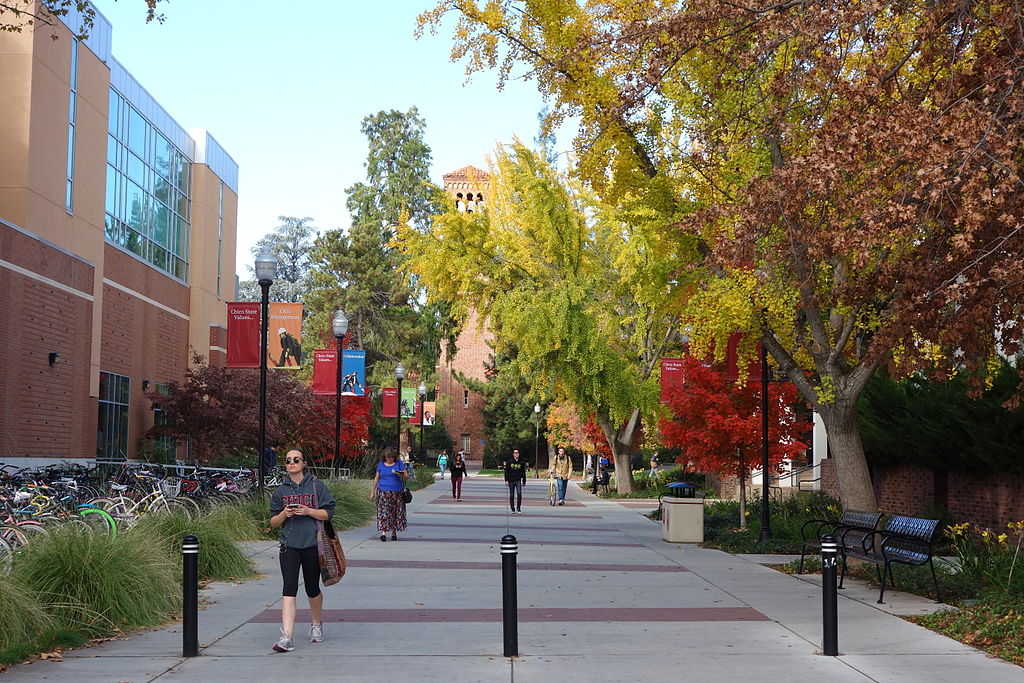
A photo of California State University's campus

At most universities in the United States, students are required to take placement exams to determine their developmental level in math and English.  Students are placed in classes that are appropriate for a student at that developmental level in each of those disciplines.  Students who are placed in non-college ready, remedial classes are required to take up to three such classes before they can enroll in courses that actually count toward their degree.  Last week, the Chancellor of the California State University educational system issued an executive order doing away with placement exams.  Instead, students can try their hands at classes at a higher difficulty level than the placement exam would have indicated was appropriate.  Many community colleges have already moved away from the use of placement exams, but the move to this approach in the large Cal State system is noteworthy.

Continue reading “Should Universities Abandon Placement Exams?”

In San Diego, Fighting Islamophobia in the Elementary School

In order to combat the “pervasive and underreported” bullying of Muslim children in public schools, the San Diego public school district’s board has launched a campaign to fight Islamophobia. As one of the largest public school districts in the country, San Diego has set an important precedent for other districts. For this reason, the decision, voted 4-0 on April 4, has received both praise and backlash on social media.

Continue reading “In San Diego, Fighting Islamophobia in the Elementary School”

The Implicit Bias of Zero Tolerance Policies

The promise of free and compulsory public education in the United States is the basis for an equal and educated citizenry and the foundation of our democracy. According to most, equal access to education levels the playing field and is the ultimate provider of social mobility and economic opportunity; therefore, we have the duty to inspect what threatens this access.

Continue reading “The Implicit Bias of Zero Tolerance Policies”

Betsy DeVos and the Changing Face of Public Education

Betsy DeVos’ controversial nomination to the Secretary of Education position has left many folks on both sides of the aisle wondering where exactly the future of our schools lie. DeVos, a staunch believer in school choice, is hoping to fix the public school system in the United States by forcing schools to compete with each other. Critics were appalled when DeVos “called traditional public schools a ‘dead end,’” leading them to launch a hashtag on social media, #publicschoolproud, to show that public schools are still making an impact on the lives of them and their children.

Continue reading “Betsy DeVos and the Changing Face of Public Education”

Move Over, Mercator: World Maps in Boston’s Public Schools

Schools in Boston recently decided to make the switch from the Mercator projection of world maps to the Gall-Peters projection, becoming the first American school system to do so. While seemingly uninteresting, making the switch from the Mercator projection is a step toward inclusivity and one that other schools should consider making.

Continue reading “Move Over, Mercator: World Maps in Boston’s Public Schools”

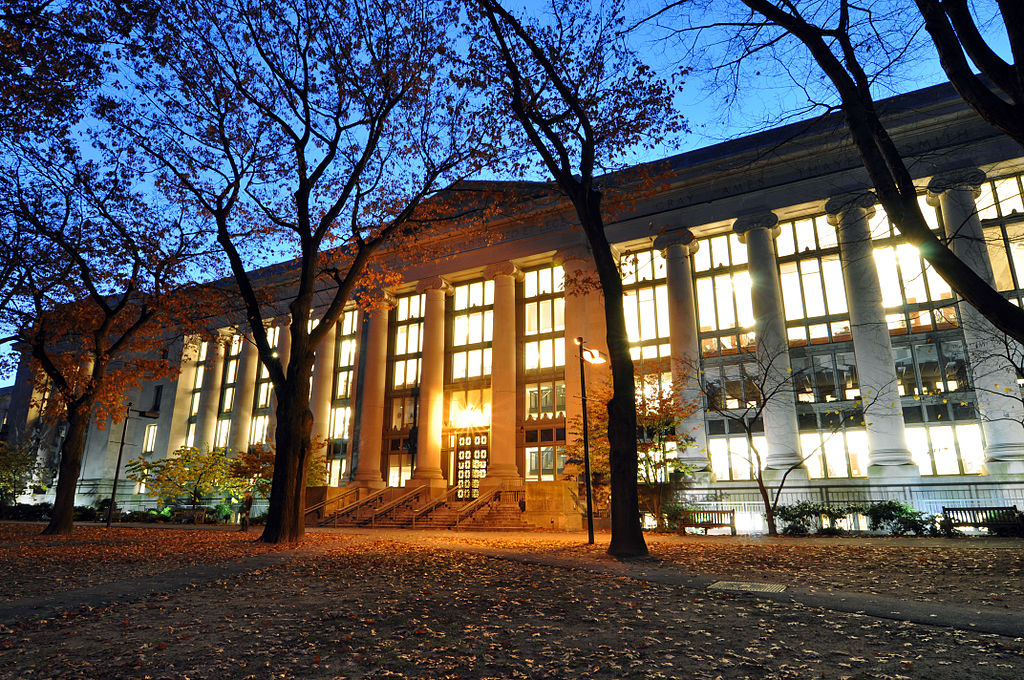
Questions of Access as Harvard Law Accepts the GRE

Since 1947, the LSAT has been a dark cloud hanging over pre-law students. A student’s LSAT score and GPA have been the main considerations in the law school admissions process for almost 70 years. Law schools have become more and more focused on the mean of their LSAT acceptance scores because it determines their national ranking. Thus, students with low LSAT scores but other qualities may not be admitted to prestigious programs.

Continue reading “Questions of Access as Harvard Law Accepts the GRE”

Should Private Schools be Outlawed?

Equal opportunity weighs heavily in American views of education. Not everyone can grow up to be a CEO of a Fortune 500 company, but who gets to be CEO should be determined principally by merit, and not according to skin color, place of birth, or family wealth. Both conservatives and liberals describe education as a driver of equal opportunity. While some may be born into poverty and others born into wealth, a well-rounded education can be the leg up that the poor child needs to compete with the rich kids. The moral case for public education rests on its ability to give everyone a shot to rise to the top.

Continue reading “Should Private Schools be Outlawed?”

Hey Hey, Ho Ho: Does Western Civ Have to Go?

Is colonialism a bad thing? It is fashionable to think so, and with good reason. Genocide, racism, slavery, depredation, epidemics, cultural inferiority complexes, etc., are all traceable to Europe’s colonial expansion beginning in the 16th Century. It would be naïve to think it is over, even if the United Nations’ list of non-self-governing territories is rather short. Colonialism persists. Whether it is America invading Iraq to get its oil, or Nike setting up sweatshops in Bangladesh, colonialism is alive and kicking, and it continues to cause great damage to people of color.

Continue reading “Hey Hey, Ho Ho: Does Western Civ Have to Go?”

Do Prison Education Programs Count as Forced Labor?

It is now common knowledge that education, whether prior or during a prison inmate’s sentence, is one of the most impactful factors in reducing recidivism, a revolving door phenomenon that sees two-thirds of prisoners return to prison. This phenomenon exacerbates the state of the largest prison population in the world, and locks away more than one in six of America’s Black men.

Continue reading “Do Prison Education Programs Count as Forced Labor?”

Diversity in Children’s Books: A White Author’s Quandary (Part I)

This post originally appeared September 22, 2015.

For the first time in census history, the majority of children living in the United States are now children of color. But the vast majority of children living within the pages of American children’s books are white. According to the Cooperative Children’s Book Center of the University of Wisconsin-Madison, which releases annual statistics on the number of U.S. children’s books by and about people of color, in 2014 only 8 percent of children’s book authors were nonwhite (African American, Asian American, American Indian, or Latino), and only 11 percent of characters. Little progress has been made in diversifying children’s book publishing since librarian Nancy Larrick published her famous 1965 essay, “The All-White World of Children’s Books,” fifty years ago.

Why does this matter? Rudine Sims Bishop uses the following metaphor to explain. For children of color, diverse books serve as mirrors: “When children cannot find themselves reflected in the books they read, or when the images they see are distorted, negative, or laughable, they learn a powerful lesson about how they are devalued in the society of which they are a part.” For white children in a white-dominant society, diverse books serve as windows: “They need books that will help them understand the multicultural nature of the world they live in, and their place as a member of just one group, as well as their connections to all other humans. . . . If they see only reflections of themselves, they will grow up with an exaggerated sense of their own importance and value in the world.”

As a children’s book author and professor of children’s literature, I’m going to take it as ethically uncontroversial that we – all those who work in some way to produce and disseminate books for children – should strive to remedy the current situation. This means prioritizing the recruitment and retention of diverse editors and the encouraging and fostering of diverse authors. It means supporting organizations such as We Need Diverse Books, “a grassroots organization created to address the lack of diverse, non-majority narratives in children’s literature.” It means accepting the challenge posed by Prof. Michelle H. Martin, one of the speakers in last year’s Prindle Institute symposium on Race and Children’s Literature, to buy diverse books as holiday and birthday gifts for the children we love.

As a white children’s author, however, I want to focus on the thorny question of what I can do to make my own books more representative of my readers. First I need to ask the hard question of whether white authors have the ability to write convincingly about characters of color, or the cultural authority to do so.

Can white authors write about non-white characters and “get it right”? It’s hard to know what would even count as “getting it right,” as the experience of any cultural, ethnic, or racial group is not one uniform, monolithic thing, presenting a single clear comparison point against which various representations can be judged. There are as many ways of being Black as there are of being white. It’s somewhat easier, perhaps, to see what would count as getting representation of another group wrong. It would be to write in a way that relies on stereotype and cliché, especially in a way that perpetuates negative assessments and expectations. Here the judges, in my view, can only be members of the non-dominant group themselves (noting that disagreement here is to be expected). Thus, as children’s books can’t be put into the hands of young readers without prior gatekeeping by editors, booksellers, librarians, and teachers, this speaks to the importance of having a significant number of non-white persons serving in these positions.

But are white authors even entitled to write about the experience of non-white people? Do we have, as it were, the right to do so? While surely we need to reject the general principle that nobody can write outside of the confines of his or her own narrow, insular, personal experience, when white people write about people of color, we face the further issue of cultural appropriation: exploitation of members of marginalized groups by privileged members of the dominant group. White authors writing about non-white characters can seem one more example of white people taking what belongs to others: bodies, land, artifacts, and now, stories.

I myself would feel cautious about writing a book about a non-white main character that focuses centrally on that character’s experience of racism. Maybe it’s because I think I’d be bound to get it wrong, because I can’t imagine being able fully to know what it’s like to be a Black person in the United States in 2015. So maybe it’s the previous concern about accuracy of representation that is doing the work here. It just feels hubristic to think that I could tackle that experience, “whitesplain” it to others, with any confidence. Another, more imaginative writer might legitimately feel otherwise.

That said, I’m no longer willing – ethically willing – to write an all-white world into creation in my books. Children need and deserve diverse books. I have to do what I can, within these limits, to provide books that reflect the classrooms and families of the real world in which my readers live.

In the next post, I look at the ethical challenges that arise in trying to do this.

Diversity in Medicine

Issues of race and discrimination transcend social interactions and permeate important institutions in the U.S., and the field of medicine is no exception. Recently, concerns about how patients of color may be receiving treatment differently, and less effectively, than white patients have become more frequently studied. Medical schools have implemented diversity initiatives in cultural sensitivity and awareness of subconscious bias to combat these issues and decrease the prevalence of racism in the medical field. However, according to Jennifer Adaeze, medical school student and writer for Stat News, these initiatives are not enough .

Continue reading “Diversity in Medicine”

Does the U.S Need a School Lesson from Finland?

Addressing American families, Howard Gardner, an education professor at Harvard, suggested to “‘[l]earn from Finland, which has the most effective schools and which does just about the opposite of what we are doing in the United States.’” William Doyle, writer for the Los Angeles Times, abided by Gardners advice and enrolled his seven-year-old son in a Finnish school. Doyle got an inside look at the higher education system as well when he became a professor in a Finnish University. Reflecting fondly on his familys five months there, he refers to the school system as stunningly stress-freewhile being stunningly good.Doyle recalls, Finns put into practice cultural mantras I heard over and over: Let children be children,’ ‘The work of a child is to play,and Children learn best through play.’” These values contrast greatly with Americas mentality of teaching for the standardized test.

Continue reading “Does the U.S Need a School Lesson from Finland?”

The Social Welfare of Child Maltreatment Prevention

Social constructs of parenting and childrearing norms change over time as the idea of the “right” or “best” way to raise a child is continually debated, such as the social acceptability of spanking. A recent article in The Atlantic titled, “Welcome to Parent College,” explores this notion and the ethical dilemmas surrounding an increasing number of classes across the U.S. that teach parents how to be parents, a little-explored corner of the healthcare realm. Triple P, the Positive Parenting Program, is the curriculum behind the parenting class at the San Francisco center. The class includes parents who have been proven or suspected of committing child abuse and have been referred by social workers, as well as those who are simply at the ends of their ropes, like those who have acknowledged their own tempers and waning patience with unruly children.

Continue reading “The Social Welfare of Child Maltreatment Prevention”

Student Loan Debt’s Enforcement Problem

The prospect of student loan debt is often enough to scare any college graduate. For many, such fear is all too common; according to the Wall Street Journal, 71% of the Class of 2015 graduated with student loan debt. For many of these graduates, the amount owed is scary enough, in itself. What happens, then, when heavily-armed members of law enforcement are thrown into the mix?

Continue reading “Student Loan Debt’s Enforcement Problem”