You’re sitting in an emergency room waiting area when a commotion breaks out near the doors. Two staff members and a paramedic are pushing a gurney down the hall. The patient is strapped in. He is awake, coherent, and furious. “Let me go. I’m fine. You can’t do this. You’re violating my rights.” A concerned bystander follows, insisting the same thing. A few strangers in the waiting room start to chime in. Someone tells the staff to stop.
Should you do anything? You could join the protest. You could even try to physically block the staff. But you do not know the patient’s vitals or medical history. You do not know what he initially said. You do not know what the paramedic saw ten minutes ago. Sure, the staff might be wrong. Errors and abuse do happen. But even so, the scene is not yours to take over. Doing so would be wrong.
The reason why it would be wrong for you to intervene has to do with what’s called epistemic asymmetry. It is the simple fact that in some situations the parties do not stand in anything like equal relation to the relevant information. One party knows things that the other parties cannot know on the spot. The asymmetry is not a matter of one party being morally superior, but about access to knowledge. In high-stakes situations, access to knowledge matters because it determines who can act responsibly in the moment.
The Limits of the Bystander
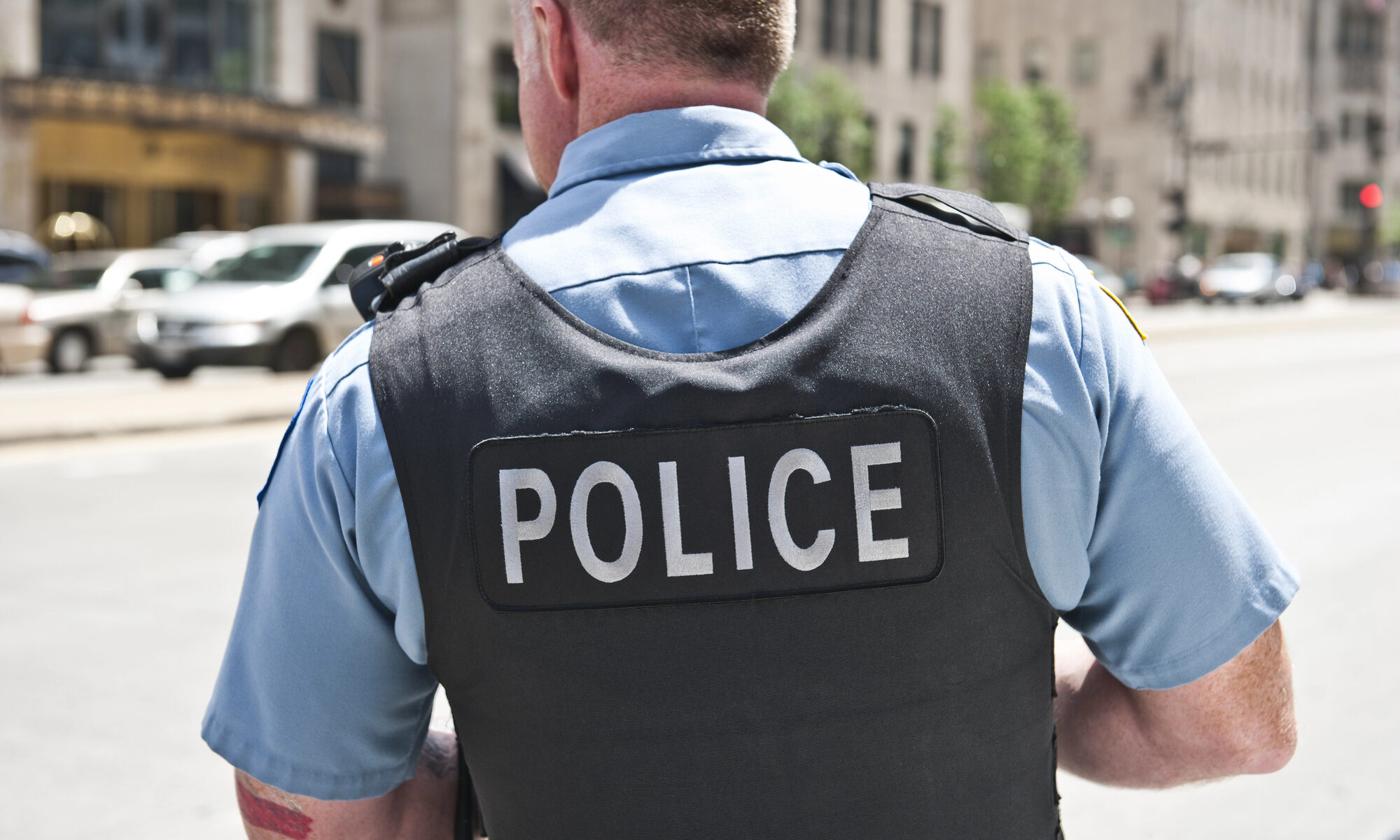
Now consider a scene that plays out routinely in the real world. You are walking down the street and you come across a police officer and a man on the ground, grappling. The officer is trying to get the man’s hands behind his back. In the distance, you hear sirens. The man is yelling that he did nothing wrong and that the officer is oppressing him. A small crowd forms. Someone shouts, “He didn’t do anything wrong!” The arrestee begins to scream for others to help. Meanwhile, the officer keeps saying, “Stop resisting!”
You have no idea what happened two minutes earlier. You do not know whether there is a warrant. You do not know whether the officer saw a weapon. You do not know whether the man just punched someone around the corner. You do not know whether the man is wanted for something serious. You simply have a struggle in front of you and competing claims.
Should you do anything? Who is more reasonable to trust in that moment?
The answer is not “the officer, because he wears a uniform.” It is “the officer, because of the structure of the situation.” The officer is likely acting on information you do not have. He is also acting under a set of constraints and responsibilities that you do not share. The man being arrested is an interested party. He might be innocent. He might be guilty. Either way, he has an incentive to say whatever will get him out of handcuffs. The bystanders have even less information than he does.
If we take epistemic asymmetry seriously, then intervening on an arrestee’s behalf is morally wrong in the typical case. It is not your job to adjudicate the legality of the arrest by force on the basis of a few shouted sentences and a chaotic struggle. The same is true for the arrestee. Even if he believes the arrest is unjust, he is not entitled to settle that dispute by escalating violence against an officer.
The Presumption of Reliability
What justifies this restraint is not blind obedience, but rather a presumption of reliability. Now, a presumption is not a conclusion. It is a rational starting point, adopted in the absence of defeating evidence. We rely on such presumptions constantly. When a pilot gives instructions during turbulence, passengers comply even though pilots sometimes make mistakes. When a lifeguard orders swimmers out of the water, most people do not demand proof that a riptide has formed. In each case, authority is provisional and defeasible, but still owed deference because the person issuing commands is positioned closer to the relevant facts.
Police officers occupy a similar role. They receive dispatch calls. They are given descriptions. They observe behavior before bystanders arrive. They are trained to notice things that mean little to spectators. They also operate under rules that matter even when no one else knows what those rules are. That combination generates a prima facie reason to trust their judgment in the moment.
The word trust might seem to provoke resistance, as if trusting the police required moral submission. It does not. Trust here means something modest. It means treating an officer’s actions as more likely to be grounded in relevant information than the claims of the person being arrested or the guesses of the crowd. That is a comparative judgment, not an endorsement of infallibility.
Some may object that this gives the state too much power. But it does not. It gives the moment less power. It insists that disputes over justification be resolved where reasons can be assessed, evidence weighed, and incentives constrained.
Another objection is that police abuse is real, and in some communities persistent. That is true, but also besides the point. A presumption can be defeated. If an officer is clearly acting outside the bounds of law and restraint, self-defense principles apply. But most cases that people label unjust arrests are not cases of obvious criminal violence by police. They are cases of disputed authority under conditions of uncertainty. Those are precisely the cases where epistemic humility is required.
Just and Unjust Arrests
Most jurisdictions criminalize resisting arrest, or using force against a law enforcement officer, even if the person being arrested believes the arrest is unjust. For example, in Kansas (where I work), KSA 21-5229 states that “a person is not authorized to use force to resist an arrest which such person knows is being made either by a law enforcement officer… even if the person arrested believes that the arrest is unlawful.”
That can strike some people as odd. If you sincerely believe that the state is acting unjustly, why can’t you resist? If you believe that an officer is violating your rights, why must you submit? The intuition is understandable. We are used to thinking that perceived injustice licenses immediate opposition, and that compliance amounts to complicity. But that way of thinking ignores the moral significance of not knowing what you do not know.
Laws against resisting seemingly unjust arrests are not premised on the absurd idea that police officers are infallible. They are premised on the reality that arrests occur under conditions of severe informational asymmetry. The officer is acting on facts that are typically unavailable to the person being arrested and entirely unavailable to bystanders. The law treats that asymmetry as morally relevant. It builds in a presumption that the officer’s use of force is more likely than not to be justified in the moment, even when that presumption later turns out to be false.
Belief is cheap and knowledge is hard. People routinely believe they are being wronged when they are not, and just as routinely claim injustice when it is convenient to do so. The law cannot treat sincerity as a moral trump card in situations where bad faith is common and information is unevenly distributed.
What matters is not whether an arrestee believes the arrest is unjust, but whether it is unjust. And that is not something the arrestee, much less the crowd, is typically in a position to determine in the moment. Epistemic asymmetry makes belief an unreliable guide to reasonableness, which is precisely why the use of force cannot be conditioned on one’s own assessment of injustice.
Trust, Then Verify
The point, then, is not that the police are always right. It is that force is a moral instrument with demanding preconditions, and one of those preconditions is appropriate knowledge. In the context of an arrest, that knowledge is almost never available to the crowd watching from the sidewalk.
If an arrest is truly unjust, what matters is that it be shown to be so under standards designed to distinguish error from excuse and authority from abuse. That work cannot be done in the middle of a struggle. It can only be done once the moment has passed and reasons can be given their due. The place for that is the courtroom.