← Return to search results
Back to Prindle Institute

Ethical Considerations of Deepfakes

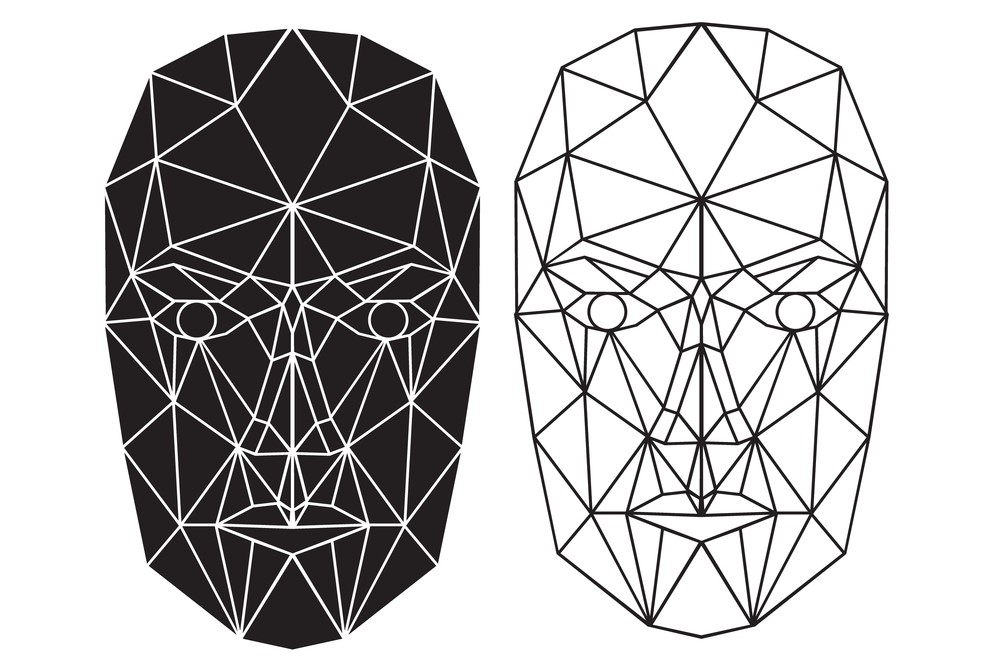
computer image of two identical face scans

In a recent interview for MIT Technology Review, art activist Barnaby Francis, creator of deepfake Instagram account @bill_posters_uk, mused that deepfake is “the perfect art form for these kinds of absurdist, almost surrealist times that we’re experiencing.” Francis’ use of deepfakes to mimic celebrities and political leaders on Instagram is aimed at raising awareness about the danger of deepfakes and the fact that “there’s a lot of people getting onto the bandwagon who are not really ethically or morally bothered about who their clients are, where this may appear, and in what form.” While deepfake technology has received alarmist media attention in the past few years, Francis is correct in his assertion that there are many researchers, businesses, and academics who are pining for the development of more realistic deepfakes.

Is deepfake technology ethical? If not, what makes it wrong? And who holds the responsibility to prevent the potential harms generated by deepfakes: developers or regulators?

Deepfakes are not new. The first mention of deepfake was by a reddit user in 2017, who began using the technology to create pornographic videos. However, the technology soon expanded to video games as a way to create images of people within a virtual universe. However, the deepfake trend suddenly turned toward more global agendas, with fake images and videos of public figures and political leaders being distributed en masse. One altered video of Joe Biden was so convincing that even President Trump fell for it. Last year, there was a deepfake video of Mark Zuckerberg talking about how happy he was to have thousands of people’s data. At the time, Facebook maintained that deepfake videos would stay up, as they did not violate their terms of agreement. Deepfakes have only increased since then. In fact, there exists an entire YouTube playlist with deepfake videos dedicated to President Trump.

In 2020, those who have contributed to deepfake technology are not only individuals in the far corners of the internet. Researchers at the University of Washington have also developed deepfakes using algorithms in order to combat their spread. Deepfake technology has been used to bring art to life, recreate the voices of historical figures, and to use celebrities’ likeness to communicate powerful public health messages. While the dangers of deepfakes have been described by some as dystopian, the methods behind their creation have been relatively transparent and accessible.

One problem with deepfakes are that they mimic a person’s likeness without their permission. The original Deepfakes, which used photos or videos of a person mixed with pornography uses a person’s likeness for sexual gratification. Such use of a person’s likeness might never personally affect them, but could still be considered wrong, since they are being used as a source of pleasure and entertainment, without consent. These examples might seem far-fetched, but in 2019 a now-defunct app called DeepNude, sought to do exactly that. Even worse than using someone’s likeness without their knowledge, is if the use of their likeness is intended to reach them and others, in order to humiliate or damage their reputation. One could see the possibility of a type of deepfake revenge-porn, where scorned partners attempt to humiliate their exes by creating deepfake pornography. This issue is incredibly pressing and might be more prevalent than the other potential harms of deepfakes. One study, for example, found that 96% of existing deepfakes take the form of pornography.

Despite this current reality, much of the moral concern over deepfakes is grounded in their potential to easily spread misinformation. Criticism around deepfakes in recent years has been mainly surrounding their potential for manipulating the public to achieve political ends. It is becoming increasingly easy to spread a fake video depicting a politician who is clearly incompetent or spreading a questionable message, which might detract from their base. On a more local level, deepfakes could be used to discredit individuals. One could imagine a world in which deepfakes are used to frame someone in order to damage their reputation, or even to suggest they have committed a crime. Video and photo evidence is commonly used in our civil and criminal justice system, and the ability to manipulate videos or images of a person, undetected, arguably poses a grave danger to a justice system which relies on our sense of sight and observation to establish objective fact. Perhaps even worse than framing the innocent could be failing to convict the guilty. In fact, a recent study in the journal Crime Science found that deepfakes pose a serious crime threat when it comes to audio and video impersonation and blackmail. What if a deepfake is used to replace a bad actor with a person who does not exist? Or gives plausible deniability to someone who claims that a video or image of them has been altered?

Deepfakes are also inherently dishonest. Two of the most popular social media networks, Instagram and TikTok, inherently rely upon visual media which could be subject to alteration by self-imposed deepfakes. Even if a person’s likeness is being manipulated with their consent and also could have positive consequences, it still might be considered wrong due to the dishonest nature of its content. Instagram in particular has been increasingly flooded with photoshopped images, as there is an entire app market that exists solely for editing photos of oneself, usually to appear more attractive. The morality of editing one’s photos has been hotly contested amongst users and between feminists. Deepfakes only stand to increase the amount of media that is self-edited and the moral debates that come along with putting altered media of oneself on the internet.

Proponents of deepfakes argue that their positive potential far outweighs the negative. Deepfake technology has been used to spark engagement with the arts and culture, and even to bring historical figures back to life, both for educational and entertainment purposes. Deepfakes also hold the potential to integrate AI into our lives in a more humanizing and personal manner. Others, who are aware of the possible negative consequences of deepfakes, argue that the development and research of this technology should not be impeded, as the advancement of the technology can also contribute to research methods of spotting it. And there is some evidence backing up this argument, as the development of deepfake progresses, so do the methods for detecting it. It is not the moral responsibility of those researching deepfake technology to stop, but rather the role of policymakers to ensure the types of harmful consequences mentioned above do not wreak havoc on the public. At the same time, proponents such as David Greene, of the Electronic Frontier Foundation, argue that too stringent limits on deepfake research and technology will “implicate the First Amendment.”

Perhaps then it is not the government nor deepfake creators who are responsible for their harmful consequences, but rather the platforms which make these consequences possible. Proponents might argue that the power of deepfakes is not necessarily from their ability to deceive one individual, but rather the media platforms on which they are allowed to spread. In an interview with Digital Trends, the creator of Ctrl Shift Face (a popular deepfake YouTube channel), contended that “If there ever will be a harmful deepfake, Facebook is the place where it will spread.” While this shift in responsibility might be appealing, detractors might ask how practical it truly is. Even websites that have tried to regulate deepfakes are having trouble doing so. Popular pornography website, PornHub, has banned deepfake videos, but still cannot fully regulate them. In 2019, a deepfake video of Ariana Grande was watched 9 million times before it was taken down.

In December, the first federal regulation pertaining to deepfakes passed through the House, the Senate, and was signed into law by President Trump. While increased government intervention to prevent the negative consequences of deepfakes will be celebrated by some, researchers and creators will undoubtedly push back on these efforts. Deepfakes are certainly not going anywhere for now, but it remains to be seen if the potentially responsible actors will work to ensure their consequences remain net-positive.
In Search of an AI Research Code of Conduct

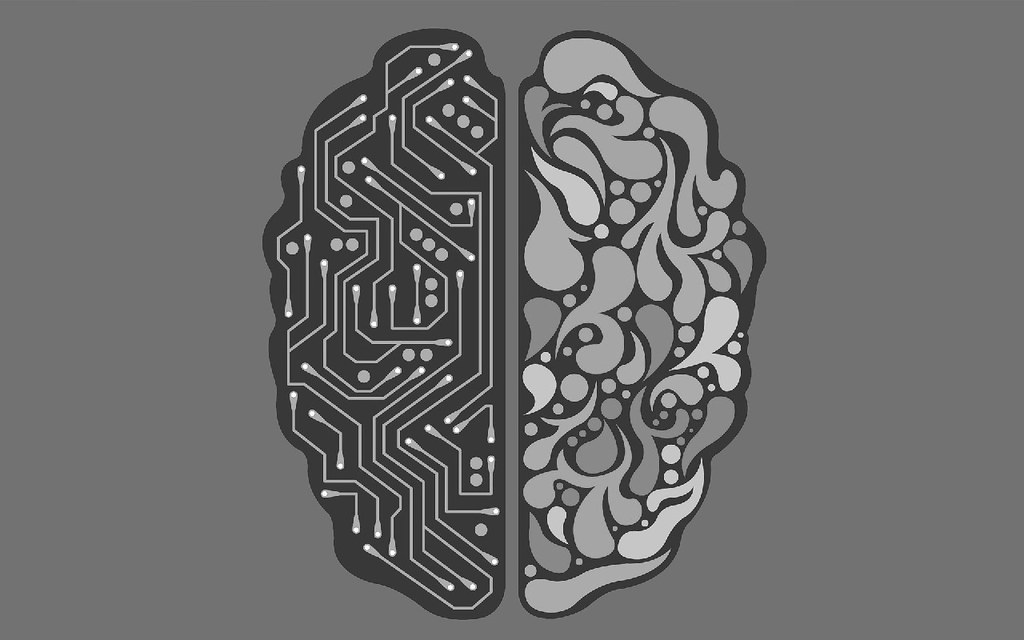
image of divided brain; fluid on one side, curcuitry on the other

The evolution of an entire industry devoted to artificial intelligence has presented a need to develop ethical codes of conduct. Ethical concerns about privacy, transparency, and the political and social effects of AI abound. But a recent study from the University of Oxford suggests that borrowing from other fields like medical ethics to refine an AI code of conduct is problematic. The development of an AI ethics means that we must be prepared to address and predict ethical problems and concerns that are entirely new, and this makes it a significant ethical project. How we should proceed in this field is itself a dilemma. Should we proceed in a top-down principled approach or a bottom up experimental approach?

AI ethics can concern itself with everything from the development of intelligent robots to machine learning, predictive analytics, and the algorithms behind social media websites. This is why it is such an expansive area with some focusing on the ethics of how we should treat artificial intelligence, others focusing on how we can protect privacy, or some on how the AI behind social media platforms and AI capable of generating and distributing ‘fake news’ can influence the political process. In response many have focused on generating a particular set of principles to guide AI researchers; in many cases borrowing from codes governing other fields, like medical ethics.

The four core principles of medical ethics are respect for patient autonomy, beneficence, non-maleficence, and justice. Essentially these principles hold that one should act in the best interests of a patient while avoiding harms and ensuring fair distribution of medical services. But the recent Oxford study by Brent Mittelstadt argues that the analogical reasoning relating the medical field to the AI field is flawed. There are significant differences between medicine and AI research which makes these principles not helpful or irrelevant.

The field of medicine is more centrally focused on promoting health and has a long history of focusing on the fiduciary duties of those in the profession towards patients. Alternatively, AI research is less homogeneous, with different researchers in both the public and private sector working on different goals and who have duties to different bodies. AI developers, for instance, do not commit to public service in the same way that a doctor does, as they may only responsible to shareholders. As the study notes, “The fundamental aims of developers, users, and affected parties do not necessarily align.”

In her book Towards a Code of Ethics for Artificial Intelligence Paula Boddington highlights some of the challenges of establishing a code of ethics for the field. For instance, those working with AI are not required to receive accreditation from any professional body. In fact,

“some self-taught, technically competent person, or a few members of a small scale start up, could be sitting in their mother’s basement right now dreaming up all sorts of powerful AI…Combatting any ethical problems with such ‘wild’ AI is one of the major challenges.”

Additionally, there are mixed attitudes towards AI and its future potential. Boddington notes a divide in opinion: the West is more alarmist as compared to nations like Japan and Korea which are more likely to be open and accepting.

Given these challenges, some have questioned whether an abstract ethical code is the best response. High-level principles which are abstract enough to cover the entire field will be too vague to be action-guiding, and because of the various different fields and interests, oversight will be difficult. According to Edd Gent,

“AI systems are…created by large interdisciplinary teams in multiple stages of development and deployment, which makes tracking the ethical implications of an individual’s decisions almost impossible, hampering our ability to create standards to guide those choices.”

The situation is not that different from work done in the sciences. Philosopher of science Heather Douglas has argued, for instance, that while ethical codes and ethical review boards can be helpful, constant oversight is impractical, and that only scientists can fully appreciate the potential implications of their work. The same could be true of AI researchers. A code of principles of ethics will not replace ethical decision-making; in fact, such codes can be morally problematic. As Boddington argues, “The very idea of parceling ethics into a formal ‘code’ can be dangerous.” This is because many ethical problems are going to be new and unique so ethical choice cannot be a matter of mere compliance. Following ethical codes can lead to complacency as one seeks to check certain boxes and avoid certain penalties without taking the time to critically examine what may be new and unprecedented ethical issues.

What this suggests is that any code of ethics can only be suggestive; they offer abstract principles that can guide AI researchers, but ultimately the researchers themselves will have to make individual ethical judgments. Thus, part of the moral project of developing an AI ethics is going to be the development of good moral judgment by those in the field. Philosopher John Dewey noted this relationship between principles and individual judgment, arguing:

“Principles exist as hypotheses with which to experiment…There is a long record of past experimentation in conduct, and there are cumulative, verifications which give many principles a well earned prestige…But social situations alter; and it is also foolish not to observe how old principles actually work under new conditions, and not to modify them so that they will be more effectual instruments in judging new cases.”

This may mirror the thinking of Brent Mittelstadt who argues for a bottom-up approach to AI ethics that focuses on sub-fields developing ethical principles as a response to resolving challenging novel cases. Boddington, for instance, notes the importance of equipping researchers and professionals with the ethical skills to make nuanced decisions in context; they must be able to make contextualized interpretations of rules, and to judge when rules are no longer appropriate. Still, such an approach has its challenges as researchers must be aware of the ethical implications of their work, and there still needs to be some oversight.

Part of the solution to this is public input. We as a public need to make sure that corporations, researchers, and governments are aware of the public’s ethical concerns. Boddington recommends that in such input there be a diversity of opinion, thinking style, and experience. This includes not only those who may be affected by AI, but also professional experts outside of the AI field like lawyers, economists, social scientists, and even those who have no interest in the world of AI in order maintain an outside perspective.

Codes of ethics in AI research will continue to develop. The dilemma we face as a society is what such a code should mean, particularly whether it will be institutionalized and enforced or not. If we adopt a bottom up approach, then such codes will likely be only there for guidance or will require the adoption of multiple codes for different areas. If a more principled top-down approach is adopted, then there will be additional challenges of dealing with the novel and with oversight. Either way, the public will have a role to play to ensure that its concerns are being heard.

Racist, Sexist Robots: Prejudice in AI

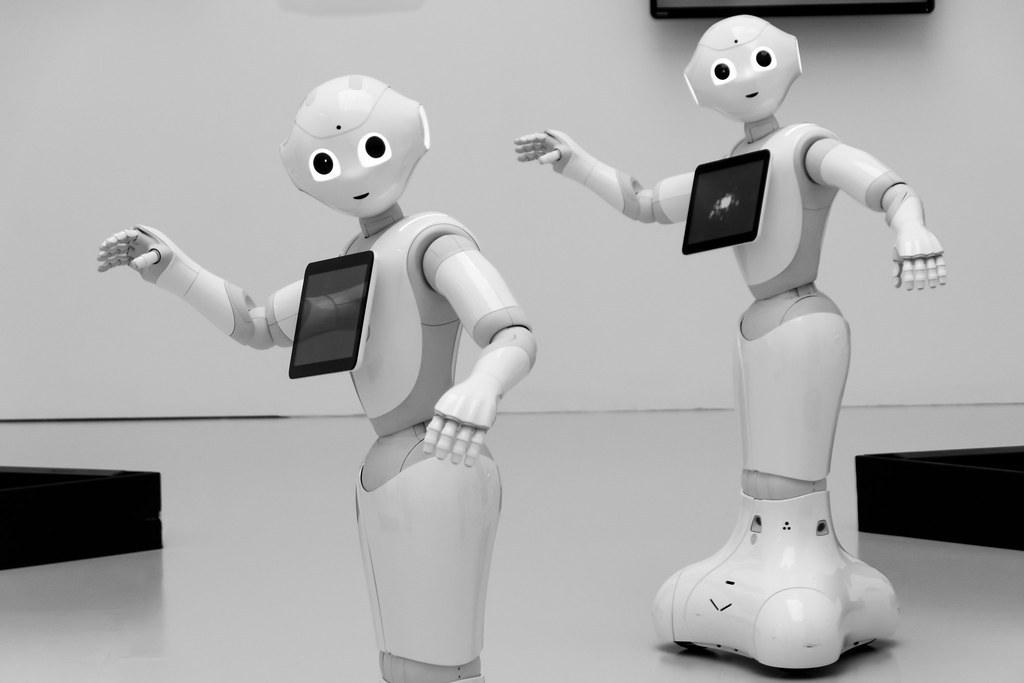
Black and white photograph of two robots with computer displays

The stereotype of robots and artificial intelligence in science fiction is largely of a hyper-rational being, unafflicted by the emotions and social infirmities like biases and prejudices that impair us weak humans. However, there is reason to revise this picture. The more progress we make with AI the more a particular problem comes to the fore: the algorithms keep reflecting parts of our worst selves back to us.

In 2017, research showed compelling evidence that AI picks up deeply ingrained racial- and gender-based prejudices. Current machine learning techniques rely on algorithms interacting with people in order to better predict correct responses over time. Because of the dependence on interacting with humans for standards of correctness, the algorithms cannot detect when bias informs a correct response or when the human is engaging in a non-prejudicial way. Thus, the best working AI algorithms pick up the racist and sexist underpinnings of our society. Some examples: the words “female” and “woman” were more closely associated with arts and humanities occupations and with the home, while “male” and “man” were closer to maths and engineering professions. Europeans were associated with pleasantness and excellence.

In order to prevent discrimination in housing, credit, and employment, Facebook has recently been forced to agree to an overhaul of its ad-targeting algorithms. The functions that determined how to target audiences for ads relating to these areas turned out to be racially discriminatory, not by design – the designers of the algorithms certainly didn’t encode racial prejudices – but because of the way they are implemented. The associations learned by the ad-targeting algorithms led to disparities in the advertising of major life resources. It is not enough to program a “neutral” machine learning algorithm (i.e., one that doesn’t begin with biases). As Facebook learned, the AI must have anti-discrimination parameters built in as well. Characterizing just what this amounts to will be an ongoing conversation. For now, the ad-targeting algorithms cannot take age, zip code, or gender into consideration, as well as legally protected categories.

The issue facing AI is similar to the “wrong kind of reasons” problem in philosophy of action. The AI can’t tell a systemic bias of humans from a reasoned consensus: both make us converge on an answer and support the algorithm to select what we may converge on. It is difficult to say what, in principle, the difference is between the systemic bias and a reasoned consensus is. It is difficult, in other words, to give the machine learning instrument parameters to tell when there is the “right kind of reason” supporting a response and the “wrong kind of reason” supporting the response.

In philosophy of action, the difficulty of drawing this distinction is illustrated by a case where, for instance, you are offered $50,000 to (sincerely) believe that grass is red. You have a reason to believe, but intuitively this is the wrong kind of reason. Similarly, we could imagine a case where you will be punished unless you (sincerely) desire to eat glass. The offer of money doesn’t show that “grass is red” is true, similarly the threat doesn’t show that eating glass is choice-worthy. But each somehow promote the belief or desire. For the AI, a racist or sexist bias leads to a reliable response in the way that the offer and threat promote a behavior – it is disconnected from a “good” response, but it’s the answer to go with.

For International Women’s Day, Jeanette Winterson suggested that artificial intelligence may have a significantly detrimental effect on women. Women make up 18% of computer science graduates and thus are left out of the design and directing of this new horizon of human development. This exclusion can exacerbate the prejudices that can be inherent in the design of these crucial algorithms that will become more critical to more arenas of life.

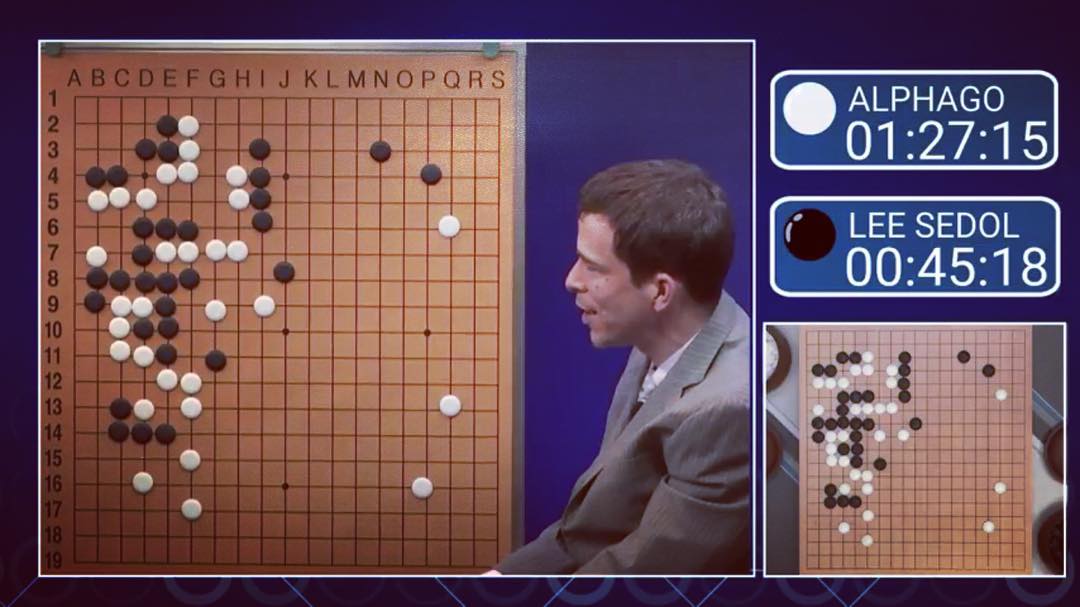
The Artificial Intelligence of Google’s AlphaGo

Last week, Google’s AlphaGo program beat Ke Jie, the Go world champion. The victory is a significant one, due to the special difficulties of developing an algorithm that can tackle the ancient Chinese game. It differs significantly from the feat of DeepBlue, the computer that beat then-chess world champion Garry Kasparov in 1997, largely by brute force calculations of the possible moves on the 8×8 board. The possible moves in Go far eclipse those of chess, and for decades most researchers didn’t consider it possible for a computer to defeat a champion-level Go player, because designing a computer with such complexity would amount to such great leaps towards creative intuition on the computer’s part.

Continue reading “The Artificial Intelligence of Google’s AlphaGo”