
Scattering the Flock: Exploring Anti-Flock Sentiments


 SHARE
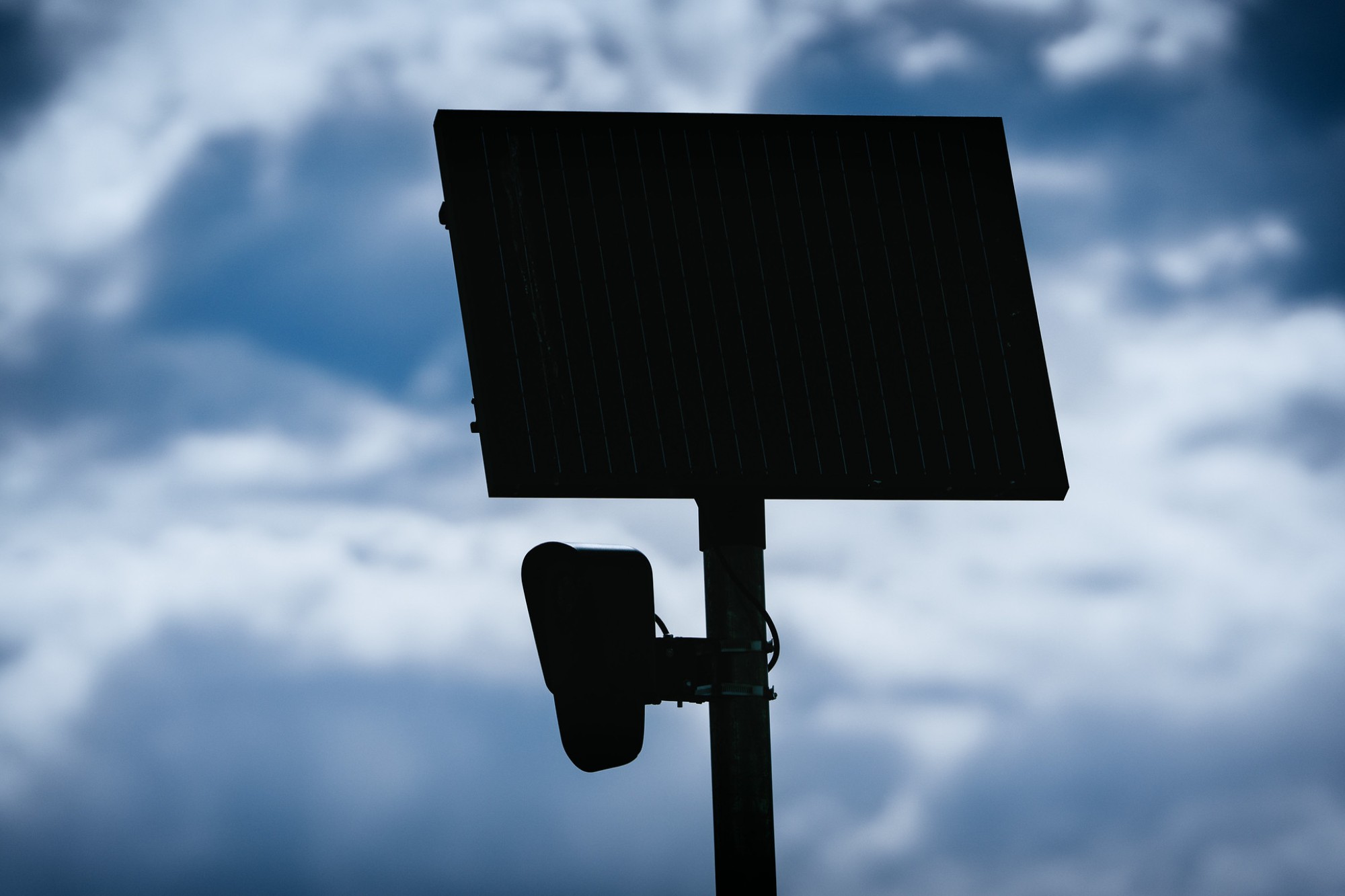
Over the past several months, Flock cameras have been the subject of much public ire. This even comes despite Darth Vader’s support! As described by their manufacturer, these cameras are automatic license plate leaders (ALPR) which utilize AI image recognition software to read the license plates of any vehicles that pass by, as well as noting other identifiable characteristics (e.g., the make, model, color and imperfections such as dents and scratches). They then store all readings in a searchable cloud database, which clients, usually investigators, search through. Initially, Flock cameras defaulted to 30 days of storage for all readings, but recently updated the default storage to 7 days.
A single reading from an ALPR does not provide much information (this vehicle, registered to this person, was photographed at this location at this time), but the worries of detractors emerge from the scale of ALPR networks. Most major metropolitan areas in the United States now have a dense concentration of Flock cameras. A series of searches for a single vehicle could reveal the daily movements of anyone who lives in a major metro; you might pass a camera leaving home, another arriving at work, down the street from your favorite coffee shop, outside your child’s school, and in the parking lot of the complex containing your doctor’s office. Even if this data is only stored for a week, the ALPR database at any moment contains a detailed picture of your usual habits, frequent haunts, and associates.
In a recent column for the Prindle Post, Timothy Hsiao considers the merits of one argument against Flock surveillance systems. This critique holds that such systems should not be utilized out of a concern that law enforcement officers (LEOs) may abuse them. For instance, multiple LEOs have been fired, currently face charges, and/or have been convicted for utilizing their precinct’s APLR system to track and harass their exes, as well as their exes’ new partners.
Hsiao contends this critique faces a dilemma. If the claim is that any system with the potential for abuse should not be used, he argues, then this condemns too much. For instance, LEOs found the new addresses of their former partners in licensed driver registries. But this hardly seems like sufficient ground to abolish their use. However, Hsiao argues, if the critic instead thinks that we need to only guard against significant abuses of ALPRs, then this simply requires stricter regulations on their use, rather than the abolition. Thus, the abuse-based critique either condemns too much or fails to hit its target.
The purpose of this column is not to critique Hsiao’s argument. Indeed, he poses a worthwhile challenge for opponents of ALPRs to consider. They should certainly be able to explain what exactly makes this technology different from other tools LEOs utilize to gather personal information. If we cannot find such a difference, then it is worth reconsidering our views about ALPRs and/or about other forms of surveillance.
That being said, Hsiao’s argument offers a limited perspective on objections to Flock cameras, considering only the concern that they may be abused by LEOs. If we broaden our scope beyond this critique, then some ideas might resonate differently. Consider this argument raised by Hsiao:
“The strongest disanalogy [between Flock cameras and traditional police databases] is that accumulated Flock sightings can reveal patterns of movement that a single driver’s license inquiry cannot. But this comparison involves a sleight of hand. It compares many Flock records with one conventional database inquiry. Repeated searches across driver, vehicle, criminal history, and other police databases can also produce a detailed picture of someone’s life. Indeed, this is exactly what Paull did. Flock may make aggregation easier, but aggregation is already possible using conventional databases. At most, the difference shows that prolonged or broad Flock tracking requires stronger justification, not that it should be abolished.”
I think Hsiao is correct here, at least when the potential for abuse is what we are analyzing. A home address, discoverable with a vehicle registration, is far more useful for stalking or harassment than even multiple ALPR record searches. But this is a very limited perspective. What concerns might emerge when we consider the collection, storage, and access of aggregated ALPR data?
First, some find issues with their intended use, rather than their abuse. It’s understandable to support tools which help investigations in cases such as murder, theft, and kidnapping, as well as to find missing people. But some of the most high profile cases involving Flock saw the devices used to investigate suspected abortions and out-of-state customers at marijuana dispensaries in legal states. Further, officials from Immigration and Customers Enforcement often request Flock data from state/local departments to make immigration arrests. When a law is controversial at best and unjust at worst, it is understandable why ire would be drawn to new tools used to investigate those laws.
Second, although Hsiao correctly notes that private firms owning ALPRs seems irrelevant to their potential for abuse, this may be very concerning in other respects. Whether a database is public or privately owned makes little difference to whether LEOs may abuse it. But such a service being operated for the sake of profit may be significantly concerning when that service involves private, potentially sensitive information that is gathered without one’s consent. Without transparency about the exact agreement between law enforcement agencies, local municipalities, and firms like Flock, citizens may have reasonable concerns about what weeks-long tracking data may be used for. Even then, ALPR-providers have provided misleading information about their services to clients.
Third, many object that the process of their implementation was undemocratic. Often, ALPRs are installed without public notice, a ballot measure, or approval from elected officials. Indeed, in many cases it seems active efforts were taken to obscure this information from the public. For instance, state and local police departments have installed cameras without consulting officials or the public, and split orders of cameras to fall below spending thresholds that trigger oversight mechanisms. Public pressure has worked to bring about change to some extent; DeFlock, an anti-ALPR advocacy group lists 294 cases where city councils have either cancelled contracts or agreed to no longer utilize the service after a contract expires. However, in some cases municipalities merely sign a deal with a new ALPR vendor.
I previously discussed similar issues in the context of data centers. I argued that the rapid construction despite public objection demonstrated a governmental system that failed to function as republican ones. The quick rollout without much, if any, opportunity for members of the public to contest feels like arbitrary interference with their interests. Local communities will certainly face a burden from these data centers, while the benefits are not as obvious; the majority of the benefits of data centers flow to the firms which operate and utilize them, and the users of the services which rely on them.
However, ALPRs are different in this regard. They seem to both benefit and burden members of the same group, the local public. Provided that ALPRs enable LEOs to solve otherwise unsolvable cases, or to more quickly resolve time-sensitive ones like missing or kidnapped persons, this benefits the local public. Further, ALPRs may also serve as a deterrent. Perhaps would-be-offenders may avoid violating laws in an area they know is dense with ALPRs out of fear they will be caught.
But these benefits come at the price of decreased privacy. In a region with a robust network of ALPRs, one’s movements in a vehicle are tracked, stored and categorized in a database accessible by LEOs without a warrant. This information may then be stored for weeks. More troublingly, though, LEOs may actually utilize ALPRs to track people, rather than vehicles, and some companies have begun to offer AI-powered facial recognition services for data gathered from ALPRs. Even if no one actually searches a database for you or your vehicle, the fact that they have the power to do so, without a warrant and with minimal oversight, seems to violate privacy.
Thus, ALPRs may be best understood as offering a trade-off: granting law enforcement an additional investigative tool and the associated public benefits, in exchange for the loss of privacy about any activities outside the home. Understood in this light, then, it seems that the installation and use of Flock cameras without democratic checks on the process is a violation. Rather than presenting this choice to the public and then offering a channel to provide input, municipalities and police departments have simply installed the cameras, forcing the trade-off upon their residents.
But the relative worth of privacy and the benefits granted by ALPRs are difficult to assess, especially from the perspective of a public official or an LEO. In On Liberty, John Stuart Mill argues that individuals, having experimented with various ways of living, are the best judges of their own interests and how to secure them. Thus, he contends, the state should generally avoid making paternalistic decisions for citizens, as even well-meaning ones will likely make citizens worse-off. The decision to install automatic ALPRs with minimal input from members of the public seems like just such a decision – public officials and LEOs have decided for citizens that they will benefit from the loss of security in privacy. Yet, as the recent outcry against these devices indicates, this was not their decision to make.