Should We Need a Law to Wear Headphones?


 SHARE
I live in a city. So, I don’t own a car. The reason for this is simple: I don’t need one.
Public transport gets me where I need to go. I can get to work without much trouble, reach friends’ houses quickly, and walk to the supermarket and the local park. So, a car would be an expense I could afford, but don’t need. And, to give you some insight into my personality, I am very, very money conscious. I don’t spend money when I don’t have to.
For the most part, this works fine.
I should say, however, that I grew up in the countryside. So, I understand the freedom a car brings. Passing my driving test was one of those inflection points when my world’s boundaries shifted. Places that had previously required lifts, favors, or careful planning became places I could go to on my own. Jobs that weren’t on the table before I could drive suddenly became things I could apply for, because I now knew how I’d get there.
Living in a city is different. Most of what I need is already within reach, whether on foot or by hopping on a bus.
But I won’t pretend public transport is always rosy. Buses can be late. They spend inexplicably long periods sitting at stops. They aren’t always as clean as one might hope. And then there is public transport’s most persistent problem: the public.
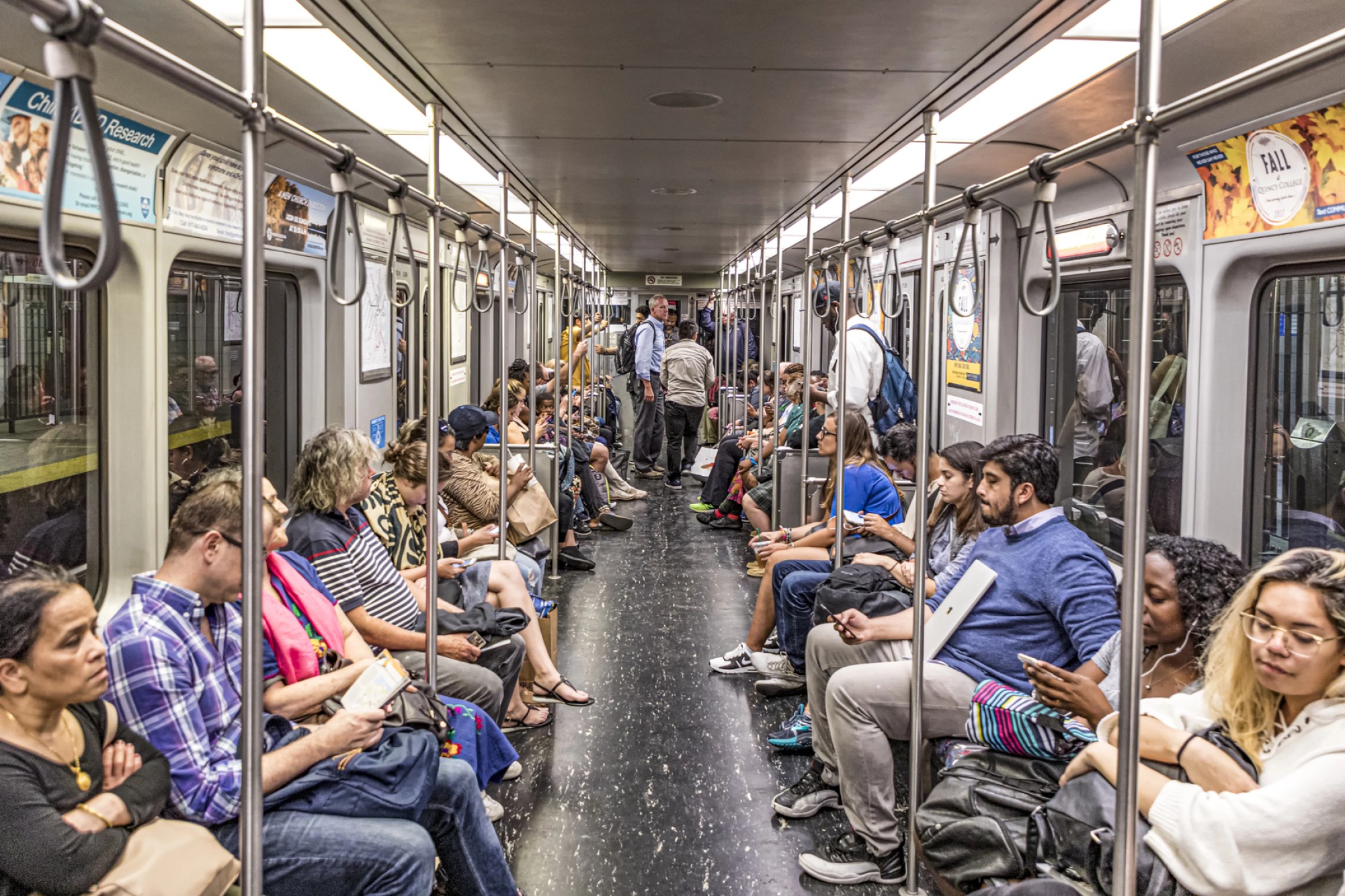
This is, admittedly, unavoidable. It is, after all, public transport. Yet anyone who regularly uses buses, trains, or trams knows that fellow passengers can make their presence remarkably palpable. People take up several seats. They block doors. Hit you with their luggage. They conduct conversations at extraordinary volumes. Sometimes they seem to have waged a campaign against deodorant.
But one offense I find particularly unforgivable is playing noise from a phone without headphones.
I’m sure I’m not alone in sitting on a bus while another passenger blasts TikToks, YouTube videos, music, or whatever else their algorithm has decided they desperately need to hear. They’ve decided the rest of us should, too.
Normally, I resort to my own headphones. That’s fine(ish) if I was already planning to listen to something. It’s less fine if I wanted to read. And sometimes, and increasingly often, I don’t want to consume anything at all. Sometimes I want twenty minutes in which nothing demands my attention.
This nuisance has become familiar enough in Britain to have a name: “loudcasting.” Efforts have increasingly been made to tackle it alongside other forms of antisocial behavior on public transport, most notably through recent measures announced by the UK government. This includes a possible £100 fine.
My first thought on this is positive. If you force an entire bus to listen to whatever appears on your phone, a fine may be exactly what you deserve. The rest of us shouldn’t need noise-cancelling headphones to enjoy some relative tranquillity on the way to work.
Indeed, I’ve previously written about cinemas as a modern-day common: spaces whose enjoyment depends upon strangers accepting modest restrictions on their individual behavior. A bus seems similar. Everyone benefits from transportation, but enjoying that shared environment requires everyone to surrender a tiny amount of freedom.
You can listen to TikTok. I can listen to Spotify. Someone else can watch Netflix. We can all do these things at the same time because headphones let our individual freedoms coexist.
So, what’s the problem with enforcing that arrangement? Or, more specifically, why do I have a nagging sense that something’s amiss here? After all, I’m OK with the outcome, so what’s my issue?
John Stuart Mill offers an obvious place to start. In On Liberty, Mill famously argues that coercion is warranted to prevent harm to others, rather than merely because we dislike someone’s behavior. That raises an unexpectedly difficult question: if we want to use Mill’s principle to justify coercing others’ behavior, then what exactly is the harm in making me listen to your phone?
It is certainly irritating. But we normally tolerate irritating people. Someone might wear clothes I dislike, hold a conversation I find tedious, or eat something whose smell turns my stomach. We don’t generally demand state intervention whenever another person’s conduct annoys us. Or, at least, we shouldn’t.
Loudcasting seems different, however, because it captures something that other travelers cannot easily escape. The offender effectively appropriates part of a shared environment by imposing their choice upon everybody else. I can avert my eyes from your clothes. I can ignore your newspaper. I cannot quite so easily choose not to hear your phone when I’m sitting three feet away from it. Your freedom to make noise necessarily alters the environment the rest of us inhabit.
So, for the sake of argument, let’s say that some form of coercion is acceptable. Even then, another question remains: why should coercion be necessary at all?
This struck me while I was reflecting upon my (albeit too brief) time in Japan. Japanese public transport has a reputation for quietness. That was my experience there. Traveling around Tokyo, Kyoto, and Osaka, I was amazed by how little passengers intruded upon one another. Conversations were subdued, and phones weren’t competing for everyone’s attention. I took multiple journeys through some of the most populous and crowded cities on the planet. Yet those journeys were remarkably peaceful.
What interested me most, however, wasn’t simply the quiet. It was how they achieved that quiet. The fundamental restraint seemed social rather than punitive. The reason not to blast a video out of your phone wasn’t that an enforcement officer might appear and issue a penalty. It was simply that you weren’t supposed to behave like that.
This, I think, is an important distinction. And, I think, it also appears in the work of Elinor Ostrom.
Ostrom was a political economist whose work challenged the assumption that shared resources must inevitably be governed through top-down control. In Governing the Commons, she explored how communities can develop their own rules, expectations, and practices for managing resources together.
Now, I will admit that the lost tranquillity of the number 2 bus is rather different from the forests, fisheries, and irrigation systems associated with Ostrom’s work. But the underlying insight translates nicely.
In short, shared life requires informal rules. Think about the enormous number of these rules governing an ordinary bus journey. We queue rather than fight our way aboard. We allow passengers to exit before entering. We move down the bus when others need space. We don’t sit directly beside a stranger when plenty of empty seats remain. We don’t conduct video calls on speakerphone at maximum volume. Very few of us know whether any of these behaviors are formally prohibited. For the most part, it doesn’t matter. We know what we’re supposed to do.
The law could theoretically try to address every one of these things. But a society in which every minor obligation to other people had to be translated into a rule, backed by the threat of punishment, would be rather unpleasant.
A functioning public space depends not merely upon formal rules, but upon what we expect from one another. Indeed, formal regulation can only go so far. There can never be enough officers, enough CCTV cameras, or enough £100 penalties to police every tiny act of selfishness committed in shared spaces. This is why I feel conflicted about government attempts to punish loudcasting. My concern isn’t that the state has no right to intervene. It is that the need for intervention reveals the failure of something that should come before it: informal social regulation.
There is nothing particularly precious about the freedom to force forty strangers to listen to your TikTok feed. If penalties discourage people from doing it, my morning commute will improve markedly. Nevertheless, something has gone wrong if fines become necessary to secure forms of consideration that should emerge from social life itself.
Perhaps this is one cost of thinking about freedom too individualistically. We tend to imagine freedom in terms of what I should be permitted to do. Can I play my music? Can I make this call? Can I watch this video? But shared spaces demand a second question: what does my exercise of freedom do to everybody else’s experience of that space?
Living alongside strangers inevitably involves countless tiny compromises. I restrain myself here; you restrain yourself there. Neither of us gets complete freedom, and as a result, we both get something better: a space we can actually share. A space we can inhabit together, and resources we can all use.
Much of what makes that possible never appears in legislation. No police officer compels me to move my bag when someone needs the seat beside me. I don’t need to consult the conditions of carriage before letting someone off the bus before I get on. These things work because, most of the time, we understand that sharing a space places small obligations upon us.
So, yes, if fining loudcasters means a more comfortable journey, I’m unlikely to complain. But we shouldn’t necessarily see those fines as a victory. The very reason we need them suggests that something has already been lost: our ability to sustain ordinary standards of consideration without turning them into formal rules.
Perhaps that is what my experience in Japan brought home to me. It wasn’t the silence itself. Rather, it was what produced it. A bus full of people quietly wearing headphones may not look like a great philosophical achievement. And perhaps it wasn’t in the past. But if considerate behavior increasingly requires the threat of a fine, maybe it is today.