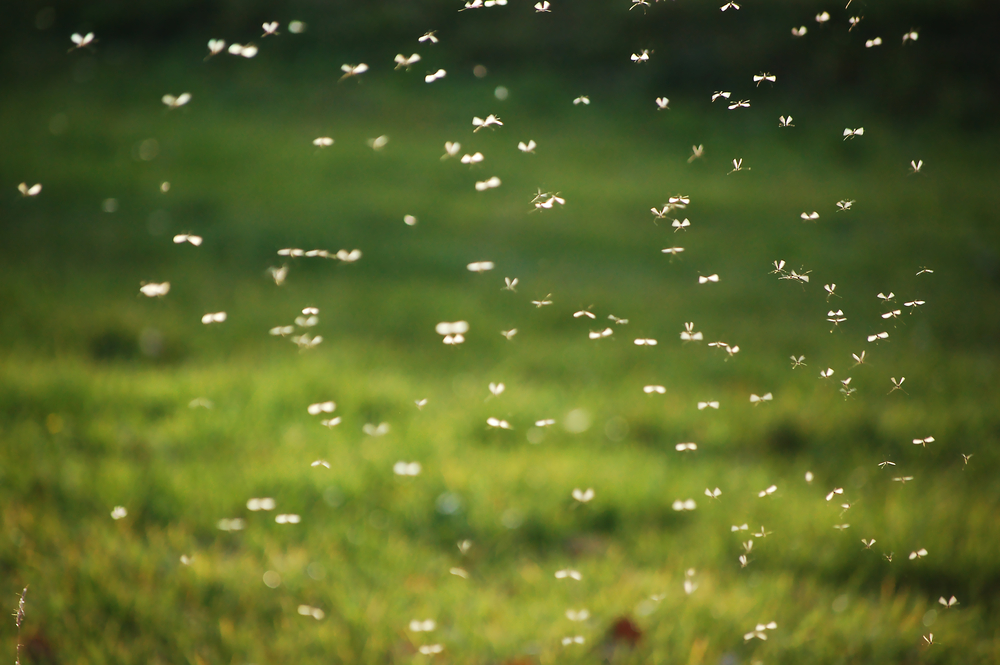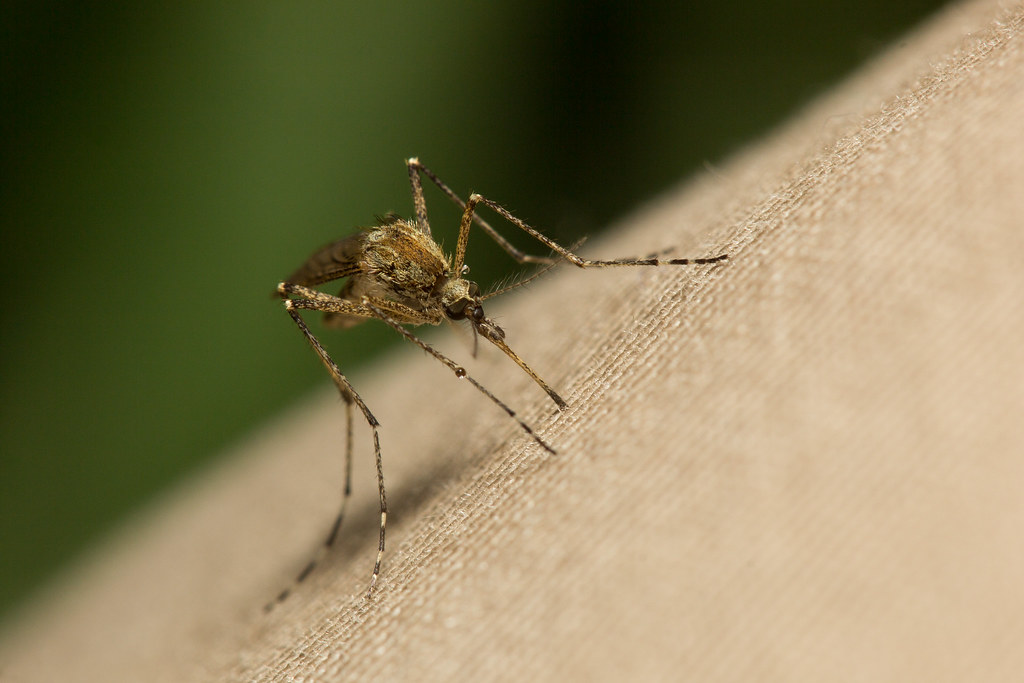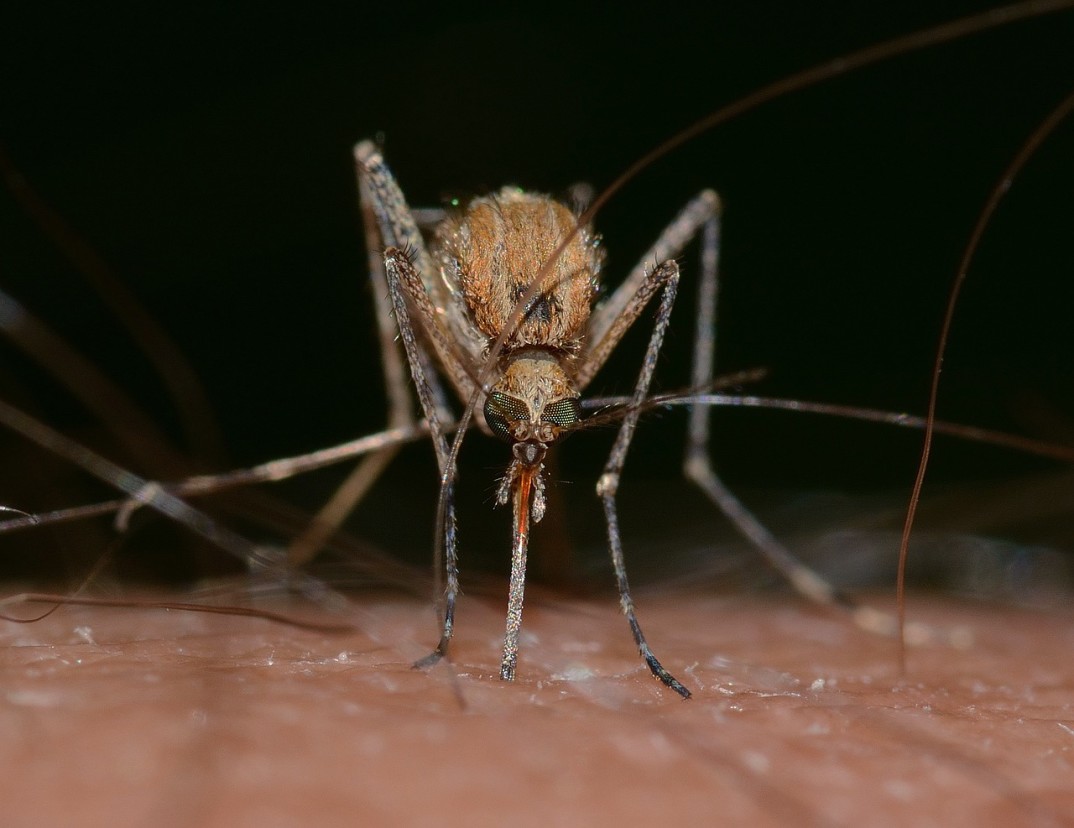

In recent months, I’ve found myself thinking back, with some fondness, to my time working in Galveston, Texas. From 2021 to 2023, I was a postdoc at the University of Texas Medical Branch. When not working, I spent my time riding my bicycle around the island, surfing, and drinking. With my rose-tinted spectacles on, it was fabulous. Without them, there were many issues that irritated me daily. It’s Texas, so obviously it was hot. Very hot. It was also an island connected to the mainland via a vehicle-only bridge, so unless I made use of a car, I was trapped there. Finally, there were the mosquitoes. They loved me, but not I them, and whenever I got bitten (and I got bitten a lot if I wasn’t careful), I would develop a sizable welt that would itch beyond all reason. And while the mosquitoes were only present seasonally, those seasons can cover a lot of the year. So, when I catch myself thinking fondly about Galveston and considering going back for a visit, I must remind myself how much I despise those little bloodsuckers.
It should come as no surprise, then, that back in July 2022, right in the middle of mosquito season, I wrote a piece for the Prindle Post on the implications of using gene drives to eradicate them from the face of the earth. In that piece, I explored a tension at the heart of the technology: while gene drives could potentially save countless lives by eliminating disease-carrying mosquitoes, they also represent an unprecedented attempt to exert control over the natural world.
The reason I bring this up now, while I’m sitting in the UK, where I appear unappealing to our native mosquito breeds, is because another creepy crawly has been making the news: the New World Screwworm. The screwworm is a parasitic type of fly that lays its eggs in wounds, the nose, or other openings in livestock, wildlife, pets, and, on rare occasions, people. These eggs hatch, and then the larva begin to eat at the animal. Unlike maggots, however, these larvae do not restrict themselves to dead or necrotic tissue. Screwworm larvae eat living flesh, and infestations can become so severe that the larva can burrow into the animal, make existing wounds even larger, and even kill their host if left untreated.
While the screwworm had once been prevalent across the US, as outlined in a recent Financial Times article, it had been eradicated from the United States in 1966 and, by the 1980s and 1990s, suppressed as far south as Panama via a sterile-fly barrier program. The method for doing this was relatively simple. Female screwworms mated only once. So, if they mated with a sterile male, no offspring would be created. This insight led scientists to release weekly waves of sterile males to drive the population numbers down. And while the screwworm could never be fully driven to extinction using this method, it could be contained through the strategic geographical deployment of these sterile males.
However, in 2023, this plan started to falter. The reasons for it are suspected to be multifaceted. The aforementioned Financial Times article notes that:
Experts point to a combination of expanding livestock production in former buffer zones, increased movement of animals through the region, unprecedented human migration flows through the Darién Gap and possible weaknesses in the sterile-fly programme itself: the sterile males were becoming less attractive to females, and older strains that were losing fitness were not replaced quickly enough…
Today, the screwworm has not only made its way back up Central America, but is now back in Texas. This, of course, is of concern for the State’s roughly 153,000 cattle farms and its roughly 13 million cattle.
So, what’s to be done, then?
Well, one option, as with mosquitoes, is to use gene drives so that rather than simply preventing the female screwworm from reproducing, we have it create offspring who are likely to be sterile, a trait that subsequent generations will possess. This sterile trait propagates through the population until, eventually, there are so few unaffected insects that the population eventually collapses. Whether this is an ethically acceptable thing to do, however, is up for debate.
According to Gregory E. Kaebnick and others, in a rather prescient 2025 article in Science, the answer is a qualified yes. They claim that the screwworm presents a rare case where genome-driven extinction might be ethically defensible because of the severe suffering and economic harm it causes. They do note that this may only be the case because the species is overwhelmingly harmful, because there is a lack of alternatives, and because the screwworm’s eradication would prevent substantial suffering and economic damage.
Yet, the issues I raised in my 2022 piece remain: that we may be seeking to exert a degree of control over the natural world, for which we are ill-equipped to handle. After all, even a brief glimpse back through the annals illustrates how bad we are at effectively managing these large-style ecological projects (see the 1935 introduction of cane toads in Australia, the 1883 introduction of mongooses to Hawai’i, or the near worldwide distribution of cats). Despite these being instances of failures involving introduced species rather than targeted eradication, they nevertheless illustrate how poorly we predict ecological outcomes. Even if one can reconcile the principled objections to species extinction — and that is not a given — there remain the practical issues of what impact the creation of an ecological vacuum may have.
The obvious response is that not every species occupies the same ecological niche. Mosquitoes, for all their faults, are food for fish, birds, bats, and countless other creatures. They also pollinate certain plants. Remove them, and there is at least a plausible concern that something important disappears alongside them. The screwworm, by contrast, is a specialist parasite, and it is not clear what role it plays in the wider ecological web. Indeed, it is pretty hard to point to a positive contribution made by an insect whose primary claim to fame is eating living animals from the inside out.
What’s more, this is part of what makes the screwworm such an interesting test case. If one is ever going to argue for the deliberate extinction of a species, surely it should be one that causes extraordinary suffering while providing little obvious benefit. The screwworm is not cute. It is not charismatic. There is not, as far as I’m aware, a screwworm fan club. If a case cannot be made for eliminating it, then it is difficult to imagine a case being made for any species at all.
And yet, for reasons I still cannot quite articulate, I’m hesitant.
I think part of that hesitation comes from the fact that every generation seems convinced that it finally possesses the knowledge necessary to master nature. Normally, however, nature responds by reminding us that this is not the case.
I guess the question is not merely whether we can predict the ecological consequences of eliminating the screwworm. The question is: What sort of relationship we ought to have with the natural world? There is an important difference between controlling a species because doing so is necessary to prevent immense suffering and controlling a species simply because it inconveniences us. In my 2022 piece, I drew on Michael Sandel’s argument that modern technology can sometimes reflect a problematic “drive to mastery.” That is, a desire to remake the world according to our preferences rather than accepting it as is. The danger is not that every intervention is wrong. Rather, it is that we come to view every problem as something that must be solved through ever greater control.
The screwworm may be one of those rare cases where intervention is justified. It might even be obligated. After all, the suffering it causes is substantial. The economic damage is immense. Existing methods of control appear increasingly fragile if not downright obsolete. If there is a species for which a carefully governed gene-drive program could be ethically defensible, the screwworm is probably near, if not at, the top of the list.
But even if that is true, I think we should resist the temptation to treat the screwworm as proof that deliberate extinction is unproblematic. As I’ve learned working in a law school, hard cases make bad precedents. A world in which we eliminate a flesh-eating parasite may be a better world. A world in which we become comfortable deciding which species deserve to exist may not be.
As for me, I’m torn. The philosopher in me worries about humanity’s endless desire for control. The former Texas resident in me remembers the mosquitoes. And the cattle farmer in Texas, should the screwworm continue its northward march, is probably not especially interested in either position’s musing.
Sometimes ethical questions do not present us with a choice between good and bad options. Sometimes they present us with a choice between competing risks, competing values, and competing uncertainties. The screwworm may be one of those cases. Whether we ultimately decide to drive it to extinction or merely push it back once more, I think a sense of humility is essential. After all, history has a habit of punishing the overconfident.