
← Return to search results
Back to Prindle Institute

FIFA, Gianni Infantino, and the Character of Leaders

Gianni Infantino, the president of the Fédération Internationale de Football Association (FIFA), is facing an approval crisis. His position is currently safe, following an expression of “full support” from the organization’s leadership after an emergency meeting. However, member organizations have recently begun to express serious discontent with his tenure, posing a significant issue for him.

The blowback escalated following two incidents this summer. In late June, FIFA unveiled the FIFA Forward Enterprise (FFE), an organization that would enable investors to purchase stakes in the World Cup and other FIFA organized tournaments. This came after the suspension of a red card against the United States’ Florian Balogun which would have seen the striker banned from participating in a World Cup elimination match against Belgium. This, in turn, occurred after a phone call between Infantino and  inaugural FIFA Peace Prize recipient President Donald Trump, which Trump claims influenced the final decision. Infantino’s tenure has also been marred by other controversies, such as Infantino’s personal involvement in FIFA’s extraordinary efforts to award Saudi Arabia with the 2034 World Cup, and the introduction of mandatory hydration breaks in all matches at the 2026 tournament, a practice previously reserved for matches in extraordinary heat.

After the FFE announcement, continental confederations made their discontent clear. The 41 member nations of CONCACAF, the body governing Caribbean, North and Central American soccer, rejected the FFE proposal. UEFA, the European confederation, has threatened to boycott all FIFA organized tournaments even after FIFA withdrew the FFE proposal. UEFA, CONCACAF, and the Asian Football Confederation have also released a joint statement describing the inadequacies of an apology for the FFE proposal and characterizing FIFA leadership as violating their duties by breaking trust through deception.

Why exactly is there an outcry against Infantino for these actions? FIFA’s revenue has grown significantly, more than doubling since Infantino’s tenure began in 2016. FIFA operates as a not-for-profit, and thus their internal budgets see them spending these profits on organizing future tournaments, awarding prize money to international teams, and investmenting in growing the game. So, presumably, these increased profits work their way back to the member organizations.

But one might worry that these increased profits come at a cost. For instance, FIFA had a financial incentive in overturning Balogun’s aforementioned red card; more than 50 million viewers in the U.S. tuned in for the match and presumably a significant win on home soil would have created even further interest in the sport in a wealthy nation that often ignores the game. It may be that FIFA leadership were more interested in maximizing the U.S.’s chances of winning than consistently following the rules of the tournament. This concern with profits over competitive fairness is deeply troubling for a group that organizes international tournaments.

Further, even if the concern about competitive fairness is overblown, FIFA’s profit-seeking behavior may be seen as excessive. In a July statement, UEFA officials wrote that “The World Cup cannot be treated as an investment product… No part of it should ever be surrendered to private investors. The World Cup is not for sale.” Obviously, the World Cup is already an incredibly profitable event; FIFA took in about $15 million in revenue from this summer’s tournament (by comparison, the host cities likely saw significantly less revenue). But the concern expressed here seems to be that, when the goal of the tournament becomes maximizing profits, as becomes the case when investors are involved, the game transforms into something else.

This is an issue of commodification (discussed in other contexts here, here and here), the process of turning a valuable thing into a commodity, something whose value is measured in monetary terms. The notion here appears to be that, although sports are massively profitable, they are not merely products. There’s a certain value to sports, whether competing in observing them, beyond the revenue generated. Particularly for large-scale international events, like the World Cup or the Olympics, there’s something to be said for how they capture the attention and imagination of the global community. When investors are invited to purchase shares in such an event and in turn seek to maximize their returns, as with other instances of commodification, something about the event’s value is lost. Thus, by seeking to invite investors to purchase stakes in the World Cup, leadership at FIFA may have diminished this kind of incalculable value of the event by turning it into a mere tool to generate profit.

Although these concerns about FIFA leadership are compelling, I think they are best understood as sharing a similar root concern. To see this, it is fitting to turn to Confucianism. As discussed by other authors at the Post, Confucianism is a wisdom tradition with its roots in classical China. Although often lumped in with religious traditions in the West, Confucianism is a secular tradition (in the Analects, Confucius instructs rulers to first worry about serving people, and that keeping a distance from spirits is wise) primarily concerned with human virtue.

Of particular importance to Confucians is the moral character of a society’s leaders. Adherents of this tradition believed that wise, compassionate rulers would create a harmonious society and model their virtues for the populous. The Confucian sage Mengzi went so far as to refer to leaders as the mother and father of the people. Conversely, though, Confucians believe that when society is ruled by the vicious, this will trickle down to the rest of us, creating a disharmonious and self-interested society. The fish rots from the head down, as the expression goes.

It seems to me that Confucianism is well-equipped to explain the concerns with FIFA leadership in a fashion that captures both objections. In short, the organization as led by Infantino seems to lack the right sort of moral character. The decisions which seek to maximize profit demonstrate a lack of reverence, treating the value of the game as a function of its monetary output. Further, in demonstrating a willingness to award the World Cup to host nations with spotty records on democracy and human rights – Russia in 2018, Qatar in 2022, Saudi Arabia in 2036 – they are willing to transgress against other values as well. In their emphasis on growing the profitability of their tournament, FIFA leadership demonstrates the kind of character that Confucianism cautions us against.

But why apply Confucianism to this case? Historically, Confucians were concerned about societal rulers; kings, emperors, and others who led nations. The head of a sporting organization hardly seems like the kind of figure with this sort of power to reshape societies in the way that a ruler might.

Focusing on virtue through the lens of Confucianism is particularly appropriate here, I contend, because this framework is well-equipped to capture how even the leaders of organizations without political power can reshape societies by serving as models. Whether they are the heads of state, international organizations, or just local groups, the character we are willing to accept in leaders sends a signal: this is what we find laudable, these are the standards we expect everyone to follow, these are our values.

For this reason, it is appropriate to scrutinize the character of any leader and consider the broader impacts of the message we send. Certainly, competency is an important quality of leadership – it would be a fool’s errand to judge our leaders based simply on their character. But to wholly forsake character for competence may create even worse problems than those for which we currently seek leaders to resolve.

Who Is Worthy of Power?

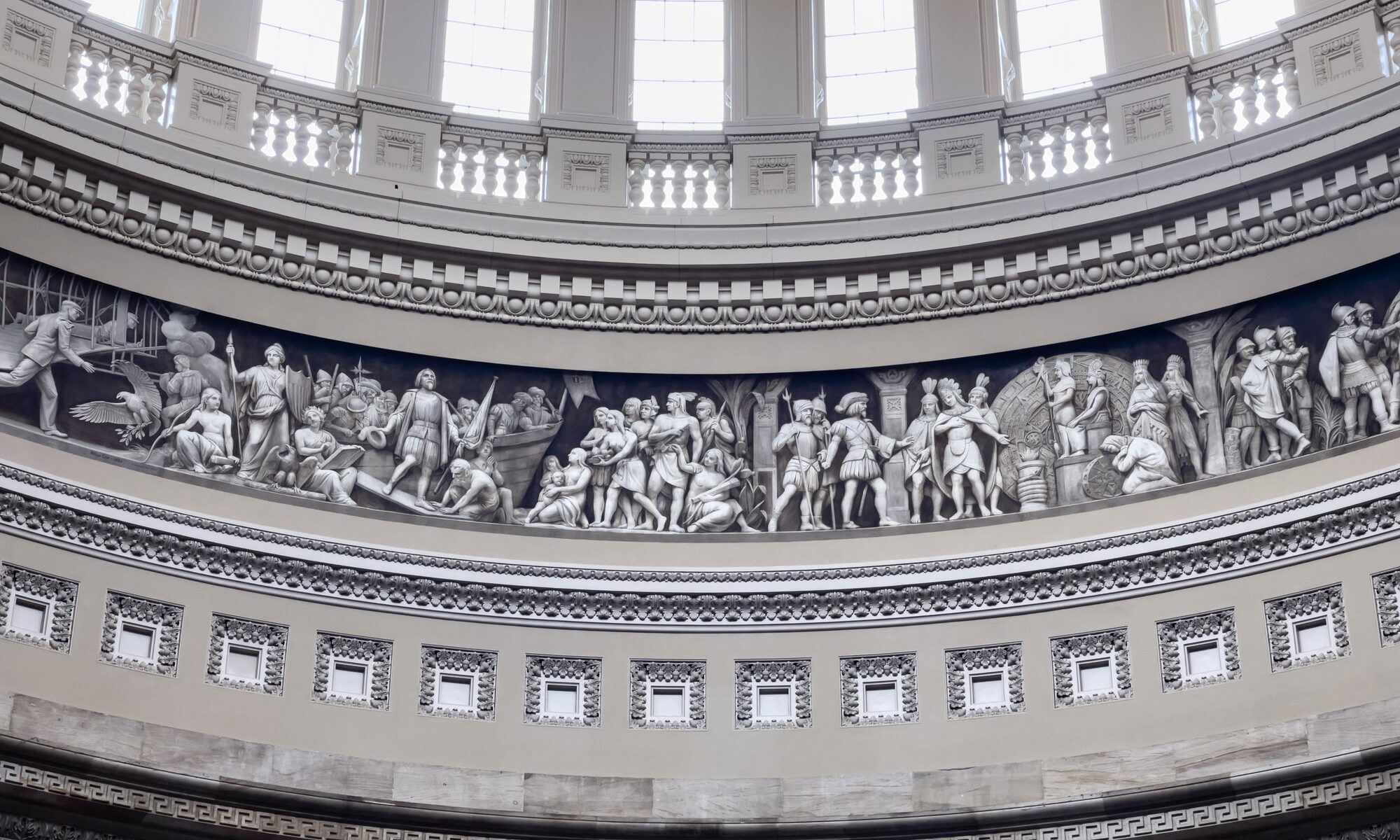
photograph inside Capitol Building dome

The U.S. election is approaching its culmination. The winner, almost overnight, will become one of the most powerful people in the world. This ritual of empowerment repeats for senators, representatives, and even some judges. Let us then step back and reflect on what kind of person we should invest power in.

Ancient thinkers were intensely interested in questions of virtue and what virtues rulers should possess. The Athenian philosopher Plato famously (and perhaps a bit conveniently) argued for “Philosopher Kings” in his Republic — rule by lovers of wisdom. Wisdom for him concerns the ability to discern the best course of action and provide good counsel. Plato’s ideal ruler is connected with his vision of an ideal society, for a ruler should embody their role in the larger society and act for the good of that society rather than themselves.

The most feared ruler for Plato is the tyrant. More than simply a bad or authoritarian ruler, Plato’s tyrant is a kind of psychological monster. Achieving power through low cunning, flattery, and lies, they are ruled by their appetites for food, power, material wealth, and even violence, rather than by reason. The wants of a tyrant are endless — they can never have enough power or enough pleasure — and thus if not checked, they can consume all around them.

Beyond classical Greek and Roman philosophers, ancient Chinese philosophers such as Confucius and Mencius also considered the virtues of the ruler. Especially central for them was benevolence, caring for the well-being of others and acting to the benefit of the people.

Across both ancient Greek and Chinese philosophical traditions, learning and growth are pivotal. The ideal ruler is not only morally virtuous but actively strives to cultivate their virtues and improve themselves. This relates to humility. For example, as the Philosopher King loves truth and right action rather than simply appearing right, they listen to the wisdom of others and are willing to change their mind. In ancient traditions, the virtuous leader also often serves as a moral exemplar — someone worth emulating for how to live ethically and well. (Although, both Confucius and Plato emphasized that people should live well within their station, so following a moral exemplar entailed applying their lessons as appropriate to one’s circumstances.)

For hundreds of years after these philosophers of antiquity, there remains a strong connection between individual moral virtue and good leadership. Although, especially during medieval times, there is a darker undercurrent to this. By extolling the virtue of rulers, such philosophy could legitimize hereditary rulers, who ultimately possessed power through accident of birth. The link between individual morality and leadership is weakened by the Renaissance-era Italian philosopher Niccolò Machiavelli, from which we derive the adjective Machiavellian, meaning amoral and manipulative.

His famous text The Prince, written as advice for princes (especially a prince just assuming power), advocates scheming and ruthlessness to pursue and maintain political power. What precisely Machiavelli’s intent was remains unclear. Was it legitimate practical advice? Was he slyly ridiculing the ruling class? Regardless, it raises an important consideration about who we want to hold power.

Perhaps, rather than simply having someone virtuous and of excellent moral character, we want someone who will do what is needed even if they have to engage in a bit of skullduggery.

This echoes later political thinking such as Realpolitik, which emphasized practical considerations in political decision-making over ethical ones.

But morals cannot be escaped so easily. Rather, a good ruler, when necessary (and only when necessary!), may engage in unethical actions in service of the greater good. That these unscrupulous actions are done for a defensible higher reason is paramount. Someone who is simply okay with lying, cheating, and stealing for personal gain cannot be trusted to achieve worthwhile political ends. By contrast, someone who understands with due seriousness that personal morals may occasionally need to be compromised for the good of the people and the nation could be more worthy of power.

Put differently, a willingness to compromise ethics alone is clearly not laudatory. A willingness to occasionally be strategic or flexible to achieve larger goals of merit, perhaps is.

Impressionistically, philosophers have been progressively less attentive to the moral character of leadership since Machiavelli. There are several possibilities here. First, with the growth of new approaches to ethics such as utilitarianism (the greatest good for the greatest number), ethics becomes about something one does, rather than a virtue or character trait. Second, with the rise of modern democracies, political power is vindicated by popular mandate and no longer needs to use moral virtues as a justification for holding power. This shifts focus from individual character to political process. Third, especially when all candidates are of acceptable character or personal moral virtue is unclear, elections may center on political ideology and policy.

But none of these developments negate the foundational importance of character in considering who should be invested with power. Whatever your ethical system, you need to rely on a leader to have the disposition to actually try to achieve your ethically preferred results. And even if holding power is no longer legitimized through ethics and virtue,  that does not make such characteristics irrelevant to whom we want to hold power.

The role of policy and political ideology merits more scrutiny. For it might be objected that rather than electing politicians based on what they are like, we should elect them for what they will do.

However, the predictability of policies relies on personal characteristics such as honesty. If someone cannot be trusted to be truthful about their intended policies, or to earnestly and effectively pursue them, then voting based on policy is pointless. Moreover, even if one can be trusted, the policy process is enormously complicated and uncertain, and depends on the machinery of governance working just so. At best, policy goals are more indicative of what someone stands for than what they will do. Most importantly, policy cannot always account for the unexpected. One significant function of a leader is to react to changes and emergent challenges. Will they act effectively in the interest of the people under conditions of uncertainty, or will they instead act ineffectively, or even exploit the crisis for personal gain? This is not a policy matter.

There is a related concern: modern governance is complicated, involving many people and underlying factors, rather than singular leaders. This does not negate the importance of worthiness to hold power, but rather contends that powerful people may be less individually powerful than we might think. Assuredly it is true that figures such as governors, senators, and presidents are not personally making every decision within their domain, but they still have an impressive capacity to make decisions if so inclined. Moreover, the relevance of other people cuts both ways. If we think someone is morally rotten and unworthy to hold power, why would we think they surround themselves with those worthy to hold power, or that the worthy to hold power would support them?

Elections are an investiture of power. Consider what traits make someone worthy (or unworthy) of power. There is a compelling case that foundational moral considerations, such as integrity, wisdom, and beneficence, should stand above policy and even political ideology. For if we cannot rely on a basic commitment to the well-being of the people, then all else is suspect.

Corporate Social Responsibility Depends on Ethical CEOs

Corporate social responsibility (CSR), once seen as a sure indicator of a company’s intentions, is increasingly becoming a trend for all companies to adopt.  More and more, companies engage in CSR for their own benefit, and stakeholders are left unsure which companies participate for the right reasons. Corporate social responsibility is the branch of business that handles how a company upholds ethical standards, including sustainable sourcing, production, and corporate transparency, sometimes “going beyond” expectations to engage in community building projects. Research on the effectiveness of CSR has almost solely relied on signaling theory, which proposes that companies send positive signals to stakeholders (consumers, employees, investors, and communities) when they engage in CSR.

Continue reading “Corporate Social Responsibility Depends on Ethical CEOs”