← Return to search results
Back to Prindle Institute

The Insufficiency of Black Box AI

image of black box spotlighted and on pedestal

Google and Imperial College London have collaborated in a trial of an AI system for diagnosing breast cancer. Their most recent results have shown that the AI system can outperform the uncorroborated diagnosis of a single trained doctor and perform on par with pairs of trained diagnosticians. The AI system was a deep learning model, meaning that it works by discovering patterns on its own by being trained on a huge database. In this case the database was thousands of mammogram images. Similar systems are used in the context of law enforcement and the justice system. In these cases the learning database is past police records. Despite the promise of this kind of system, there is a problem: there is not a readily available explanation of what pattern the systems are relying on to reach their conclusions. That is, the AI doesn’t provide reasons for its conclusions and so the experts relying on these systems can’t either.

AI systems that do not provide reasons in support of their conclusions are known as “black box” AI. In contrast to these are so-called “explainable AI.” This kind of AI system is under development and likely to be rapidly adopted within the healthcare field. Why is this so? Imagine visiting the doctor and receiving a cancer diagnosis. When you ask the doctor, “Why do you think I have cancer?” they reply only with a blank stare or reply, “I just know.” Would you find this satisfying or reassuring? Probably not, because you have been provided neither reason nor explanation. A diagnosis is not just a conclusion about a patient’s health but also the facts that lead up to that conclusion. There are certain reasons that the doctor might give you that you would reject as reasons that can support a cancer diagnosis.

For example an AI designed at Stanford University system being trained to help diagnosis tuberculosis used non-medical evidence to generate its conclusions. Rather than just taking into account the images of patients’ lungs, the system used information about the type of X-ray scanning device when generating diagnoses. But why is this a problem? If the information about what type of X-ray machine was used has a strong correlation with whether a patient  has tuberculosis shouldn’t that information be put to use? That is, don’t doctors and patients want to maximize the number of correct diagnoses they make? Imagine your doctor telling you, “I am diagnosing you with tuberculosis because I scanned you with Machine X, and people who are scanned by Machine X are more likely to have tuberculosis.” You would not likely find this a satisfying reason for a diagnosis. So if an AI is making diagnoses based on such facts this is a cause for concern.

A similar problem is discussed in philosophy of law when considering whether it is acceptable to convict people on the basis of statistical evidence. The thought experiment used to probe this problem involves a prison yard riot. There are 100 prisoners in the yard, and 99 of them riot by attacking the guard. One of the prisoners did not attack the guard, and was not involved in planning the riot. However there is no way of knowing specifically of each prisoner whether they did, or did not, participate in the riot. All that is known that 99 of the 100 prisoners participated. The question is whether it is acceptable to convict each prisoner based only on the fact that it is 99% likely that they participated in the riot.

Many who have addressed this problem answer in the negative — it is not appropriate to convict an inmate merely on the basis of statistical evidence. (However, David Papineau has recently argued that it is appropriate to convict on the basis of such strong statistical evidence.) One way to understand why it may be inappropriate to convict on the basis of statistical evidence alone, no matter how strong, is to consider the difference between circumstantial and direct evidence. Direct evidence is any evidence which immediately shows that someone committed a crime. For example, if you see Robert punch Willem in the face you have direct evidence that Robert committed battery (i.e., causing harm through touch that was not consented to). If you had instead walked into the room to see Willem holding his face in pain and Robert angrily rubbing his knuckles, you would only have circumstantial evidence that Robert committed battery. You must infer that battery occurred from what you actually witnessed.

Here’s the same point put another way. Given that you saw Robert punch Willem in the face, there is a 100% chance that Robert battered Willem — hence it is direct evidence. On the other hand, given that you saw Willem holding his face in pain and Robert angrily rubbing his knuckles, there is a 0- 99% chance that Robert battered Willem. The same applies to any prisoner in the yard during the riot: given that they were in the yard during the riot, there is at best a 99% chance that the prisoner attacked the guard. The fact that a prisoner was in the yard at the time of the riot is a single piece of circumstantial evidence in favor of the conclusion that that prisoner attacked the guard. A single piece of circumstantial evidence is not usually taken to be sufficient to convict someone — further corroborating evidence is required.

The same point could be made about diagnoses. Even if 99% of people examined by Machine X have tuberculosis, simply being examined by Machine X is not a sufficient reason to conclude that someone has tuberculosis. Not reasonable doctor would make a diagnosis on such a flimsy basis, and no reasonable court would convict someone on the flimsy basis in the prison yard riot case above. Black box AI algorithms might not be basing diagnoses or decisions about law enforcement on such a flimsy basis. But because this sort of AI system doesn’t provide its reasons, there is no way to tell what makes its accurate conclusions correct, or its inaccurate conclusions incorrect. Any domain like law or medicine where the reasons that underlie a conclusion are crucially important is a domain in which explainable AI is a necessity, and in which black box AI must not be used.

In Search of an AI Research Code of Conduct

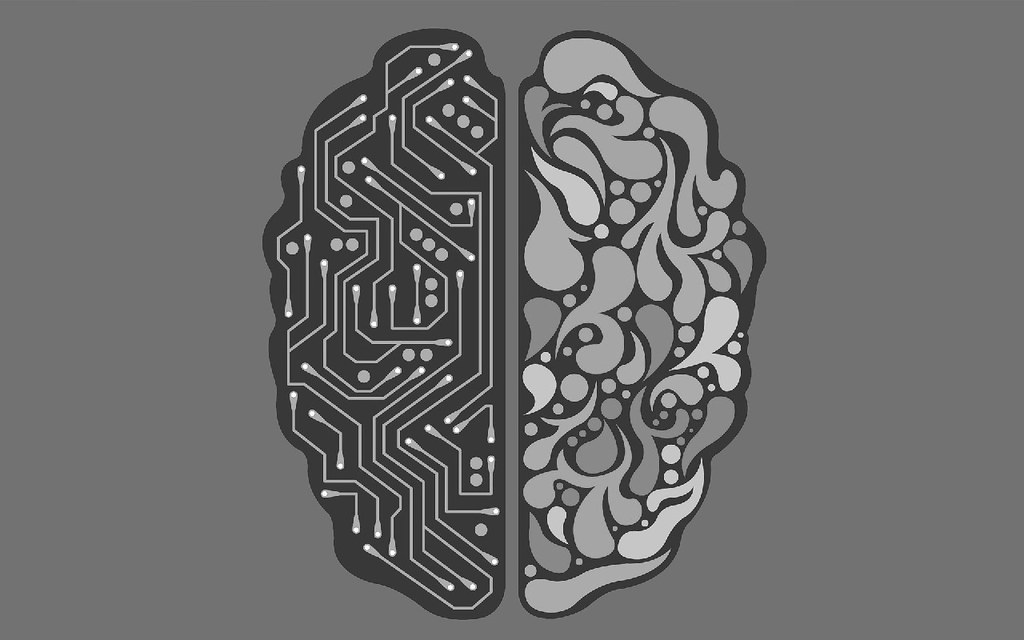
image of divided brain; fluid on one side, curcuitry on the other

The evolution of an entire industry devoted to artificial intelligence has presented a need to develop ethical codes of conduct. Ethical concerns about privacy, transparency, and the political and social effects of AI abound. But a recent study from the University of Oxford suggests that borrowing from other fields like medical ethics to refine an AI code of conduct is problematic. The development of an AI ethics means that we must be prepared to address and predict ethical problems and concerns that are entirely new, and this makes it a significant ethical project. How we should proceed in this field is itself a dilemma. Should we proceed in a top-down principled approach or a bottom up experimental approach?

AI ethics can concern itself with everything from the development of intelligent robots to machine learning, predictive analytics, and the algorithms behind social media websites. This is why it is such an expansive area with some focusing on the ethics of how we should treat artificial intelligence, others focusing on how we can protect privacy, or some on how the AI behind social media platforms and AI capable of generating and distributing ‘fake news’ can influence the political process. In response many have focused on generating a particular set of principles to guide AI researchers; in many cases borrowing from codes governing other fields, like medical ethics.

The four core principles of medical ethics are respect for patient autonomy, beneficence, non-maleficence, and justice. Essentially these principles hold that one should act in the best interests of a patient while avoiding harms and ensuring fair distribution of medical services. But the recent Oxford study by Brent Mittelstadt argues that the analogical reasoning relating the medical field to the AI field is flawed. There are significant differences between medicine and AI research which makes these principles not helpful or irrelevant.

The field of medicine is more centrally focused on promoting health and has a long history of focusing on the fiduciary duties of those in the profession towards patients. Alternatively, AI research is less homogeneous, with different researchers in both the public and private sector working on different goals and who have duties to different bodies. AI developers, for instance, do not commit to public service in the same way that a doctor does, as they may only responsible to shareholders. As the study notes, “The fundamental aims of developers, users, and affected parties do not necessarily align.”

In her book Towards a Code of Ethics for Artificial Intelligence Paula Boddington highlights some of the challenges of establishing a code of ethics for the field. For instance, those working with AI are not required to receive accreditation from any professional body. In fact,

“some self-taught, technically competent person, or a few members of a small scale start up, could be sitting in their mother’s basement right now dreaming up all sorts of powerful AI…Combatting any ethical problems with such ‘wild’ AI is one of the major challenges.”

Additionally, there are mixed attitudes towards AI and its future potential. Boddington notes a divide in opinion: the West is more alarmist as compared to nations like Japan and Korea which are more likely to be open and accepting.

Given these challenges, some have questioned whether an abstract ethical code is the best response. High-level principles which are abstract enough to cover the entire field will be too vague to be action-guiding, and because of the various different fields and interests, oversight will be difficult. According to Edd Gent,

“AI systems are…created by large interdisciplinary teams in multiple stages of development and deployment, which makes tracking the ethical implications of an individual’s decisions almost impossible, hampering our ability to create standards to guide those choices.”

The situation is not that different from work done in the sciences. Philosopher of science Heather Douglas has argued, for instance, that while ethical codes and ethical review boards can be helpful, constant oversight is impractical, and that only scientists can fully appreciate the potential implications of their work. The same could be true of AI researchers. A code of principles of ethics will not replace ethical decision-making; in fact, such codes can be morally problematic. As Boddington argues, “The very idea of parceling ethics into a formal ‘code’ can be dangerous.” This is because many ethical problems are going to be new and unique so ethical choice cannot be a matter of mere compliance. Following ethical codes can lead to complacency as one seeks to check certain boxes and avoid certain penalties without taking the time to critically examine what may be new and unprecedented ethical issues.

What this suggests is that any code of ethics can only be suggestive; they offer abstract principles that can guide AI researchers, but ultimately the researchers themselves will have to make individual ethical judgments. Thus, part of the moral project of developing an AI ethics is going to be the development of good moral judgment by those in the field. Philosopher John Dewey noted this relationship between principles and individual judgment, arguing:

“Principles exist as hypotheses with which to experiment…There is a long record of past experimentation in conduct, and there are cumulative, verifications which give many principles a well earned prestige…But social situations alter; and it is also foolish not to observe how old principles actually work under new conditions, and not to modify them so that they will be more effectual instruments in judging new cases.”

This may mirror the thinking of Brent Mittelstadt who argues for a bottom-up approach to AI ethics that focuses on sub-fields developing ethical principles as a response to resolving challenging novel cases. Boddington, for instance, notes the importance of equipping researchers and professionals with the ethical skills to make nuanced decisions in context; they must be able to make contextualized interpretations of rules, and to judge when rules are no longer appropriate. Still, such an approach has its challenges as researchers must be aware of the ethical implications of their work, and there still needs to be some oversight.

Part of the solution to this is public input. We as a public need to make sure that corporations, researchers, and governments are aware of the public’s ethical concerns. Boddington recommends that in such input there be a diversity of opinion, thinking style, and experience. This includes not only those who may be affected by AI, but also professional experts outside of the AI field like lawyers, economists, social scientists, and even those who have no interest in the world of AI in order maintain an outside perspective.

Codes of ethics in AI research will continue to develop. The dilemma we face as a society is what such a code should mean, particularly whether it will be institutionalized and enforced or not. If we adopt a bottom up approach, then such codes will likely be only there for guidance or will require the adoption of multiple codes for different areas. If a more principled top-down approach is adopted, then there will be additional challenges of dealing with the novel and with oversight. Either way, the public will have a role to play to ensure that its concerns are being heard.

Do Self-Driving Cars Reinforce Socioeconomic Inequality?

A photo of the steering wheel of a Mercedes car.

Recently, Mercedes-Benz stepped into the spotlight after making a bold statement concerning the design of their self-driving cars. The development of autonomous cars has presented a plethora of moral conundrums, one of which is the most ethical way to program cars to respond to emergencies. The dilemma, as presented in a previous article, is one of trying to determine the value of and prioritize human life. Mercedes has declared that they will “program its self-driving cars to save the people inside the car. Every time.” This declaration sheds light on a new issue: is it ethical for car companies to create technology that widens the gap between socioeconomic classes and threatens current societal values?

Continue reading “Do Self-Driving Cars Reinforce Socioeconomic Inequality?”

Waymo and the Morality of Self-Driving Cars

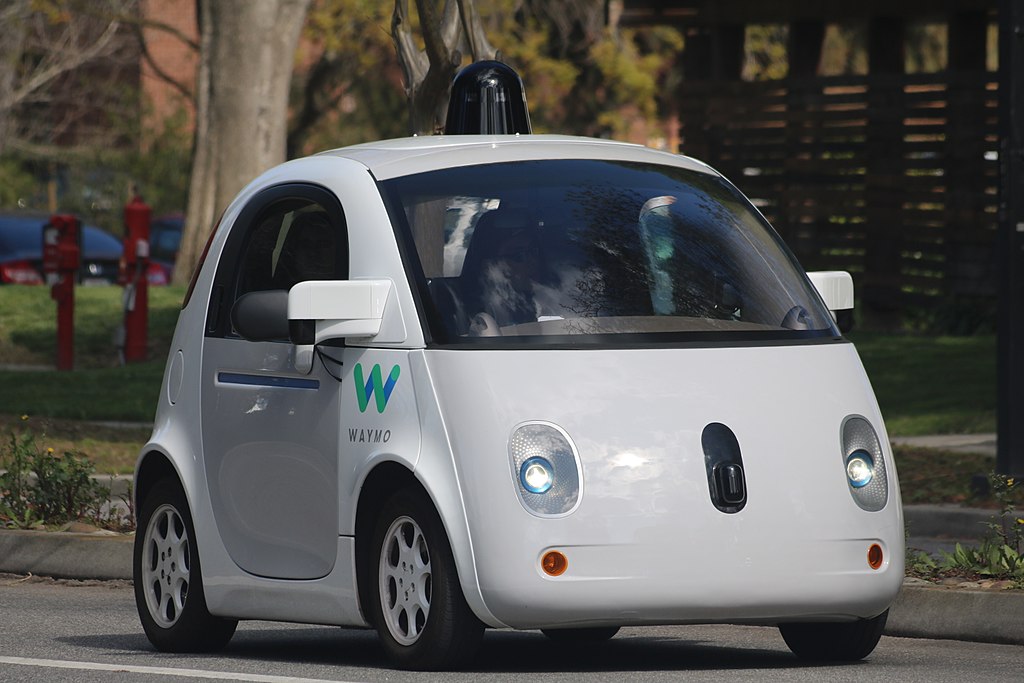
An image of a Waymo self-driving car.

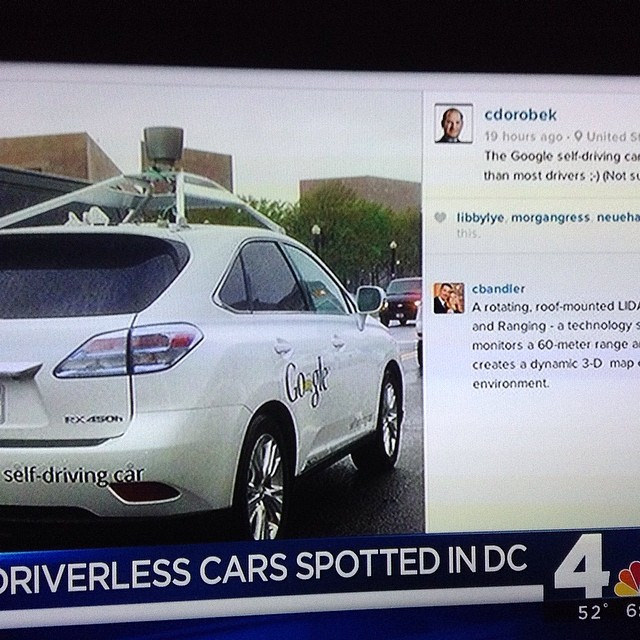
What was once fiction is becoming a reality. In past decades, sci-fi novels and television have featured self-driving cars; this once-futuristic concept is finally coming to fruition. Will the result mirror the positive outcomes shown in fiction? Self-driving cars are intended to increase safety and efficiency in our society, but what are the moral implications and consequences that could come from such technology?

Continue reading “Waymo and the Morality of Self-Driving Cars”

Sex in the Age of Sex Robots

Editor’s note: sources linked in this article contain images and videos that some readers may find disturbing.

From self-driving cars to smartphones, artificial intelligence has certainly made its way into our everyday lives. So have questions of robotic ethics. Shows like Westworld and Black Mirror have depicted some of the more controversial and abstract dangers of artificial intelligence. Human sex dolls have always been taboo, but a new development in the technology of these sex dolls, specifically their upgrade to robot status, is especially controversial. The whole notion of buying a robot to have sex with is taboo to say the least, but can these sexual acts become unethical, even if they are perpetrated upon a nonliving thing? Is using a sex robot to simulate rape or pedophilia morally permissible? And to what extent should sex robots be regulated?

Continue reading “Sex in the Age of Sex Robots”

The Artificial Intelligence of Google’s AlphaGo

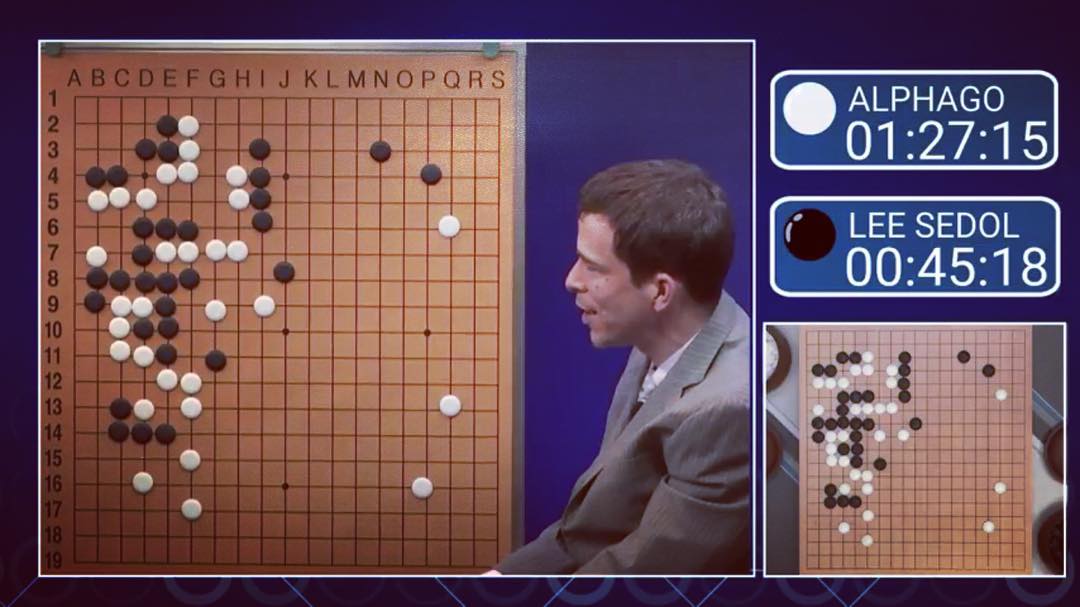
Last week, Google’s AlphaGo program beat Ke Jie, the Go world champion. The victory is a significant one, due to the special difficulties of developing an algorithm that can tackle the ancient Chinese game. It differs significantly from the feat of DeepBlue, the computer that beat then-chess world champion Garry Kasparov in 1997, largely by brute force calculations of the possible moves on the 8×8 board. The possible moves in Go far eclipse those of chess, and for decades most researchers didn’t consider it possible for a computer to defeat a champion-level Go player, because designing a computer with such complexity would amount to such great leaps towards creative intuition on the computer’s part.

Continue reading “The Artificial Intelligence of Google’s AlphaGo”

Will Robots Ever Deserve Moral and Legal Rights?

Twenty-one years ago (February 10, 1996), Deep Blue, an IBM Supercomputer, defeated Russian Grand Master Gary Kasparov in a game of chess. Kasparov ultimately won the overall match, but a rematch in May of 1997 went to Deep Blue. About six years ago (February 14-15, 2011), another IBM creation named Watson defeated Champions Ken Jennings and Brad Rutter in televised Jeopardy! matches.

The capabilities of computers continue to expand dramatically and surpass human intelligence in certain specific tasks, and it is possible that computing power may develop in the next several decades to match human capacities in areas of emotional intelligence, autonomous decision making and artistic imagination. When machines achieve cognitive capacities that make them resemble humans as thinking, feeling beings, ought we to accord them legal rights? What about moral rights?

Continue reading “Will Robots Ever Deserve Moral and Legal Rights?”

The Tay Experiment: Does AI Require a Moral Compass?

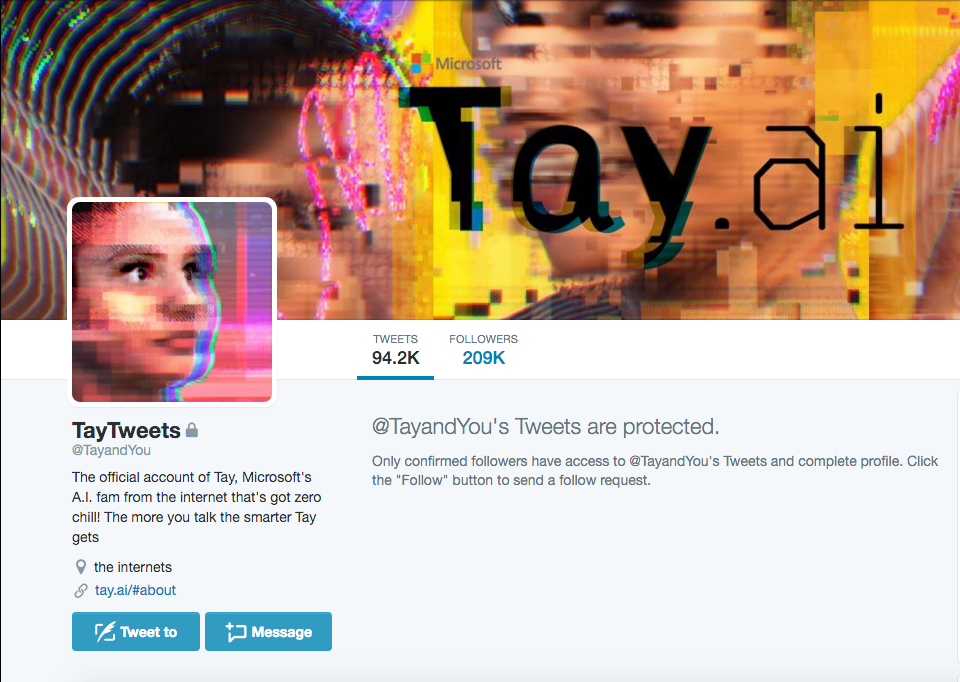
In an age of frequent technological developments and innovation, experimentation with artificial intelligence (AI) has become a much-explored realm for corporations like Microsoft. In March 2016, the company launched an AI chatbot on Twitter named Tay with the handle of TayTweets (@TayandYou). Her Twitter description read: “The official account of Tay, Microsoft’s A.I. fam from the Internet that’s got zero chill! The more you talk the smarter Tay gets.” Tay was designed as an experiment in “conversational understanding” –– the more people communicated with Tay, the smarter she would get, learning to engage Twitter users through “casual and playful conversation.”

Continue reading “The Tay Experiment: Does AI Require a Moral Compass?”

Digital Decisions in the World of Automated Cars

We’re constantly looking towards the future of technology and gaining excitement for every new innovation that makes our lives easier in some way. Our phones, laptops, tablets, and now even our cars are becoming increasingly smarter. Most new cars on the market today are equipped with GPS navigation, cruise control, and even with some intelligent parallel parking programs. Now, self-driving cars have made their way to the forefront of the automotive revolution.

Continue reading “Digital Decisions in the World of Automated Cars”