
← Return to search results
Back to Prindle Institute

The Ethical Aftermath of the Planned Parenthood Shooting

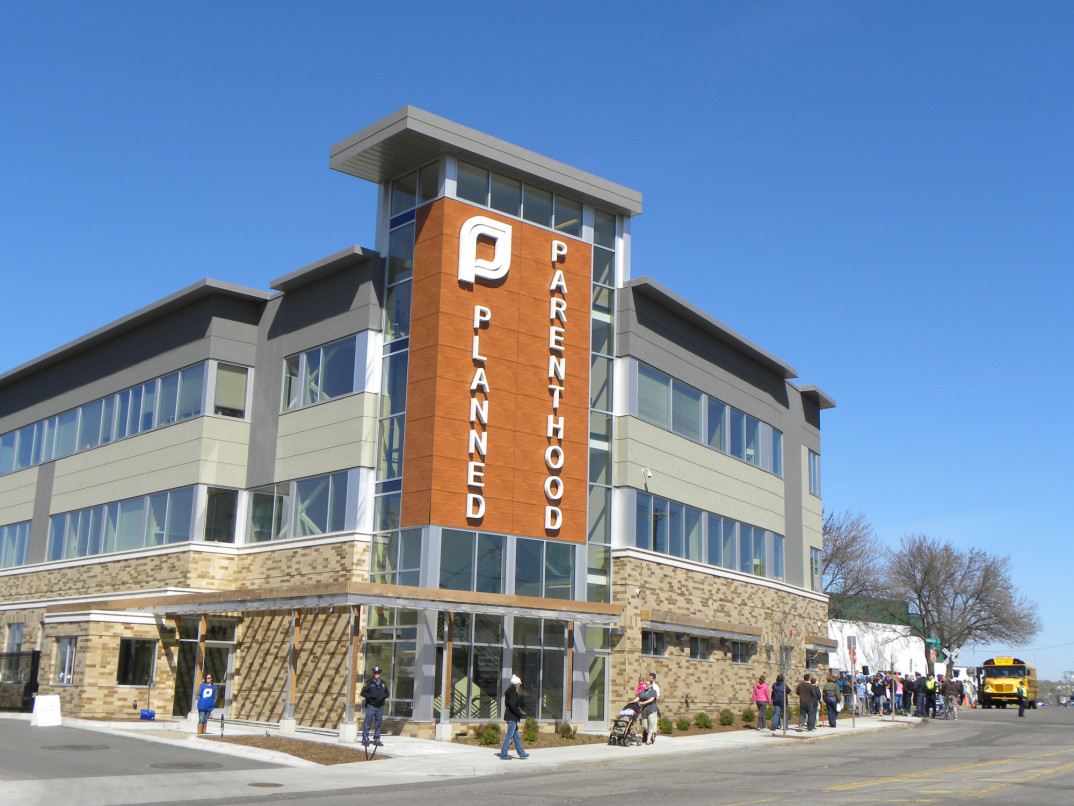
On Friday, November 27th, a man named Robert Lewis Dear Jr. entered a Planned Parenthood in Colorado Springs, Colorado, with a semiautomatic rifle. He killed three people: a police officer and two civilians. After hours of a violent standoff with the police, Dear was eventually brought into custody. Though mass shootings have garnered much public discussion recently (after news surfaced that we have had more than one mass shooting per day in 2015), the Planned Parenthood shooting has received a particularly high amount of media attention.

There are several ethical components brought forth by the shooting. Two notable ones are: 1) Should society blame violence on an atmosphere of verbal hostility? 2) Should society view Planned Parenthood as the face of abortion?

Many have argued, like Washington Post Columnist Ruth Marcus, that, “Republicans deserve some blame for the Planned Parenthood shooting.” Marcus argues that, “words- extreme language and overheated representations- have consequences” and that the heated rhetoric that she argues come from some pro-life Republicans inspired Robert Dear’s attack on Planned Parenthood. Father Frank Pravone, the national director of Priests for Life, rejected this accusation in his Op-Ed for Fox News that the pro-life movement would support any violent action. He argues that though the pro-life community consistently condemns all attacks at abortion facilities, they still receive most of the blame. He also rejects the accusation that describing abortion as “child killing” is creating a climate of violence. It is his belief that abortion is murder and to change his language would be abandoning his lifelong attempt to protect unborn babies.

This argument over language leads to the next question. Is the focus on Planned Parenthood as the face of the abortion issue legitimate? Both pro-choice and pro-life advocates seem to have an interest in deflating and inflating, respectively, the importance of Planned Parenthood in regards to abortion services. For example, Planned Parenthood reports that only 3% of their services provided are abortions and have been widely criticized for distorting their numbers to arrive at this number. Similarly, some pro-life advocates responded with a claim that 94% of Planned Parenthood’s pregnancy services are abortions, a claim that is similarly criticized. However, a third party fact checker, Politifact, says the most accurate statistic is that an estimated 12% of Planned Parenthood customers receive abortion. Do these examples of inflating/deflating Planned Parenthood’s abortion services show that we have a tendency to alter the truth to benefit a specific political agenda?

Can language incite violence? If it does, is it ethical to place limitations on language? How do we address our tendency as people to distort facts in order to benefit politically?
Black vs. White Space in McKinney, TX

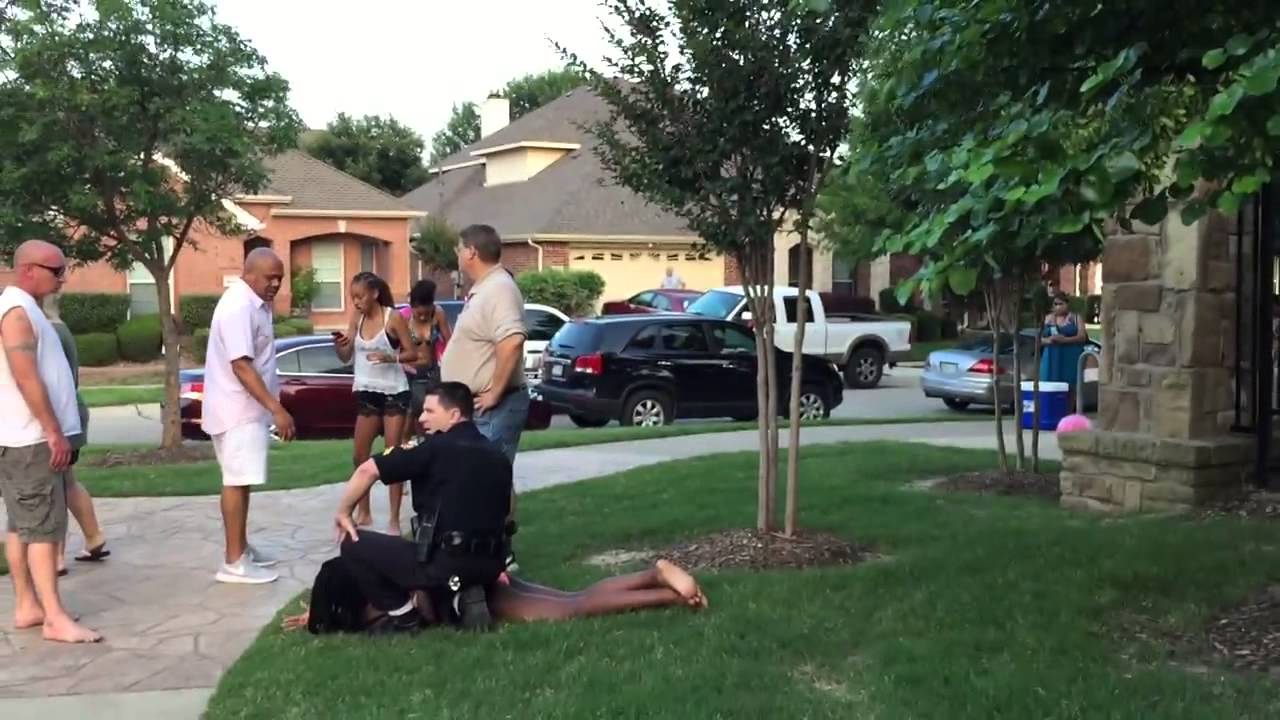
The seemingly endless events of police brutality and the deaths of unarmed black people of the United States has captivated and divided our country. The most recent in the saga is the events of the infamous pool party of McKinney, Texas. Videos of the police officer under question, Officer Eric Casebolt show him arriving at a teenager’s pool party with mostly people of color in attendance and throwing a young bikini-clad fifteen-year-old to the ground, placing both knees and his full weight on her back, and shoving her face into the ground. He then threatens other kids who run to help her by pointing his gun at them. All attendees were unarmed and nonviolent.

There has been discussion over this incident, and much of it is argument over whether Officer Casebolt is racist or not. Those who defend Officer Casebolt argue that he had just responded to two suicide calls and was emotionally unstable at the time. But maybe this argument of whether the officer is racist or not is just a distraction from the real issue at hand, which is why did the police come in the first place? I believe the answer lies in the concept of white space vs. black space, who belongs and who does not, and how this tension leads to racial profiling in our country.

Before the officer arrived at the scene, the teens had been pestered by the security guard of the pool who continuously insinuated that they shouldn’t be there, though according to attendees, they had done nothing wrong. The security guard accused them of playing music too loudly and not having permission to use the pool. The security guard supposedly told them that their music had to be turned off, though attendees swear that the music was edited. Most teens in attendance lived in the community that owned the pool and thus had the right to its use.

Why would the security guard be uncomfortable with a large group of teens when there were groups of white teens at the pool as well? Why would their music be a problem if there were no curse words in it? Why would they assume that the teens didn’t belong, though most of them lived in the neighborhood?

On an episode called the “Birds and Bees” on NPR’s This American Life, one of the voices heard is Nikki Jones, who discusses how Americans racially code space. She says, “The ghetto itself is believed to be carried on the bodies of black people…that presents special dilemmas when black people are in white space. What is white space? Almost anywhere else. In these white spaces, black people have a special burden and they face a number of dilemmas. They have to prove that they belong there, the burden is on them to prove that they belong in a particular space.”

This rings true in the tale of the McKinney pool party. These teens should not have had to convince anyone that they belong in the neighborhood in which they live, let alone be subject to police violence while trying to prove their legitimacy. McKinney is not the ghetto, it is an average middle class suburb of Dallas, TX. By Nikki Jones’s logic, McKinney is white space, no matter how many people of color live there.

When examining events of police brutality against people of color, it is easy to get distracted by the violence. Though we need to discuss the violence and work to end it, our conversations must not end with “agree to disagree” moments of whether police violence was racist or not. Let us not forget to question why the police stopped these victims in the first place. Let’s examine if there was legitimate cause or if it was simply because they were a black face existing in a white space.