
← Return to search results
Back to Prindle Institute

In Defense of Useless Books

AI companies are running out of data. For chatbots to function well, they need to be trained on a tremendous amount of original data, and readily available (or easily stolen) data is close to being exhausted. One source of potential untapped content is old and out-of-print books that haven’t yet been digitized. And there has been speculation that AI companies have started to mine this resource: many outlets have reported that book sales at used bookstores and online resellers have seen a huge uptick, with some companies touting their ability to feed the AI beast fresh meat in the form of old books.

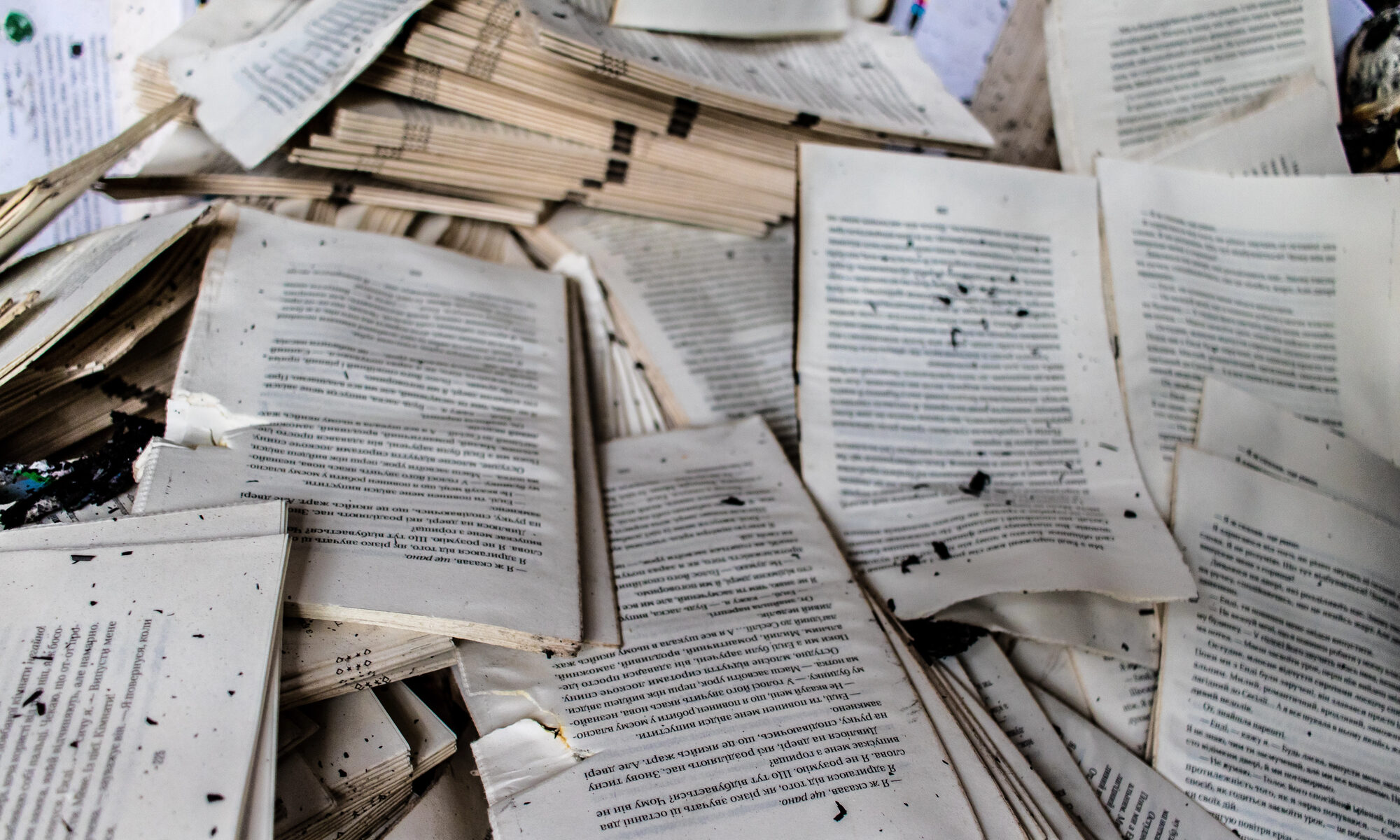
While there are still many good reasons to be concerned with the ways that AI companies deal with intellectual property, the problem with this new round of data acquisition concerns the fact that AI companies seem to not just be buying a ton of old books, but destroying them, as well. This destruction is for two reasons: first, scanning a book is easier if you tear off its spine; and second, destroying the book after scanning it is considered a transformative act under US copyright, and thus allows AI companies to skirt pesky intellectual property laws.

Reactions to news of large-scale book destruction have been almost entirely negative. Indeed, many booksellers have reported facing a dilemma: sell books that would otherwise go unsold to AI companies knowing that they will destroy them, or don’t sell them at all.

But what’s wrong with destroying old books, anyway? The thought of book destruction, of course, evokes images of mass book burnings, or the loss of great repositories of human knowledge like the Library of Alexandria. And it does seem that it would be a genuine loss if an AI company bought and destroyed a great artistic or scientific work, or even just a pretty good one.

But what about the books that aren’t winning any literary prizes or meaningfully advancing human knowledge? For example, a bookseller recently noted that he had been receiving a lot of orders for books that he really would have had almost no chance of selling: “stuff like The Insider’s Guide to Metro Denver from 1995 or How to Use Corel WordPerfect 1991.” (For those not alive in the 90s, Corel WordPerfect was like Microsoft Word, but worse.) Arguably, neither of these books has any cultural significance, and while some Coloradoan might feel nostalgic while flipping through the guide to 1995 Metro Denver, it’s hard to see it getting any real use beyond that.

These are examples of useless books. That is not to say that there is no possible world in which they could be useful: we could construct some far-fetched scenario where, in a post-apocalyptic world, we need to relearn word processing from scratch, or where we are invaded by aliens who demand we tell them the hottest Denver restaurants of 1995 or be destroyed. But for all practical purposes, no one today is going to get much use out of these books. AI companies can, on the other hand, make use of useless books: all data is good data for a large language model so long as it is novel. So maybe there is one use for useless books after all, and if they need to be destroyed in the process, then it’s really no big loss.

Should we rethink our reactions to the destruction of old books, taking comfort in the knowledge that they can slightly increase the valuation of whatever company chooses to destroy them? I think the answer is: “no.” Useless books are worth saving not because they’re useful, but because destroying them is vicious.

A couple of clarifications. First, the kind of destruction we’re talking about is really more of an annihilation: the trend in sales of used books involves books that are uncommon or rare, such that there is a real possibility that a destroyed book will be the last of its kind. This kind of destruction seems much more egregious than, say, a library or bookstore discarding copies of pulp fiction because very few people want to read them (although we still might balk at the thought of those books being de-spined).

Second, when we talk about an act being “vicious,” we typically do so in a moral sense. But we can also speak of acting in an epistemically vicious way. Just as a moral vice is a kind of trait that leads people to do morally bad things or obstruct the actions of the morally good and just, epistemic vices are those that intentionally obstruct the acquisition or sharing of knowledge. For example, being extremely close-minded is a vice because it prevents you from acquiring new knowledge and ensuring that the beliefs you have are, in fact, true. More overt, physical acts can also be the expression of epistemic vices, such as banning books for overly prudish or dogmatic reasons, sowing distrust in experts on the basis of ideological differences, and, of course, destroying books.

The destruction of an uncommon or rare book is vicious, then, because such destruction prevents the knowledge contained in that book from being accessed by anyone else. When it comes to useless books, the usefulness is moot: How to Use Corel WordPerfect 1991 still contains information that can be known, and so by purposefully destroying one of the few remaining copies, AI companies are preventing others from acquiring that knowledge.

Might we think, though, that in using the content of old books, AI companies preserve the information they contain by using them to train their LLMs? After all, after feeding all those delicious tokens contained in an old book into the insatiable maw of an LLM, a user may then be able to better get information about outdated word processing programs or, at the very least, have better conversations with their chatbots.

However, even if an LLM does end up preserving esoteric knowledge through the destruction of old books, this is incidental to their main goal, which is to acquire more information about the statistical relationships between parts of words. It would be like saying that in using a copy of The Bell Jar to wallpaper my living room, I am preserving a great work of literature because you could, technically, still read it if you came over to visit: I wanted the book for the paper it was printed on, not for the work itself.

There is also reason to think that AI companies are acting in other epistemically vicious ways that go beyond the physical destruction of books. As Alex Reisner at The Atlantic argues, using books to train LLMs “masks the hard work and collaboration that goes into knowledge creation, undermines incentives for authors to write books, prevents experts from finding one another, and gives AI companies tremendous power over what information people can access.” These are consequences that occur regardless of the usefulness of the books involved: the destruction of The Insider’s Guide to Metro Denver from 1995 is vicious not necessarily because of the potential loss of knowledge about Denver from over 30 years ago, but because it is an intentional act that undermines knowledge creation and sharing.

So, what should we do with all those old, useless books, gathering dust in used bookstores? Bookstore owners might still have other, practical reasons to sell their books to AI companies, even at the cost of feeding an epistemic vice. This is, perhaps, why bookstore owners are so conflicted: when practical and epistemic values conflict, it’s not always easy to determine how to determine the right course of action. But those acting most viciously are clearly the AI companies: destroying uncommon books for the sake of training LLMs has practical benefits to the company at the cost of knowledge for everyone else. While few will likely lament the unavailability of useless books, destroying them still comes at a cost.
No Fit Place: On Books Bound in Human Skin

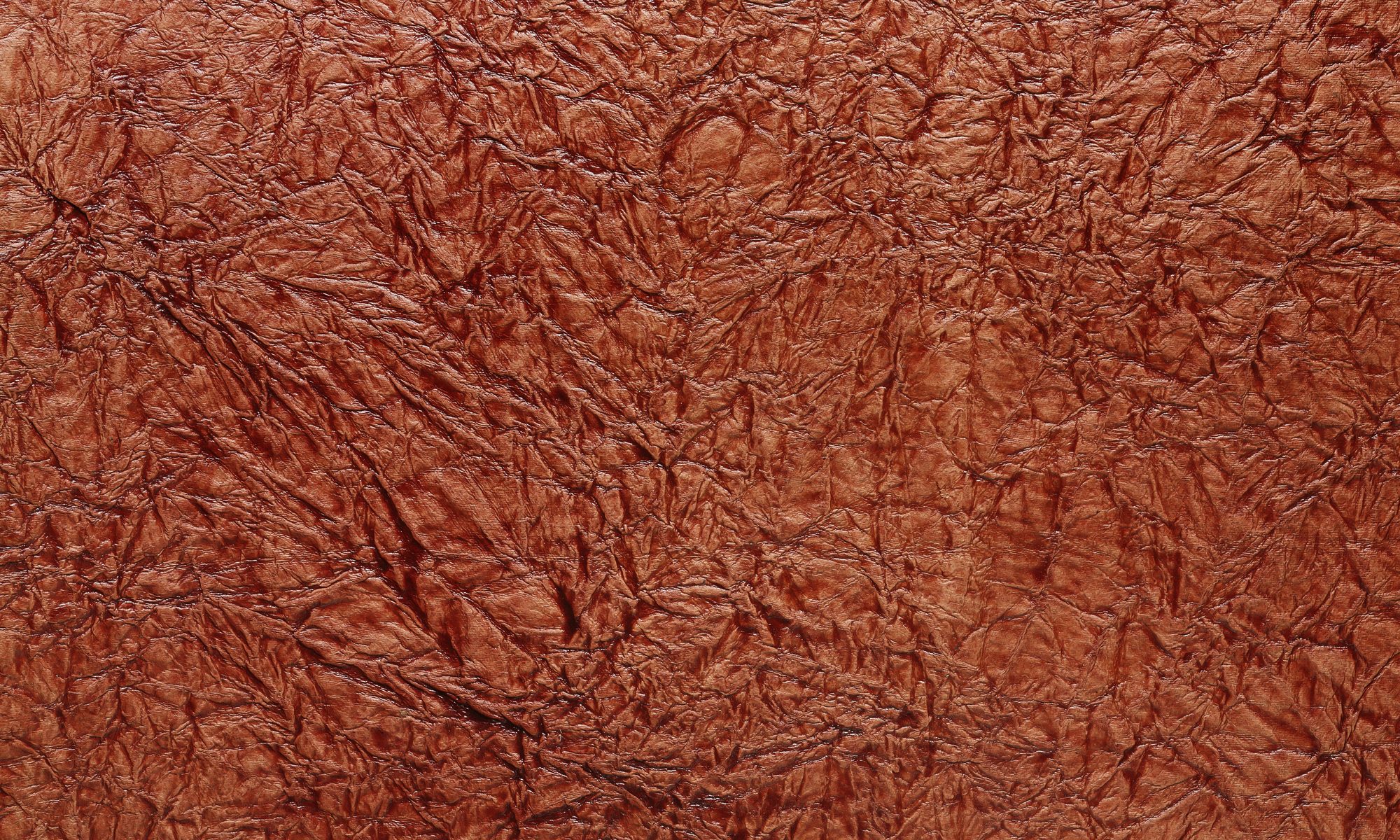
closeup image of leather texture

Many museums around the world hold and display human remains. Be they in the form of the ancient Egyptian mummies housed within the British Museum, the skeleton of the notorious murderer William Burke at Edinburgh’s Anatomical Museum, or the University of Oxford’s Amazonian “shrunken heads,” the relationship between the deceased and museums is intimate. It should surprise no one, then, that museums are the site of significant ethical debate. After all, where we find death, we often find controversy.

For example, and possibly a topic with which many will be familiar, there is considerable debate surrounding how museums obtain their exhibits and whether this has any bearing on how, or even if, they should be displayed. If a body falls into a museum’s stewardship via less than official means – like graverobbing – should this affect whether a museum should exhibit the body? We might think the answer is yes, as such an action would be patiently unethical (and likely illegal). But is this true across the board? Does time play a factor here? After all, many of the bodily remains of ancient peoples were taken from their burial places many decades, even centuries ago. Should this matter when compared to the educational and social value such remains might produce?

My point so far here is not to pick sides in such debates (although I do have a side). Instead, I want to highlight that when it comes to how museums treat remains, there is a long pedigree of philosophical and political debate, as well as legislation. This is not the case, however, when it comes to another form of venue in which the public can engage in academic and educational pursuits – libraries.

Now, this might not strike you as particularly relevant; after all, libraries don’t hold human remains, they hold books. But this is, strictly speaking, not true as some libraries house books bound in human skin.

This practice, called anthropodermic bibliopegy, became fashionable in the 19th century. While it conjures up images of occult rituals and human sacrifice – vis-à-vis the necronomicon – in reality, it has closer ties to far more legitimate professions, such as medicine and criminal punishment.

One of the most famous examples of this comes from Edinburgh in the form of a name already mentioned in this piece – William Burke. Over ten months in 1828, William Burke and his accomplice, William Hare, terrorized the streets of Edinburgh by murdering at least sixteen people. This was not simply mindless violence, however, as Burke and Hare sold their victim’s bodies for dissection in anatomy lectures. The pair were eventually caught, and, while it is unclear what happened to Hare after he turned King’s evidence, Burke was sentenced to death by hanging and, with a sense of poetic justice, his corpse was publicly dissected and his skeleton was placed on display.

What is interesting here, however, is that a section of Burke’s skin was removed and used to cover a small notebook, which is now housed in Edinburgh’s Surgeon’s Hall Museums. In a very macabre tone, on the front of the book, in faded gold text, reads BURKE’S SKIN POCKET BOOK.

This is not the only example of such a morbid tome, however. While rare, there are many more examples of such items at multiple institutes, including Harvard’s Houghton Library, Philadelphia’s Mutter Museum, and Brown University’s John Hay Library, to name a few. And, while the reasons for such unusual bookbinding vary, from punishment to memorialization to collection, it is essential to remember that each book is bound in the remains of a person who, regardless of how they lived their life, was once a living, breathing individual. Thus, how we treat these items matters. These are not just books, nor are they simply bodies; they exist somewhere in between. And while these items are not exclusively found in libraries, given the fact that they are books and that it can be hard to tell what exactly they are made from (differentiating between human and pig skin is difficult without testing), libraries must acknowledge the potentially ethically tricky situation they find themselves in; not just as curators of books, but the potential guardian of human remains.

So, what should a library do in such a scenario? How should they respond if, after testing, an item in their collection is found to have as its binding human skin?

One option is to destroy it as such an item might be deemed too offensive to be allowed to continue existing. This might be because it draws up unpleasant connotations linked to how it came into being or from whom the remains come (the skin is from a murderer or was obtained through bodily desecration). It may also be offensive not because of who it is made from or how it came to be, but simply because of what it is. As such, it might be that the best way forward is to destroy the piece humanely, thus preventing anyone in the future from obtaining it or causing any further offence. Yet, while this may be the simplest option, it is far from uncontroversial. The item holds its own story, and many may learn much from it. Not just in terms of how it was created, but also in what it represents as well as the narrative of how it came to be in the form it is. Thus, to destroy it is to abandon the knowledge and legacy that the item has accrued. The issue could be further complicated if the remains used in the item were offered willingly. Is it acceptable to destroy such an item if this contradicts the wishes of the person from whom the book has been made?

An alternative, then, might be to continue holding onto the book but to keep it away from the public. To house it away in a secure room in the depths of a library and, while not forgetting about it, letting it slip from public and professional consciousness. While potentially avoiding some issues related to the offence it causes, this does little to address one’s responsibilities towards the remains, and may very well compound any such dereliction of duties. After all, if one is aware that an item in their collection contains parts of a human body, keeping it locked away in storage might be seen as ignoring the issue. Few would find this a satisfactory solution if the item in question was a severed human head. Should the fact that the remains no longer resemble a body part and are now part of a book really make this option any more palatable?

So, if destroying the book and hiding it away are not options (or at least problem-free options), then what is left? Well, the final course of action considered here is to openly acknowledge what the items are and how they came to be; make the items available to the public to come and learn about. After all, if museums can use remains for educational purposes, then why can’t libraries? Burke’s remains, for example, were put on display so that future people might reflect on his actions. It’s an easy argument to make that his skin, regardless of whether wrapped around a book or not, should serve the same purpose.

Yet, this contravenes what libraries are typically for. While they are places of learning, and their roles are ever-changing and expanding, asking them to be home to bodily remains and to take on all the additional responsibilities that come with such a role might be asking too much.

Ultimately, then, whether libraries should retain their morbid, part-human, part-bibliographic items is far from a simple question as it draws in concerns about what the library’s role is in society, how we treat the deceased, and whether the form of bodily remains alters our responsibilities to them. And, while this is not a pressing question given how many books exist, we are talking about our duties to the deceased. Thus, both sensitivity and decisiveness are required.