
← Return to search results
Back to Prindle Institute

The AI Crisis and The Unexamined Life

One question that I return to over and over again is this: What am I doing? Beneath this question are more questions. What do I want to do? What should I do? What can I do? Is any of this worth doing? Does what I want matter, or should I do what others want me to do? What needs to be done?

This line of questioning takes us back to the Apology of Socrates. As Socrates is pleading his case to the court about whether or not he is guilty of the charges brought against him (corrupting the youth, claiming to be wise about that which he isn’t, teaching new gods in place of the old ones), he says the following:

And on the other hand, if I say that this even happens to be a very great good for a human being–to make speeches every day about virtue and the other things about which you hear me conversing and examining both myself and others–and that the unexamined life is not worth living for a human being, you will be persuaded by me still less when I say these things. This is the way it is, as I affirm, men; but to persuade you is not easy.

From this the familiar philosophical dictum arises: the unexamined life is not worth living.

While this slogan has stuck with me from the earliest days of my philosophical career, I find myself thinking about it more than usual these days as we continue to barrel through the AI Crisis. This is because AI is encroaching on uniquely human activities; whether real or mimicry, AI emulates thought, rationality, creativity, and agency to such a degree that we can outsource a great deal of our lives to it.

The AI Crisis is unfolding each day and its magnitude as a crisis is currently unclear. There are several components to the crisis, each of which is being debated and analyzed by scholars, technology experts, users, and everyone in between. We can call it a crisis because its scale of influence is global, its potential impacts are wide ranging, some of the worst-case scenarios are plausible, and the spheres of impact have serious stakes.

While the list below is incomplete, we can currently identify four major components of the AI Crisis.

The first component of the crisis is job displacement.

One of AI’s most marketed value propositions is that it can simulate the function and output of intelligence and that this is good for business. If AI can do this with any modicum of success, it threatens virtually any job that requires human intelligence.

Within the debate about AI is a question about the label “intelligence.” AI evangelists are quite serious about the term and many think AI really is intelligent, and if it is not now intelligent, it eventually will be. AI skeptics lament the term and argue that AI intelligence is an illusion and that any modicum of intelligence we can ascribe to AI really ought to be credited to the human labor powering AI and making it run smoothly.

At least for immediate job displacement, whether the intelligence is real or a façade is somewhat irrelevant. All that is required for the threat of job displacement to actualize is that people believe AI is intelligent. If they believe it to be the case, then this is enough to get the ball rolling on finding reasons to remove human workers from the loop. Right now, experts are mixed on whether or not AI is contributing to job displacement, but there is concern that it is inevitable.

Whether AI is able to live up to its labor-replacing hype will determine its long-term viability as a worker replacement. But even if it falls short of its promised performance, we should not underestimate the possibility that society will accept less than ideal labor if it saves someone money.

The second component of the AI crisis is wealth distribution.

The promise of AI is centered around doing more with less. There is a race to figure out precisely how to use AI so that we can accomplish what we want to accomplish with less people, less resources, and less ability. Whoever cracks the code first stands to gain an enormous amount of wealth, and this is something we are already seeing unfold. It is a capitalist dream to have a labor force that does not need to be paid wages, given sick leave or vacation, or provided breaks – there are no human needs to take their attention away from work.

The third component is about political domination.

AI systems cannot be separated from our political reality. AI systems are becoming intertwined in our social infrastructure at a multitude of levels. It is infused in our word processing and data processing software, our search engines and our emails, into our phones and computers. By virtue of being bound up in our information and communication technologies, it will inevitably shape what we see, what we know, how we talk, and how we think. AI is being used by the military, by police force, and by immigration enforcement. It is used by lawmakers and the courts. And, as every educator knows, it is being used by our students who are quite literally the future.

If AI were politically and morally neutral, this would be less alarming; but AI is not politically and morally neutral. It must be given values and red lines; it must be told what it is allowed to say and what it isn’t allowed to say. And, as is well established by now, the data that it relies on itself contains an immense amount of bias and morally coded information. Insofar as AI is generating profit, all of its operations must also somehow conform with the endeavor to do so.

I am not using the term domination flippantly. By domination, I am drawing from the work of Philip Pettit who identifies domination as a kind of arbitrary power that one has over another in the sphere of interpersonal relationships.

One way AI political domination occurs is through AI ownership. Insofar as a small handful of AI systems dominate the information and communication sphere, our way of understanding our political reality will be shaped by those who control and shape these AI systems. Another way is more diffuse and arises as a result of the sprawling and unpredictable nature of AI systems. Insofar as AI systems may not be fully intelligible or controllable by its makers or those who seek to control and regulate these systems, we will be dominated by an AI infused informational reality where all of us are subjected to the interpretations and nudges of AI systems.

The fourth component of the AI crisis is about responsibility.

AI threatens responsibility at several levels. First, AI will make it more difficult to track causal responsibility, which is simply the tracing of who or what is responsible for bringing about a particular state of affairs (something that is already remarkably difficult without considering the role of AI).

When AI is involved in a decision-making procedure and a mistake is made, AI muddies the causal waters in a particularly confusing way because it mimics agency. When someone is wrongly identified by AI as a wanted person, it is clear that AI is in part causally responsible. But so are the people who designed the AI system, the people in charge of updating the code that runs the AI, and the officers who used the system to make the arrest in the first place. The problem we face will only grow as AI continues to be embedded into our social structures.

Second, we lose track of moral responsibility. When an AI agent is involved in a decision-making procedure and something goes off the rails morally, it is not clear cut where we can place the moral blame. While the human in the loop strategy attempts to eliminate this moral ambiguity, the implementation of this strategy has serious limits. If the use of AI becomes standard practice, and AI is deemed as generally trustworthy, and a morally condemnable act happens as a result of the use of AI, it’s hard to understand how we can blame the human in the loop when they were trusting the system they have been socially conditioned to trust.

Third, we lose track of merit responsibility. What I have in mind by merit is simply the responsibility we give people for doing good acts and producing interesting or praiseworthy things in the world. This applies to artists and athletes as much as it does to the romantic partner or friend, or the hardworking employee and studious student. When the musician who studied music theory and put countless hours into practicing their instrument records tens or hundreds of takes, and meticulously mixes the final product, it is clear who deserves the praise and merit for creating music. When someone with an idea for a song uses AI to produce all the instrumentation, refine the lyrics, and structure the melody and pacing of the song with all of its varying sections, and ensures all the instruments are in the right key, the placement of merit is less clear. For what, if anything, is the prompt engineer praiseworthy for?

Back to the Examined Life

One of the unifying features of these components is that the AI crisis is ultimately an existential one. As I ponder the AI crisis, I am led back to some of the most basic philosophical questions: What are we doing here, what kind of lives do we want to live, how should we spend our time, what kind of world do we want to build for ourselves and each other?

Instead of waiting to see where the AI dust settles and just how far the crisis will go, we can insulate ourselves now by remembering the wisdom of Socrates. AI is wrapped up in human activity and how we spend our time. It is wrapped up in questions of morality and virtue and responsibility and meaning. It is bound up in the Socratic dictum that the unexamined life is one not worth living.
What Is Cancel Culture?

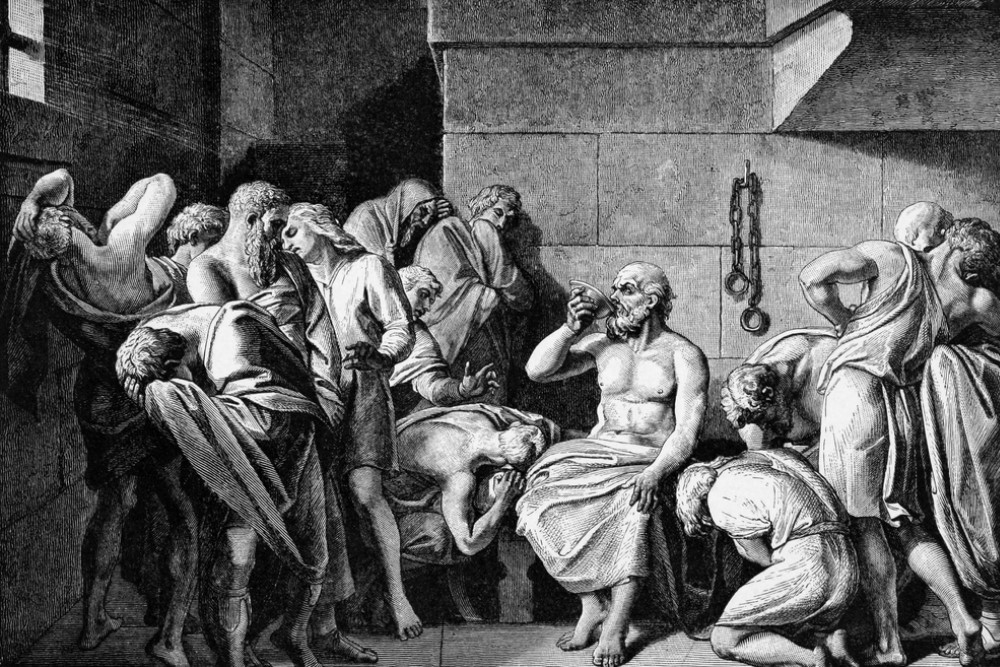
image of Socrates drinking hemlock

There has been much bemoaning of “cancel culture” in recent years. The fear seems to be that there is a growing trend coming from the left to “cancel” ideas and even people that fall out of favor with proponents of left-wing political ideology. Social media and online bullying contribute to this phenomenon; people leave comments shaming “bad actors” into either apologizing, leaving social media, or sometimes just digging in further.

It’s worth taking some time to think about the history of “cancellation.” For better or for worse, cancellation is a political tool that can be used either to entrench or to disrupt the dominant power hierarchy. Ideas and people have been “canceled” as long as there have been social creatures with reactive attitudes. Humans aren’t even the only species to engage in cancel behavior. In communities of animals in which cooperative behavior is important, groups will often shun members who behave selfishly. In other cases, groups of animals may ostracize members that do not seem to respect the authority of the alpha male. What we now call “cancel culture” is just one form of the general practice of using sentiments such as approval or disapproval or praise and blame to influence behavior and shape social interactions.

One of history’s most famous cancellations was the trial and execution of Socrates, who was “canceled” in the most extreme of ways because the influence that he had over the youth of Athens posed an existential threat to those with the power in that community. The challenge that he presented was that he might encourage the younger generation to reassess values and construct a new picture of what their communities might look like. At his trial, Socrates says,

“For I do nothing but go about persuading you all, old and young alike, not to take thought for your persons and your properties, but first and chiefly to care about the greatest improvement of the soul. I tell you that virtue is not given by money, but that from virtue come money and every other good of man, public as well as private. This is my teaching, and if this is the doctrine which corrupts the youth, my influence is ruinous indeed.”

For this, he was made to drink hemlock.

Galileo was canceled for the heresy of advancing the idea that the earth revolved around the sun rather than the other way around. This view of the universe was in conflict with the view endorsed by the Catholic Church, so Galileo’s book of dialogues was prohibited, and he lived out the rest of his life under house arrest.

In the more recent past, Martin Luther King Jr. was canceled — not only on his assassination, but prior to that, when many of his former compatriots in the struggle for civil rights broke ranks with him over his opposition to the Vietnam War and his battle to end poverty.

Through the years, people have been “canceled” for being Christian, Pagan, Catholic, Protestant, Atheist, Gay, Female, Transgender, Communist, and Socialist. They’ve been canceled for speaking up too much or too little, for being too authentic or not authentic enough. Books have been burned, ideas have been suppressed, people’s reputations have changed with the direction of the prevailing winds. Cancellation belongs to no single political party or ideology.

Nevertheless, “cancellation” in the 21st century is presented to us as a new and nebulous phenomenon — a liberal fog that has drifted in to vaporize the flesh of anyone who harbors conservative ideas. But what does it mean, exactly, to “cancel” a person? Perhaps the most common use of the word “cancel” in an ordinary context has to do with events. If I get a cold and I cancel my philosophy courses for the day, then those courses are no longer taking place. Similarly, in the most extreme cases, to “cancel” someone is to get rid of them forever — to kill them. Socrates, Hypatia, and even Jesus were “canceled” in this way.

There are other cases of cancellation which are pretty extreme, even if they don’t result in death. Instead, the person or group might be imprisoned or otherwise punished by the government. For example, during World War II, many Japanese Americans were “canceled” and put in internment camps just for being Japanese during a time when Americans were prone to xenophobia against that particular group. Then, of course, there was the McCarthy era, when people all across the country had to worry about their lives or livelihoods being destroyed if it were discovered or even suspected that they were sympathetic to communism. This cancel culture witch hunt affected the careers of stars like Charlie Chaplin, Langston Hughes, and Orson Wells. Positive proof of membership in the party wasn’t even necessary. Of one case Joseph McCarthy famously said, “I do not have much information on this except the general statement of the agency…that there is nothing in the files to disprove his Communist connections.”

Thankfully, when we use the word “cancel” these days, we are usually referring to something less extreme. We tend to mean that a certain segment of society will no longer support the “canceled” person in various ways — they will not consume their products, enjoy their art, listen to their thoughts, or otherwise support their general platform. The most common cases are those of politicians and artists of various types. Many people no longer watch Kevin Spacey movies after learning that he frequently engaged in sexual harassment of co-workers.

The linchpin — and the feature that makes it tricky — is that cancel culture is one of the consequences of the display of people’s reactive attitudes. It is these very reactive attitudes — guilt, shame, praise, blame — that are involved in moral judgments. Such judgments also involve assessment of harm. People often point out, when attempting to hold a bad actor responsible, that the bad actor’s behavior is resulting in a serious set of bad consequences for their community. These kinds of considerations are important — they make the world a better place. We don’t want to throw the baby out with the bathwater; we don’t want to give up holding people morally responsible for their actions because we are too afraid of “canceling” the wrong person. There are cases in which cancellation seems like precisely the correct course of action. We shouldn’t continue to hold in high regard rapists and serial harassers like Bill Cosby and Harvey Weinstein. We shouldn’t support the platforms of racists and child molesters.

For these reasons, cancel culture shouldn’t be depicted as the emerging new villain in the plot of the 2020s. This culture has always been around and always will be, though, granted, it is amplified by social media and the internet. Sometimes it does some real good. The reality is that this has all been so politicized that it is unlikely that they’ll be much ideological shift on these issues. If we allow Socrates’ ancient ideas to “corrupt” our minds, we’ll keep asking questions: “Is this a power play?” “Should this behavior be tolerated?” “Is this a case that calls for compassion and understanding?” Improvement of the soul calls for nuance.

Insurrection at the Capitol: Socratic Lessons on Rhetoric and Truth

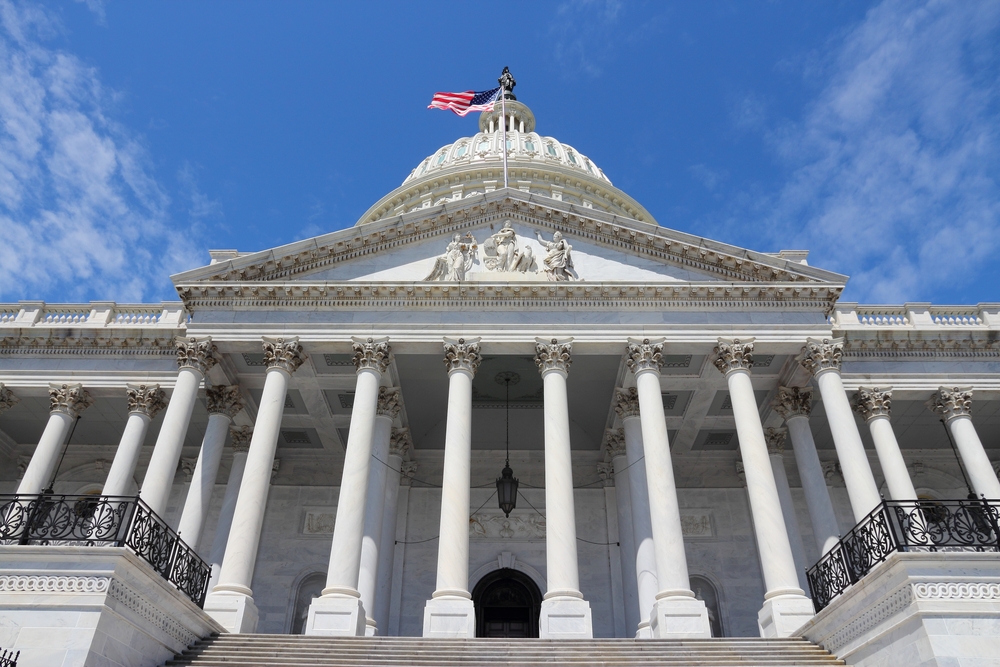
photograph of Capitol building looking up from below

In his 1877 essay The Ethics of Belief, philosopher W.K. Clifford told the story of a religiously divided community. Some members of the dominant religious group formed vicious beliefs about their rivals and started to spread those beliefs far and wide. The rumor was that the rival religious group stole children away from their parents in the dead of night for the purposes of indoctrinating them to accept all sorts of problematic religious doctrines. These rumors worked the local community into a fervor. The livelihoods and professional reputations of members of the rival group were irreparably harmed as a result of the accusations. When a committee was formed to look into the allegations, it became clear that, not only were the accusations false, the evidence that they were not true was quite easy to come by had those spreading the rumors bothered to look. The consequences for the agitating group were harsh. They were viewed by their society “not only as persons whose judgment was to be distrusted, but also as no longer to be counted honourable men.” For Clifford, the explanation for why these men were rightly viewed as dishonorable did not have to do with what their belief was, but how they had obtained it. He points out that, “[t]heir sincere convictions, instead of being honestly earned by patient inquiring, were stolen by listening to the voice of prejudice and passion.”

The January 6th attack on the U.S. Capitol Building was motivated, at least in part, by a wide range of false beliefs. Some participants were believers in the QAnon conspiracy theory which maintains that the Democratic party, led by Joe Biden, is a shell for a massive ring of pedophiles and Satanists who consume the flesh of babies. Many of these people believe that the attack on the capitol was a precursor to “The Storm” — a day of reckoning on which all of Trump’s political foes will be executed and Trump, sent by God to perform this task, will follow through on his promise to “Make America Great Again” by ridding the world of liberals. A conspiracy-based belief that all rioters seemed to share in common was that the presidential election was massively fraudulent, that democrats rigged the election in favor of Biden, and that the election had been “stolen” from the rightful winner, Donald Trump. They believed and continue to believe this despite the fact that the election has been adjudicated in the courts over 60 times, and no judge concluded that there was any evidence of voter fraud whatsoever. The basis of this commonly held belief is a series of lies Trump and his acolytes have been telling the public since November, when the results of the election became clear.

On one level, the events of January 6th are attributable to a lack of epistemic virtue on the part of the participants. The insurrection featured confirmation bias on center stage. There is no credible evidence for any of the claims that this group of people believe. Nevertheless, they are inclined to believe the things that they believe because these conspiracy theories are consistent with the beliefs and values that they had before any of this happened. When we play Monday morning quarterback (if, indeed, there ever is a Monday morning), we might conclude that the only productive path forward is to educate a citizenry that has higher epistemic standards; that is, we should do what we can to produce a citizenry that, collectively, has a more finely tuned nonsense-detector and is capable of distinguishing good evidence from bad. We should cultivate communities that have high levels of technological literacy, in which people know that the fact that an idea pops up on a YouTube video or a Twitter feed doesn’t make it true.

That said, placing the blame for false beliefs too firmly on the shoulders of those who hold them may be misguided. Such an approach assumes doxastic volunteerism — the idea that we have control over what it is that we believe. If a person, even the smartest person, is living in an epistemic environment in which they are perpetually exposed to brainwashing and propaganda, it might actually be pretty surprising if they didn’t come to believe what they are being actively coerced into believing.

This is not a new problem — in fact, it’s as old as philosophy itself. In many of Plato’s dialogues, Socrates — Plato’s teacher and the main character in his work — is quite critical of those who teach, study, and practice rhetoric. It was a common practice at that time for fathers to send their sons to study rhetoric from a Sophist, a person who was skilled in the ability to “make the weaker argument the stronger.” Students who undertake this course of study learn the art of persuasion. Having these skills makes a person more likely to get what they want in business, in the courts, and in social life. Strong rhetorical skills reliably lead to power.

It may appear as if, when Athenian fathers sent their children to study rhetoric, they were sending them to learn to construct strong arguments. This was not the case. Arguments raised by rhetoricians need not be strong in the logical sense — they need not have premises that support conclusions — they need only to be persuasive. As the Sophist Gorgias puts it in Plato’s dialogue of the same name, “For the rhetorician can speak against all men and upon any subject. In short, he can persuade the multitude better than any other man of anything which he pleases.” A strong rhetorician, faced with an audience already primed to believe conspiracy theories and propaganda, can manipulate those inclinations with great flourish and toward great danger.

So, on another level, perhaps we should place the blame for the insurrection firmly on the feet of the politicians who knowingly used the rhetoric of conspiracy theories to gain power and popularity with their vulnerable constituents. These politicians knew they were playing with fire. Terrorist attacks perpetrated by right-wing extremists like Timothy McVey are part of our country’s collective consciousness. Yet they poked the bear anyway, over and over, benefiting from doing so in the form of both money and power. These politicians fuel the fire of ignorance about more topics than voter fraud or Satanic pedophile rings; they also use rhetoric to manipulate people on topics like anthropogenic climate change and the seriousness of COVID-19. As Socrates says, “The rhetorician need not know the truth about things, he has only to discover some way of persuading the ignorant that he has more knowledge than those who know.” It may do no harm and may actually do some real good to cultivate a citizenry that has strong critical thinking skills, but we’ll never fix the problem until we get rid of politicians who use rhetorical tools to manipulate. We have to start holding them accountable.

Near the end of the Gorgias, Socrates debates with Callicles, who argues that a good life is a life in which a person pursues their own pleasure, holding nothing back. In a Nietzschean fashion, he argues that restrictions on power are just social conventions used by the weak masses to keep the strong in check. He insists that the strong should rightly rule over the weak. Using rhetoric to manipulate others is just one way of pursuing pleasure through the use of one’s strengths. The strong should not be prevented from pursuing their best life.

Socrates has a different view of what constitutes the good life. If a person goes searching for this kind of life, they should search after truth and justice. They shouldn’t study manipulation; they should study philosophy. Our goal should never be to make the weaker argument the stronger; we should commit to seeking out the stronger argument to begin with.

If history is any indication, this suggestion is nothing but doe-eyed optimism. Callicles would call it childish. He thought that studying philosophy was noble in youth, but that adult human beings should be more realistic about human nature. As a practical matter, perhaps he was right — after all the Athenians grew tired of Socrates’ influence on the youth of Athens and sentenced him to die by drinking hemlock. As a matter of principle, Socrates is the martyr for the life lived in pursuit of truth and justice and we should all strive to do the same ourselves and to do what we can to hold our politicians to the same standard. After all, there was a reason that politicians in Athens were afraid of Socrates.

Self-Care in the Late Capitalist Era

Photo of a lowlit room with candles and a mirror and a bed

As the time for New Year’s resolutions rolls around once more, the term “self-care” is more prevalent than usual. But what really is a “care of the self”?  

For decades, self-care has been associated with women’s empowerment.  In the context of women’s traditional roles as unpaid caregivers, self-care is a radical action: by prioritizing her own needs, a woman affirms that she exists for herself and not merely for others.  Audre Lorde also saw its political potential for individuals marginalized by their race and sexual orientation: “Caring for myself is not self-indulgence, it is self-preservation, and that is an act of political warfare.” For people who are typically erased from public life, loving and caring for oneself when society does not is a subversive practice.

The meaning of self-care has gradually come to be associated with enjoying small pleasures in the midst of a busy life, marketed especially to women who still overwhelmingly bear the heavy dual burden of being primary caregivers and workforce labourers. But what happens when late capitalism has permeated the notion of “self-care”, encouraging consumption itself as part of a holistic spiritual practice? Or when a “care of the self” becomes an Instagram label, used to showcase the results of a lip-plumping kit, manicure, or an Insta-filtered and staged $10 macchiato? What philosophy is at stake when magazines and periodicals tout this particular set of soy candles or bespeak aromatherapy or that $2500 per diem psychotherapy and spa program as the self-care du jour?  

Another version of a “care of the self” focuses primarily on bodily wellness. There are positive trends here. The combination of the body acceptance movement with girl power results in a new focus on #strongwomen rather than the thinness ideal long associated with the fashion industry. But some have argued that the #strongnotskinny ideal and its own genre of #fitspo is just as demanding of an ideal for women in its own way as the former, emaciated heroin-chic ideal, despite being a healthier and more rewarding overall goal.  

Even in bodily fitness, consumerist and late-capitalist signifiers of fitness tend to be emphasized over internal measures of physical well-being. Workout clothing has long shifted from repurposed tank tops and sweatpants from the back of one’s closet to a 9.6 billion dollar industry of its own. And the quintessentially American obsession with fitness has led to a series of performative fads, from expensive and restrictive diets that advertise one’s enlightened eating habits to pricey workouts.

But if late capitalism and performing membership of a leisured life have all but subsumed a “care of the self”, what might be an authentic or original version of the concept?  

Michel Foucault explored the Socratic notion of self-care as interlinked with another duty: self-knowledge. The project of self-care for the ancient Greeks, particularly through Socrates, demanded commitment to an ongoing cognitive process – a critical sounding of one’s ideas of oneself and the world. It is only through a relationship to truth-telling via rigorous ”dialectic” (literally, talking or thinking through something) that a person lives up to their own human potential. Socratic dialectic is a pre-modern mode of thought that is not wholly reducible to the scientific mode which relies on an opposition between subject and object to come to “objective” assessments of reality. It falls more under the notion of a “practice” or “techne” in Hellenistic culture.

This cognitive emphasis on self-care is radical for several reasons. It might be tempting, in the context of a biomedical view of the body, to focus on the physical and emotional benefits of learning and of cognitive behavioral therapy. While such effects exist, we could easily become locked in a therapeutic vision that envisions human flourishing and excellence primarily in terms of physiological and emotional factors. Once the parameters of flourishing are so reduced, it is possible to commodify them: the complex of factors constituting physical wellness can be subsumed into ”fitspo” and the richness of emotional lability can be swapped for positivity injunctions of #gratitude, #hygge, and #blessed.  

Instead, ancient notions of self-care invite us to fundamentally revisit our ideas of what constitutes human flourishing. Honest, self-reflective thought is difficult to commodify. As a consequence, a commitment to a discipline of critical thinking that engages oneself and one’s place in the world might represent the most promising subversion of capitalism to date.

This has direct political consequences. Plato would see Socrates’ own death as an exemplary instance of “parrhesia” – speaking one’s truth even when it is costly.  Such disciplined candour is an unavoidably political act in view of the fact that human beings are irreducibly political animals. Audre Lorde’s self-care may be much more appealing to the contemporary reader than Socrates’ — perhaps because self-preservation is a core feature of her version of self-care.  

Some of us today are fortunate enough to live in a society where self-examination and challenging of belief systems do not come at such a high price as that paid by Socrates.  However, late capitalist societies present their own peculiar challenges to self-knowledge where visions of self-fulfillment are daily bought and sold, promised and pursued. This New Year, we might put this meta-resolution at the top of our list: to see how a relentless commitment to truth-seeking can transform our lives and our world.