← Return to search results
Back to Prindle Institute

Robot Kitchens, AI Cooks, and the Meaning of Food

I knew that I was very probably not going to die, of course. Very few people get ill from pufferfish in restaurants. But I still felt giddy as I took my first bite, as though I could taste the proximity of death in that chewy, translucent flesh. I swilled my saki, squeezed some lemon onto the rest of my sashimi, and looked up. Through the serving window I could see the chef who held my life in his busy hands. We made eye contact for a moment. I took another bite. This is absurd. I am absurd. I pictured the people I love, across the ocean in sleeping California, stirring gently in their warm, musky beds.

My experience in Tokyo eating pufferfish, a delicacy known as fugu, was rich and profound. Fugu has an unremarkable taste. But pufferfish is poisonous; it can be lethal unless it is prepared in just the right way by a highly trained chef. My experience was inflected with my knowledge of the food’s provenance and properties: that this flesh in my mouth was swimming in a tank a few minutes ago and was extracted from its lethal encasement by a man who has dedicated his life to this delicate task. Seconds ago, it was twitching on my plate. And now it might bring me a lonely death in an unfamiliar land. This knowledge produced a cascade of emotions and associations as I ate, prompting reflections on my life and the things I care about.

Fugu is an unfamiliar illustration of the familiar fact that our eating experiences are often constituted by more than physical sensations and a drive for sustenance. Attitudes relating to the origin or context of our food (such as a belief that this food might kill me, or that this food was made with a caring hand) often affect our eating experiences. There is much more to food, as a site of human experience and culture, than sensory and nutritional properties.

You would be hard pressed to find someone who denies this. Yet we are on the cusp of societal changes in food production that could systematically alter our relationship to food and, consequently, our eating experiences. These changes are part of broader trends apparent across nearly all spheres of life resulting from advances in artificial intelligence and other automation technologies. Just as an AI system can now drive your taxi, process your loan application, and write your emails, so AI and related automation tools can now make your food, at home or in a restaurant. Many technologists in Silicon Valley are trying to make automated food production ubiquitous. One CEO of a successful company I spoke with said he expects that almost no human beings will be cooking in thirty years’ time, kind of like how today very few humans make soap, toys, or clothing by hand. It may sound ridiculous, but I’ve found that this vision is common in influential industry spaces.

What might life look like if this technological vision were to come about? This question can appear trivial relative to louder questions about autonomous weapons systems, AI medicine, or the existential threat of a superintelligence. It is not a question of life and death. But I think the question points to a more insidious possibility: that our technological advances might quietly erode the conditions that enable us to experience our day-to-day lives as meaningful.

On the one hand, the struggle for sustenance is a universal feature of human life, and everyone is a potential beneficiary of technology that streamlines food production, like AI that invents recipes or performs kitchen managerial work and robots that prepare food. Home cooking robots could save people time and effort that would be better spent elsewhere. A restaurant that staffs fewer humans could save on labor costs and pass these savings on to customers. Robots could mitigate human errors relating to hygiene or allergies. And then there is the possibility of automated systems that can personalize food to each consumer’s specific tastes and dietary requirements. Virtually every technologist I have spoken to in this industry is excited about a future where every diner can receive a bespoke meal that leaves them totally satisfied and healthy, every time.

Automation brings interesting aesthetic possibilities, too. AI can augment human creativity by helping pioneer unusual flavor pairings. The knowledge that your food was created by a sexy robot could enhance your eating experience, especially if the alternative would be a miserable and underpaid laborer.

These are nice possibilities. But one thing that automation tends to do is create distance between humans and the things that are automated. Our food systems already limit our contact with the sources of our food. For example, factory farming hides the processes through which meat is produced, concealing moral problems and detracting from pleasures of eating that are rooted in participation in food production. AI and robotics could create even more distance between us and our food. Think of the Star Trek replicator as an extreme case; the diner calls for food, and it simply appears via a wholly automated process.

Why is the prospect of losing touch with food processes concerning? For some it might not be. There are many sources of value in the world, and there is no one right way to relate to food. But, personally, I find the prospect of losing touch with food concerning because my most memorable food experiences have all been conditioned by my contact with the processes through which my food came to be.

I have a sybaritic streak. I enjoy being regaled at fancy restaurants with diseased goose livers, spherified tonics, perfectly plated tongues, and other edible exotica. But these experiences tend to pass for me like a kaleidoscopic dream, filled with rarefied sensations that can’t be recalled upon waking. The eating experiences I cherish most are those in which my food is thickly connected to other things that I care about, like relationships, ideas, and questions that matter to me. These evocative connections are established through contact with the process through which my food was made.

I’ve already mentioned one example, but I can think of many others. Like when, in the colicky confusion of graduate school, Sam and I slaughtered and consumed a chicken in the living room of his condo so that we might, as men of principle, become better acquainted with the hidden costs of our food. Or when I ordered tripas tacos for Stephen, my houseguest in Santa Barbara, which he thoroughly enjoyed until, three tacos in, he asked me what ‘tripas’ meant. Or when I made that terrible tuna-fish casserole filled with glorious portions of shredded cheese and Goldfish crackers for Amy, Jacob, and Allison so that they might become sensuously acquainted with a piece of my childhood. Or when Catelynn and I sat in that tiny four-seat kitchen overlooking the glittering ocean in Big Sur and were served sushi, omakase style, directly from the chef’s greasy, gentle hands, defining a shared moment of multisensory beauty.

These experiences fit into the fabric of my life in unique and highly meaningful ways. These experiences are mine, but you probably have some like it. The thing to notice is that these sorts of experiences would be inaccessible without contact with the provenance of food. They would not be possible in a world where all food was produced by a Star Trek replicator. This suggests that food automation threatens to erode an important source of human meaning.

Really, there are all sorts of concerns you might have about AI and robotics in the culinary sphere. Many of these have been identified by my colleague Patrick Lin. But for me, the erosion of meaning is worth emphasizing in discussions about technology because this kind of cost resists quantification, making it easy to overlook. It’s the sort of thing that might not show up on a cost-benefit of a tech CEO who speaks glibly about eliminating human cooking.

The point I’m making is not that we should reject automation. The point is that as we augment and replace human labor in restaurants, home kitchens, and other spheres of life, we need to be attentive to how the processes we hope to automate away may enrich our lives. An increase in efficiency according to quantifiable criteria (time, money, waste) can diminish squishier but no less important things. Sometimes this provides a reason to insist on an alternative vision in which humans remain in contact with the processes in question. I would argue this is true in the kitchen; humans should retain robust roles in the processes through which our food comes to be.

After my meal in Tokyo, I used my phone to find an elevated walkway on which to smoke. I took a drag on a cigarette and watched a group of men under an overpass producing music, in the old way, by a faint neon light. I could feel the fugu in my belly, and my thoughts flashed to my loves and hopes. One of the men playing a guitar looked up. We made eye contact for a moment. I took another drag. This is nice. I am happy.


Note: This material is based upon work supported by the National Science Foundation under Award No. 2220888.  Any opinions, findings and conclusions or recommendations expressed in this material are those of the author and do not necessarily reflect the views of the National Science Foundation.

Why You Should (Almost) Always Give a 5-Star Rating

photograph of grocery bag delivered on doorstep

One type of business that has not only survived but thrived during the pandemic is home grocery delivery. In addition to many grocery stores themselves offering delivery, there are app-based services, like Instacart, which work on a system much like other gigging apps like Uber or Lyft. People can sign up as a contract worker – or “shopper,” as they’re known in the Instacart world – where they can accept orders, pick them up from the relevant store, and deliver them to the customer. The service is convenient, tends not to be very expensive, and, at its outset, provided shoppers with a good source of income.

Things have since changed. Many shoppers have recently reported that their earnings have dropped drastically, sometimes by as much as 50%, due to new policies that the company has implemented. Because shoppers are contract employees, they are not protected by minimum wage laws in the U.S. or Canada, and many found that, after calculating for time and expenses, that they were now making less than minimum wage. The result has been a call for strikes by the Gig Workers Collective, a group that claims to represent a significant number of Instacart shoppers (along with gig workers in other industries). Several of their demands center on greater transparency by Instacart when determining how much jobs are paid, as well as rolling back some of the new policies. One policy of note concerns how customer ratings of Instacart employees affect their earning potential.

The rating system can be found everywhere in the gig economy. If you’ve ever taken an Uber or a Lyft or whatever other rideshare program you like best, chances are you’ve been asked to assign your driver a rating out of 5 stars once you arrived at your destination. Chances are you’ve also realized that the star system is crude, at best: while having a 4/5 rating on pretty much anything else in life means that you’re doing great, it’s easy to look at ratings in the low 4’s on these kinds of apps and wonder what someone did wrong.

The rating system used by Instacart is potentially the most punitive among the gigging apps. As one employee describes, workers who have the highest ratings get the first choice of deliveries that come in on the app. That means that the deliveries that pay the most go to the highest-rated, and that even a small dip in one’s rating could mean a loss of a significant amount of money. “Even though shoppers in the, let’s say, 4.9- to five-star range provide virtually the same quality service,” the employee said in an interview, “those even slightly below a perfect five-star rating can slip to orders that pay significantly differently.”

There seems to be a clear need for Instacart to change its policies. But what does this say about what you, the Instacart user, ought to do? Let’s say you place an order through Instacart, and something went slightly wrong. Maybe the shopper was a little late, or maybe your bread got smooshed a little bit. Nothing major, but it’s not perfect. It certainly doesn’t seem like 5-star service, so you give it 4 stars.

While it may seem from the user’s perspective that this was a fair rating, the overly punitive nature of the rating system used by Instacart means that in docking the shopper a star one is potentially significantly hindering the employee’s earning potential. It would certainly seem like an overreaction to, say, dock someone’s pay by thousands of dollars a year just because they broke a couple of eggs, and given the current rating system in place, giving anything less than a 5-star rating will potentially have this consequence.

Here, then, is a suggestion for a norm of rating gig workers: when it comes to companies like Instacart that excessively punish workers for average ratings that dip even slightly below 5-stars, one ought to forgive all minor mistakes and assign 5-star ratings in almost every circumstance.

There will be exceptions: one need not forgive all mistakes. For example, if your shopper shows up at your house 8 hours late, dumps all of your groceries on your lawn, and then knocks over your mailbox as they peel out of your driveway, assigning a rating lower than 5 stars would be justified. But in most normal circumstances given the disconnect between one’s feelings of whether a job has been done well and the consequences for imperfection, these feelings will not translate into proportional punishment by using the rating system in a way that might seem fair to the user.

One might think that the onus for making a rating system proportional should fall to the company, and not the user. Indeed, the Gig Workers Collective’s demand to adjust the system is motivated at least in part by the fact that users of Instacart will most naturally be inclined to assign ratings that they think are fair. In the same interview mentioned above, the Instacart employee is all too aware of this, noting that “the urge to rate a delivery service four stars or lower makes sense on the surface,” and that it seems that if “the service did not deliver on its promise, the customer has the right to report and penalize this service.”

In the interim, however, an employee’s livelihood seems to be much more of an important concern than needing to make sure that one is able to express one’s frustration over small issues. Given the way the system is set up currently, then, it will almost certainly be unfair to give an Instacart shopper anything lower than a 5-star rating.

Lab-Grown Meat: Is it Kosher?

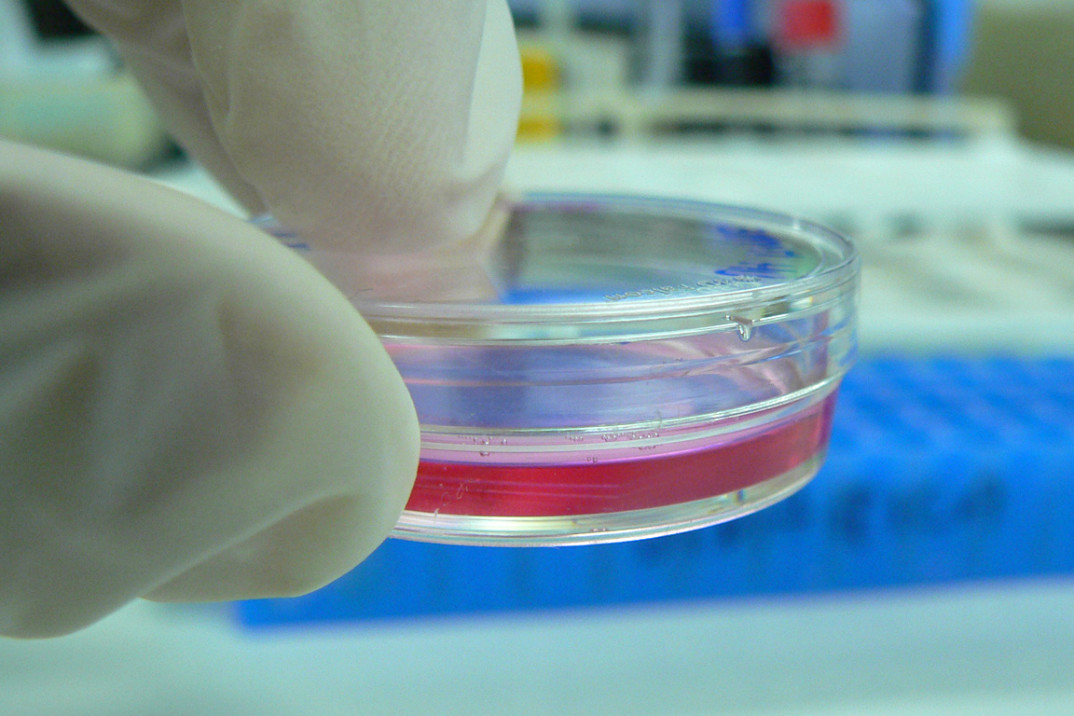
The idea of meat grown in a laboratory is not a new one. Winston Churchill even shared this vision as far back as 1931, saying “Fifty years hence, we shall escape the absurdity of growing a whole chicken in order to eat the breast or the wing, by growing these parts separately in a suitable medium.” As Churchill predicted, in recent years this once far-fetched vision has turned into an imminent reality. Lab-grown meat is created through the process of collecting cells from a live or recently killed animal and replicating the cells in a scientific setting. The current technology is similar to “cutting off a salamander’s tail and letting it grow back.”

Continue reading “Lab-Grown Meat: Is it Kosher?”

Land of Plenty?

It’s no secret that living a healthy lifestyle is a key factor when it comes to leading a long, happy life. Public discourse on this topic has grown increasingly over time with diet trends and programs, nutritional supplements, and even pharmaceutical and medical solutions becoming a part of our everyday lives. We are infiltrated on a daily basis with encouragement to put healthier things into our bodies in the form of TV and film references, news outlets, social media, and advertisements, just to name a few. First Lady Michelle Obama’s advocacy for creating a healthier generation, such as her “Let’s Move” campaign and mandated modifications to school lunches, has become very visible in the public eye and is a well-known aspect of her work in the White House. All of these factors combined, plus many more, make it clear that as a society, U.S. citizens are more aware than ever of the importance of staying active and eating well.

Continue reading “Land of Plenty?”

Progress, paradox, and the food justice movement

This post draws on my experience from co-leading the Prindle Institute’s Alternative Spring Break trip to Nashville, TN focused on food ethics and justice on March 22-28, 2015.

Food justice is an issue that many of us are indirectly exposed to at an early age. We’re taught, often through religious education but also in other ways, that many people in the world are hungry and we, as more privileged global citizens, have a responsibility to help alleviate their suffering. In my experience growing up in the Catholic school system in Columbus, Ohio, canned food drives were routine, field trips to food banks were not uncommon, and students memorized “feed the hungry” as part of the Corporal Works of Mercy. We lugged paper bags filled with Campbell’s soup, Ramen noodles, or whatever else our parents wanted to discard from our pantries to Homeroom to earn a “dress down day.”

Continue reading “Progress, paradox, and the food justice movement”

Stigmatizing Food Choice to People Without Choices

These days, it seems that everyone is trying to “eat clean.” As I browsed the news this week, I clicked over to the “Healthy Living” page of the Huffington Post and found a myriad of “Eat Clean: Fall Edition” articles like this one about 6 high-fat foods you should be eating, and this one about how to cook with pumpkin that doesn’t come from a can. As Michael Pollan, American food ethics guru, famously said, “If it came from a plant, eat it. If it was made in a plant, don’t.” Sounds simple, right? Just follow the advice given in the articles above, and you’ll be eating properly!

Continue reading “Stigmatizing Food Choice to People Without Choices”