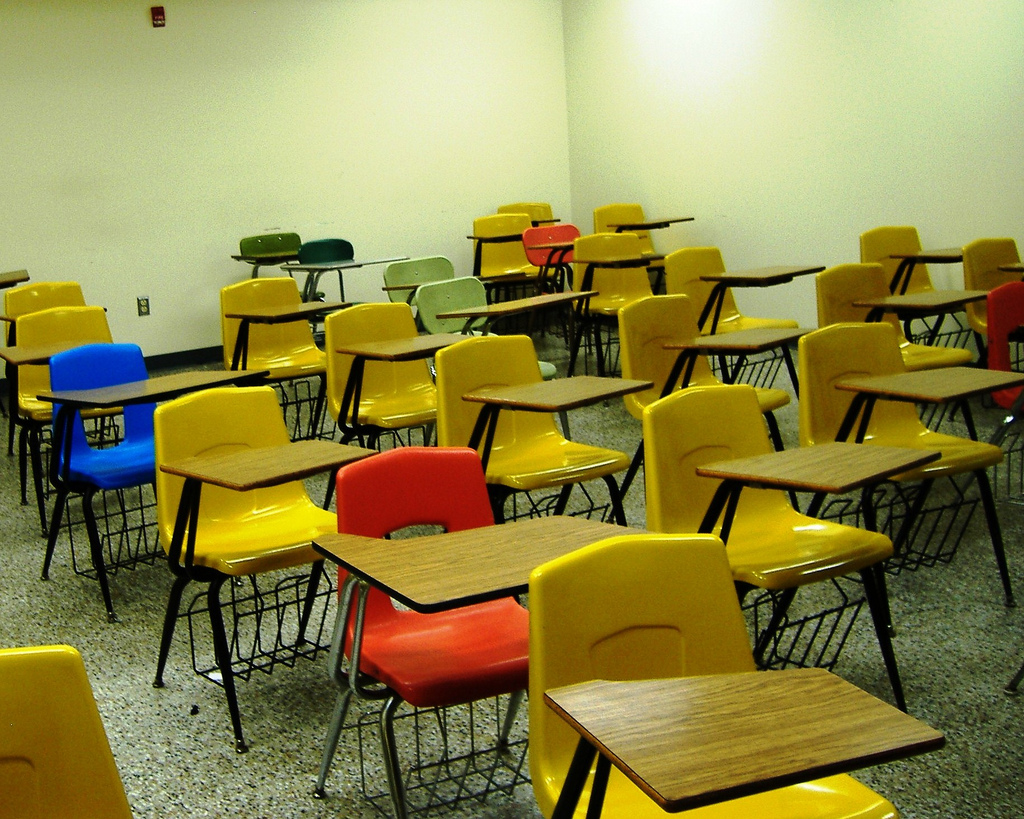
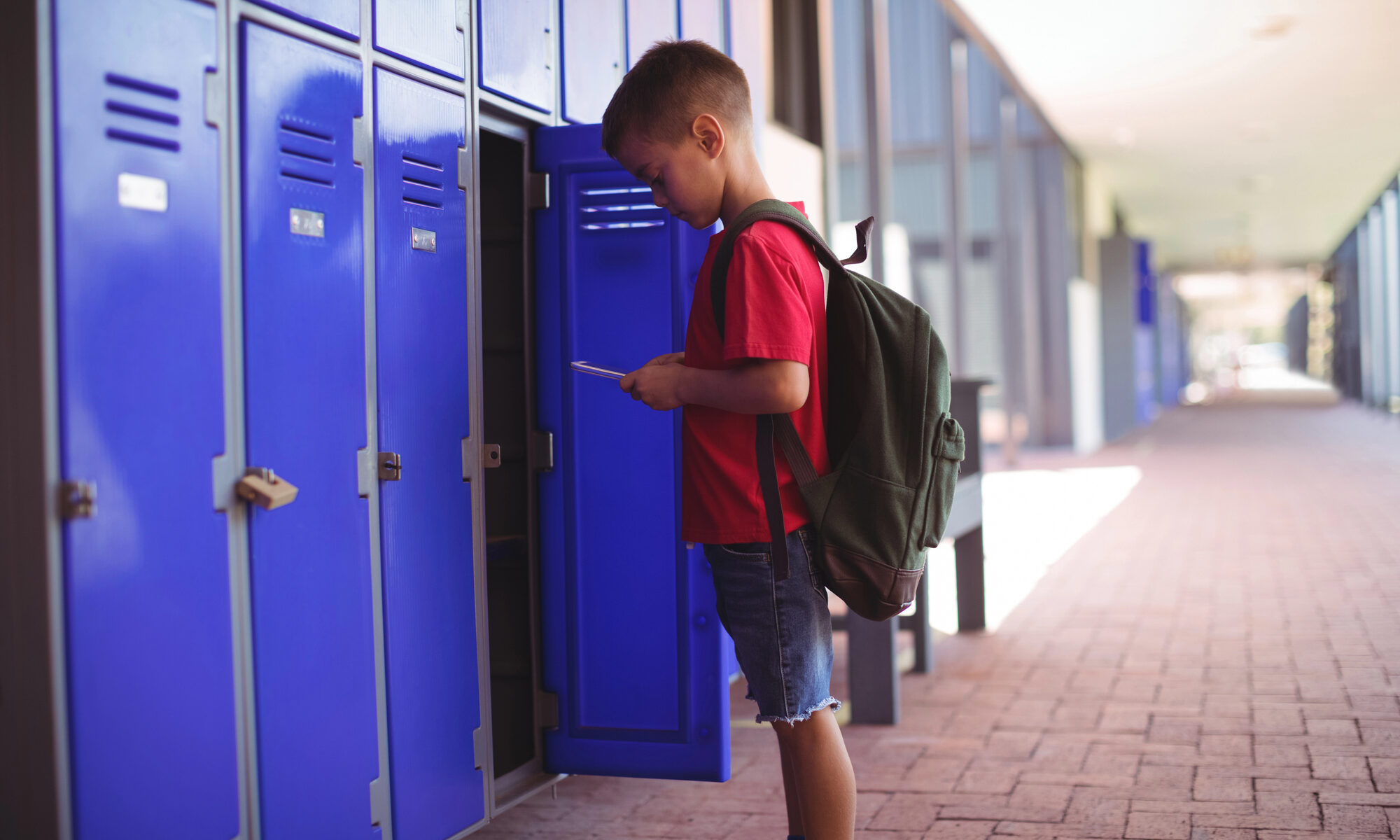
Kids are in school. Their phones are not.
Effective January 1st, classrooms across dozens of states will enforce new phone regulations. H.B. 959 (N.C.), for instance, instructs each school district to establish a policy appropriate for its learners, one that will “prohibit students from using, displaying or having a wireless communication device turned on during instructional time.” Aside from explicit teacher authorization, students are given exceptions for emergencies, healthcare, and special education plans. In response, several schools welcomed students in August with a new policy already in place.
At first glance, the phone mandate seems like a debate over autonomy: the freedom to govern one’s own self. The pictured tug-of-war lies between students and school personnel, each vying for or against the student’s access to personal property. Kids like phones. Schools don’t. So it goes.
But what if the phone question is neither this simple nor simply about autonomy itself? Perhaps everyone, in one way or another, is on the side of student freedom and, instead, the underlying tension lies in what kind of freedom ought to take precedence. Which form of student autonomy needs preserving — and beyond freedom, is something else in jeopardy?
Let’s consider the stakeholders.
First, the kids. Students — and, well, people — are pretty big fans of personal autonomy. This indicates freedom over one’s most basic functions, such as a right to one’s own physical self. For example, a person who is free to dress herself in particular attire, tiptoe her feet across a floor, and ingest a liquid of choice could be said to possess personal autonomy. In a medical setting, this might look like making one’s own healthcare decisions without coercion. Whether high or low stakes, someone with personal autonomy does what she wants with her own self because the self is hers.
Here’s where phones come in. Invoking a right to one’s own property is an appeal to this sort of freedom. That is, perhaps freedom of access to personal belongings can be reasonably umbrellaed under personal autonomy. Unlike a contraband cigarette, a teenager might imagine her device as an extension of the self. Students might argue that a right to personal property is necessitated by a right to personal autonomy, that a school’s ban on phones is a threat to its students’ personal freedom. At first read, this sounds perturbing. But does something legitimate rest at its root, a justification for limiting agency?
Schools, perhaps, think so. ‘Schools’ implicates many personnel: district employees, site administrators, and teachers. Nominally, this conglomerate wants students to achieve academic success. District-level staff who do not routinely, if at all, interface with students may define their success as scoring proficient, if not remarkably above, on standardized tests in reading, math, and science. These results inform the school’s “report card,” a published letter-grade assessment of the school’s student achievement.
Teachers, by contrast, ground their work in student relationships, adapting instruction, assessment, and evaluation in light of the particulars of the young minds they teach. I, for one, might be a daily audience to a student’s burgeoning clarity of writing or speech, the sort of flourishing a scantron doesn’t capture. School principals perhaps fall between my imagined monoliths of district leaders and classroom instructors. Often former teachers themselves, school-based administrators have daily access to student goings-on but are tasked with managing their assessment data and long-term academic outcomes.
Broadly construed, then, schools seek students’ intellectual autonomy. Whatever the motive, they want kids to make well-reasoned judgments, whether demonstrated on a standardized bubble sheet or through analytical prose. If we rely on classroom instruction to deliver students the opportunity to stretch and grow their thinking capacities, then a kid glued to his feed instead of the whiteboard threatens his cerebral development. Well-developed brains, if not ends in themselves, hopefully grow up to power self-sufficient adults who positively engage in the world. If maximizing mental capacity is in students’ best interest, then phones must go, right?
The picture we’ve built, then, implies personal and intellectual autonomy to be at odds. To have freedom over personal choice, one neglects cultivating mental dexterity — and, perhaps, vice versa.
But maybe this is wrong.
For one, perhaps intellectual autonomy is already at risk. Learning often fails without the help of phones. When I lecture longer than my students can focus, my creative indulgence supersedes their likelihood of understanding. If a student is one of forty in a class, then their opportunity for personalized feedback, support, and rapport is lower than a learner tutored one-on-one. Swimming in educational apathy, whether at home or school, a child may grow unenthused in pushing the bounds of their intellectual capacities. In other words, removing phones is hardly a guarantee for saving intellectual freedom.
Kids have always managed to slip through the cracks, even though most classrooms in history were phone-free. Any student can find himself insufficiently rested, nourished, or comfortable, all of which preclude maximal learning in the school day. We will never be able to remove the human factor embedded in schooling, which means it’s not unreasonable to suggest that cultivating intellectual freedom was always a steep climb. Amid post-pandemic teacher burnout and drop in literacy, devices might be a dazzling scapegoat for deeper environmental issues.
Some even argue phones help. Maybe students feel personal autonomy ought to manifest in a phone-friendly way to feel a sense of safety at school. Accessing instant messaging when the outside world lobs our kids bigger-than-math-test updates — family emergencies, travel, death, or celebrations — allows them to acknowledge their whole personhood. The possibility of contacting emergency services or a parent in dire straits, even if unlikely or unrealistic, can feel like freedom. In the wake of media coverage on school shootings, many parents openly feel this way. Life threats aside, we don’t ask working adults to ignore their messages all day. So long as she completes her work too, why must a studious fourteen-year-old?
But maybe we don’t want our kids to have cellular security blankets. More so, we don’t want them to have to want them — to feel like they won’t be able to go without. A lesser acknowledged metric for education is how well-prepared kids are to interact with others in the real world. You might support the phone ban in the name of intellectual efficacy. You might support the phone ban as an appeal to instructors’ authority or improving staff working conditions. But perhaps the best reason to ban phones is in the name of a lesser acknowledged function of education: socialization.
Two school years ago, a high school student told me that social anxiety directly feeds an impulse to turn to a phone; unsure how to talk to new friends, it’s more comfortable, in the short term, to reach into a backpack and feign focus on fleeting notifications. We know persistence amid discomfort is what empowers us in the long term, but it’s hard to relish the long-term when you’re a nervous fourteen-year-old who just wants to hide in the bathroom.
Phones capitalize on this avoidance. This means avoiding not only instruction but also assignments, peers, and oneself. From nervousness or boredom, if every student checks a text every few minutes, even briefly, likely staggered on different timelines, there is feasibly one person is on a phone at all times. With short-lived individual soothing comes disjointed classroom — or lunch table — culture. The whole point of being together in person feels moot. Ironically, most children more than likely aspire to be informed and prepared for the adult world, to find and be who they are, and surround themselves with others who support them in doing so. Even the phone time reflects this inclination. What are any of us ever doing on our devices besides engaging in or idealizing human connection anyway?
This is the point where we might look for something hopeful about the inclusive use of technology. You’ve likely heard the refrain: “We’re not getting rid of it. Technology is a tool. It’s just about using it properly.” There are plenty of tools we’ve made that we’re probably not getting rid of. However, I’m not convinced that any of us are reliable advocates for proper use if we’re all entrenched in algorithmic soup ourselves. I’m not sure that there always is an in-between, even if we want one, and I’m not sure that there’s much nobility in seeking to include tools that both profit from and shape our impulses.
Students have these thoughts, too. They’re aware of their attention degradation, and they don’t like it. Perhaps, then, the most compelling support for banning phones lies beyond intellectual efficacy or teachers feeling respected and, instead, in how kids interact with other kids.
Heaps of my students freely admit technology to be disruptive — one joked her friend is a “screenager.” The only further memory I hold from that moment is its aftermath, how the quip prompted two other seventh graders to peek up from their computers and melt into a conversation full of hand motions, emphatic head-nodding, and giggling through braces.
I think this is where we all want them to end up: looking up, laughing with each other.