
← Return to search results
Back to Prindle Institute

Why Debate?

In December of 2025, CBS and the Bank of America announced the “Things That Matter” series of town hall debates. According to editor-in-chief Bari Weiss,

We believe that the vast majority of Americans crave honest conversation and civil, passionate debate…In a moment in which people believe that truth is whatever they are served on their social media feed, we can think of nothing more important than insisting that the only way to get to the truth is by speaking to one another.

Debates are popular these days. The YouTube channel Jubilee, for example, claims to “Provoke human connection” by producing videos where one central figure debates numerous contrarians (often 20 or more), with recent video titles including: “Doctor Mike vs. 20 RFK Jr. Supporters,” “Andrew Callahan vs. 20 Conspiracy Theorists,” and “Piers Morgan vs. 20 Woke Liberals.” These videos receive millions of views, and the Jubilee channel itself boasts over 10 million subscribers.

Our current moment is often presented as one in which polarization is running amok. Think pieces and books abound on the need to bridge social divisions, and debating issues is often seen as the best way to reach across political aisles to address those issues rationally and productively. But despite their popularity and promise of healing divides, maybe what we need is a little less debate.

What do I mean by “debate”? While they can take different forms, debates are generally ways of engaging with issues where parties take opposing stances on a particular issue, present arguments for their view, and criticize and respond to the arguments of their opponents. In engaging in a debate, the ultimate goal is to “win”: in formal debates, a “winner” or “loser” may be declared, while in more informal debates, it is left up to an audience or the participants themselves to reach a verdict.

Issues can be debated in better or worse ways. A debate where people are screaming and insulting each other isn’t a good one; hence, we see “civility” commonly espoused as a characteristic of a quality debate. There is no shortage of additional advice about how to debate well: books on proper debating techniques like Win Every Argument: The Art of Debating, Persuading, and Public Speaking and Good Arguments: What the art of debating can teach us about listening better and disagreeing well emphasize rhetorical strategies alongside proper debate decorum, with the promise of helping their readers get the edge over their ideological rivals.

If we’re going to debate, then we should want to do it well. One of the main criticisms of Jubilee, for example, is not that it features debates, but that the debates it features are bad: participants arrive unprepared and talk over one another, many of the arguments are specious, and the overall vibe is more chaotic than civilized. However, we might think that something like the “Things That Matter” series, which promises well-informed speakers and civil engagement, would be the ideal way to address divisive political issues.

The lineup of the “Things That Matter” series, however, illustrates one of the major problems with how political and ideological issues are presented for debate, at least in the media: while debates are often presented as ways to critically evaluate views from a neutral position, choosing which issues to debate is itself a political act.

For example, one of the purported issues that “matter” in the CBS series concerns feminism, with the question “Has feminism failed women?” being up for debate. While it is certainly worthwhile to discuss feminism and its relation to American politics, the question is presented in a way that places two positions on equal footing: one that claims that feminism has failed women, and one that says it hasn’t. Using debate to address political issues thus presents them as being equally worthy of consideration, even when they’re not. There are plenty of examples of this kind of “bothsidesism” in the popular debate landscape, for example: flat earthers vs. scientists, doctors vs. antivaxxers, etc. The mere fact that there are people who disagree on some issues, then, does not mean that they ought to be presented as issues for debate.

Some commenters have also criticized the “Things that Matter” series in particular for the choice of debate topics. In addition to “Has feminism failed women?”, the series includes the questions “Does America need God?” and “Should gen Z believe in the American dream?” Again, these are certainly topics some Americans disagree about, and they may even be ones that have some well-formulated arguments on both sides. However, in the current moment, they are arguably far from the most pressing. Choosing an issue for debate, especially as part of a major national televised event, thus elevates it as being particularly important. Again, choosing which issues to debate becomes a political act.

These might be problems when it comes to big, televised events or social media channels with millions of followers, but surely, when it comes to our own personal disagreements, we should still encourage engagement with people we disagree with in a way that emphasizes civility and well-formulated arguments. What would it mean to say that we should be debating less with each other?

There are ways to engage with contentious issues that don’t involve debating them. Philosophers, arguably, do not debate; instead, they discuss different views. While the difference between debates and discussions might seem semantic, the philosopher’s discussion is motivated by pursuing the force of arguments and working collaboratively to find the best such arguments to gain a deeper understanding. While philosophical argumentation can also be done in better or worse ways, the virtuous philosophical argument is not motivated by a desire to defeat an opponent.

Indeed, that debates encourage adopting the mindset of wanting to emerge as a “winner” in turn encourages obstinacy in the face of evidence that one might be wrong. Sometimes, though, the most reasonable course of action in the face of arguments is to change your mind. That this would constitute “losing” a debate underscores both the artificiality of debates and how ill-suited the debate mindset is to engaging with complex political issues.

Debating isn’t all bad. As many books about debating point out, to debate well, you need to know how to do other important things, such as analyzing and formulating arguments. But the idea that the best approach to socially divisive issues is to debate them fails to acknowledge how debates can amplify political differences rather than bridge them.

The Day after Election: Democracy and Good Faith

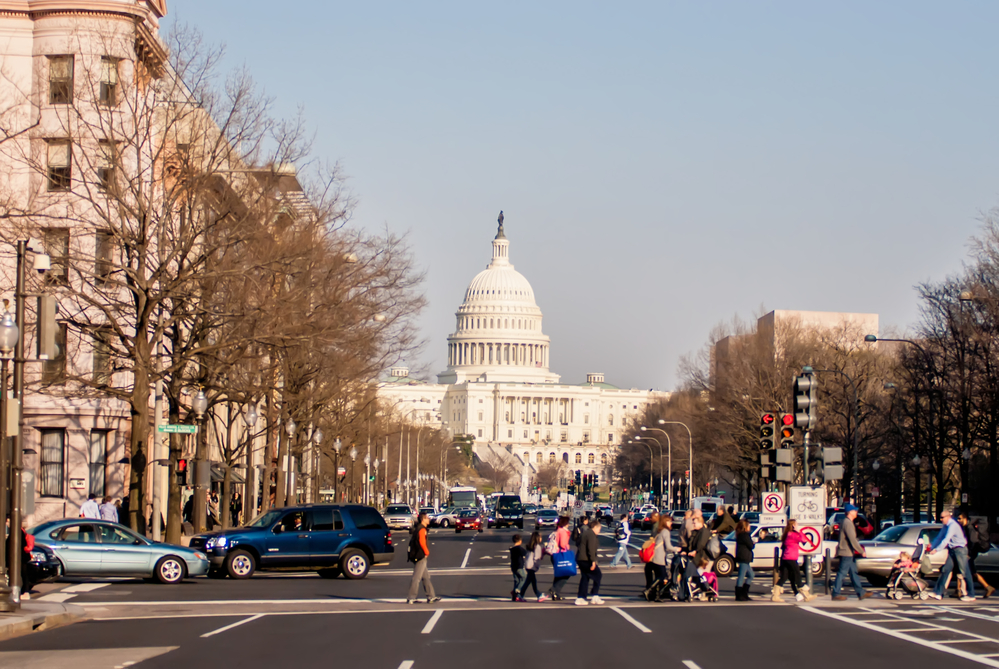
photograph of downtown Washington D.C. with Capitol building in background

Much attention and energy is focused on the outcome of the election, but regardless who wins there is a great deal of work to be done — simply declaring one side the victor won’t solve our problems. So what’s the next question we should be asking after “Who won?”

In a recent podcast discussing the state of the American democracy, David Runciman remarked:

“The optimistic view is that democracy is a resilient and flexible form of politics… but there’s a deeper fear – which is that something has changed, something over these last three and a half years; [that the Trump presidency] has left not just a stain but a kind of permanent imprint on how people think about the institutions the values and the norms [of American democracy].”

America, and the world, will know soon if Trump gets in for a second term. There has been much talk over the past four years about how much damage Donald Trump could do, is doing, and has done to American democracy, and much discussion about the ongoing effects of the stress the Trump presidency has had on the institutions of American democracy.

If Trump loses, it isn’t yet clear how the institutions of American democracy will emerge from the crisis of his presidency. If Trump is returned to office, no one knows what the state of American democracy will be after four more years, but the prognosis would not be good.

When people talk about the ‘institutions of democracy’ they usually mean the balance between legislative and executive power, the checks and balances Congress is supposed to provide, as well as the role of an independent judiciary and a free press. The last four years, compounded by fears that Trump may refuse to concede a lost election, have demonstrated many weaknesses and vulnerabilities in all these areas. But there is another important democratic ‘institution’ rarely mentioned yet vital for a healthy and functional democracy – that of good faith.

When Utah senator Mike Lee said recently that “democracy isn’t the objective” of America’s political system, he confirmed the suspicions of many in appearing to speak out loud the agenda and tactics of the Republican Party. Other Republican figures, including the president, are on record admitting that without voter suppression tactics the Republican party could not retain, or likely ever again attain, the power of the presidency or of Congress.

Good faith means that all sides of politics respect and uphold the central principle of democracy as a system of government formed by and of and for the people. Citizen participation is needed for this. A high degree of trust is needed. For there to be trust in politicians they must be trustworthy. If you trust someone who lies and cheats, that doesn’t make you a trusting person, it makes you gullible. So there has to be the right kind of trust, which is reciprocal and earned and not misplaced.

Good faith, necessary for democracy to function, is derived from the institution itself: from respect for and deference to true democratic principles by those empowered to discharge its duties. Good faith is attached to the principle of fairness, and it is lost when the desire to win at any cost takes hold.

Erosion of good faith between political parties, where there is no recognition of a common good, only the good for one side or another, has been poisoning American democracy since before Trump descended the escalator at Trump Tower to announce his candidacy. So, while it is tempting to think of this election as centrally a test of whether the American democracy can withstand authoritarianism of whether the world’s oldest and longest surviving democracy can withstand the stress test of Donald Trump it would be incorrect to think the era of bad faith began with him, even if he is the unsurpassed master of its theatrics.

Much has been made over the last four years about the Republican Party in general, and particular key figures such as Mitch McConnell, as enabling Trump – but Sarah Churchwell makes the point that the failure of McConnell et al to reign Trump in has enabled the ideological right. Trump has been utilized by the Republican Party to pursue its arch-conservative and patently antidemocratic agenda.

Heading into the election Trump has not only helped advance the conservative ideologue’s antidemocratic agenda, but taken it to a whole new level. As Sabeel Rahman (president of the thinktank Demos) says: “A set of actors in the Trump administration and the Republican party have made it very clear that their intention is to hold on to political power at the expense of democratic institutions.” This was spelled out (although incorrectly) by Mike Lee: “Democracy isn’t the objective; liberty, peace, and prospefity [sic] are. We want the human condition to flourish. Rank democracy can thwart that.”

It has been clear leading into this election that voter suppression and intimidation is the Republican plan for winning the election. Added to this is the widespread fear that Trump won’t concede, and the uncertainty about what will happen next. Judith Butler tells David Runciman: “…I think if Trump is successful in his efforts to contest, litigate, or otherwise cling on to power, then he is there unless the government is able to act and remove him.”  At this stage, as the election looms, we don’t know how such a scenario would play out.

Democracy and the institutions and democratic norms it relies on has, at best, always been a slow dance towards a better, more inclusive, more progressive, and more just iteration of a political ideal where the views and interests and of the people are represented through various means of direct and indirect choice. The lack of good faith now at the heart of the system has severely impeded this goal. It seems that all but a few, now-powerless members of the GOP are willing to sacrifice good faith for power – and, whatever happens next week, the American democracy cannot heal without some restoration of those vital democratic institutions of trust and good faith.