
← Return to search results
Back to Prindle Institute

Into Houses or Off the Street?: The Right Response to Homelessness

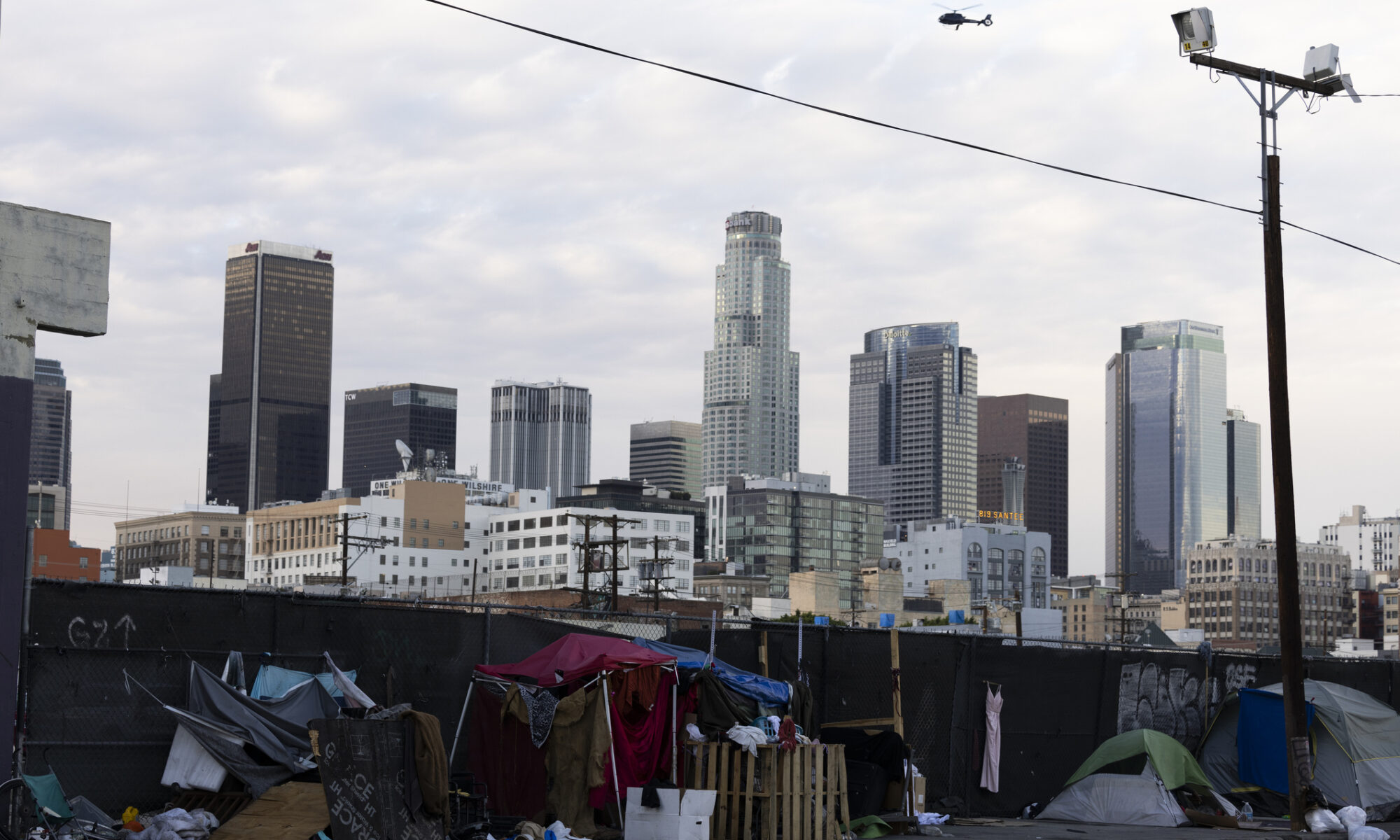
On July 24th, the US  administration announced a new approach to addressing America’s ongoing homelessness crisis in an executive order: “Ending Crime and Disorder on America’s Streets.” Its main assertion is that “shifting homeless individuals into long-term institutional settings for humane treatment through the appropriate use of civil commitment will restore public order.” It also encourages maximum enforcement of laws against vagrancy and the elimination of encampments.

Ethically notable about the executive order is the framing of the problem. As the title of the order makes clear, the concern is not that hundreds of thousands of Americans do not have housing, but rather that they are on the streets. It might be objected that this is a distinction without a difference; merely semantics. But it is not. For our understanding of the problem impacts potential solutions.

Let us say the policy challenge we are interested in is, “Homeless individuals do not have adequate homes.” The aim then becomes to secure housing, and potential solutions could include avenues such as directly providing housing, seeking to lower rent, or ensuring support services such as mental health care exist so people do not lose housing. By contrast, if the stated problem is, as the title of the executive order indicates, “crime and disorder on America’s streets,” then solutions such as institutionalization (whether in mental health facilities or prisons) are more natural. The specific solutions we consider follow directly from our particular understanding of the problem.

In this case, one might worry there is something wrong with treating the unhoused merely as a inconvenince for other people. Immanuel Kant, a German philosopher of the 1700s, famously argued that people should always be treated as ends and not merely means.  In other words, we should regard people as something valuable in their own right and not simply for their usefulness to others.

However, while the inadequately housed are, themselves, the primary sufferers, homelessness is a social problem that affects other people, from human waste to burdens on public services, to, somewhat more complicatedly, crime.  Consideration of the public impact of homelessness is not, itself, inherently dehumanizing. Instead, Kant’s ethical concern comes when we fail to recognize the homeless as people, and begin to treat them merely as a public nuisance to be resolved. To be clear, the executive order is hardly unique in taking this stance. It is an enduring approach in the US.

The executive order also represents a changed stance on alleged causes. It asserts, “The Federal Government and the States have spent tens of billions of dollars on failed programs that address homelessness but not its root causes, leaving other citizens vulnerable to public safety threats.” Per the order, the root causes are mental health problems and substance abuse. But experts generally dispute this contention. While mental health and substance abuse are major problems in homeless populations, it is rent and housing prices that appear fundamental. Although there have been longstanding worries about deinstitutionalization — the shift of individuals with serious mental illness away from mental health institutions and into community care. (It is worth noting that overall funding for mental  health care is actually being decreased by current legislation.)

There are also concerns about the executive order’s abandonment of “housing first” approaches. These prioritize getting homeless people into housing, and then following up with other support services and are strongly evidence-backed. Unsurprisingly, homelessness is a major stressor and cause of drug abuse and mental health problems, so housing first programs make intuitive sense. Homelessness often places individuals in survival mode, where other problems become especially challenging to treat.

Most of these concerns relate to the policy infeasibility of the executive order, rather than ethics. But an ethical issue exists behind analysis of the causes of homelessness. Big picture: Is homelessness something wrong with individuals, that needs to be treated, or society, that needs to be changed? These are of course not mutually exclusive, but there is a question of emphasis and who we see as morally responsible for homelessness. If we primarily blame individuals for their own homelessness, e.g., through irresponsible drug use, we may be less inclined to support compassionate solutions. The recent executive order leans toward an individual responsibility tack, rather than highlighting background economic or social problems.

A final controversial reprioritization is dismissing “harm reduction” practices. The intent of these practices, such as supervised injection facilities and sterile needle exchanges for injection drug users, is to minimize the harms of a dangerous behavior.  Some of the major ethical questions with “harm reduction” have been analyzed in The Prindle Post by Nicholas Kreuder. As he points out, while one may be uncomfortable with the government enabling drug use, from a lives saved perspective, the evidence is very favorable for harm reduction approaches.

Again, focusing on the characterization of the problem can provide some clarity. If the problem to solve is “drug use,” then simply reducing harms is not responsive. Alternatively, if what we care about addressing are “harms associated with drug use,” such as overdose and disease transmission, then a strategy of harm reduction is more logical. An analogous case to consider is abstinence-only sex education, versus sex education that discusses condoms and other contraceptives and prophylactics.

As this executive order illustrates, specifying the problem we want to solve — housing or vagrancy; drug use or drug harms — is a major ethical decision in its own right. Thinking of homelessness primarily as a problem for the non-homeless, raises further unsettling implications. Just how much harm and indignity for homeless people, from anti-homeless architecture to criminalization of sleeping in public spaces to incarceration, is allowable to prevent the impositions they cause to others?

The California Housing Crisis and Collective Action

photograph overlooking San Francisco

The situation in California has become increasingly dire, and is even beginning to appear on the periphery of the 2020 presidential race. While there are factors that make California unique, it might be a sign of things to come for cities like Chicago, Austin, and Nashville. The political discourse currently taking shape may be indicative of the US’s future treatment of problems stemming from population growth and density.

California’s housing shortage places enormous pressure on tenants as supply shrinks and demand continues to expand. Strong economic growth, mostly in the tech sector, has created hundreds of thousands of new jobs, but has been met with inadequate construction of necessary housing. A report by the McKinsey Global Institute found that California needs to build 3.5 million more homes by 2025 to meet demand. This situation has seen the state’s home prices grow to 2.5 times the national average, while rents are 50 percent above average. As a result, nearly a quarter of the nation’s homeless population lives in California.

Current homeowners like Los Angeles resident Glenn Zweifel insist that “there is not necessarily a shortage of housing but an excess of people,” and attribute the problem to an attitude of entitlement: “Just because you want to live somewhere doesn’t mean you can.”

This, however, oversimplifies the problem. First, this is a matter of displacement; it isn’t simply a case of turning prospective residents away. Property values are skyrocketing which means that current tenants can’t earn enough to keep up with rising rents. It’s estimated that you’d need to make $34/hour in order to afford a two-bedroom rental home. Not everyone is in a privileged position to be able to uproot their lives. Tenants may not have much of a choice about where they live; their jobs, families, and financial, medical, or social situation may mean that relocation is simply not an option.

Second, the housing crisis is a byproduct of class and generational conflict. The interests of old, rich, white property owners are at odds with the young, poor, minority renters. The two main obstacles to increasing housing development are zoning laws and community opposition. Apartment buildings are banned in most of California, and single-family zoning laws prohibit higher-density housing construction in residential areas. Current residents don’t want affordable housing going up next door. They are intent on protecting the value of their assets, and know that environmental protections can be easily abused so as to protect their investment.

Conservative/libertarian writers, like Edward Ring, emphasize concerns of fairness:

“There’s a reason people work hard for decades to pay off their mortgages so they can own homes in spacious suburbs. It’s because they value the leafy, semi-rural atmosphere of an uncrowded suburban neighborhood. [Policy initiatives] will effectively double the housing density in these neighborhoods, violating the expectations of everyone living there who relied on the zoning rules that were in effect when they bought their homes.”

Property owners, they argue, have earned the right to restrict others’ access to those goods for which they have labored. To undermine that basic right of ownership and fail to reward these individuals’ hard work is manifestly unjust. And yet lawmakers continue to recommend the 

“forcible integration of people who, for whatever reason, require government assistance to support themselves, into communities of taxpayers, who, by and large, are working extra hard to pay the mortgages on overpriced homes in order to provide their children with safe neighborhoods.”

Market forces may be conspiring to put people on the street, but property owners, so the argument goes, are not the guilty party and are not obligated to make accommodations. In the end, they argue, it’s unfair to have homeowners shoulder others’ burdens.

This is a common sentiment. But the neighborhoods in California are, in effect, gated communities aimed at maximizing monetary gains and keeping out the undesirables. Even when residential communities are pried opened and new residents are admitted, those who’ve threaded the needle and somehow gained access to such a scarce resource are the very same that attempt to slam the door closed behind them. As San Francisco Assemblymember Phil Ting explains, “If you’re a city council, the people who vote for you oppose the housing you’re creating, and you’re creating housing for the people who have yet to move in. And when they do move in, they fight the next project.”

The political incentives all point in one direction. Homeowners are entrenched; they have ties in the community and their voices carry the weight of immediate political consequence. There are few other voices — certainly not the homeless or prospective residents — that might countermand it. This may change if businesses start feeling the effect of not having the necessary workers and talent to function. Being unable to attract necessary professions like nurses, teachers, janitors, and firefighters threatens to grind the economy to a halt. Property Shark notes that despite San Francisco paying nurses one of the highest wages in the US, a nurse would have to earn 10 annual incomes in order to afford a house there. The situation is no different for tech workers. But until businesses start feeling the pinch, there is more of a political incentive to protect current residents, slow development, and push the homeless to shelters elsewhere.

Conservatives are often partial to subsidiarity — the idea that actors closest to the problem are the best positioned to address it. They prefer local solutions which might limit government meddling and eliminate red tape. But the California Housing Crisis is a collective action problem; conflicts of interest between individuals encourage actors to pass the buck, while sustainable solutions require a concerted group effort. The consequences of doing one’s part to address the housing crisis encourage free-riding (that mirrors the immigration crisis at the national level). Those who flout their obligations are the ones who stand to reap the greatest rewards. Towns who haven’t built an apartment in a decade are also ones where the median home sells for $1.6 million. Given the incentives at play, a decentralized approach is unlikely to work.

There are a number of proposed solutions, but the two which have gained the most traction concern “upzoning” and rent control. SB 50 would allow apartment buildings to be built near major transit hubs, increasing housing capacity six-fold while also mitigating increased traffic congestion. It represents a market-based solution that looks to harness developer incentives in order to accelerate the development rate.

But critics contend that a market-based solution like SB 50 is unlikely to provide relief. Michael Storper, a professor of urban planning at UCLA, argues that the bill is essentially about “raising housing opportunities for highly skilled, relatively high-income people.” Upzoning may encourage more housing, but it will be housing designed to maximize the return on investment. The bill doesn’t make development in lower-income neighborhoods any more attractive or profitable. Instead, it may very well “gentrify what’s left to gentrify in highly desirable areas.” Francisco Dueñas, the housing campaign director at the Alliance of Californians for Community Empowerment, agrees: “We think that in general, similar to what happened in Chicago, [SB 50] is just going to increase the value of that land, fueling greater speculation, and then that gets translated into increased rent and more people getting pushed out.” Ultimately, while the bill may encourage development thus increasing supply, critics worry it does nothing to address the issue of displacement.

An alternative aimed directly at this issue is rent control. (One such proposal, Proposition 10, was on the ballot in 2018 and was defeated. Another measure, AB1482 is currently gathering steam.) As property values soar and wages stagnate, renters are unable to keep up with rising prices. By placing legal limits on what landlords can demand for rent and tying those figures to cost of living calculations, these measures hope to protect renters from effectively being forced out of their residences. Renters may no longer be victims of arbitrary market forces and suffer the consequences of prices which reflect whatever the market will bear.

Critics emphasize the negative effect expanding rent control will have on housing development, as it eliminates financial incentives to build new housing or develop existing properties. Given the magnitude of the housing shortage at hand, ensuring renters remain where they are might not be the most pressing objective. Rent control creates immediate gains, but, as a Brookings Institute study concludes, “in the long run it decreases affordability, fuels gentrification, and creates negative spillovers on the surrounding neighborhood.” Reduced profit margins discourage landlords from regular maintenance, renters bunker down in apartments that are too big or small for their needs, and the neighborhood housing market is depressed.

There are no easy solutions. At best, the crisis in California is a cautionary tale that might signal when to raise the alarm, and, if we’re lucky, where to look to find a way out.