


Weslandia
Book Module Navigation
Summary
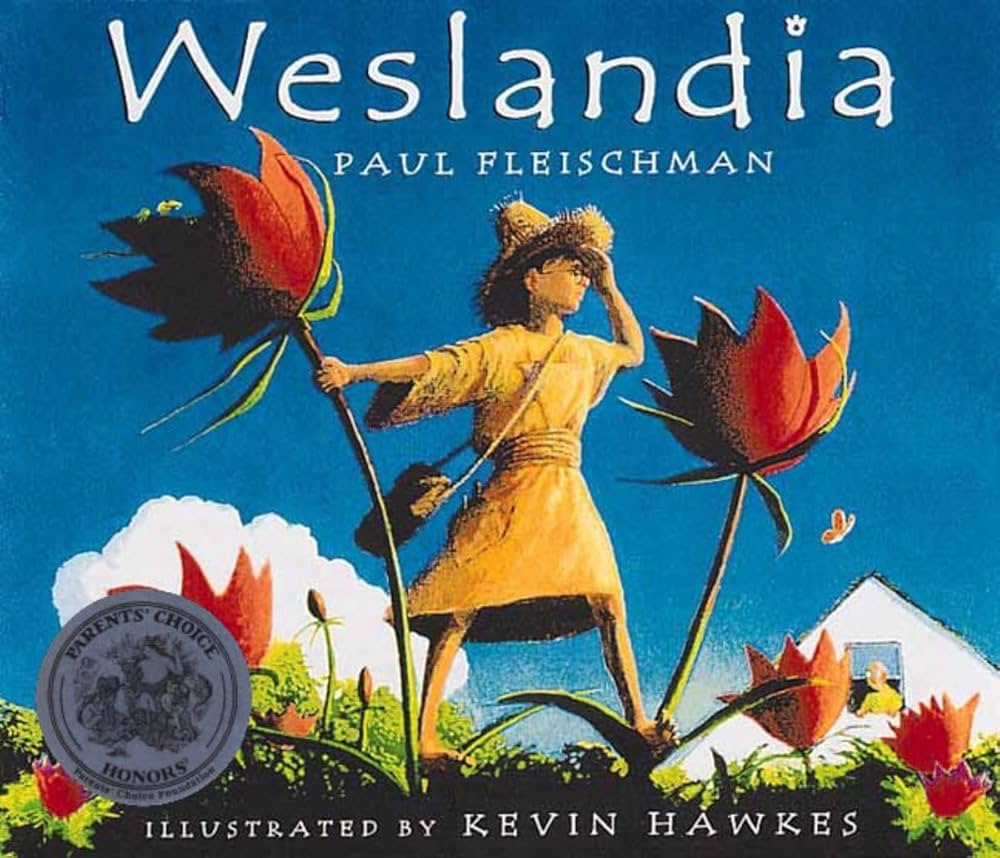
Weslandia tells the story of Wesley, a boy who feels out of place among his peers. Teased for being different, Wesley decides to create his own summer project: a new civilization in his backyard. He grows a mysterious plant that becomes the foundation of an entire culture, complete with food, clothing, shelter, games, and even a language. By the end of the summer, Wesley not only builds Weslandia but also earns the respect and curiosity of those who once bullied him. The book highlights themes of individuality, conformity, creativity, and self-discovery, inviting readers to consider what it means to be true to oneself in the face of social pressure.
Guidelines for Discussion
Weslandia is especially useful for opening discussions about individuality and conformity—topics children are already grappling with in school and friendships. Wesley is teased because he does not fit in, but instead of changing himself to be more like others, he creates a world that celebrates his unique interests. Facilitators can guide students to notice the tension here: Why do people sometimes try to fit in? What makes it difficult to be different? Is it always better to stand out, or can fitting in also matter? These questions help children reflect on the choices they make about identity and belonging.
The story also invites exploration of self-discovery. Wesley’s summer project is not just about inventing a civilization; it is about discovering who he is and what he values. Children can connect with this by recalling times when they tried something new—like learning a game, drawing a picture, or joining a group—and discovered a new part of themselves. Facilitators can support these reflections by asking open questions: How do we learn who we are? What helps us feel confident about ourselves? By tying these abstract themes back to concrete examples from children’s lives, facilitators keep the discussion grounded and relatable.
Another theme is the role of creativity in shaping identity. Wesley doesn’t just passively resist conformity; he actively builds something new and imaginative. This is a chance to help children see how creativity can be a tool for self-expression and resilience. When others do not accept us, we can still create spaces and projects that reflect who we are. For facilitators without a philosophy background, it can help to frame questions in everyday terms: “What does it mean to make something your own?” or “Can making things show who we are?” The story shows that philosophy does not have to be abstract—it is tied to the choices we make about ourselves and the communities we want to build.
Finally, the ending of Weslandia raises questions about recognition and reward. Wesley’s bullies become his friends once they see what he has built. This can lead to inquiry about whether “being yourself always pays off.” Do we value individuality only when it is admired by others, or is it important even if others don’t accept it? Such questions encourage children to consider the worth of self-acceptance apart from external approval, while also exploring why recognition from others can feel so powerful.
Discussion Questions
Individuality and Conformity
- How is Wesley different from the other kids? How is he similar?
- What does it mean to “fit in”? Why do some people try to be like everyone else?
- Is it always good to be different? Why or why not?
- At the end, Wesley’s bullies become his friends. Does being yourself always pay off?
Self-Discovery
- In what ways did creating Weslandia help Wesley learn more about himself?
- Have you ever discovered something about yourself by trying something new?
- What are other ways people can learn about who they are?
Creativity and Recognition
- How did Wesley use creativity to solve his problem of not fitting in?
- Do you think Wesley would still have been happy with Weslandia even if no one else admired it?
- Why do you think the other children changed their minds about Wesley at the end?
Suggested Activity: Build Your World
One way to bring the themes of Weslandia to life is to invite students to imagine, like Wesley, a world of their own. Begin by reminding the class how Wesley felt out of place at the start of the story, and how he created Weslandia as a way to express who he was. Then explain that each student will now design their own imaginary world that reflects their own interests, talents, and creativity.
Give each child a blank sheet of paper and some markers or crayons. Ask them to think about the things that make them unique—such as their favorite foods, hobbies, colors, games, or even the kinds of rules they think would make life fair and fun. Encourage them to imagine a world where those things are celebrated. They can draw, label, or write descriptions on their paper. To guide them, you might suggest a few prompts: What plants or foods would grow there? What kind of clothing would people wear? What games or sports would people play? Would there be a special language, alphabet, or way of communicating? What would houses or schools look like?
Give the students ten to fifteen minutes to work on their designs, and remind them that there are no right or wrong answers—this is about creativity and expressing who they are. For children who might struggle to get started, encourage them to choose just one element (such as food or clothing) and build out from there.
When everyone has had time to finish, invite students to share their worlds. Depending on the class size and comfort level, this can be done as a whole group or in small circles. As students present, encourage them to explain why they chose certain elements and what those choices say about them. Facilitators can highlight both the individuality of each creation and the unexpected similarities between them—for instance, several students may imagine similar foods or games even though their worlds look very different.
After the sharing, guide a reflective conversation. Ask: What did you notice about your own world? Did it show something about who you are? How did it feel to make a world that was all your own? Were there any surprising similarities between your world and someone else’s? This step brings the activity back to the philosophical themes of individuality and conformity. Children can see that being unique does not mean being isolated, and that even when we create worlds to express our own identities, we still share common ground with others.
This activity mirrors Wesley’s journey in the story: it shows how creativity can help us discover and express who we are, while also reminding us that our individuality exists alongside our connections to others.
About the Prindle Institute
The Prindle Institute for Ethics equips people to deepen their understanding of different moral perspectives and to think critically about the inescapable ethical issues of our time. Through ethics education resources and interactive experiences, we bring communities together to fully engage with the ethical dimensions of their lives.
About Teaching Children Philosophy
Teaching Children Philosophy began with the philosopher, Dr. Tom Wartenberg, whose pioneering work showed how picture books can open the door to big ethical and philosophical questions. Today, The Prindle Institute serves as the digital home for the library, expanding and maintaining this growing collection of guides so educators everywhere can bring lively, thoughtful dialogue into their classrooms.
Further Resources
Some of the books on this site may contain characterizations or illustrations that are culturally insensitive or inaccurate. We encourage educators to visit the Association for Library Service to Children’s resource guide for talking to children about issues of race and culture in literature. They also have a guide for navigating tough conversations. PBS Kids’ set of resources for talking to young children about race and racism might also be useful for educators.
Philosophy often deals with big questions like the existence of a higher power or death. Find tips for leading a philosophical discussion on our resources page.
