




Tar Beach
Book Module Navigation
Summary
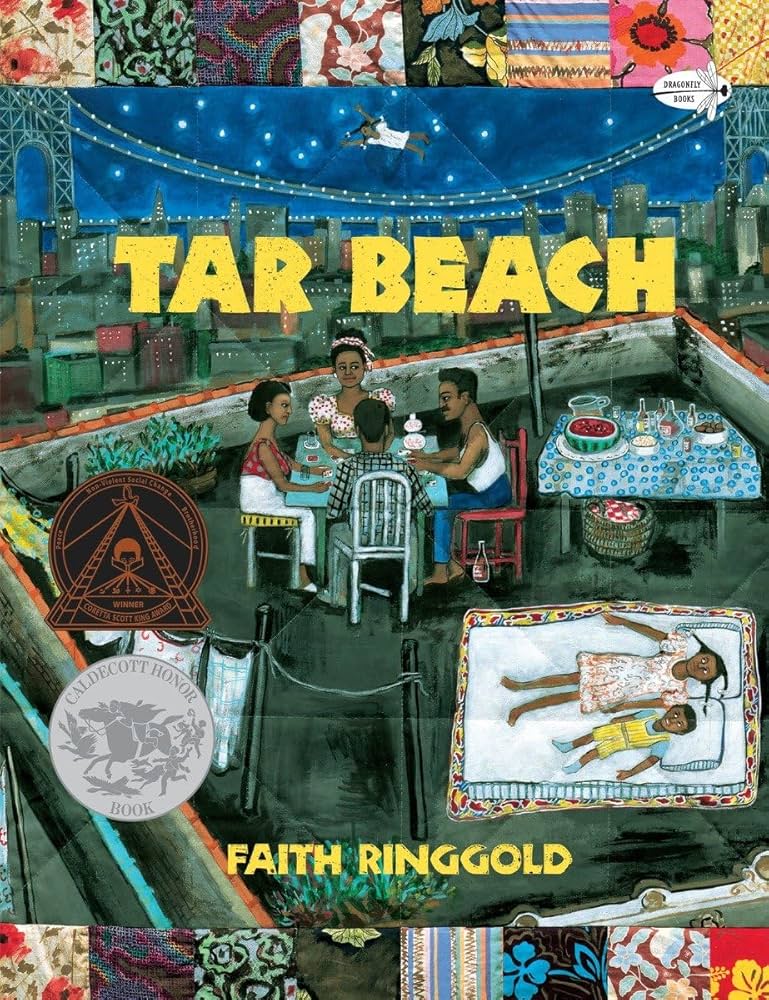
Tar Beach is the imaginative and vibrant story of Cassie Louise Lightfoot, an eight-year-old girl living in Harlem, New York City. Set on the rooftop of her apartment building—her “tar beach”—Cassie dreams of flying over the city, claiming everything she sees as her own. This richly illustrated book weaves together Cassie’s hopes, dreams, and family history, inviting young readers to consider ideas about freedom, imagination, and ownership.
Guidelines for Discussion
Tar Beach is a story rich with possibility: it blends the ordinary rooftop of a Harlem apartment building with the boundless skies of Cassie’s imagination. For young readers, this creates a natural entry point into conversations about the meaning of freedom, the role of creativity in our lives, and the ways in which we think about fairness and belonging. A facilitator does not need to be a philosopher to guide these reflections—being attentive to the themes already present in the story is enough.
One central theme is imagination and creativity. Cassie’s flights across the city show how imagination can give us strength and a sense of possibility, even when daily life feels limited. Facilitators can encourage children to think about how imagination shapes the way we see the world, asking whether imagining something could help bring it closer to reality, or whether dreams matter even if they remain “just” dreams. Philosophically, this connects to questions about how we know what is possible and how our minds shape our understanding of the world.
Another theme is freedom and empowerment. Cassie’s dream of flying allows her to rise above the barriers in her community and claim a kind of independence. Children can consider what freedom means to them, and why people value it so deeply. Is freedom just the ability to go anywhere you want, or does it also mean having opportunities to pursue your hopes and goals? This theme connects Cassie’s personal dreams to broader questions of justice, equality, and human dignity.
The book also raises questions of ownership and fairness. Cassie declares ownership of everything she flies over—bridges, buildings, and even the city itself. This invites children to ask: what does it really mean to own something? Is ownership about legal documents, physical possession, or the meaning something holds for us? And how do we decide when something is being shared fairly or unfairly withheld? These questions can help students think critically about fairness in their own communities.
Finally, Tar Beach emphasizes family and community. Cassie’s rooftop is not just her private space but a shared place of joy and comfort for her family. Facilitators can guide children to reflect on the importance of safe spaces, belonging, and the role of family and community in nurturing our dreams. This theme connects Cassie’s individual imagination with the relationships and histories that support her.
Taken together, these entry points show that Tar Beach is not only a story about one girl’s dream of flying—it is also an invitation to think about the role of imagination in resilience, the meaning of freedom, the nature of fairness and ownership, and the ways our families and communities sustain us. The aim of discussion is not to supply right answers, but to allow children to voice their own experiences and ideas, seeing themselves as participants in larger conversations about hope, justice, and belonging.
Discussion Questions
Imagination and Dreams
- What does Cassie’s ability to fly represent?
- Can imagining something make it more likely to happen? Why or why not?
- What kinds of things do you imagine for your own future?
Ownership and Fairness
- What does Cassie mean when she says she owns things just by flying over them?
- What makes something truly ours?
- Have you ever felt something was unfairly denied to you or someone else? How did that feel?
Freedom and Empowerment
- What does freedom mean to Cassie?
- How does imagining herself flying help Cassie feel powerful?
- How important is freedom in our own lives, and why?
Family and Community
- Why is the rooftop, “tar beach,” important to Cassie and her family?
- What places make you feel safe and happy? Why?
- How do our families and communities support our dreams and imagination?
Suggested Activity: Illustrated Dreamscape
To extend the discussion, invite students to create their own “Dreamscape Illustration,” inspired by Cassie’s rooftop flights. Begin by asking students to think about a place where they feel free, safe, and able to imagine without limits. This could be a real place in their lives—like a bedroom, a park, or a family gathering spot—or an imagined one, like a magical landscape or a city of the future. Encourage them to think not only about the place itself, but also about what dreams, hopes, or wishes they would associate with it.
Provide each student with drawing paper and art supplies such as crayons, markers, or colored pencils. Ask them to draw their personal dreamscape, filling the page with details that reflect their sense of freedom and the things they would like to “claim” as their own, just as Cassie does when she flies over the George Washington Bridge. As students work, facilitators can circulate and ask questions like: What makes this place special for you? How does this place help you feel free or powerful?
When the drawings are complete, create time for students to share their dreamscapes in small groups or with the entire class. Each student should explain why they chose this particular place and what their drawing says about their dreams and values. To conclude, bring the group back together for reflection. Ask: What do our dreamscapes tell us about the different ways we understand freedom and imagination? How does Cassie’s story help us think about the role of creativity in shaping our lives? This discussion reinforces the connection between imagination, empowerment, and community, showing how personal dreams are part of larger human questions.
About the Prindle Institute
The Prindle Institute for Ethics equips people to deepen their understanding of different moral perspectives and to think critically about the inescapable ethical issues of our time. Through ethics education resources and interactive experiences, we bring communities together to fully engage with the ethical dimensions of their lives.
About Teaching Children Philosophy
Teaching Children Philosophy began with the philosopher, Dr. Tom Wartenberg, whose pioneering work showed how picture books can open the door to big ethical and philosophical questions. Today, The Prindle Institute serves as the digital home for the library, expanding and maintaining this growing collection of guides so educators everywhere can bring lively, thoughtful dialogue into their classrooms.
Further Resources
Some of the books on this site may contain characterizations or illustrations that are culturally insensitive or inaccurate. We encourage educators to visit the Association for Library Service to Children’s resource guide for talking to children about issues of race and culture in literature. They also have a guide for navigating tough conversations. PBS Kids’ set of resources for talking to young children about race and racism might also be useful for educators.
Philosophy often deals with big questions like the existence of a higher power or death. Find tips for leading a philosophical discussion on our resources page.
