
Choice, Coerced: Examining Consent in Russia’s War Efforts


 SHARE
SHARE
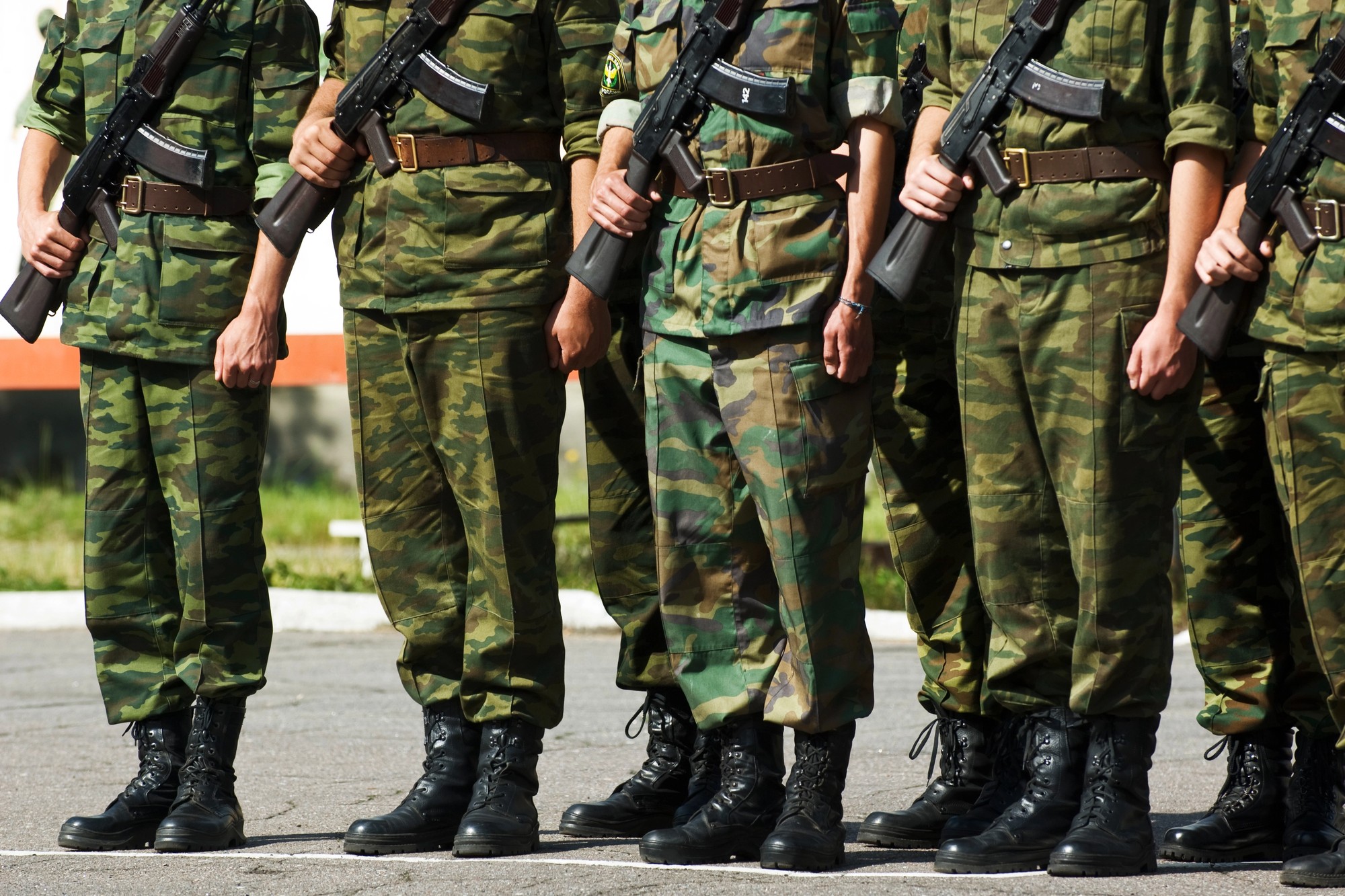
Recently, the BBC has reported that nearly 500,000 Russian soldiers have been killed in the war between Russia and Ukraine. To replenish their ranks, Russia has increased their recruitment efforts massively. Russian ambassador to the UK Audrey Klein claimed that, as of June 2025, Russia was recruiting close to 50,000-60,000 new soldiers every month. While high recruitment numbers is not in and of itself interesting, the way in which Russia goes about their recruitment is. In order to keep up high levels of recruitment, Russia has been forced to increase financial incentives given to soldiers joining. In some instances this may just be high wages relative to the rest of the population, but it also might come in the form of debt relief, or sign-on bonuses of more than $20,000 USD.
Russia has also increased recruitment by allowing foreigners, most notably those from Kenya, to join the Russian military with similar high salary and sign-on bonus incentives. At home, Russia has also used marketing tactics to incentivize those on the fence to enlist, such as referral bonuses or “last minute deals.” These incentives, as one could guess, are targeted towards and most attractive to those lower on the socioeconomic ladder. But can these men give genuine consent to become Russian soldiers when the incentives are too good to pass up?
To take a closer look at this question, we need to get a clear grasp on what we mean when we talk about consent. Onora O’Neill offers a treatment of the term in her article “Between Consenting Adults.” The first conception of consent that O’Neill considers is what she calls “actual consent.” Actual consent is exactly what it sounds like: someone has given consent only if they have actually consented, and it is morally objectionable to treat someone in a way in which they have not expressly approved. Two immediate problems arise with this conception of consent. First, actual consent can be coerced, like in cases of physical threats. Second, actual consent can be the product of deception, such that one could think they are consenting to x, but have been deceived as to what x entails.
In its place, we might consider hypothetical consent, that is, what a hypoethically fully and ideally rational being in their place might do. But an immediate problem arises: we will often find ourselves overriding individuals’ actual dissent in favor of the hypothetical consent an ideally rational being would give. This conception is also strained as it would require non-ideally rational agents to determine what an ideally rational agent would consent to. We can imagine any scenario in which someone is saying “No!,” but we respond along the lines of, “Well, if you were ideally rational you would say yes.” It seems as though something has gone wrong here.
O’Neill’s final suggestion she terms “possible consent.” In order for genuine consent to occur, one must genuinely have the possibility to reject what is proposed. This is clearly differentiated from both actual and hypothetical consent, where consent might be “given” without considering the specifics of one’s situation. If one is held at gunpoint and gives consent, for instance, there was never a real possibility of their dissenting.
If we take this conception of possible consent and apply it to the case of Russian soldiers, we are faced with the main question of interest in this article: to what extent does a Russian soldier enlisting under the pressure of financial incentives have a possibility of dissent?
O’Neill considers, for example, whether or not workers can genuinely consent to work, as it may be impossible to dissent on pain of the coercion of starvation. Since we must work to eat, we cannot genuinely consent to work – there is no possibility of us dissenting. In the case of the Russian soldiers, the financial incentives are targeted towards those who are most likely to enlist because of them, namely those residing in the poorest regions of Russia. Moreover, the Russian government is, at least in part, responsible for the poor socioeconomic status of these men and their families. They then prey on this status to, insofar as we accept O’Neill’s framework, coerce men into joining the Russian military via financial incentives that are too good to refuse.
Whether or not we use O’Neill’s version of the term, it is a fact that deception and coercion necessarily undermine consent. While men may not be the victims of deceptive plot to garner enlistments, it seems fair to say that many soldiers that enlist into the Russian military under the guise of financial incentives are, in a sense, being coerced to sign on the dotted line. We should not compare these soldiers to those who are physically forced to enlist in their government’s military, which is alleged to occur in Ukraine as the war rages on. Rather, we should understand what’s happening with Russian enlistment as a kind of financial coercion. Simply put: many of the poor men enlisting into the Russian military to reap the financial benefits do not seem able to genuinely consent to their enlistment, irrespective of their “actual consent.”