
When Is Foreign Intervention Justified?


 SHARE
SHARE
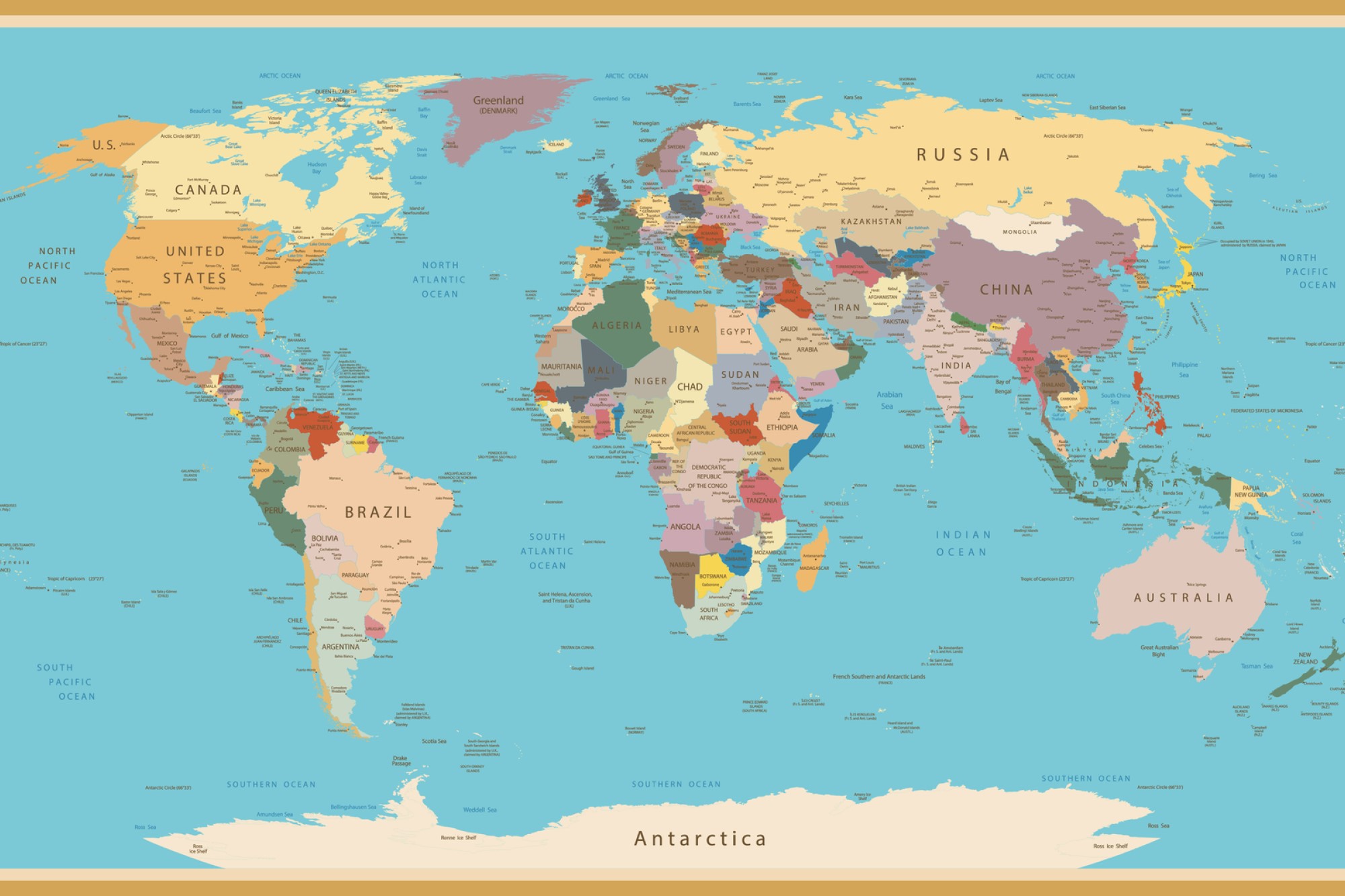
The current US administration has become increasingly interested in the affairs of other countries. This includes the military strikes on Iranian nuclear sites in 2025, as well as the more recent ousting and detainment of President Maduro in Venezuela, consideration of further strikes on Iran during the ongoing protests, and, most surprisingly, aggressive saber-rattling towards long-time American ally Greenland. Each of these situations concerns the thorny issue of when and how interference in the internal affairs of a sovereign nation is justified.
National sovereignty is the bedrock of the post-WWII international order. Each nation is an absolute (or near absolute) authority within the territory it controls. Moreover, nations relate to each other as equals, or at least as equals under international law. Practically speaking, there are, of course, vast differences in political and economic power between nations.
The justifications for such a system of sovereign nations bridge power and ethics. National sovereignty as a norm is ideal for individual nations interested in running their country without foreign obstructions. And nations unsurprisingly have a vested interest in preserving a system where the nation as a unit of political organization is paramount. Even the United Nations is designed to respect national sovereignty. This setup is especially amenable to powerful nations, such as the United States and China, who would likely be unenthusiastic about a global system that did not preserve their advantages.
Nonetheless, there are ethical defenses of sovereignty to be made. First, a sincere commitment to sovereignty and especially, sovereign equality, can help to prevent war and conflict between nations. Second, sovereign equality is in the interest of smaller nations who would otherwise be at risk of being constantly victimized, or even taken over, by more powerful nations. (Again, the actual implementation of sovereign equality is imperfect. Powerful nations do throw their weight around. Less powerful nations do occasionally get squashed.) Finally, national sovereignty can relate to self-determination. If we believe that a people have a right to self-determination, that is, to collectively decide on governance, then respect for national sovereignty is one way to respect self-determination.
The sticking point of national sovereignty is that while it may protect nations from the interference of other nations, it does not protect the people of nations from harms enacted by or permitted by their own countries. Hence, if we want systems of government that are fundamentally for the well-being of their people, then there must be limits on sovereignty. But, given the importance of sovereignty to the current global order, outside of overturning that order, violations of sovereignty should be carefully considered.
One reason for violating sovereignty relates to self-determination. If respect for national sovereignty flows from respect for self-determination, then an oppressive or authoritarian government might not deserve the presumption in favor of non-interference. The thought is that a state which does not serve its people is no true state at all. This argument, however, does not have much traction in the current global order. Instead, the more common justifications involve preventing atrocities or self-defense.
For example, humanitarian intervention approaches contend that sovereignty should be violated to prevent genocides and other atrocities, usually through military action. Ethically, we may also consider a nation engaged in such monstrous acts to have violated a covenant with its people and lack the political legitimacy to claim sovereignty. The exact way humanitarian intervention works varies – which atrocities? who gets to decide? – but central is that the motivation for intervention is humanitarian, as opposed to merely being in the strategic interest of a specific nation. Similarly to humanitarian intervention, the Responsibility to Protect approach adopted by the United Nations in 2005, represents a shared commitment to protect people from mass atrocity crimes such as genocide. The final stage of the Responsibility to Protect entails intervention, albeit only occurring under certain conditions and after other approaches have been exhausted.
Self-defense, or more controversially, defense against an imminent threat, are also commonly offered reasons for violating national sovereignty. The self-defense case is clear cut. If a country is being attacked, it can violate sovereignty and attack back. Imminent threat is more slippery, demanding an assessment of the danger and the need for preemptive action.
Besides the justification for intervention, it is also important to consider who should be able to intervene. For interventions other than self-defense, an organization like the UN, or a similar form of global governance, allows for a collective international regime with an agreed upon set of conditions for the violation of sovereignty. This provides a structure for intervention that, at least in theory, does not generally corrode national sovereignty or render it merely the privilege of powerful states. Likewise, time permitting, an international organization like the UN could provide a neutral actor to access a threat. (Although there are certainly those who would allege the UN is unduly influenced by its more powerful members, or that ostensibly humanitarian interventions can have ulterior motives.)
This puts us in a clearer position to understand why recent US interventions, or potential interventions, are generating such fear and controversy.
While there was at least a plausible humanitarian justification for intervening in Venezuela (although certainly no better than for many other countries), the US was quite forthright about pursuing oil there. It was also a largely unilateral action. The US recently pulled back from the brink of intervening (again) in Iran, although in light of intense violence against protestors there would at least be a potential humanitarian motivation (even if there are undoubtedly strategic interests at play). It remains to be seen how the situation with Greenland will develop. However, there is no plausible humanitarian justification nor imminent threat. The US has been clear that what it wants from this one-time ally are its natural resources and strategic location. In other words, this nakedly abandons any pretext of a higher ethical justification for the violation of sovereignty.
Critics might allege that, at least Venezuela, is business as usual for US foreign policy. The US has long had an interventionist foreign policy, from coups in Latin America, to the Vietnam War, to the 1999 intervention in Kosovo (with NATO), to the wars in Iraq and Afghanistan. However, even while engaging in these actions, the US generally maintained the rhetorical trappings of respect for sovereignty, coalition building, and international cooperation. So, while the US was perhaps hypocritical, it was not completely dismissive of the post-WWII system, a system for which it was one of the primary architects and beneficiaries. Like Russia’s action in Ukraine, US action in Greenland would signal that there are no boundaries for foreign intervention other than the respective power of the nations involved. A marked departure indeed.