Truth, Power, and the BBC: An Arendtian Warning


 SHARE
SHARE
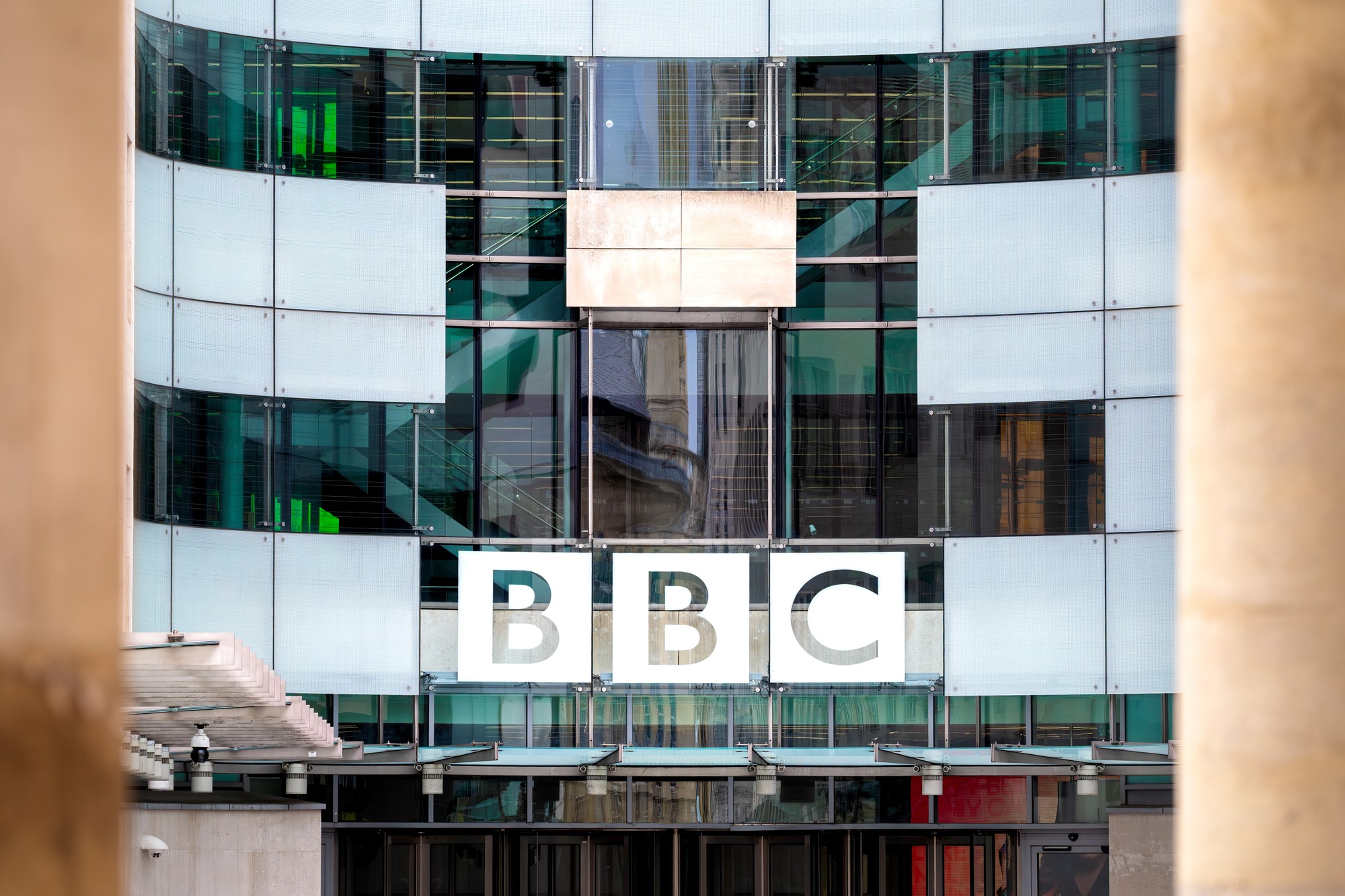
The BBC is often regarded as one of the most respected media institutions in the world. Since its founding in 1922, the public-service broadcaster has pursued its now-famous mission to inform, educate, and entertain audiences not only in the United Kingdom but across the globe. Yet, despite the best efforts of those who work for and lead the organization, the BBC has never been entirely free from controversy. As social and political tensions within the UK have intensified in recent years, the corporation appears to have found itself under scrutiny more frequently than usual. Be that Gary Liniker, former host of Match of the Day, sharing a social media post about Zionism which included the imagery of a rat (for which he later apologized), to the ever steady stream of sexual misconduct accusations made against multiple presenters, most recently the former MasterChef host Gregg Wallace. Most recently, it has drawn the attention of none other than Donald J. Trump. And, unexpectedly, the former president may have something resembling a point.
To recap: in January 2021, a crowd of Trump supporters gathered in Washington, D.C., after the then-president addressed them on the National Mall. The demonstration moved toward the U.S. Capitol and ultimately breached the building. By the end of the day, five people had died, including one shot by Capitol Police; hundreds were injured, including roughly 140 police officers; and dozens had been arrested. By early 2025, more than 1,500 individuals had been charged in connection with the attack. This is all well known and documented, but it is that documentation that has caused the BBC its recent headache.
On November 2nd, 2024, the investigative documentary series Panorama aired a special, hour-long episode titled Trump: A Second Chance?. The program included excerpts from Trump’s speech on January 6. This, in itself, is not unusual: a documentary cannot reasonably broadcast a lengthy speech in full, and selective quotation is an inevitable part of editorial practice. However, the program’s editing choices drew sharp criticism from Trump, who argued that Panorama had stitched together lines from the speech in a way that altered their meaning. The broadcast sequence appeared to show him telling supporters, “We’re going to walk down to the Capitol and I’ll be there with you. And we fight. We fight like hell.” This single line came from two different parts of his speech, over an hour apart. First, he said “We’re going to walk down to the Capitol, and we’re going to cheer on our brave senators and congressmen and women, and we’re probably not going to be cheering so much for some of them.” This was then followed a whole hour later with “We fight like hell. And if you don’t fight like hell, you’re not going to have a country anymore.” Now, even if you think his original comments were provocative, it’s hard to argue that Panorama’s editing conveys a much stronger, more explicit, call to violent action.
This is the crux of the issue that Trump has latched on to. That his words were taken out of meaning. And it is something for which the BBC has apologized. Nevertheless, a simple apology hasn’t placated the president, with him claiming he is going to sue the BBC for anywhere between $1 billion to $5 billion.
So, where then, is the ethics in all this? Well, there’s the obvious point about journalistic integrity and professional ethics – was this an intent to deceive or simply an ignorance of the possibility to do so. There are also questions about the freedom of the press. After all, many commentators and (so called) journalists bend or break the truth to tell better stories and get better ratings.
What I want to focus on, however, is the response to Trump’s criticism – not the issue itself, but the timidity it seems to have awakened. There is a growing sense that institutions, including the BBC, are adopting an increasingly defensive, self-censoring posture whenever confronted with the threat of Trump’s disapproval. This is not entirely new. We have seen US broadcasters remove entertainers and hosts from shows for criticizing the president. Jimmy Kimmel, for example, was taken off the air in September 2025 in what seemed to be an obvious attempt to placate the president. That decision was then reversed in less than a week. The BBC, meanwhile, appears to be internalizing the logic of appeasement, altering its editorial decisions before any protest is made. This is perhaps clearest in its handling of this year’s Reith Lectures.
The Reith Lectures, an annual series founded to promote the BBC’s educational mission, provide leading thinkers with a platform to explore the most pressing questions of the moment. This year’s lectures are being delivered by Dutch historian Rutger Bregman, author of Humankind: A Hopeful History and Utopia for Realists. His lecture series, called “Moral Revolution,” “explore[s] a growing trend for unseriousness among elites, and ask[s] how we can follow history’s example and assemble small, committed groups to spark positive change.”
In the first lecture, Bregman directs criticism at both left and right, calling the modern right corrupt and the modern left unwilling to act with moral courage. Unsurprisingly, Trump features prominently. Yet the BBC — apparently eager to avoid yet another confrontation — removed from the audio broadcast a line in which Bregman described Trump as “the most openly corrupt president in American history.” Bregman has since accused the BBC of cowardice and noted the irony of censoring a lecture series literally dedicated to moral courage.
It is here that philosophy reveals its value. For the ethical problem at stake is not merely about one edit, one lawsuit threat, or one lecture clipped for safety. It is about truth, power, and the need for healthy public discourse.
In The Origins of Totalitarianism, Hannah Arendt warned that the greatest threats to freedom arise not only from overt censorship, but from the gradual corrosion of a shared reality. In such conditions, individuals and institutions come to anticipate the expectations of the powerful and adjust their speech accordingly. This self-imposed conformity, with people silencing themselves before anyone needs to silence them, was, for Arendt, one of the most dangerous features of a collapsing public realm. It presents itself as caution or professionalism, yet it quietly erodes the very conditions under which truthful speech and political judgment can survive. In other words, it is not so much a defensive retreat but a preemptive surrender.
This is why the Panorama edit and the Reith Lectures matter. The former was a mistake that was later corrected. The latter was an act of anticipatory caution. Together, they trace a worrying progression from error, to apology, to fear, to self-censorship.
For Arendt, truth-telling is a political act, one that is never neutral or risk-free. A functioning public sphere depends on institutions willing to articulate facts even when those facts are contested, inconvenient, or unwelcome. Once a broadcaster, and especially one of the size and reputation of the BBC, begins to tailor its editorial decisions to avoid antagonizing the powerful, it ceases to be a guardian of public truth and becomes instead a manager of public feeling.
If the BBC wishes to maintain its reputation and live up to its purpose, it must confront the deeper ethical stakes at play. Preserving trust does not mean avoiding offense; it means demonstrating the courage to uphold factual truth in the face of intimidation or political pressure. Bregman is right that without that courage, the public sphere shrinks, and in that space, something else, something darker, steps.